
An enquiry about a vacant 400 square metre warehouse comes in at 6:40pm. Your leasing team left at 5:30. The caller hits voicemail, hangs up, and rings the next agency on the listing. That deal just walked.
An AI voice agent for commercial real estate answers that call. It picks up on the first ring, qualifies the enquiry, and books the inspection while your team sleeps. The platform works the hours your leads actually ring.
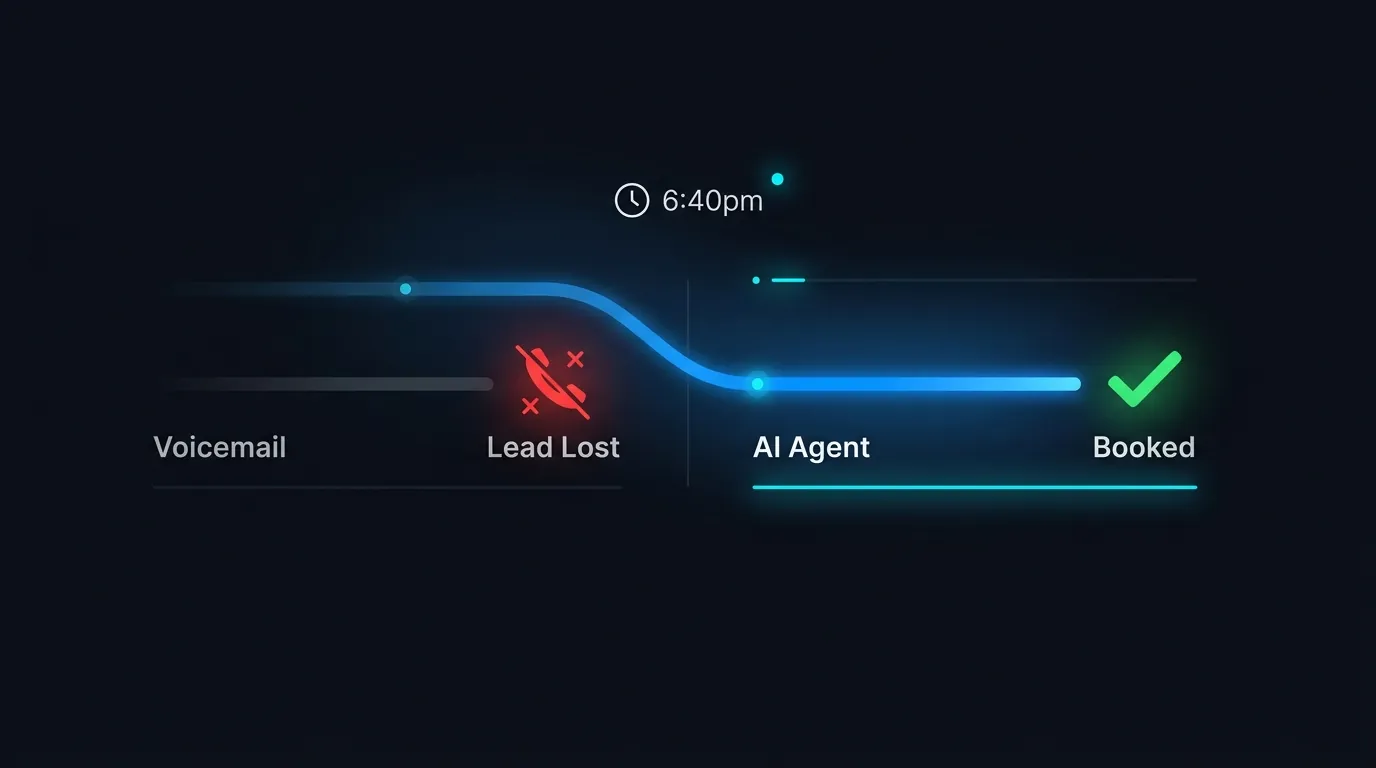
A 6:40pm warehouse enquiry: voicemail loses the lead, the agent captures and books it.
What does an AI voice agent do for a commercial real estate agency?
It answers every leasing and tenant call, day or night, then qualifies and routes it. The agent captures the property of interest, the caller's budget and timeframe, then books an inspection or logs a maintenance issue. No call hits voicemail. Every enquiry lands in your system as a structured record.
Think about the volume a single agency handles. Leasing enquiries on vacant space. Tenants reporting a broken roller door. Investors asking about yield. Your receptionist juggles all of it between inspections.
The agent handles the repetitive front end. It greets the caller, works out what they need, and pulls the right detail. Your agents only get involved when a deal is real.
Why do leasing enquiries slip through?
Most slip through because they arrive outside office hours or while staff are on site. Commercial property tenants ring when they finish their own workday. That is after 5pm. A missed call at 6pm rarely gets a callback, and the prospect rings a competitor instead.
Here is the pattern we see. A listing goes live. The phone runs hot for 48 hours. Your leasing agent is out doing three inspections that day.
Calls stack up in voicemail. By the time someone calls back the next morning, the keen tenant has already toured two other buildings. The first agency to answer usually wins the lease.
That gap is expensive. A single commercial lease can carry tens of thousands in commission. Letting it ring out to voicemail is the costliest habit in the business.
How does it qualify a leasing enquiry?
It asks the questions your best leasing agent would ask, in order. The agent confirms which property the caller saw, the floor area they need, their budget per square metre, and their move-in date. It separates a serious tenant from a tyre-kicker before anyone wastes a site visit.
A real example from the residential side shows the maths. A Christchurch developer used our agent to book viewings at 7.12 dollars each. The same qualifying logic works on commercial space, just with different fields.
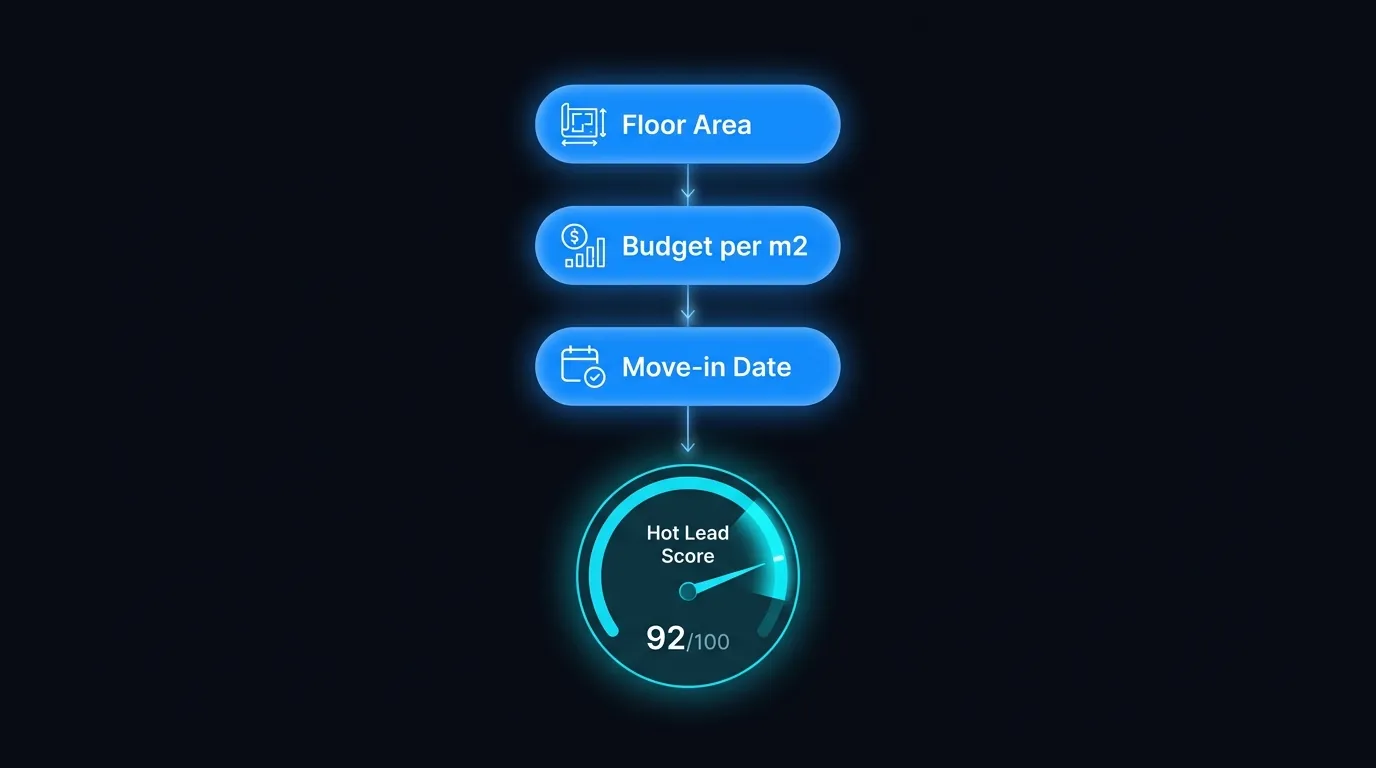
The agent scores each enquiry on floor area, budget and timeframe before a human steps in.
The agent scores the enquiry as it goes. A tenant wanting 500 square metres of warehouse, ready to move in 30 days, with a clear budget, gets flagged hot. That record reaches your agent before they finish their coffee.
For the deals that need a human touch, the handoff is clean. We cover where that line sits in our piece on why voice AI agents still need humans.
Stop losing leases to voicemail.
See how the commercial real estate voice agent for NZ agencies answers and qualifies every leasing call.
How does it handle a tenant or building issue?
It logs the issue, captures the urgency, and routes it to the right person. A tenant reporting a flooded basement at 11pm gets a calm, immediate response. The agent records the unit, the fault, and the severity, then escalates a genuine emergency straight to your on-call property manager.
Property management is half the job at most commercial agencies. Lifts fail. Air conditioning dies in a heatwave. Tenants want answers now, not at 9am tomorrow.
The agent triages every one. A blown lightbulb becomes a logged work order for the morning. A burst pipe becomes a phone alert to the right manager in seconds. Your tenants feel looked after, and your team is not woken for trivia.
How does it book an inspection?
It checks your agent's calendar in real time and offers the caller open slots. Once the tenant picks a time, the agent confirms it, sends the details, and writes the booking back to your system. No double handling. The inspection is locked before the call ends.
This is the same booking engine we describe in our guide to AI receptionist appointment booking across NZ and AU. The agent reads availability, avoids clashes, and confirms on the spot.
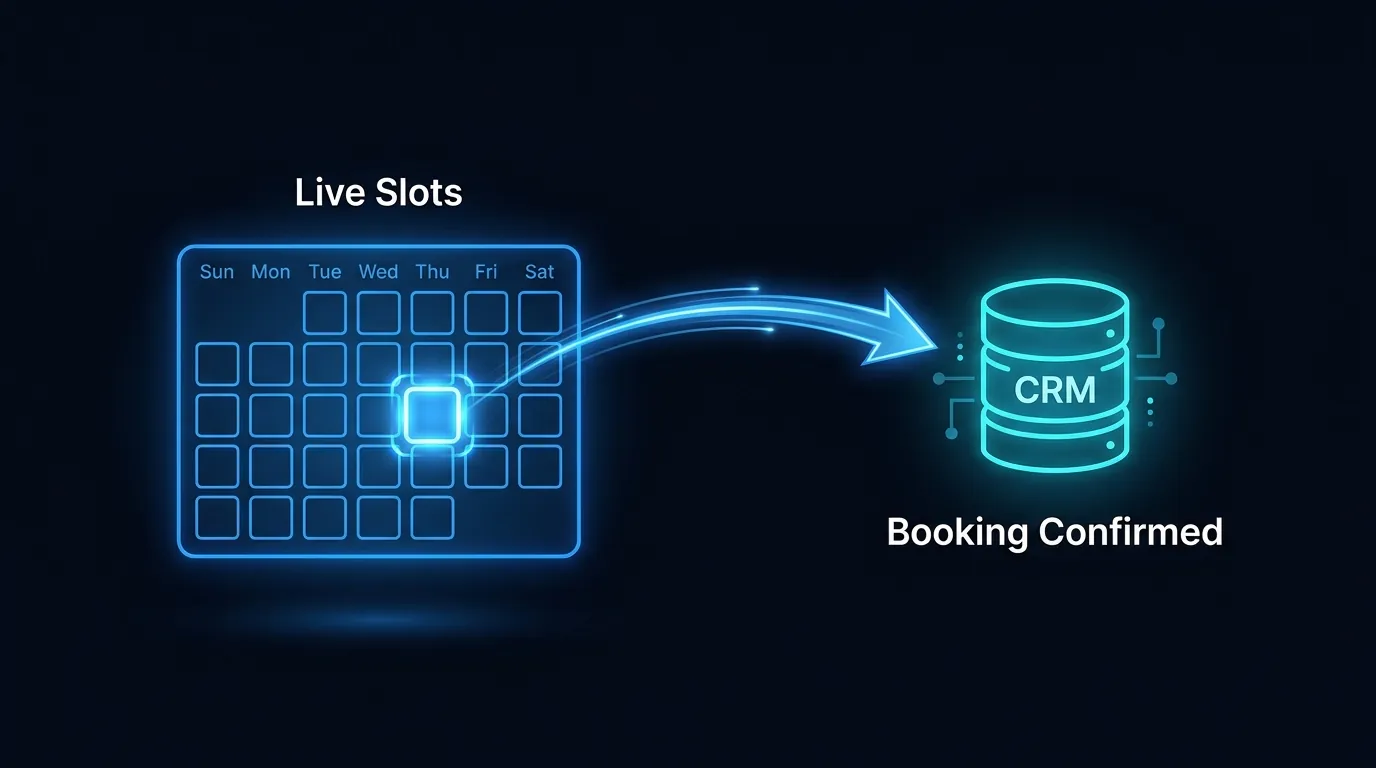
Live calendar slots are offered on the call and written straight back to your CRM.
Every booking flows into your CRM with the full context attached. The property, the qualifying answers, the caller's details. We explain that data flow in our piece on AI voice agent CRM integration. Your agent walks into the inspection already knowing the brief.
And when a hot tenant goes quiet, the agent can follow up. We unpack that cadence in our hot lead follow-up guide.
How does it keep enquiry data private?
Your enquiry records, transcripts, and structured data sit on our servers in Sydney. The live audio of each call is processed offshore under documented arrangements with our voice infrastructure partner. We are upfront about that split. We never claim every byte stays in Australia, because it does not.
Tenant and investor enquiries carry real commercial detail. Budgets. Lease terms. Business plans. That data deserves proper handling.
For NZ agencies, we operate under the Privacy Act 2020 and answer to the Office of the Privacy Commissioner. For AU agencies, we work to the Privacy Act 1988 and its 13 Australian Privacy Principles, the APPs, overseen by the OAIC. We break down the NZ obligations in our Privacy Act 2020 compliance guide.
One more thing. The agent tells every caller it is an AI at the start of the call. No deception. That disclosure is built in and runs on every call.
What does it cost a NZ or AU agency?
You pay from 77c to 95c a minute depending on plan, billed by the second, with no salary attached. An average answered enquiry runs about 30 seconds, roughly 48c. A solid two-minute qualifying call costs about $1.90. There is no roster to manage and no idle time to pay for.
Compare that to a part-time receptionist. In NZ or AU that runs about 28 to 35 dollars an hour. Add KiwiSaver or super, ACC, and holiday pay on top. And that person goes home at 5pm, just as commercial tenants start ringing.
The agent covers nights, weekends, and the 6pm rush for the price of the calls it actually answers. We lay out the full breakdown in our piece on how much an AI receptionist costs. For most agencies, one captured lease pays for a year of call minutes.
The after-hours angle alone changes the numbers. We dig into that in our after-hours receptionist guide for NZ businesses.
The next vacancy you list will get a call at 6pm.
The only question is whether anyone answers it. Set up your commercial real estate voice agent for NZ, or get the AU build. For the broader picture, start with our inbound voice agent overview.
Frequently Asked Questions
Does the AI voice agent work after hours and on weekends?
Yes. The agent answers around the clock, including nights, weekends, and public holidays. Commercial tenants and investors often ring after their own workday ends, which is exactly when most agencies hit voicemail. The agent picks up on the first ring every time, with no roster and no overtime to pay.
Can it tell a serious tenant from a time-waster?
Yes. The agent asks the same qualifying questions your best leasing agent would, covering floor area, budget per square metre, and move-in date. It scores each enquiry and flags the hot ones to your team. A residential client booked viewings at 7.12 dollars each using the same logic on a different property type.
What happens with an urgent building fault at night?
The agent logs the fault, captures how serious it is, and routes it. A minor issue becomes a work order for the morning. A genuine emergency, like a burst pipe, triggers an immediate phone alert to your on-call property manager. Tenants get a calm response at 11pm, and your team is not woken for trivia.
Where is our enquiry data stored?
Your transcripts, enquiry records, and structured data sit on our servers in Sydney. The live call audio is processed offshore under documented arrangements with our voice infrastructure partner. We operate under the NZ Privacy Act 2020 and the AU Privacy Act 1988 with its 13 Australian Privacy Principles. We never claim all data stays in Australia.
Does the agent tell callers it is an AI?
Yes, on every call. The agent discloses that it is an AI assistant at the start of the conversation. There is no attempt to pass as human. This is built into the platform and runs automatically, which keeps you onside with privacy expectations in both NZ and AU.
How much does it cost compared to hiring someone?
You pay from 77c to 95c a minute depending on plan, billed by the second, with no salary. An average call costs about 48c and a two-minute call about $1.90. A part-time receptionist runs 28 to 35 dollars an hour before KiwiSaver or super, ACC, and holiday pay, and they finish at 5pm.
See AI voice agents for NZ property managers for tenant calls and arrears.
Leonardo Garcia-Curtis
Founder & CEO at Waboom AI. Building voice AI agents that convert.
Ready to Build Your AI Voice Agent?
Let's discuss how Waboom AI can help automate your customer conversations.
Book a Free Demo

