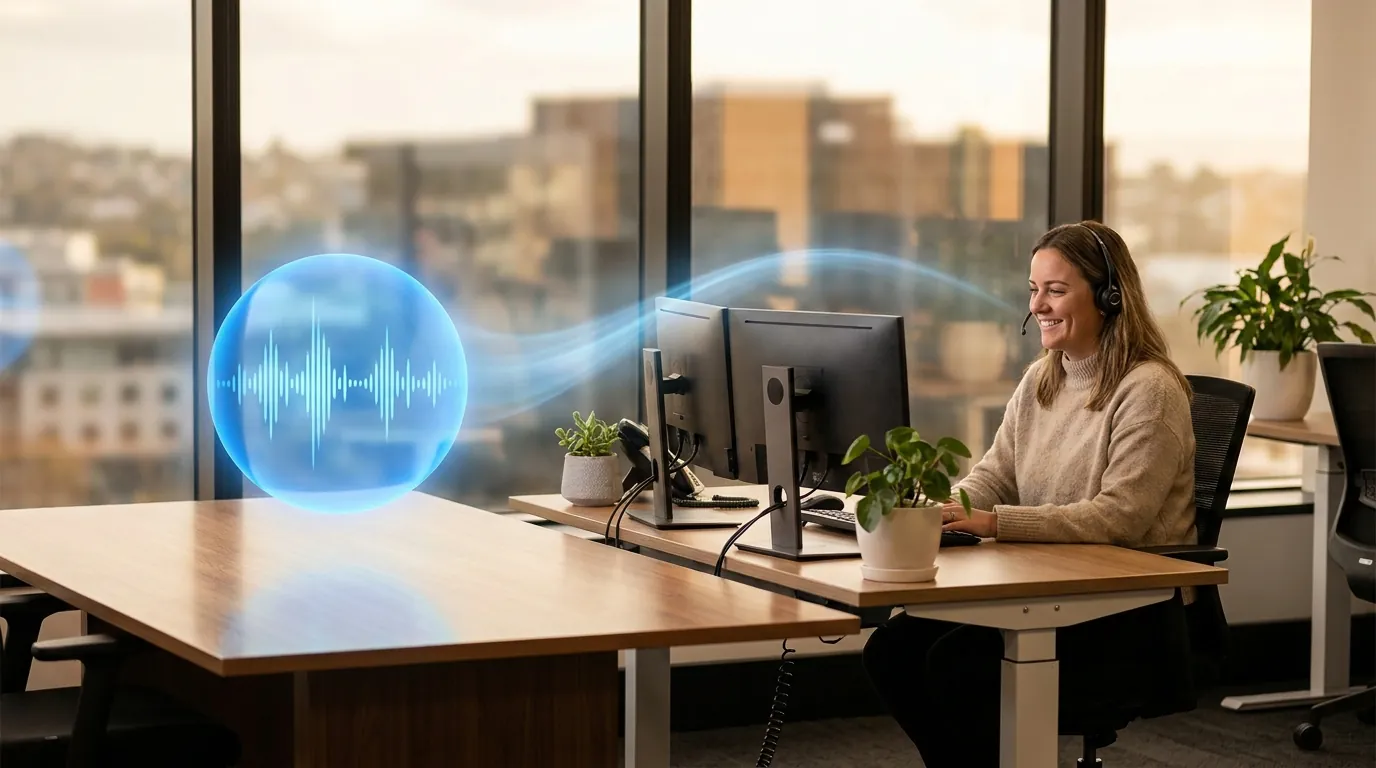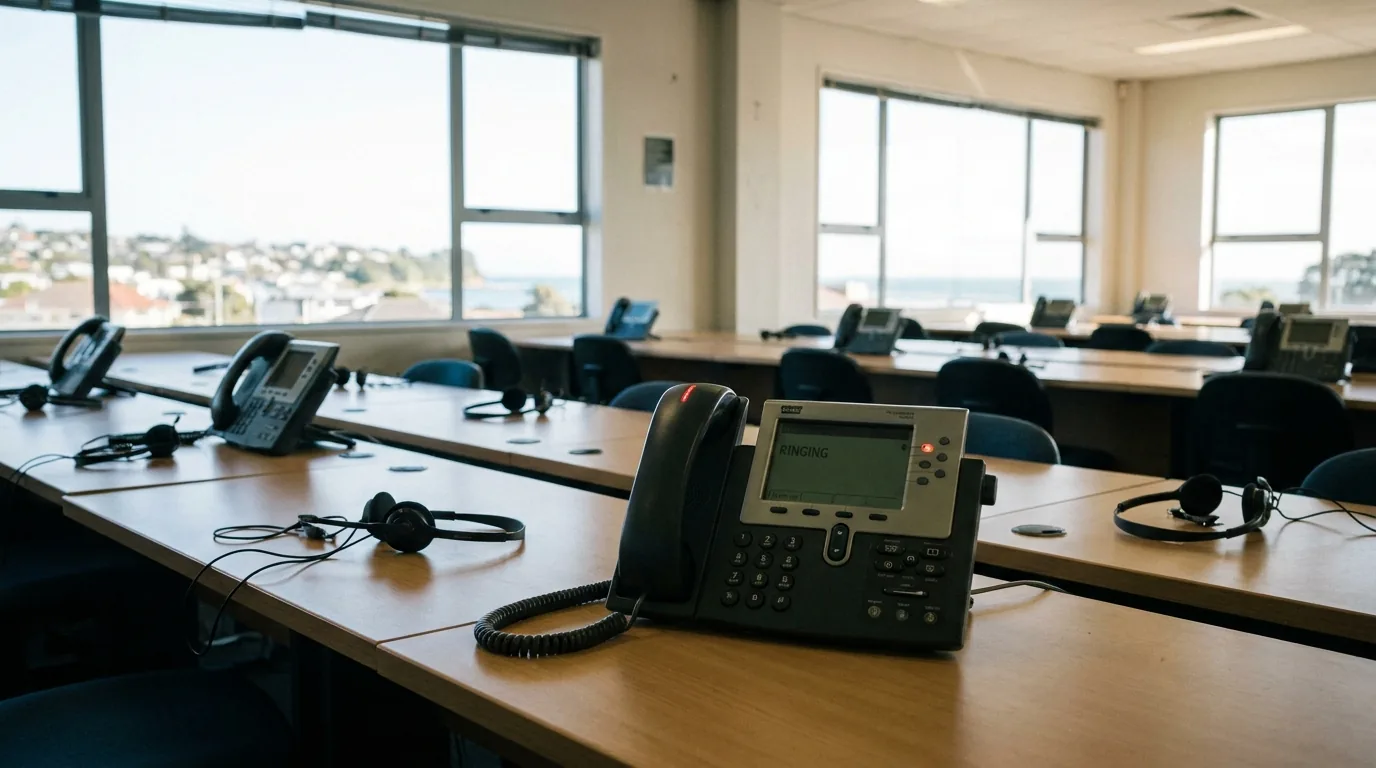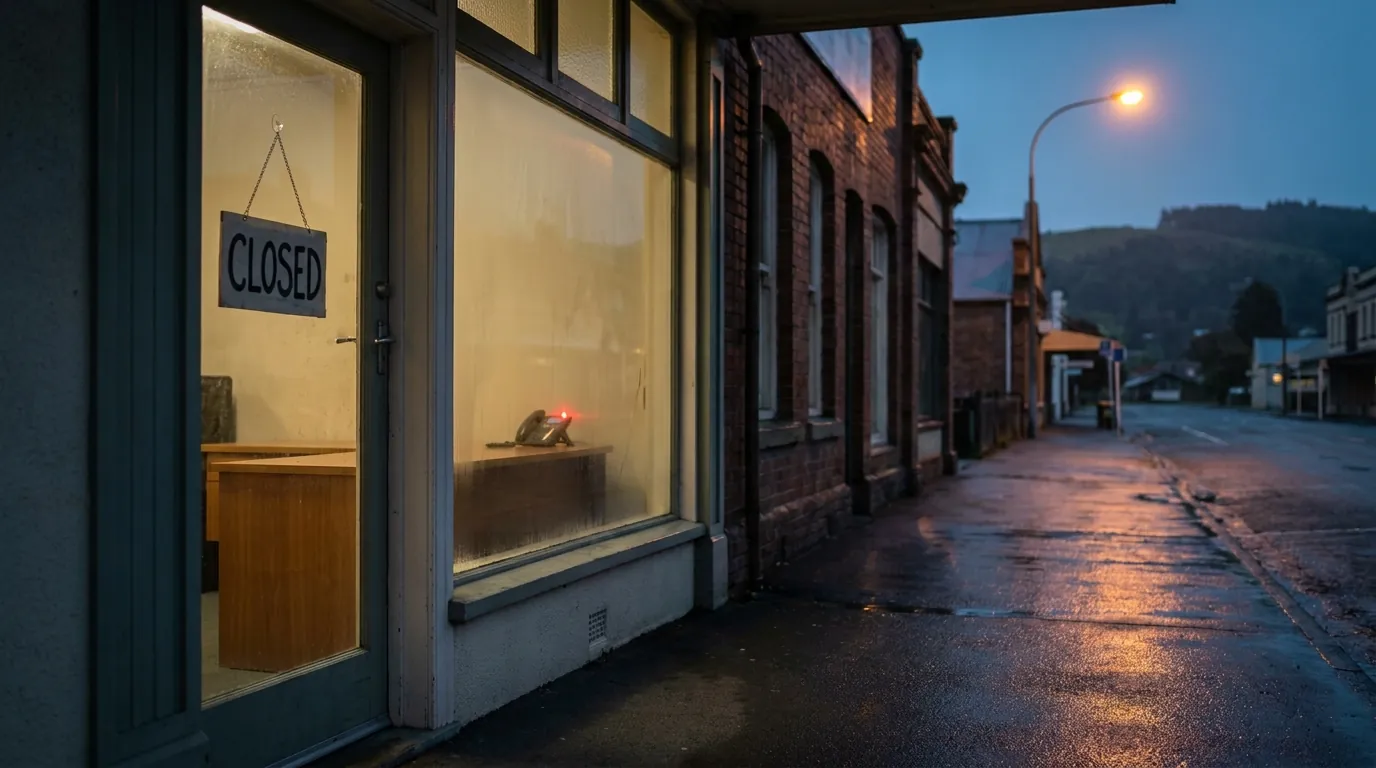
Most NZ SME phone systems were built for a 9-to-5 world. The customer's world isn't 9-to-5. Roughly one in four inbound calls to a typical NZ business arrives outside business hours, and a further share lands on weekends and public holidays. If your phone rolls to voicemail at 5pm, that's a quarter of your inbound demand walking to the next listing on Google.
This pillar covers what an after-hours receptionist actually does, and the two models for delivering it, human or AI. Then what each costs, when to use which, and a live ROI calculator for your call volume.
What an after-hours receptionist does
Five core jobs:
1. Answers inbound calls outside business hours. Same speed as in-hours, no voicemail bounce.
2. Captures the message + caller details. Pushes to your CRM or inbox before 9am the next day.
3. Books appointments directly. Real-time calendar sync, not a "we'll call you back" handoff.
4. Triages urgent calls. Detects emergency keywords (gas leak, burst pipe, after-hours medical, lockout) and warm-transfers to your on-call.
5. Handles overflow and weekend volume. Picks up when in-house lines are saturated or closed.
A good after-hours receptionist replaces the voicemail bounce with a real conversation. A great one books the appointment without you ever knowing the call happened.
How much after-hours traffic do you get?
Most NZ SMEs underestimate their after-hours volume. A reasonable starting estimate, based on call-pattern data from 30 NZ deployments in our 2026 State of NZ AI Voice report:
| Sector | After-hours share of inbound | Weekend share |
|---|---|---|
| Trades (electrician, plumber, HVAC) | 35% | 18% |
| Healthcare + vets | 22% | 9% |
| Hospitality | 41% | 33% |
| Property management | 28% | 12% |
| Real estate sales | 31% | 22% |
| Mortgage broking | 19% | 7% |
| Accounting + law | 14% | 4% |
If you're a tradie, plan for 35% of demand happening when your office is dark. If you're a hotel, plan for 41%. If you're an accountant, the number is closer to 14%. But the calls you do get after hours are usually high-value: existing clients, urgent IRD issues.
We covered the timing data in detail in our 50,000-call timing heatmap.
Two delivery models: human vs AI
Human after-hours receptionist (CallCare, ReceptionHQ, Office HQ, Anytime Phone Answering NZ, etc.)
How it works: a remote pool of human operators on rostered shifts. You sign a monthly retainer plus per-minute charges. After-hours calls usually attract a 50-100% premium on the per-minute rate. Operators handle 5-12 different businesses each.
Strengths: warmth, judgement, handles complex emotional or escalation calls well.
Weaknesses: roster gaps, and Christmas Day at 3am is genuinely unstaffed on most plans. Inconsistent voice, because it is whoever is rostered. A monthly retainer regardless of volume, an after-hours surcharge, and slower onboarding at 2 to 4 weeks.
AI after-hours receptionist (Waboom, ReceptionHQ AI, others)
How it works: an AI voice agent runs 24/7 with no roster. Same response time at 3am as at 3pm. You pay per minute used, no retainer.
Strengths: zero roster gaps, same voice every call, follows your script verbatim, integrates natively into your calendar and CRM, no after-hours premium.
Weaknesses: limited judgement on truly novel calls, which the agent transfers to your on-call human. It requires upfront script training. And 2026 voice tech does not yet handle very heavy noise environments perfectly.
What it costs in NZ in 2026
Realistic NZ market pricing, May 2026:
| Item | Human service | AI service |
|---|---|---|
| Monthly retainer | $300 to $800 | $0 |
| Per-minute (in-hours) | $1.50 to $3.00 | $0.80 |
| Per-minute (after-hours) | +50% to +100% | $0.80 |
| Public holiday surcharge | Often +100% | $0 |
| Onboarding | 2 to 4 weeks, often a fee | 24 to 48 hours, no fee |
| Contract length | 12 months common | None, cancel anytime |
For a NZ business getting 100 after-hours calls a month at an average 60-second handle time:
The AI model is roughly 90% cheaper at this volume. The crossover where a human service becomes cheaper is essentially never on after-hours-only volume. humans need the in-hours volume to cover the retainer.
Run your numbers
We built a calculator that takes your business hours and inbound call estimate and returns:
Run your after-hours cost calc
Plug in your business hours and average call volume. Get monthly cost, lost-revenue exposure, and payback period in 30 seconds.
Open the calculatorWhen to use which
Three short rules:
Use a human after-hours service if: more than 30% of your after-hours calls are genuine emergencies needing warm escalation. Or your brand voice depends on one specific person's tone. Or your callers are emotionally fragile, so grief, mental health, crisis. Pay the premium.
Use an AI after-hours service if: most after-hours calls are routine (bookings, enquiries, missed-call recovery, basic triage). Which is most NZ SMEs.
Use both, the overflow model. Keep your in-house line open during business hours. Route after-hours and overflow to AI, and route detected emergencies to a human on-call. Best ROI for most operators.
How to deploy in 7 days
1. Day 1-2: pick your provider, share your business hours and target script.
2. Day 2-3: 30-minute discovery call to map call types and integrations.
3. Day 3-5: agent build, voice selection (NZ accent), and CRM connection.
4. Day 5-6: parallel test (forward only after-hours calls, leave in-hours alone).
5. Day 6-7: review first batch of recordings, adjust script.
6. Day 7+: switch to full after-hours coverage.
Frequently asked questions
Can I run AI on weekends only?
Yes. Configure your phone system to route to the AI service only outside your defined business hours and on weekends. In-hours calls stay with your team.
What happens on a true emergency call?
The agent is trained on emergency keywords (gas leak, water leak, fire alarm, after-hours medical, lockout). It captures the address and severity, then warm-transfers to your on-call number with the call context attached.
Will the AI know my prices?
Only the prices you train it on. We typically train standard service rates and quote ranges; complex quotes are flagged for human follow-up the next morning.
Is it Privacy Act compliant?
Yes. Recording disclosure at call start. NZ Privacy Act 2020 (including IPP 3A from 1 May 2026) and Australian Privacy Principles compliant. We covered the IPP-by-IPP detail in our compliance guide.
Ready to stop bouncing after-hours calls to voicemail?
Live in 24 to 48 hours. Native Kiwi voice. Per-call pricing, no retainer. 30-day trial available.
After-hours calculator · AI answering service · AI virtual receptionist · Talk to us
See how the NZ AI receptionist answers every call with a Kiwi accent.
Leonardo Garcia-Curtis
Founder & CEO at Waboom AI. Building voice AI agents that convert.
Ready to Build Your AI Voice Agent?
Let's discuss how Waboom AI can help automate your customer conversations.
Book a Free Demo