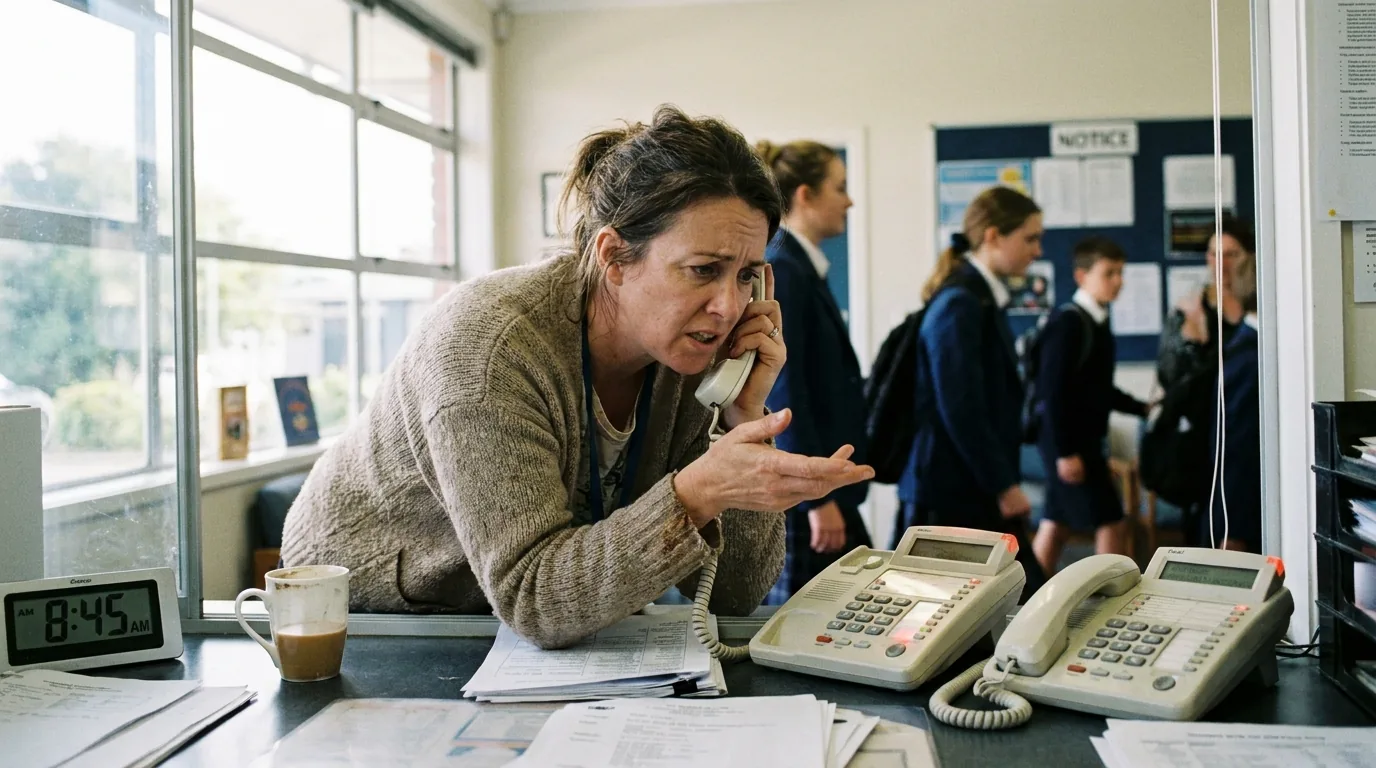
At 8am on a Monday, every medical clinic phone line in New Zealand turns into a radio competition. Caller 14 gets the appointment; caller 40 gets the engaged tone and a sick day spent redialling. An AI receptionist for medical clinics exists to end exactly that ritual. It runs on the same AI receptionist for business that answers every patient call and books appointments around the clock.
The Scramble
Why can nobody get through to a medical clinic at 8am?
Because demand has outgrown the phone line, and the phone line has not changed since 2009. One third of New Zealanders now wait more than two weeks to see a GP. The RNZCGP workforce data projects a shortage of 300 GPs within a decade, with 70% of GPs reporting moderate to high burnout.
Your reception team sits in the middle of that squeeze. They spend the morning apologising for a booking system, then the afternoon returning voicemails from people who gave up.
Me: "Surely the phones calm down by 10." Anyone who has actually sat at a clinic front desk: "They do not."
The 8am scramble is a queueing problem, and queueing problems are solvable. A voice agent answers every one of your callers at once, in under a second, with no engaged tone. The same pattern that kills spike-load queues in other businesses applies to your clinic's mornings.
The Workload
What does an AI receptionist for medical clinics actually handle?
The routine majority of your inbound calls. Bookings, reschedules, cancellations, and the questions your team answers 40 times a day. The agent works from your clinic's own rules: which appointment types exist, how long each runs, which doctor takes new patients.
The repeat work it takes off your front desk:
Every one of those ends with the loop closed, so the patient does not redial at 8:01 tomorrow. That is the deflection logic from our piece on reducing inbound call volume, applied to the busiest phone in town.
The Line It Does Not Cross
What about urgent calls?
They go straight to a human, every time. The agent never gives clinical advice, never triages symptoms on its own judgement, and never stands between a frightened caller and your nurse. Chest pain, breathing trouble, or any urgent keyword triggers an instant transfer, or tells the caller to hang up and ring 111. Your clinic defines those rules, word for word.
We treat that boundary as an engineering problem, with testing to match. Before any agent goes live we war-test it against the conversations you hope never happen, and humans stay in the loop for everything that matters.
(Worth saying plainly: if a vendor tells you their phone AI can safely triage symptoms, walk away. That is not what this technology is for.)
Want to hear it handle a clinic call?
A 15 minute demo on your own appointment types shows exactly where the agent helps and where it hands off. Medical builds go live in hours.
The Privacy Question
Is patient information safe?
Health information carries the strictest privacy rules in New Zealand, and your clinic stays accountable for it no matter who answers the phone. So here is the plain English version of how we handle it. Every call opens with AI disclosure. Calls are encrypted, transcripts and structured call data sit in our Sydney environment, and you can delete a caller's data on request in minutes.
The agent collects only what the call needs: name, contact details, appointment preference, and the message for your clinical team. No diagnosis notes, no records access it does not need, no data sold or reused. The full legal detail lives in our NZ Privacy Act 2020 guide for AI voice agents, written for humans rather than lawyers.
The Money
What does it cost compared to reception staff?
A fraction of a salary, because you pay per minute of conversation rather than per hour of availability. The agent is not there to replace your receptionists; it is there to stop them being a call centre. The humans keep the front desk, the complex calls, and the patients standing in front of them.
We have not published clinic-specific results yet, so we will not invent a percentage for you. The nearest published number we have: a Hamilton home care agency was losing an estimated $641,000 a year to after-hours calls that rang out. Healthcare phones leak money quietly; the full AI receptionist cost breakdown shows the per-minute maths.
The Timeline
How fast can a clinic go live?
A focused build, answering calls and capturing bookings against your appointment rules, goes live the same day. Connecting your practice management system so the agent writes appointments directly into your calendar takes days, depending on the system.
Start with after-hours if you want the lowest-risk first step. The agent picks up everything your voicemail currently swallows, and your team reviews the results each morning. The after-hours receptionist guide covers that pattern end to end.

Ready to retire the 8am scramble?
We will build the agent on your real appointment types, war-test the urgent-call handling, and put your front desk back on front desk work.
Frequently Asked Questions
Can an AI receptionist book medical appointments directly into our system?
Yes. A same-day build captures bookings and sends them to your team with SMS confirmation to the patient. A connected build writes appointments straight into your practice management system, which adds days to setup depending on the system you run.
Does the AI give medical advice?
No, and it is built so it cannot. The agent handles administration only. Bookings, messages, and instructions your clinic has approved. Any symptom discussion routes the caller to your team or to 111, following the escalation script your clinic signs off.
What happens when a caller is having an emergency?
The agent recognises urgent language and acts on your clinic's escalation rules immediately. That means an instant warm transfer to your team during hours, or a clear instruction to hang up and call 111. We war-test these paths before the agent takes a single live call.
Is patient information safe with an AI receptionist?
Every call is encrypted and opens with AI disclosure. Transcripts and structured call data sit in our Sydney environment. The agent collects only what the call requires, and you can delete a caller's data on request in minutes. Our NZ Privacy Act guide covers the detail in plain English.
Can it handle repeat prescription requests?
Yes. The agent captures the patient's details, the medication, and the pharmacy, then routes the request to your clinical inbox for sign-off. Your prescribing process stays exactly as it is; the phone queue in front of it disappears.
What does an AI receptionist cost for a medical clinic?
You pay per minute of conversation, so a quiet day costs almost nothing and the 8am rush costs a few dollars. Compare that with reception time spent on hold management, and with the appointments lost when callers give up. The full cost breakdown post runs the numbers.
For current numbers, see Waboom's AI voice agent pricing page.
Leonardo Garcia-Curtis
Founder & CEO at Waboom AI. Building voice AI agents that convert.
Ready to Build Your AI Voice Agent?
Let's discuss how Waboom AI can help automate your customer conversations.
Book a Free Demo