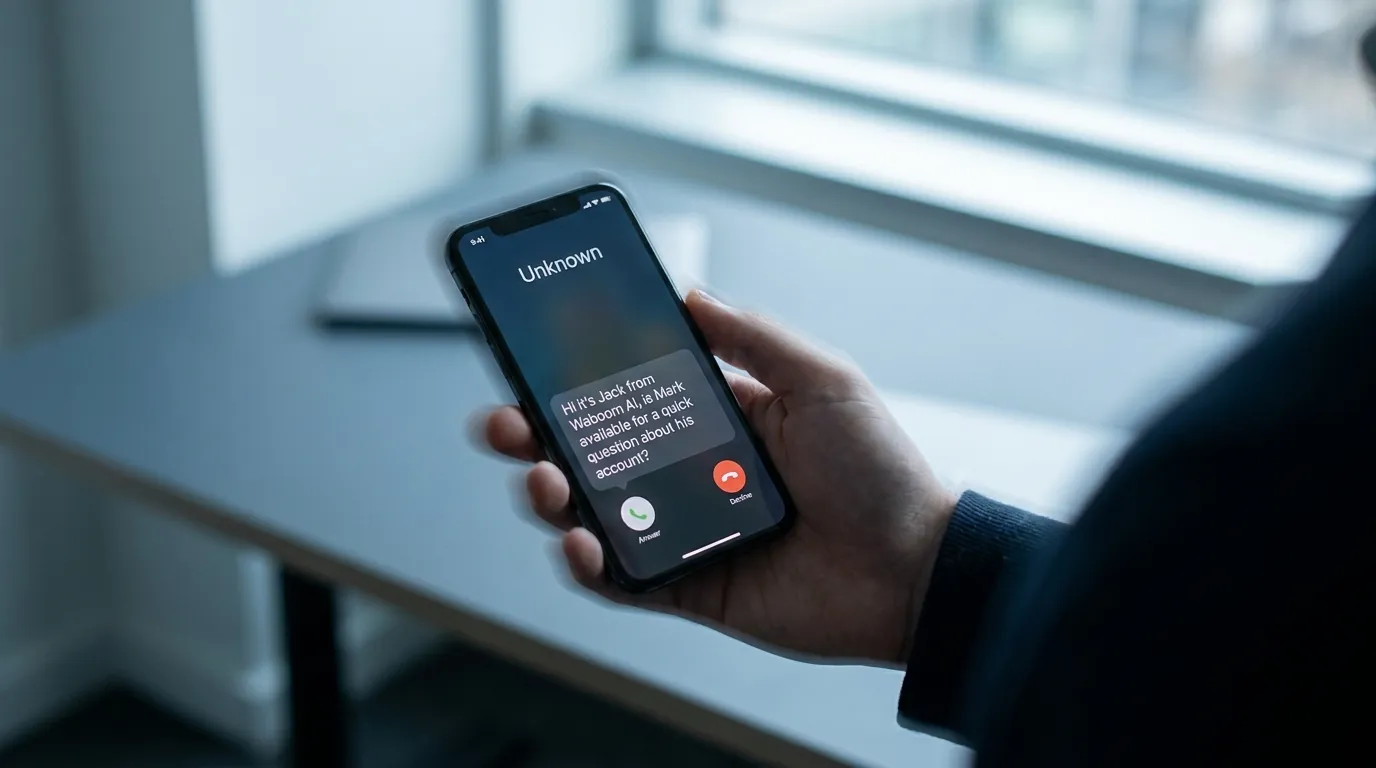
What does voice AI at scale actually look like in the US?
Not pilots. Production systems with revenue attached, published by name. Here is what your US counterparts already run.
Start with hotels. PolyAI's Golden Nugget case study covers the casino group's reservations line. The voice assistant handles 34 percent of all calls to it, fully automating 87 percent of those.
It averages more than 300 completed bookings a week. One hotel took 3,000 reservations worth US$600,000 through the agent in a single month.
Now cars, probably closer to your world. Toma published a case study with Martin Management Group, a 16 dealership US group. First 90 days: 22,000 calls automated, more than 9,000 service appointments booked, over US$2 million in service revenue. Booking-desk workload fell 40 percent.
Then healthcare, the hardest test. Universal Health Services runs 29 US acute care hospitals. It deployed Hippocratic AI agents to ring patients after discharge, check symptoms and flag concerns to staff.
Patients rate the calls 9 out of 10. It started at two hospitals, with the wider network as the rollout target.
Every one of those is a vendor-published number, so hold them the way you would any reference from a salesperson. But they are named, specific and checkable, which puts them a class above the usual AI hype.
What is the investment money saying?
That this category graduated while you were watching chatbots.
Decagon is the AI agent company behind Hunter Douglas's customer service. It raised US$250 million in January 2026 at a US$4.5 billion valuation. That valuation tripled in six months, after more than 100 new enterprise customers signed in 2025.
The Hunter Douglas deployment shows why the money moved. Decagon reports US$1 million in revenue from conversations fully handled by AI. Customers who talked to the agent spent 85 percent more per order than those who did not.
Investors are not funding demos anymore. They are funding reported revenue.
How fast is voice AI growing on our shores?
Faster than the quiet news cycle suggests, and you can already hear it on local lines.
Australia has its first named full-voice deployment. Decagon's case study records that Blinds Online moved to a complete voice deployment, served by an Australian persona called Buddy, local accent included.
The global vendors are setting up here too, opening Sydney offices and naming locals like Australia Post and Xero as customers. When the national postal service is on a voice AI customer list, the shift has made landfall.
And New Zealand phones are already talking. We run voice agents for NZ and AU businesses every day, with the numbers published call by call in our case studies.
This is not a wave that is coming. You can ring one this afternoon.
What about hospitals, government and strict data rules?
This is where the local story got interesting this year, and where your compliance team comes back into the room.
Westpac NZ became the first bank in the country to run Microsoft's AI contact centre platform. Its AI supports the human team rather than answering calls. But the signal is loud: when a New Zealand bank chooses an AI phone stack, it chooses Microsoft's cloud.
We built to that same standard. Alongside our main platform, Waboom now runs a data-sovereign voice engine on Microsoft Azure in Sydney. Speech is processed in Sydney, conversation data is stored in Australia, and the language model runs inside Microsoft's Asia-Pacific region.
That engine exists for the buyers with the tightest rules: hospitals, government suppliers, and anyone whose contracts restrict where call data can travel. If your data policy was the reason you waited, the reason just moved.
How do you catch the wave without the risk?
Adopt the proven patterns, and keep the guardrails local.
The playbook is already written, and your version of each play is mapped. Phone reservations with payment on the call: we covered the NZ version in deposits on the call. Dealership service booking: our dealership piece maps it. Post-discharge calling: the NZ clinic version is live territory.
The overseas early adopters paid for that map. You get it free, with local compliance already built in.
And an SMB moves faster than a bank. Westpac's rollout takes a year across its contact centres. A Queenstown lodge or a Hamilton dealer group can be live in weeks.
Where should you start?
Pick one call type and make it excellent before your competitors pick any.
The US playbook says start where volume is high and the conversation is structured: reservations, service bookings, follow up calls. Measure from day one, the way we set out in cost per booked outcome. Then your decision to expand is arithmetic rather than faith.
And keep your scepticism. Independent benchmarking published in 2026 found voice agents retain only 30 to 45 percent of their text counterparts' capability. Most failures come from agent behaviour, not audio.
The wave is real and so are the rocks. The businesses that win will be the ones that test before they trust, which is how we build anyway.
Frequently Asked Questions
Is this just another hype cycle?
The difference is receipts. Hype cycles run on projections; the deployments above publish reservation counts, revenue figures and patient ratings with names attached. Vendor-published, yes, and worth your scrutiny. But projections and receipts are different animals.
Can voice AI really keep data in New Zealand and Australia?
Two tiers, honestly labelled. Our standard build stores transcripts, tags and structured call data in Sydney, with live audio processed offshore. Our Microsoft based Sydney engine goes further for restricted-data deployments: speech processed in Sydney, data stored in Australia, model inside Microsoft's Asia-Pacific region. Your contracts pick the tier.
Does the US playbook translate directly?
The call patterns translate. The compliance does not, and that is where local builds earn their keep. NZ privacy law, Australian calling-hour rules and disclosure settings all differ from the US defaults. We build to the local rulebook first.
Who is the sovereign option actually for?
Hospitals and health providers, government suppliers, financial services, and any business whose contracts name where call data can live. It costs a flat Sydney hosting fee per agent on top of the usual per-minute rate. For everyone else, the standard build with its honest Sydney-plus-offshore split is the right value. See the Office of the Privacy Commissioner and the OAIC for the frameworks that apply.
See this service for the full detail.
Leonardo Garcia-Curtis
Founder & CEO at Waboom AI. Building voice AI agents that convert.
Ready to Build Your AI Voice Agent?
Let's discuss how Waboom AI can help automate your customer conversations.
Book a Free Demo