On 27 April 2026, Microsoft added live voice agents to Microsoft Copilot Studio, generally available in North America and plumbed into Dynamics 365 Contact Center first, with Microsoft Teams Phone and the rest of the Copilot channels next on the roadmap.
This is a big deal. Not because Microsoft invented anything new on 27 April. Because Microsoft already runs Copilot Studio agents inside 80% of the Fortune 500, and they just put live voice on the same shelf as text and chat.
Here is the honest read. Praise where it is due. Gaps where they are real.
The Launch
What Microsoft actually shipped
The headline product is a new "premium mode" inside Copilot Studio. Microsoft's branding for it: live voice. The pitch is low-latency, interruptible, speech-to-speech conversations. Reasoning happens on the line, not in a queue behind it.
It ships with five external B2C templates: billing and payments, order and reservation support, eligibility and verification, appointment scheduling, and account and membership management. Sensible starting points, but not finished agents.
It is generally available in North America today through Dynamics 365 Contact Center, with Microsoft Teams Phone and the rest of the Copilot Studio channels flagged as next.
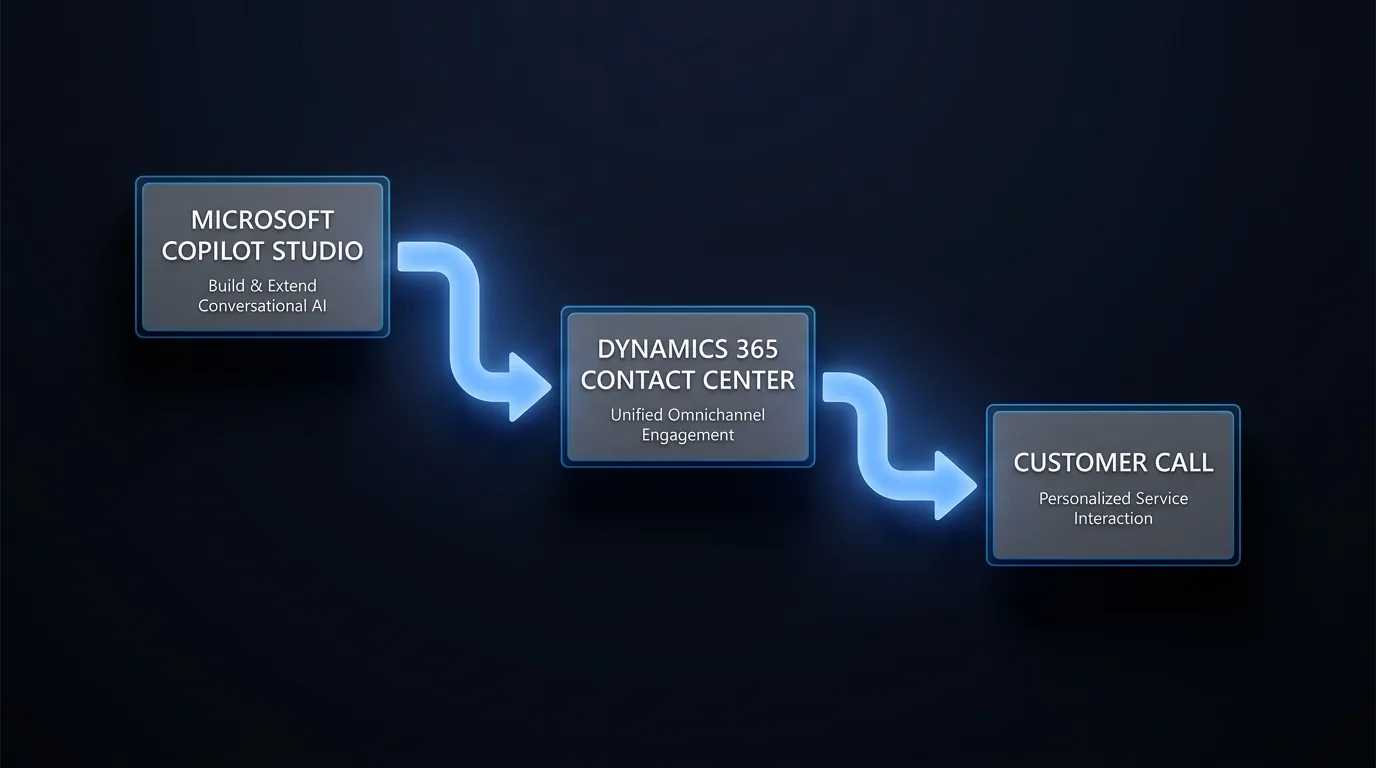
The launch path: Copilot Studio agent, Dynamics 365 Contact Center, customer on the line. Teams Phone is next.
Under the hood, the claim is solid. The agent moves from intent to action to confirmation inside a single turn, holds context across an escalation to a human, and pulls or updates data mid-conversation. That is the right design, and it is also the design every serious voice agent platform has been shipping for the last 18 months.
Validation
Why this is good news for everyone in the category
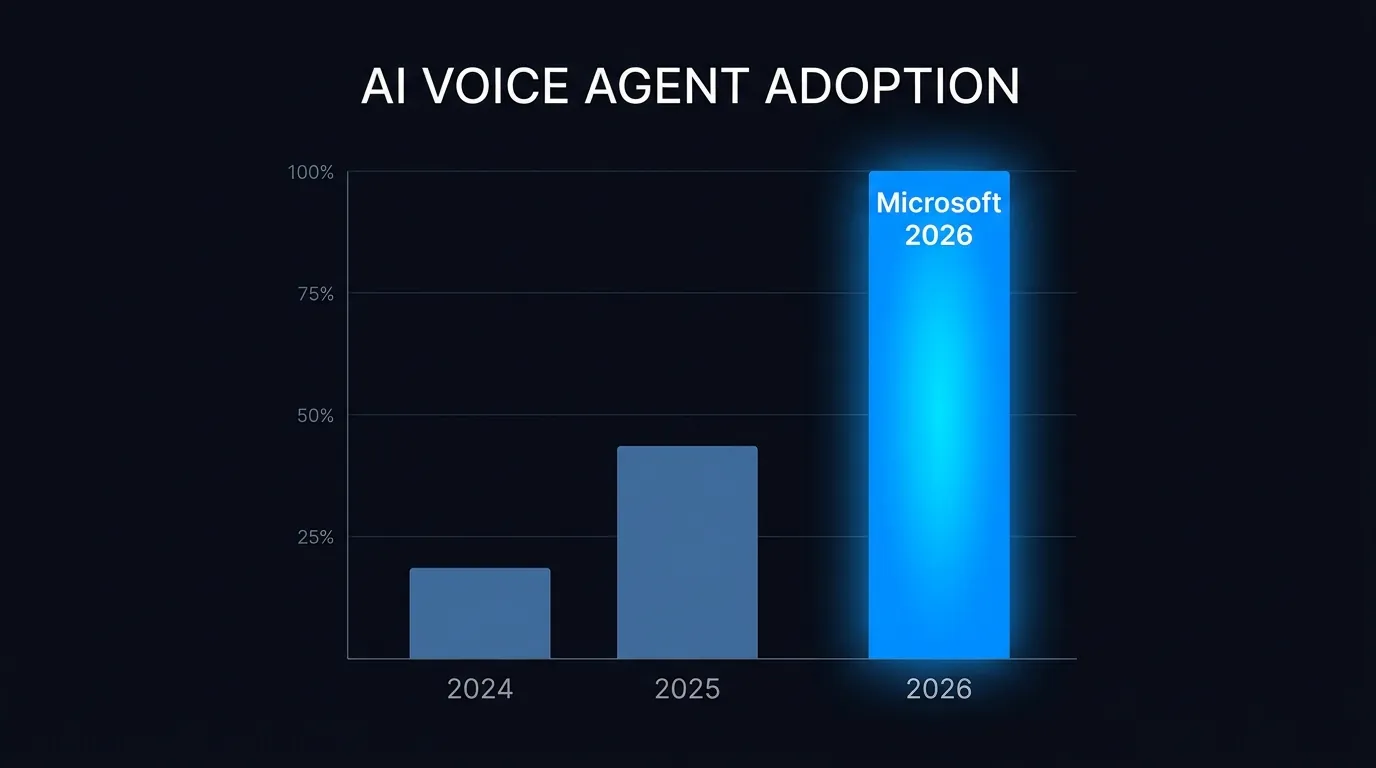
The 2024 to 2026 curve, with Microsoft entering at the top. The category just got its enterprise sign-off.
Two years ago, voice agents were a thing you had to defend in a board meeting. People asked if it was a scam, if the calls would sound like Stephen Hawking, if their customers would walk. We spent a lot of meetings answering those questions.
When Microsoft puts a feature in front of the Fortune 500 and calls it premium mode, the conversation changes. Operations directors stop asking whether voice agents are real and start asking which one to pick.
That is good for everyone delivering this work properly. The procurement door swings open. Compliance teams start saying yes. Customers stop being surprised when an AI agent answers the phone, and start judging it on whether the conversation actually went anywhere.
The bar just moved from "does this work" to "is this any good". The operators who care about quality win. We are happy about that.
Stack Fit
Where Copilot Studio voice fits beautifully
Already living inside Microsoft 365, Dynamics, Azure AD and the rest of the Microsoft estate? This is a strong card to hold.
The data plane stays where your auditors already trust it, Conditional Access already governs who can configure what, and the audit trail flows into the same Sentinel and Purview tooling your security team is already paying for.
For a regulated industry inside that footprint (think a large insurer, a hospital network, or a government agency), keeping voice agent traffic, transcripts and tooling inside the Microsoft tenancy is genuinely valuable. Procurement does not need a new vendor risk assessment, legal does not need a new data processing agreement, and your NZ Privacy Act posture stays inside one perimeter.

Inside the Microsoft tenancy: governance, identity and audit are already plumbed in. That is the real reason to pick it.
If you know what you are doing inside Microsoft, this saves weeks of compliance work versus bringing in an external voice stack. Take it seriously.
The Templates
The template problem

Stock template on the left. Tuned, regional, conversational on the right. Same model under the hood. Very different call.
Here is the honest bit. The templates Microsoft shipped sound robotic: stiff openings, generic phrasing, and the kind of script you would expect from a vendor demo rather than a real conversation a customer wants to have.
That is fine if your enterprise IT team is prepared to do two months of work. Tuning prompts, picking voices, A/B testing greetings, training the agent against real call recordings, and pruning the dead branches.
That is the work. The templates are the door, not the room.
The risk is that most teams do not do that work. They paint over the template, ship the agent, then wonder why the call abandonment rate is 40%. We have seen it on every voice platform that ships templates, and Microsoft is not unique here. They just have the largest install base, and the ceiling on bad implementations is going to be high.
A template is not an agent. It is a placeholder. The agent is what you do to it after.
Localisation
The accent and localisation gap
This is the bit that matters most for our patch. The launch is North America first, and the voices in the templates are North American. There is no New Zealand voice option in the documentation, no Australian voice, no "G'day mate", no "kia ora", and no "how are you going" instead of "how are you doing".
That is not a small detail when your customer is a Bay of Plenty kiwifruit grower or a Brisbane mortgage broker. The first three seconds of a phone call decide whether they stay on the line, and a generic American voice answering an outbound call to a Sydney landlord triggers the spam-call instinct before the agent finishes its opening line.
We hear it on every campaign. The accent has to land or the connect rate collapses. We have run NZ, AU, UK and US voices on identical scripts to identical lists, and accent alone moves talk-time by 30% to 40%. Pick the right one from our voice library before the campaign goes live, not after.

First three seconds of the call. If the voice does not sound local, the caller is already gone.
Microsoft will close this gap eventually. NZ and Australian voices already sit in the catalogues they are plugging into. The real question is whether the in-product templates and recommended voices catch up before your buying decision gets made.
For a contact centre in Auckland or Adelaide rolling out voice agents this quarter, the localisation work is not optional. It is the entire job.
Craft
Where craft still wins

Voice agent quality is craft work. The platform gives you the workbench. Someone still has to use the tools.
A platform launch does not change what makes a voice agent good. Five things still decide whether the call lands.
Voice selection. Local, warm, brand-appropriate, vetted on a hundred sample calls before the campaign goes live. Not the default option in the dropdown.
First-line phrasing. The opening sentence is the entire fight. We rewrite ours weekly based on the calls that hung up at hello.
Real CRM and dialler integration. Smart number rotation, branded caller ID, Spam Likely defence, live CRM writes. Without that, even the best agent is calling from a number the recipient screens.
Objection handling tuned to the actual market. A New Zealand mortgage broker hears different objections to a US insurer, and the flow has to know the territory.
Daily review of the call recordings. By a human, tagging the dropouts, updating the prompt, and retesting. Every week, the agent gets sharper.
That is the work. It just got harder, because the bar of acceptable production quality went up the moment Microsoft entered the room.
The Take
The take
- →Validation. The category just crossed into enterprise default. Procurement and compliance got easier for everyone.
- →Stack fit matters. If you live in Microsoft 365 and Dynamics, this is the stack to evaluate first. The compliance plumbing is real value.
- →The work has not changed. Templates are not agents. Localisation, voice selection, dialler hygiene and weekly call review are still where the result lives.
We are not the right fit for an enterprise that wants the entire voice surface inside the Microsoft tenancy with their own team running it. Microsoft is. Take a serious look.
We are the right fit if you are a New Zealand or Australian operator. The agent has to sound like it lives down the road, has been trained on your actual call recordings, and is plugged into Pipedrive, HubSpot or your own CRM, answering a Bay of Plenty grower at 7am the same way it answers a Brisbane investor at 10pm.
That is the gap. That is what we do.
Want a voice agent that sounds like it belongs in your patch?
We build NZ and Australian voice agents tuned for your callers, your CRM and your industry. Hear one on a real call before you pick a platform.
AI voice agents · Book a demo · State of NZ AI voice 2026 · Microsoft Copilot work
Frequently asked questions
What did Microsoft launch on 27 April 2026?
Microsoft added live voice agents to Copilot Studio as a new premium mode. It is optimised for low-latency, interruptible, speech-to-speech conversations. Generally available in North America through Dynamics 365 Contact Center. Microsoft Teams Phone and additional Copilot Studio channels are flagged as next.
Are Copilot Studio voice agents available in New Zealand or Australia yet?
The launch is North America first. Microsoft has not given a public date for general availability in New Zealand, Australia or the rest of APAC. The voice templates that shipped on launch day are also North American. NZ and AU customers can technically build on the platform via Azure tenancies, but the localised voices, scripts and tuning are not in the box.
How does Copilot Studio voice compare to dedicated voice-agent platforms?
Copilot Studio voice is best when you already live inside Microsoft 365 and Dynamics and want governance, identity and audit handled inside your existing tenancy. Dedicated voice-agent platforms are stronger today on voice catalogue depth, regional accents, latency benchmarks, and integration breadth across non-Microsoft CRMs and diallers. Pick by stack fit and accent need, not by brand.
Why does the accent of a voice agent matter so much?
The first three seconds of a call decide whether the caller stays on the line. A generic American voice on an outbound call to a Sydney or Auckland number sounds wrong, and the spam-call instinct fires before the agent has finished its opening line. We have measured 30% to 40% swings in talk-time on identical scripts when the only variable changed is the accent of the voice. The fuller story sits in our Queenstown US-voice case study and our localised persona teardown.
Should I switch from a dedicated voice-agent platform to Copilot Studio?
Only if your roadmap is to consolidate inside the Microsoft estate. You also need the in-house skill to tune Copilot Studio agents properly. Most NZ and AU operators we work with run Pipedrive or HubSpot, not Dynamics. They care more about local voice and dialler hygiene than tenancy consolidation. For them, switching does not pay back.
Is Microsoft entering voice agents bad news for specialist providers?
No. It is the opposite. Microsoft launching voice into Copilot Studio is the largest validation event the category has had. The buying conversation moves from "is this real" to "which one is best for my call". Specialist providers who do the local tuning, voice selection and dialler work properly now compete on quality. Not on whether the technology exists.
If your team wants hands-on help, see Waboom's AI team training.
Leonardo Garcia-Curtis
Founder & CEO at Waboom AI. Building voice AI agents that convert.
Ready to Build Your AI Voice Agent?
Let's discuss how Waboom AI can help automate your customer conversations.
Book a Free Demo