
Your CRM has 4,000 leads in it. Your reps call maybe 30 a day. The gap between those two numbers is where revenue quietly dies.
An AI voice agent sales funnel fits in three exact places. The top, the middle, and the bottom. Speed-to-lead, qualification, and dormant-database reactivation. Nobody on your team owns the gaps between them, and that is the problem.
We run these deployments across New Zealand and Australia. The pattern is the same in Auckland or Adelaide. The agent does not replace your closers. It feeds them.
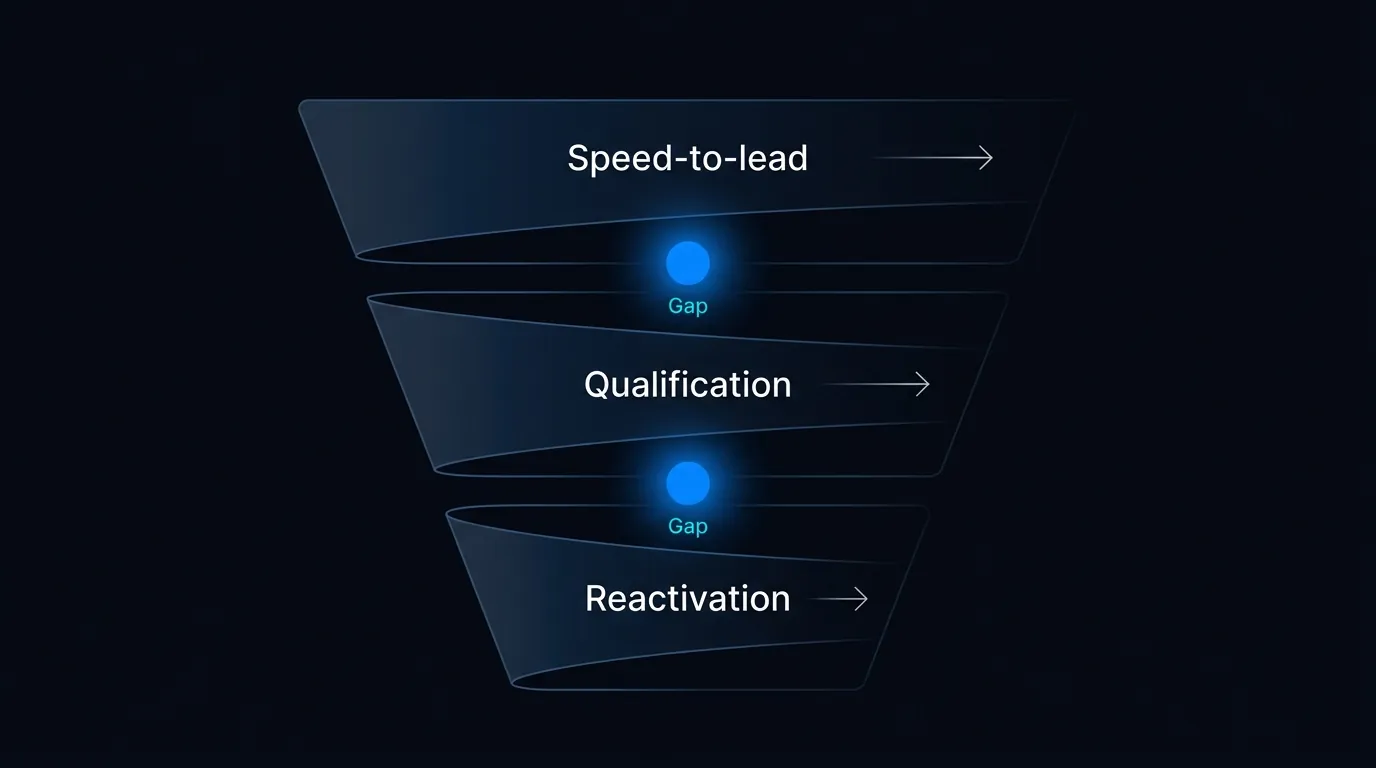
The agent covers the three funnel gaps your reps cannot reach: top, middle, and bottom.
Where does an AI voice agent fit in your sales funnel?
It fits in the three gaps your reps cannot cover. The top needs instant follow-up. The middle needs every lead qualified the same way. The bottom needs old contacts worked again. Humans skip all three because there are not enough hours in the day.
Think about a normal Tuesday. A form fills at 9:14am. Your rep is on another call.
By the time she rings back at 11:40, the buyer has talked to two competitors. The lead was never bad. The timing was.
The agent closes those gaps. It rings in seconds, asks the same questions every time, and never gets tired at lead 200. Your reps then spend their hours on people who are ready to buy.
For the bigger picture and local pricing, see our AI sales agent hub. The fit changes by funnel stage, not by industry.
How does it win the speed-to-lead race at the top?
It calls the lead inside seconds of the form submitting, not hours. Speed is the whole game at the top of the funnel. The first business to reach a fresh lead wins most of the time, and the agent is always first.
A 200-dial campaign costs about $100 NZD. Each answered call runs about 30 seconds, near 40 cents. Connect rate sits between 47 and 65 percent, so a real human picks up roughly half the time.
The agent does not wait for a free rep. It fires the moment the form lands. We have watched a Christchurch client book property viewings at $7.12 each by hitting fresh enquiries before anyone else could.
For a deeper look at the top of the funnel, read our guide on hot lead follow-up. The first five minutes decide the next five weeks.
How does it qualify in the middle of the funnel?
It asks the same qualifying questions on every call, then routes the lead by the answers. Consistency is what reps lose under pressure. The agent never forgets to ask budget, timeframe, or decision-maker, so your pipeline data stays clean.
About 20 to 25 percent of dials become a real conversation of a minute or more. Those are the ones worth a rep's time. The rest get tagged and parked without burning a salary.
A one to two minute qualifying call costs roughly $1 to $2. Compare that to a part-time receptionist at $28 to $35 an hour before KiwiSaver or super, ACC, and holiday pay. The maths is not close.
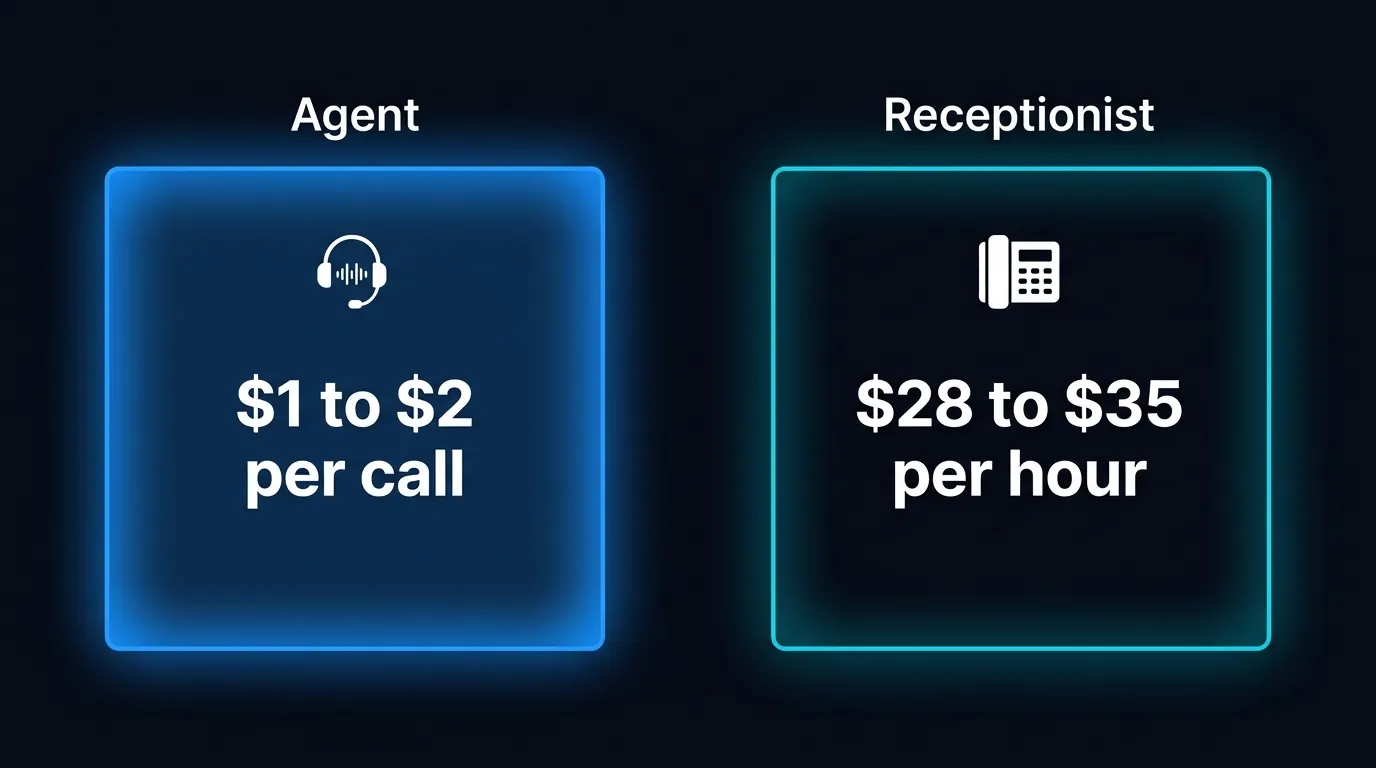
Per-outcome pricing beats per-hour staffing across the middle of the funnel.
The agent writes every answer back to your CRM. No half-filled notes. No "I think they said next quarter". For the full build, see how to implement AI outbound sales calls.
Working one funnel stage at a time?
Map your gaps with us first. See the AI sales agent overview and pick the stage that loses you the most revenue today.
How does it reactivate a dormant database at the bottom?
It works the old list nobody has touched in months and surfaces the few who are ready now. Most CRMs hold thousands of cold contacts. Reps never call them because the hit rate feels low, so the asset just sits there ageing.
The agent does not feel that. It dials the whole list at about 80 cents a minute, billed by the second. A 200-dial pass costs around $100 NZD and finds the handful worth a callback.
A Sydney client pulled 141 vendor leads in 90 days from this exact play. That worked out to $32.74 per seller surfaced. No new ad spend, just a database that was already paid for.
That is the cheapest pipeline you own. For the playbook, read our piece on reactivating dormant leads with AI voice agents and the full Sydney 141-lead story behind the numbers.
What does it cost across the funnel?
About 80 cents per minute in NZD or AUD, billed by the second, with no salary, no super, and no idle time. A short answered call lands near 40 cents. A real one to two minute conversation costs about $1 to $2.
Run the numbers across the whole funnel. A 200-dial reactivation pass is about $100. Top-of-funnel speed-to-lead calls are cents each because most ring out fast.
There is no overtime and no sick leave. The agent works the same at 6pm on a Friday as 9am on a Monday. You pay for talk time, not for a chair.
Set against a part-time receptionist at $28 to $35 an hour before on-costs, the per-outcome price wins. A viewing booked at $7.12. A seller surfaced at $32.74. Those are the numbers that matter.
How does it hand a hot lead to a human rep?
It transfers the live call to your rep with the full context already attached. The moment a lead clears qualification, the agent warm-transfers and passes the notes. Your rep picks up knowing the name, the need, and the timeframe.
No cold "so, what were you after?". The buyer never repeats themselves. That handover is where AI and human stop competing and start stacking.
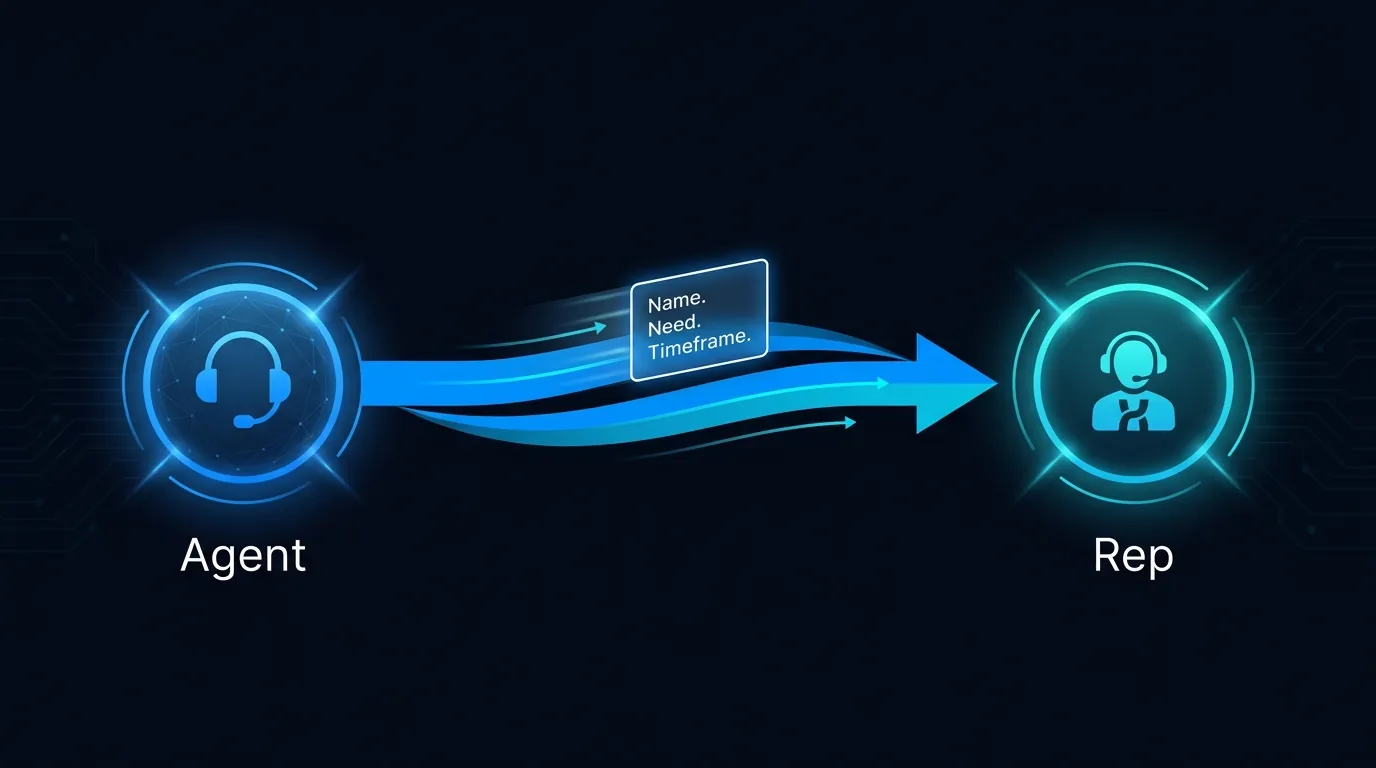
A warm transfer carries the name, the need, and the timeframe straight to your closer.
Every caller is told upfront they are speaking with an AI. We disclose it on every call, in New Zealand and Australia. It builds trust rather than breaking it, and buyers respect the honesty.
For the mechanics, see our guide on agent-to-agent transfer with full context preservation. The handover is the part most teams get wrong.
Where should you start?
Start at the bottom with your dormant database, because it is paid for and the risk is near zero. One reactivation pass tells you the real value sitting in your CRM. Then move up to qualification, then speed-to-lead.
Pick the 1,000 oldest leads nobody has called. Run a 200-dial pass for about $100. Count the conversations and the callbacks, and you will know within a week.
On data, your transcripts and structured records sit on Sydney servers. Live audio is processed offshore under documented arrangements with our voice infrastructure partner. Recordings can be deleted in 10 minutes on request. Outbound work follows the AU Do Not Call Register and Spam Act 2003, the AU Privacy Act 1988 with its 13 Australian Privacy Principles (APPs), and in New Zealand the Privacy Act 2020 overseen by the OPC. You can read the regulators direct at the OAIC and the Office of the Privacy Commissioner.
Want a funnel that feeds your reps, not replaces them?
We build the AI voice agent sales funnel that fits your team. Start with the New Zealand AI sales agent or the Australia AI sales agent page for local pricing.
Frequently Asked Questions
Where in my funnel will an AI voice agent help most?
Usually the bottom first. Your dormant database is already paid for, so a reactivation pass is the lowest-risk way to prove value. A Sydney client surfaced 141 vendor leads in 90 days at $32.74 each. Once that works, layer in middle-funnel qualification and top-of-funnel speed-to-lead.
How fast does the agent call a new lead?
Inside seconds of the form submitting, not hours. Speed is everything at the top of the funnel, and the agent never waits for a free rep. With connect rates between 47 and 65 percent, roughly half your fresh leads answer a human-sounding call while they are still warm.
What does a campaign actually cost?
About 80 cents per minute in NZD or AUD, billed by the second. A 200-dial reactivation pass is around $100. A short answered call is near 40 cents, and a one to two minute qualifying call is about $1 to $2. No salary, no super, no idle time.
Does the agent tell people it is an AI?
Yes, on every call, in both New Zealand and Australia. We disclose it upfront because honesty builds trust. We also follow the AU Do Not Call Register and the NZ outbound rules, and your transcripts sit on Sydney servers with deletion available in 10 minutes.
Can it pass a hot lead to my human rep?
Yes. The moment a lead clears qualification, the agent warm-transfers the live call with the full context attached. Your rep picks up knowing the name, the need, and the timeframe. The buyer never repeats themselves, so the conversation feels seamless.
Will it replace my sales reps?
No. The agent feeds your reps, it does not replace them. It covers the three gaps humans cannot. Speed-to-lead, consistent qualification, and dormant-database work. Your closers then spend their hours on people who are ready to buy.
Leonardo Garcia-Curtis
Founder & CEO at Waboom AI. Building voice AI agents that convert.
Ready to Build Your AI Voice Agent?
Let's discuss how Waboom AI can help automate your customer conversations.
Book a Free Demo

