AI inbound call lead qualification means working out, on the call itself, whether the person ringing is worth your sales time. It captures who they are, what they want, how urgent it is, and where they are. Then it acts on that in seconds, not the next business day.
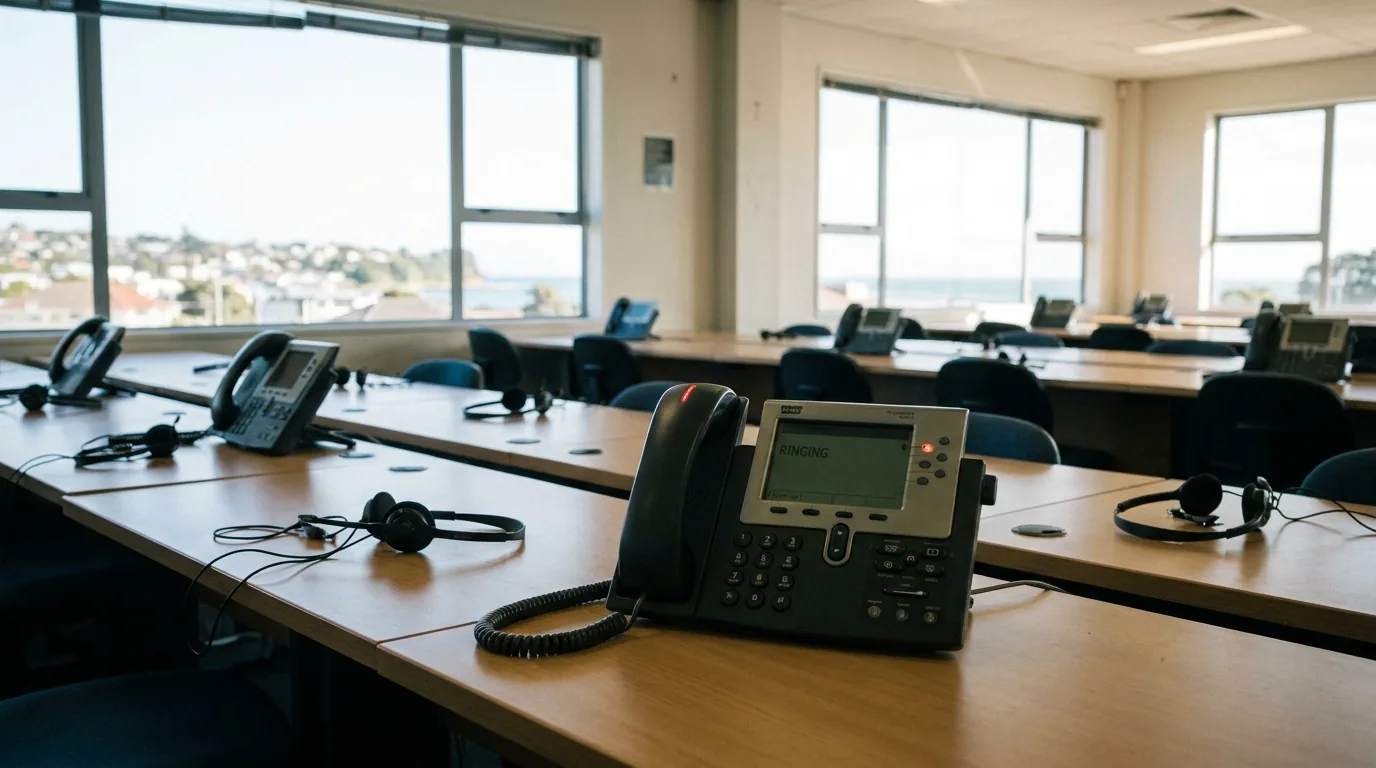
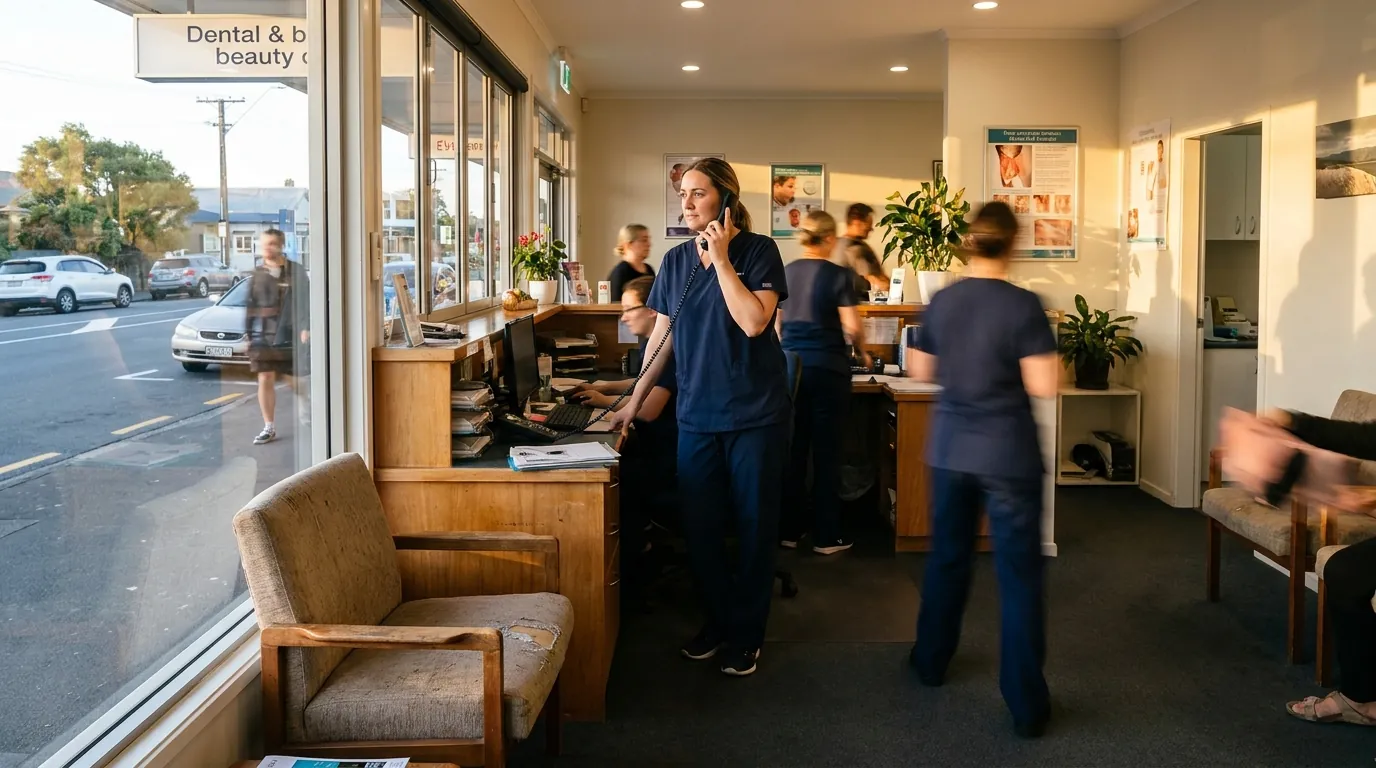
Most enquiries do not die because the offer was wrong. They die in voicemail at 6pm on a Friday. The tradie is up a ladder. The clinic front desk is dressing a wound. The caller hangs up and rings the next name on the list.
We built our inbound answering setup to catch that ring, sort the lead, and route it before the caller loses interest. This is how AI inbound call lead qualification works for a New Zealand or Australian business, and how fast you can get it live.
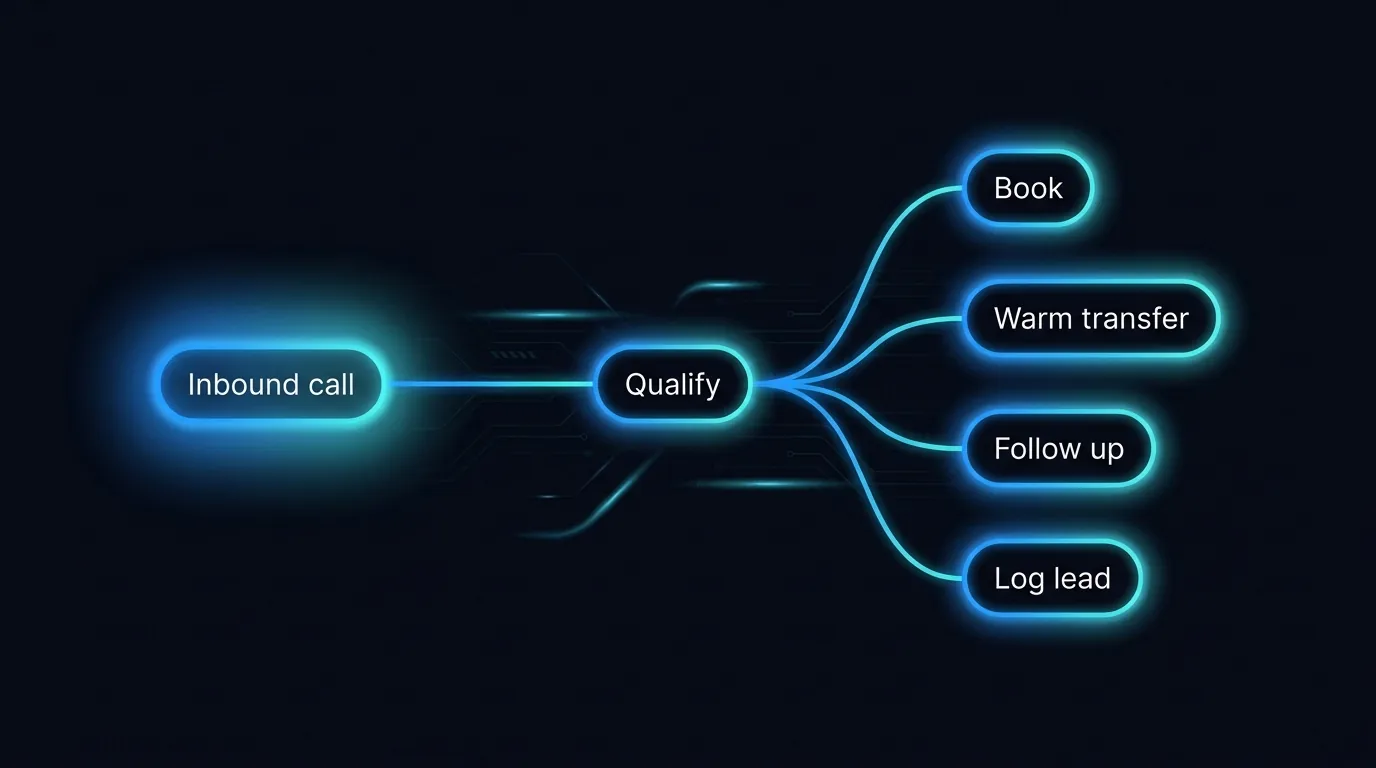
One ring in, four ways out: book it, transfer it, follow up, or log it. Nothing lands in voicemail.
What does it mean to qualify an inbound lead on a call?
Qualifying an inbound lead means deciding, during the call, if the caller is a real prospect worth your team's time. You capture intent, service needed, urgency, and location. Then you grade the lead and decide the next step. A booking, a transfer, or a polite handoff.
The old way was a notepad and a hope. A receptionist scribbles a name and a number between other tasks. Half the detail is missing. The callback happens hours later, if at all.
A good agent asks the same questions every time. It does not get flustered at call number forty. It records the answers as clean data, not a smudged sticky note.
How does an AI receptionist qualify a caller in the first 20 seconds?
It greets the caller, discloses it is an AI, then asks two or three sharp questions that reveal intent fast. What do you need, when do you need it, and where are you based. The agent extracts those answers as structured fields while the conversation flows naturally.
Speed is the whole game here. The average answered call runs about 30 seconds, costing roughly 40 cents at about 80 cents a minute, billed by the second. In that window the agent already knows if this is a hot buyer or a tyre-kicker.
The trick is structured capture. Each answer becomes a variable: service, suburb, urgency, budget signal. We cover the mechanics of pulling clean fields out of speech in our guide on how agents turn speech into clean data.
You are not paying a person 28 to 35 dollars an hour, before KiwiSaver or super, ACC and holiday pay, to ask those same three questions all day. The agent does it on every call, at 2pm and at 2am.
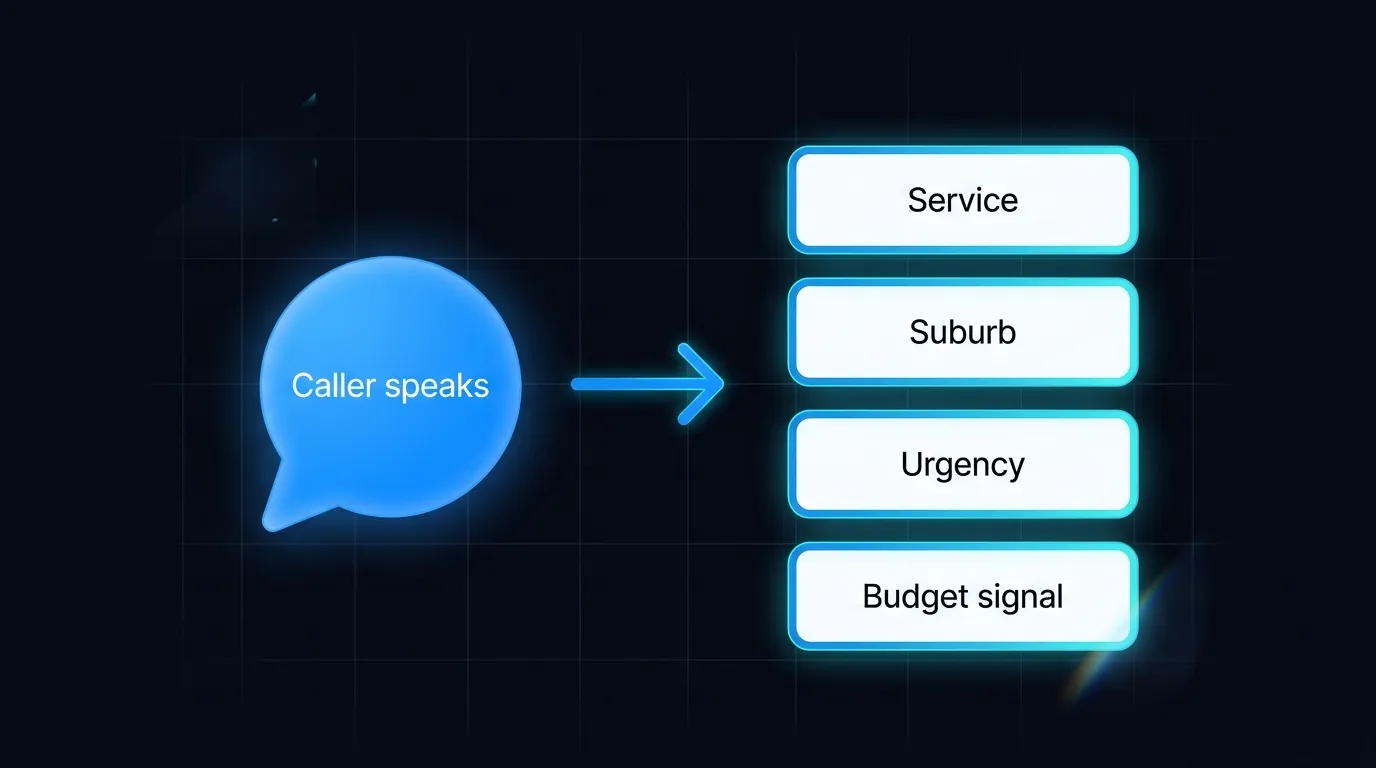
The agent listens, then writes four clean fields instead of one smudged sticky note.
How does it route the call once it knows what the caller needs?
Once the agent has the caller's intent, it picks a path. A plumbing emergency goes one way. A quote request goes another. A wrong-number or supplier call goes a third. The routing logic runs on the data the agent just captured, not on a menu the caller has to navigate.
This is intelligent pathing. The branch is chosen by what the caller said, not by a button they pressed. We break down how that decision tree works in our piece on routing a call on what the caller means.
Routing also covers the handoff. A hot lead can be warm-transferred to a human with the full context attached. The salesperson picks up already knowing the name, the job, and the urgency. No "so what can I help you with" from scratch.
That context carry-over matters more than people expect. We explain how an agent passes the full call history to the next agent or human in our note on handing off a call without losing context.
Stop losing the 6pm Friday job.
See how our always-on inbound answering for New Zealand businesses qualifies and books while you are on the tools.
Can it book the qualified lead straight into the diary?
Yes. Once a caller qualifies, the agent can offer real available times and write the booking straight into your calendar. A one to two minute booking call costs about one to two dollars in airtime. Cheaper than the missed job.
This is where qualification pays for itself. A Christchurch property developer used our agents to book viewings at 7 dollars and 12 cents each. Inbound is warmer than outbound, so booking rates climb higher.
The booking is not a vague "someone will call you back". It is a confirmed time, in your diary, with the caller's details already filled in. We walk through the full booking flow in our guide on writing appointments straight into your calendar.
How fast you book matters. A lead that books in the same call has no time to ring your competitor. The job is locked before the caller hangs up.
What does it do with a lead it cannot qualify?
It captures everything, tags the lead as unqualified or unsure, and routes it for human follow-up rather than dropping it. No enquiry vanishes into a voicemail nobody checks. Every call leaves a clean record with a transcript and the captured fields.
Sometimes the caller is early. They are price-checking, or the job is months away. The agent still logs the details and flags it for a follow-up at the right time. That is a pipeline, not a dead end.
Hot leads that slip through get chased. We tested same-hour follow-up on warm enquiries and the lift was real. Read how we handle that in our piece on chasing a warm lead while it is still warm.
Even a "no" is data. You learn which suburbs, which services, and which price points are calling. That feeds your marketing better than a lost call ever could.
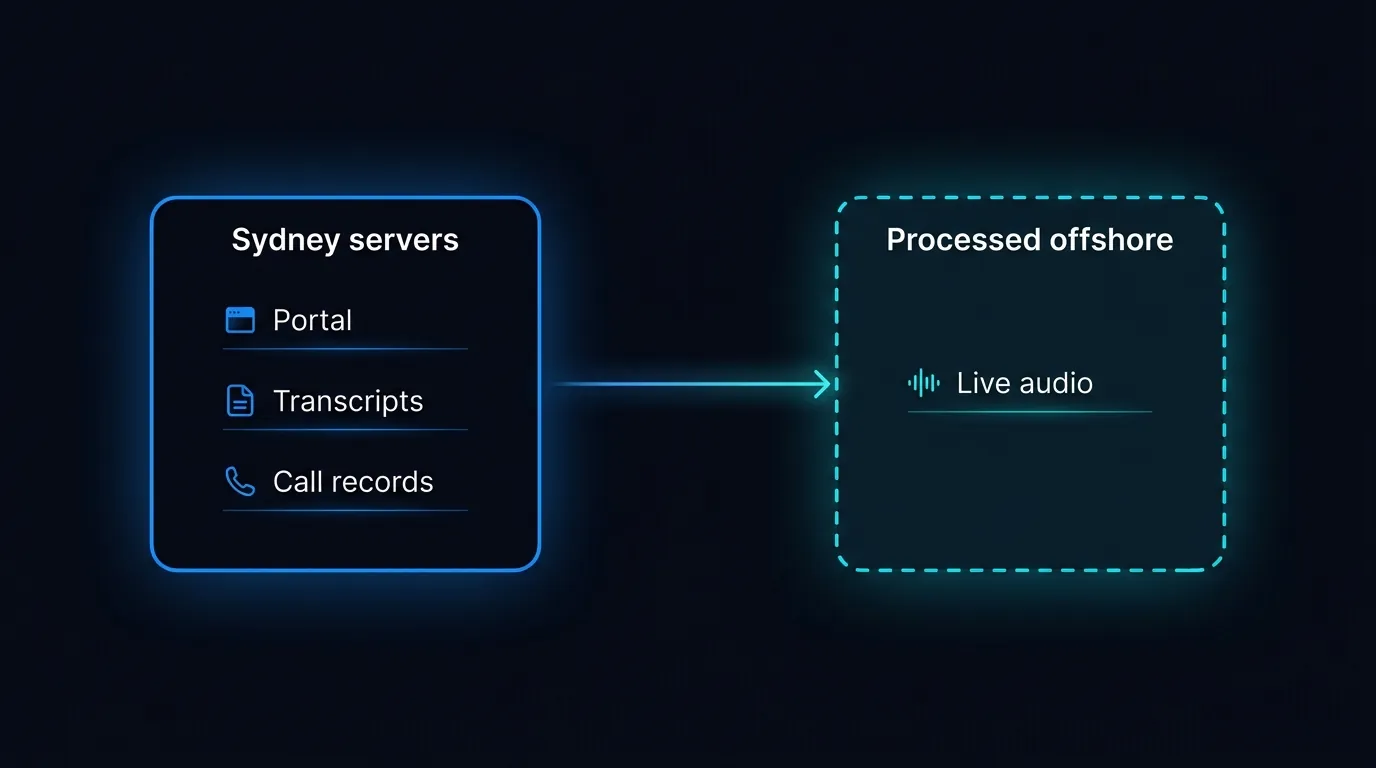
Your records sit on Sydney servers, while live audio is processed offshore. We say so plainly.
How is this different from an old press-one phone menu?
A phone menu makes the caller do the work. Press one for sales, two for accounts, three to be forgotten. Our agent has a real conversation, understands plain speech, and routes on meaning. The caller never hits a button or repeats themselves.
The old menu fails the moment a caller has a question that does not fit a number. They mash zero hoping for a human. Often they get a voicemail instead. Many of those callers never ring back.
A conversational agent handles the messy middle. "I think my hot water cylinder is leaking, is that something you do" gets understood and routed. No menu tree on earth covers that sentence.
It also tells the truth up front. The caller knows they are speaking with an AI. That honesty is required, and it builds more trust than a menu pretending a human is about to pick up.
How fast can you get inbound lead qualification live?
For a standard inbound setup, most businesses are live within a few days, not months. We map your call flow, set the qualifying questions, connect your diary, and test against real scenarios. Then we point your number at the agent.
The heavy lifting is the questions and the routing rules, not the technology. We have done this across trades, clinics, property and professional services. The patterns repeat, so the build is fast.
On data, be clear with your customers. Your portal, transcripts and structured call records sit on our Sydney servers. The live audio is processed offshore. We never claim every byte stays in Australia, because it does not, and you should not say that either.
If you want the full picture of how the receptionist works end to end, start with our explainer on how an always-on receptionist runs, then compare inbound answering for Australian businesses with the New Zealand option.
Book the lead before it rings the next name.
Walk through what a qualifying receptionist does on every call and get yours live this week.
Frequently Asked Questions
Does the caller know they are talking to an AI?
Yes, and they are told at the start of every call. Disclosure is not optional. Under New Zealand and Australian practice, callers should know they are speaking with an AI. We find honest disclosure builds more trust than a system pretending to be human, and it removes the awkward moment when a caller realises later.
Is this compliant with New Zealand and Australian privacy law?
Inbound calls fall under the Privacy Act 2020 in New Zealand and the Privacy Act 1988 with its 13 Australian Privacy Principles in Australia. You stay the data controller. We capture only what the caller offers and store it on Sydney servers, with live audio processed offshore. HIPAA is United States law and does not apply to New Zealand or Australian businesses, even for health enquiries.
What does inbound call answering cost to run?
You pay about 80 cents a minute in NZD or AUD, billed by the second. An average answered call is around 30 seconds, so about 40 cents. A one to two minute booking call is roughly one to two dollars. Compare that to a part-time receptionist at 28 to 35 dollars an hour before KiwiSaver or super, ACC and holiday pay.
Can it transfer a hot lead to a real person?
Yes. When a caller qualifies as hot, the agent can warm-transfer them to a human with the full call context attached. The salesperson picks up already knowing the name, the job and the urgency. There is no repeated discovery and no cold handoff, which is the moment most leads go quiet.
What happens to leads that call after hours?
They get the same qualification, capture and booking as a daytime caller, because the agent never sleeps. A 6pm Friday enquiry is booked or flagged before the caller rings a competitor. The full transcript and captured fields wait in your system for the morning, so nothing slips through overnight.
How is this different from a normal voicemail or call service?
Voicemail captures a name if you are lucky and nothing if you are not. A generic call service takes a message but cannot qualify, route or book. Our agent does all three on the call, grades the lead, and either books it or transfers it. The enquiry is handled, not just recorded for later.
Leonardo Garcia-Curtis
Founder & CEO at Waboom AI. Building voice AI agents that convert.
Ready to Build Your AI Voice Agent?
Let's discuss how Waboom AI can help automate your customer conversations.
Book a Free Demo