
An AI voice agent for construction answers every call while your team is on site, up a ladder, or pouring a slab. It picks up the client chasing a quote, the subbie confirming a start time, and the supplier checking a delivery. No call goes to voicemail. No job walks because nobody answered the phone.
You are a builder, not a receptionist. The phone rings while you are 6 metres up with a nail gun in your hand. By smoko you have four missed calls and no idea which one was the kitchen renovation worth 80,000 dollars. This is the daily tax of running a construction business off a mobile.
We built our platform to take that phone off your tool belt. The agent answers in your company name, sounds human, and tells callers it is an AI assistant. It captures the job, the address, and the timeframe, then drops a clean summary into your inbox or your CRM before you have climbed down.
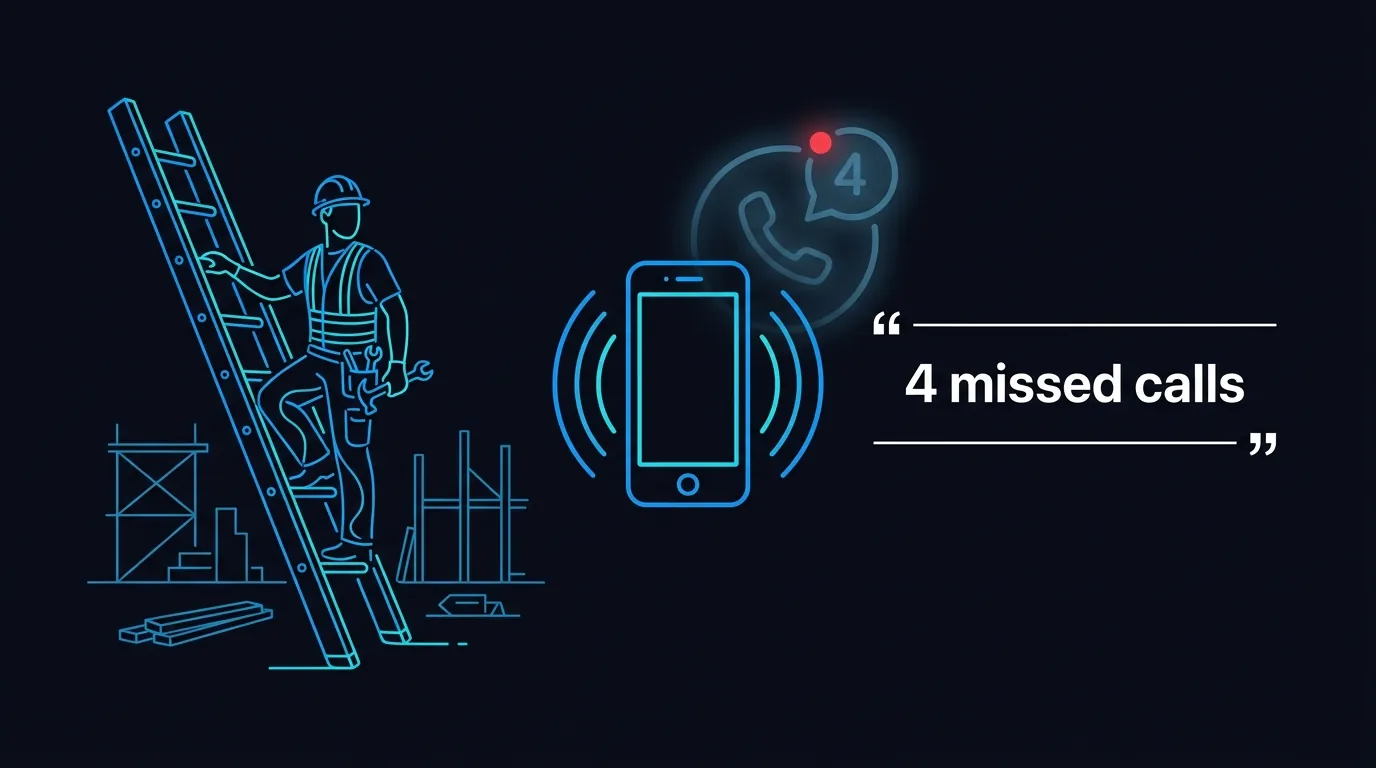
Every ringing phone on site is a quote enquiry that can walk to the next builder.
What does an AI voice agent for construction do for your company?
An AI voice agent for construction answers your phone when you cannot. The agent handles new quote enquiries, subbie scheduling calls, and supplier queries, then sends you a written summary of each one. You stay on the tools. Nothing slips through to voicemail and dies there.
Think about a normal Tuesday on a Hamilton build. You are framing. The phone rings six times before lunch.
Two are spam. One is your timber supplier. One is a subbie running late.
One is a new client who found you on Google. One is the homeowner from last month.
Without help, you ring them all back at 6pm, tired, and the new client has already booked someone else. With the agent, each caller gets answered straight away. You get six short summaries instead of six missed calls.
The agent does not replace your judgement on the build. It replaces the dead air on your phone. For the bits that genuinely need a human, it takes a message and flags it as urgent.
Why do builders miss calls on site?
Because you physically cannot answer. Power tools, heights, concrete, and two-handed work all make a ringing phone impossible to reach in time. Most construction calls land between 7am and 4pm, exactly when you are least able to pick up. So they go to voicemail, and most callers hate voicemail.
Here is the painful part. A homeowner ringing for a deck quote usually calls three builders. Whoever answers first wins the conversation. If you are on the saw and call back two hours later, you are talking to someone who already has a quote booked.
Voicemail does not save you. Most callers hang up rather than leave a message, so the job does not wait in your voicemail. It goes to the next builder on the list.
The agent removes that race. It answers on the first or second ring, every time, no matter where your hands are. We dig into the lost-call problem in our guide on cutting call abandonment with a voice agent.
How does it handle a quote or new-job enquiry?
It greets the caller, asks what work they need, captures the property address, and gets a rough timeframe and budget. Then it offers a callback time or books a site visit. You receive the full enquiry as a written summary, so you can quote from real detail instead of a name and a number.
A good quote enquiry has structure. The agent asks the right questions in order.
What is the job. Where is the property. When do you want it done.
Is it a renovation, a new build, or a repair. Have you got plans or consent.
That beats a sticky note that says "ring back deck guy." You walk into the site visit already knowing the scope.
You can link the agent to your existing tools too. Each enquiry lands where you already work. See how we handle that in our CRM integration guide. The lead never gets retyped or lost between apps.
Want the deeper playbook on this? Our construction hub for New Zealand and the Australian construction page both walk through quote capture step by step.
Stop losing the kitchen renovation to the builder who picked up first.
See how an agent built for trades captures every quote on our construction hub for New Zealand.
How does it route subbie and supplier calls?
It recognises why the caller is ringing and handles it accordingly. A subbie confirming a start time gets the schedule detail. A supplier checking a delivery address gets the site location. Anything that needs your decision becomes an urgent flag in your summary, not a missed call.
Your phone is a switchboard you never agreed to operate. The sparky wants to know if the slab is ready. The plumber needs the gate code. The merchant is asking which site the order goes to.
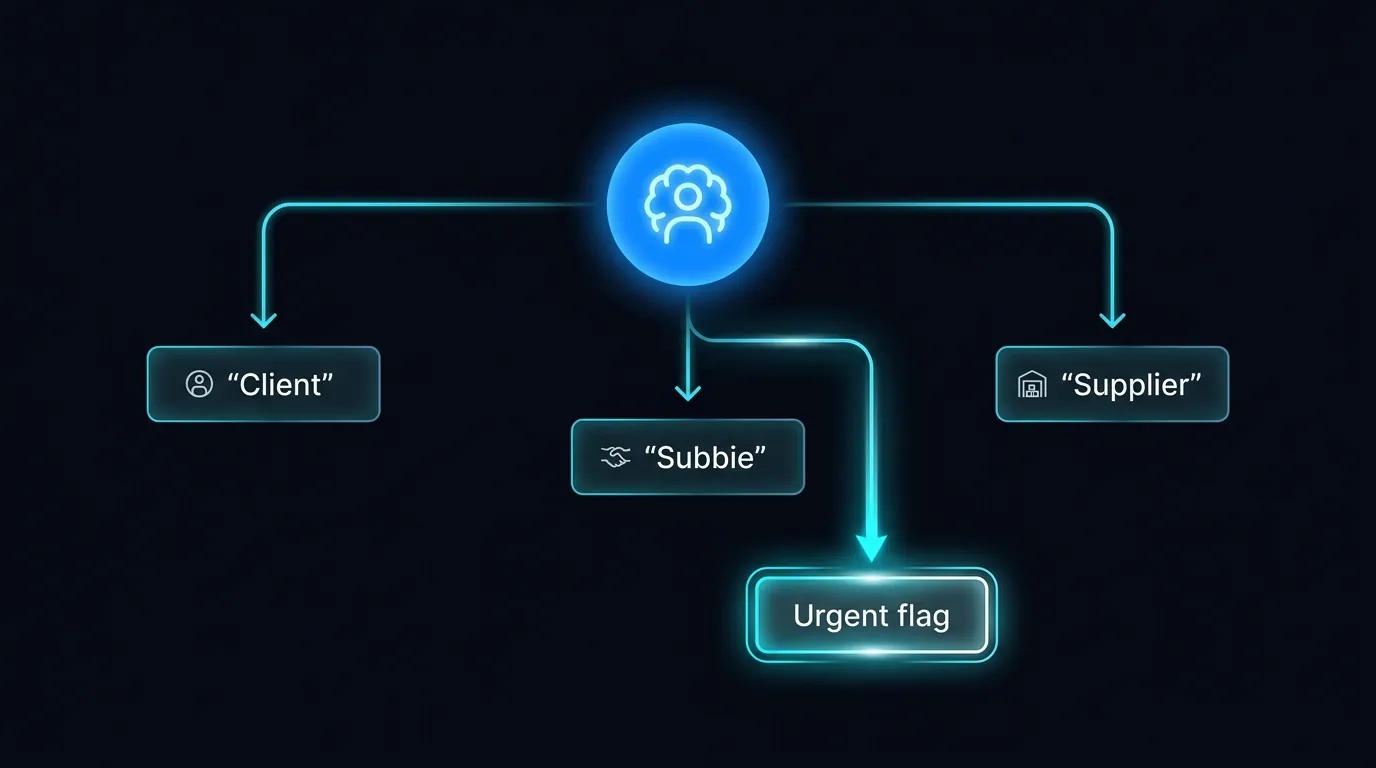
The agent sorts routine calls and only flags the ones that need your decision.
The agent fields the routine ones with the details you have given it. It only interrupts your day for the calls that genuinely need you. That is taking a human in the loop seriously. We cover the why in our piece on voice AI still needing people.
So your phone stops buzzing every ten minutes. The noise drops. The signal gets through.
How does it book a site visit or callback?
It offers the caller real time slots and books straight into your calendar. The agent confirms the address, the preferred day, and a window, then sends the caller a confirmation and adds the visit to your diary. You wake up to a booked week, not a list of people to chase.
Booking is where most leads leak. The caller is keen at 10am. By the time you call back at 6pm, the moment has passed. Booking in the moment is how you convert.
We have seen this in the field. A Christchurch developer used our agent to book property viewings at 7.12 dollars each.
A Sydney sales team produced 141 qualified leads in 90 days at 32.74 dollars per seller. The pattern holds for trades. Book while they are warm.
For the full mechanics, read our guide on AI receptionist appointment booking across New Zealand and Australia.
How does it keep client data private?
Your structured records stay on our Sydney servers. Portal access, call transcripts, and the job summaries you rely on are all held in Sydney. The live audio of each call is processed offshore through documented arrangements with our voice infrastructure partner, so we are straight with you about the split.
Construction clients share addresses, budgets, and sometimes financial detail. That is private information, and the law treats it as such. In New Zealand the Privacy Act 2020 and the Office of the Privacy Commissioner set the rules. In Australia the Privacy Act 1988 and the 13 Australian Privacy Principles, overseen by the OAIC, do the same.
We do not pretend everything lives in one country. We never tell you all data stays in Australia, because that is not true and you deserve the real answer. The structured records sit in Sydney. The audio is processed offshore.
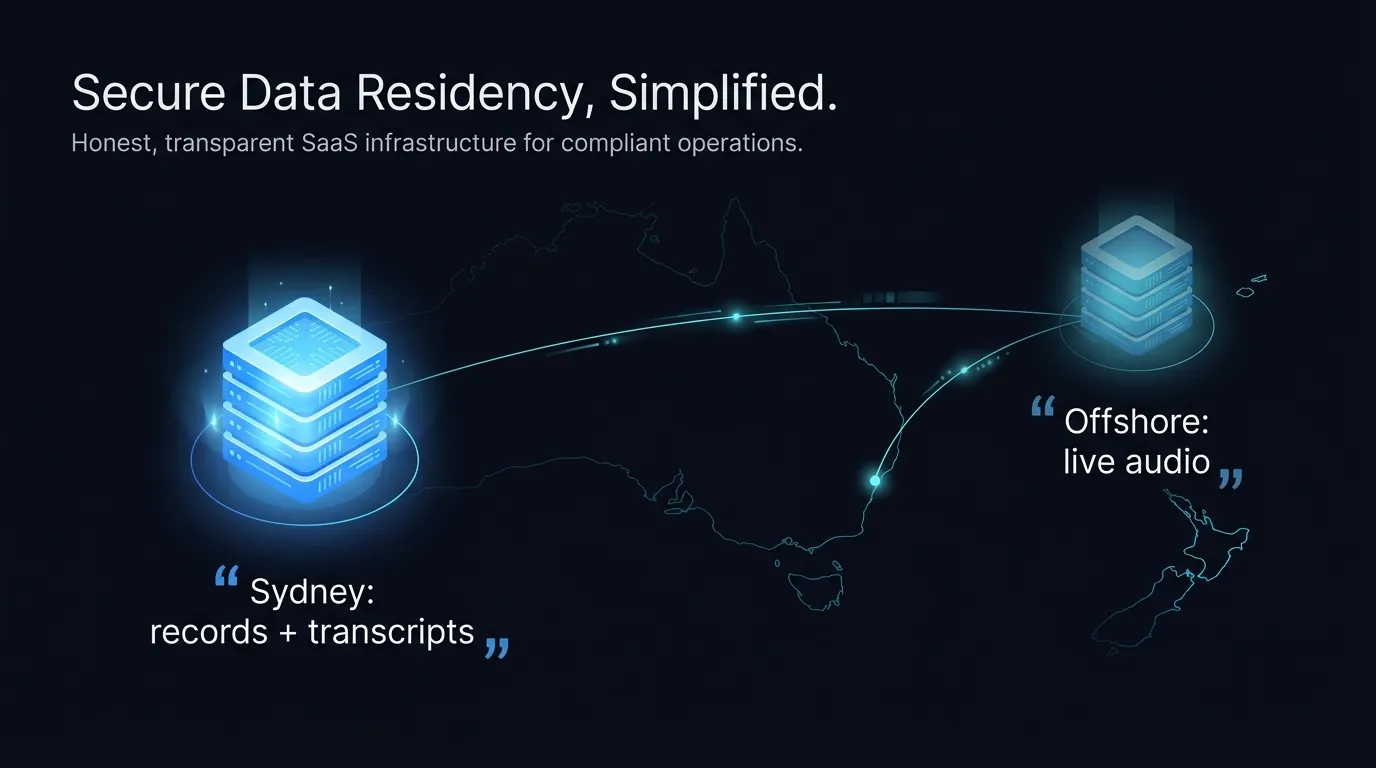
Transcripts and records in Sydney, live audio offshore: the honest residency split.
The agent also discloses that it is an AI at the start of every call. No tricks. If you want the detail, our guide on the Privacy Act 2020 and AI voice agents lays it out.
What does it cost a NZ or AU builder?
Far less than a missed kitchen renovation. We bill from 77c to 95c a minute depending on plan in NZD or AUD, charged by the second. An average answered call runs about 30 seconds, so roughly 48c. A solid one to two minute enquiry costs about 95c to $1.90.
Compare that to the alternative. A part-time receptionist in New Zealand or Australia costs about 28 to 35 dollars an hour before KiwiSaver or super, ACC, and holiday pay. They go home at 5pm and take sick days. The agent works nights, weekends, and public holidays.
Run the numbers on a single job. One deck quote you would have missed is worth thousands. The agent answering that one call pays for months of itself. We break the cost question down further in our guide on what an AI receptionist costs.
You do not pay for idle time. You pay for seconds of conversation that capture real work.
The bottom line for builders
Every missed call on a construction site is a quote that may never come back. The agent answers in your name, captures the job, books the visit, and routes the subbies, all while you stay on the tools. It is honest about being an AI and honest about where your data lives.
Start with our dedicated Australian construction page or the New Zealand construction hub to see it set up for trades. If you also want the general after-hours picture, our after-hours receptionist guide and our inbound voice agent overview round it out.
Never miss another quote enquiry on site.
Get the agent set up for your trade on our construction hub for New Zealand.
Frequently Asked Questions
Does the AI voice agent tell callers it is not a real person?
Yes. The agent discloses that it is an AI assistant at the start of every call. Your callers always know they are speaking to an automated agent acting for your company. This keeps you compliant with privacy expectations in both New Zealand and Australia and avoids any sense of deception with your clients.
Can it handle calls outside business hours?
Yes. The agent answers nights, weekends, and public holidays without overtime or penalty rates. A homeowner ringing at 8pm about a leaking roof still gets a real conversation and a booked callback. You wake up to a captured lead instead of a voicemail that the caller never bothered to leave.
Will it stop wasting my time with routine subbie and supplier calls?
That is the point. The agent fields routine subbie and supplier calls using the site details you provide, like gate codes and delivery addresses. It only flags calls that genuinely need your decision. Your phone stops buzzing every ten minutes and you get a clean summary instead.
How does it book a site visit into my calendar?
It offers the caller available time slots, confirms the address and preferred window, then writes the visit straight into your calendar. The caller gets a confirmation and you get a booked diary. There is no back and forth of voicemail tag, which is where most warm leads go cold.
Is my clients' information safe?
Your structured records and transcripts are held on our Sydney servers under the Australian Privacy Principles and the New Zealand Privacy Act 2020. Live call audio is processed offshore through documented arrangements with our voice partner. We never claim everything stays in one country, because the honest answer is a split.
What does it actually cost per call?
It runs from 77c to 95c a minute depending on plan in NZD or AUD, billed by the second. A typical answered call is around 30 seconds, so roughly 48c. A one to two minute quote enquiry costs about 95c to $1.90. You only pay for real conversation, never idle time, which makes one saved job pay for months.
Leonardo Garcia-Curtis
Founder & CEO at Waboom AI. Building voice AI agents that convert.
Ready to Build Your AI Voice Agent?
Let's discuss how Waboom AI can help automate your customer conversations.
Book a Free Demo

