
It is 9pm. A pipe bursts on level four and water is running down a stairwell. The resident rings the building manager. It goes to voicemail. By morning the carpet is ruined and three units are flooded.
That call should never sit in voicemail. An AI voice agent for apartment buildings answers it on the first ring. It gets the unit number, rates the urgency and pages the on-call plumber in under a minute. The manager finds out it was handled, not that it blew up.
We build these agents for NZ and AU buildings and body corporates. Here is exactly what one does, how it triages a 9pm emergency, and what it costs you.
What does an AI voice agent for apartment buildings do?
An AI voice agent for apartment buildings answers every resident, owner and maintenance call, day or night. It captures the unit, the issue and a callback number. It rates urgency, escalates real emergencies and logs the rest for business hours. Nothing sits in voicemail.
Think of it as a tireless front desk for the whole building. It picks up while the manager is in a meeting, asleep or on leave. It handles ten calls at once. It never forgets to write down which unit rang.
Every call ends with the agent telling the caller it is an AI. That disclosure is not optional for us. It builds trust and it keeps you compliant.
Want the full picture? Our apartment voice agent for NZ buildings page walks through the setup end to end.
Why do building manager phones get overwhelmed?
One building manager runs a single phone for hundreds of units. A lockout, an owner levy query and a burst pipe can all land in the same five minutes. One person cannot field three at once. Calls stack up, voicemails pile up, residents get angry.
The volume is lumpy and unpredictable. A quiet Tuesday becomes chaos when the lift fails. A long weekend means the manager is off, but the building is not. Pipes still burst at 2am on a public holiday.
Voicemail is where these calls go to die. A frustrated resident leaves a message, then rings the committee chair, then posts in the building group chat. Now three people are dealing with one problem.
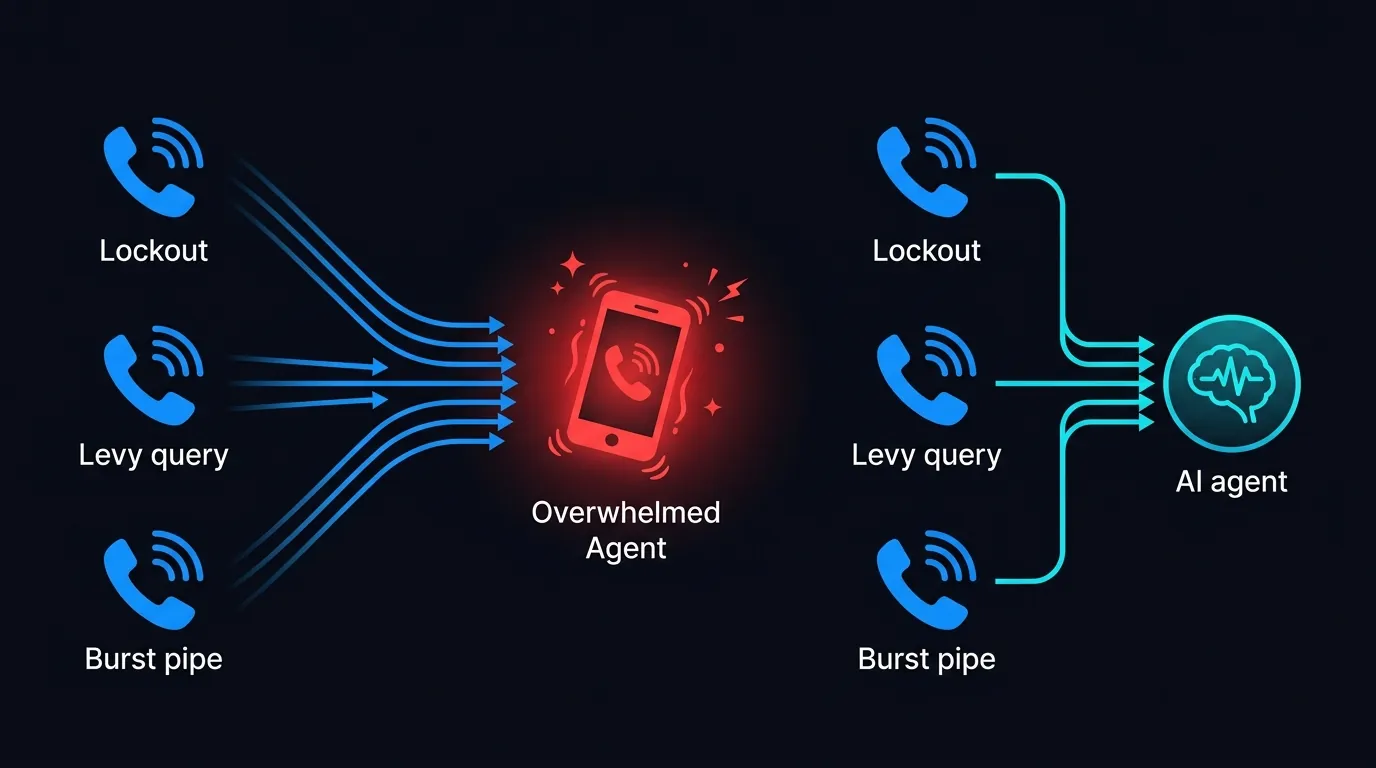
One phone cannot field a lockout, a levy query and a burst pipe at once. The agent can.
The agent removes the bottleneck. It answers every line at once. The manager stops being a switchboard and starts being a manager.
How does it triage a maintenance or emergency call?
The agent asks three quick things: which unit, what is happening, and how to call you back. Then it rates urgency. A flooding car park is not a noisy neighbour. It escalates the flood right away and books the noise complaint for the morning.
Urgency is the whole game with buildings. Get it wrong and you wake a plumber for a blown bulb, or you let a leak run all night. We tune the rules with you. Water, gas, fire, lifts and security go to the top. Cosmetic issues wait.
For a genuine emergency the agent acts in seconds. It pages the right contractor, texts the manager and logs a timestamped record. For a routine job it creates a ticket with the unit, the issue and the caller, ready for the morning run.
A 9pm leak that used to ruin a stairwell now gets a tradie paged in under a minute. That is the difference between a 200-dollar callout and a 20,000-dollar insurance claim.
Stop letting after-hours leaks sit in voicemail.
See how an always-on agent triages your building's calls on our apartment voice agent for AU buildings page.
How does it handle owner and resident enquiries?
The agent answers everyday questions from your building handbook in plain English. Owners ask about levies, AGM dates and parking. Residents ask about bins, lifts, gates and noise rules. It answers instantly, then logs the call so the committee sees what came in.
Most calls to a building are not emergencies. They are repetitive questions with known answers. When is the next AGM. Where do I put recycling. How do I get a second fob. The agent handles all of it without a human lifting a finger.
It works from the documents you give it. Your body corporate rules, your levy schedule, your contractor list. Update the handbook and the agent updates with it. No retraining, no scripts to rewrite by hand.
When a query needs a human, the agent says so and routes it. A dispute over a special levy is not something to settle on a call. We are clear that voice agents still need humans for the nuanced calls.
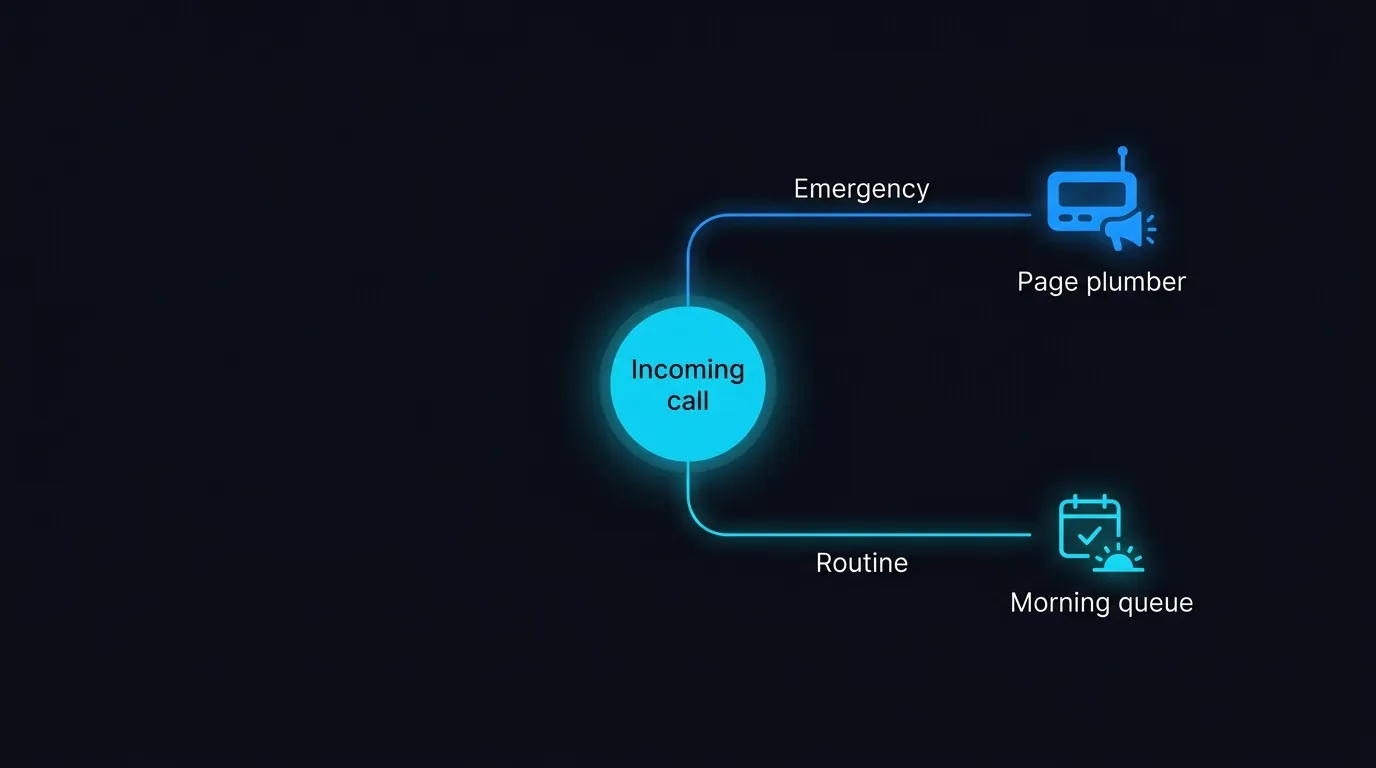
The agent rates urgency, then escalates emergencies and queues routine jobs for the morning.
How does it route after-hours building issues?
After hours, the agent decides who to wake and who can wait. A burst pipe pages the on-call plumber. A blown corridor bulb waits till morning. The manager sleeps. The building stays covered. Every escalation is logged with a timestamp.
You set the on-call roster once. Plumber for water, electrician for power, locksmith for lockouts, security for break-ins. The agent matches the issue to the right trade and rings them, not you. We tune the whole roster on our apartment specialists page for NZ.
This is the real win for managers. The phone stops ringing at 1am for things a contractor can handle. An after-hours receptionist for NZ businesses follows the same logic, tuned for buildings instead of bookings.
The agent also chases the boring follow-ups. Late levies and arrears are a constant drain. The same approach we use for rent arrears in property management works for body corporate levies too.
How does it keep resident data private?
Your resident data stays protected by design. Portal records, transcripts and structured call logs live on our Sydney servers. Live audio is processed offshore under documented arrangements with our voice infrastructure partner. We never claim all data stays in one country.
We hold this to two sets of rules at once. In New Zealand that is the Privacy Act 2020 and the Office of the Privacy Commissioner. In Australia that is the Privacy Act 1988 and the 13 Australian Privacy Principles, overseen by the OAIC. A building straddling both is covered under both.
You decide what the agent stores and for how long. You control who in the committee can see transcripts. Residents are told it is an AI on every call, so consent is explicit, not buried.
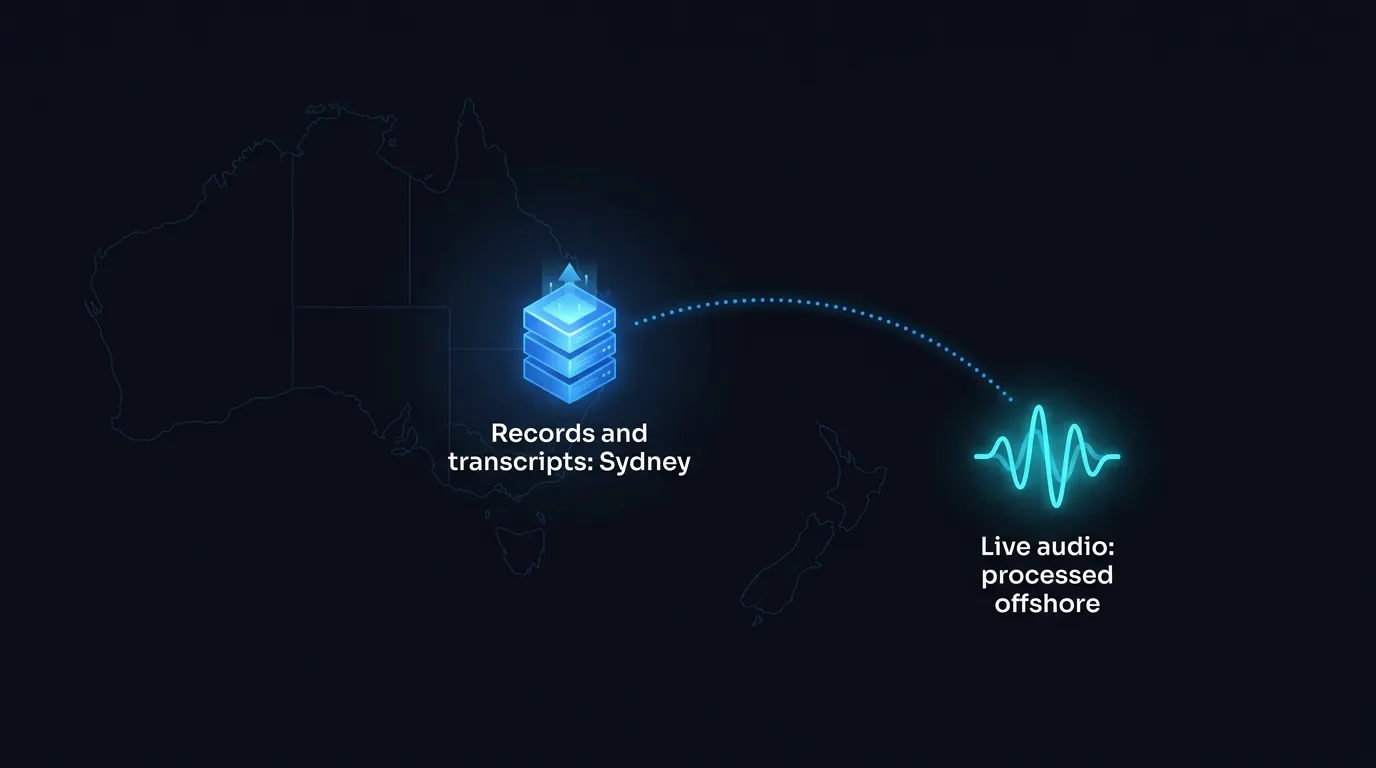
Records and transcripts sit in Sydney; live audio is processed offshore under documented arrangements.
If you want the detail, our guide to the NZ Privacy Act 2020 and AI voice agents spells out how we handle resident information.
What does it cost a NZ or AU building manager?
A lot less than a phone that sleeps. An answered call averages about 30 seconds, so roughly 48c. A full triage call runs one to two minutes, so 95c to $1.90. You pay by the second, at 95c a minute or less, only for calls that actually happen.
Compare that to the alternative. A part-time receptionist costs 28 to 35 dollars an hour before KiwiSaver or super, ACC and holiday pay. They cover business hours only. The 9pm leak still goes to voicemail. The agent covers every hour for a fraction of one wage.
There is no salary, no roster gaps and no overtime for public holidays. You pay for conversations, not for seats. For a building taking a handful of calls a day, that is a small monthly number against the cost of one missed flood. AU buildings get the same per-second pricing on our apartment specialists page for AU.
For a full breakdown across building sizes, see how much an AI receptionist costs. The same per-second logic that powers appointment booking for NZ and AU businesses runs your building line.
Never let another 9pm leak hit voicemail.
Get an always-on agent for your building, or see how the same engine answers any inbound line on our NZ inbound voice agent page.
Frequently Asked Questions
Does the agent tell callers it is an AI?
Yes, on every call. The agent discloses that it is an AI assistant at the start of each conversation. This is built in, not optional. It keeps you compliant with NZ and AU privacy expectations and it builds trust with residents, who would rather know than be misled.
Can it handle a real emergency at 2am?
Yes. The agent answers instantly, captures the unit and issue, rates urgency and pages your on-call contractor for water, gas, fire, lift or security faults. A burst pipe gets a plumber in under a minute. Routine issues are logged for the morning so nobody is woken for a blown bulb.
Where is our resident data stored?
Portal records, transcripts and structured call logs live on our Sydney servers. Live audio is processed offshore under documented arrangements with our voice infrastructure partner. We never claim all data stays in one country. You control retention periods and who on the committee can view transcripts.
Will it replace our building manager?
No. The agent handles the repetitive calls, triage and after-hours routing. Nuanced work like levy disputes, owner negotiations and committee decisions still needs a human. It frees your manager from being a switchboard so they can do the actual job of running the building.
How much does an apartment voice agent cost?
You pay by the second at 95c a minute or less, only for calls that happen. An answered call averages about 30 seconds, so about 48c. A triage call of one to two minutes runs 95c to $1.90. That is far below a part-time receptionist at 28 to 35 dollars an hour.
Does it work for both NZ and AU buildings?
Yes. We run agents for buildings and body corporates in both countries. The agent is tuned to local rules. We hold to the NZ Privacy Act 2020 and the OPC, plus the AU Privacy Act 1988 and the 13 Australian Privacy Principles overseen by the OAIC.
See AI voice agents for plumbers for the plumbing-specific setup.
Leonardo Garcia-Curtis
Founder & CEO at Waboom AI. Building voice AI agents that convert.
Ready to Build Your AI Voice Agent?
Let's discuss how Waboom AI can help automate your customer conversations.
Book a Free Demo

