
Your phone rang 140 times last month and 90 of those callers wanted the same four things. Your AI receptionist handled the call containment rate that decides whether the phone ever reaches a human at all.
Call containment rate is the share of inbound calls an AI receptionist resolves end to end, with no human handoff. It is the single number that tells you whether the agent is doing real work or just routing. Most NZ and AU buyers ask about voices and accents first. They should ask about containment first.
We run inbound agents for clinics, trades and property firms across New Zealand and Australia. The number that decides their return is containment, not voice quality. This article is the honest version. What containment actually means, what an AI can realistically hold, how vendors inflate the figure, and what drags it down in the real world.
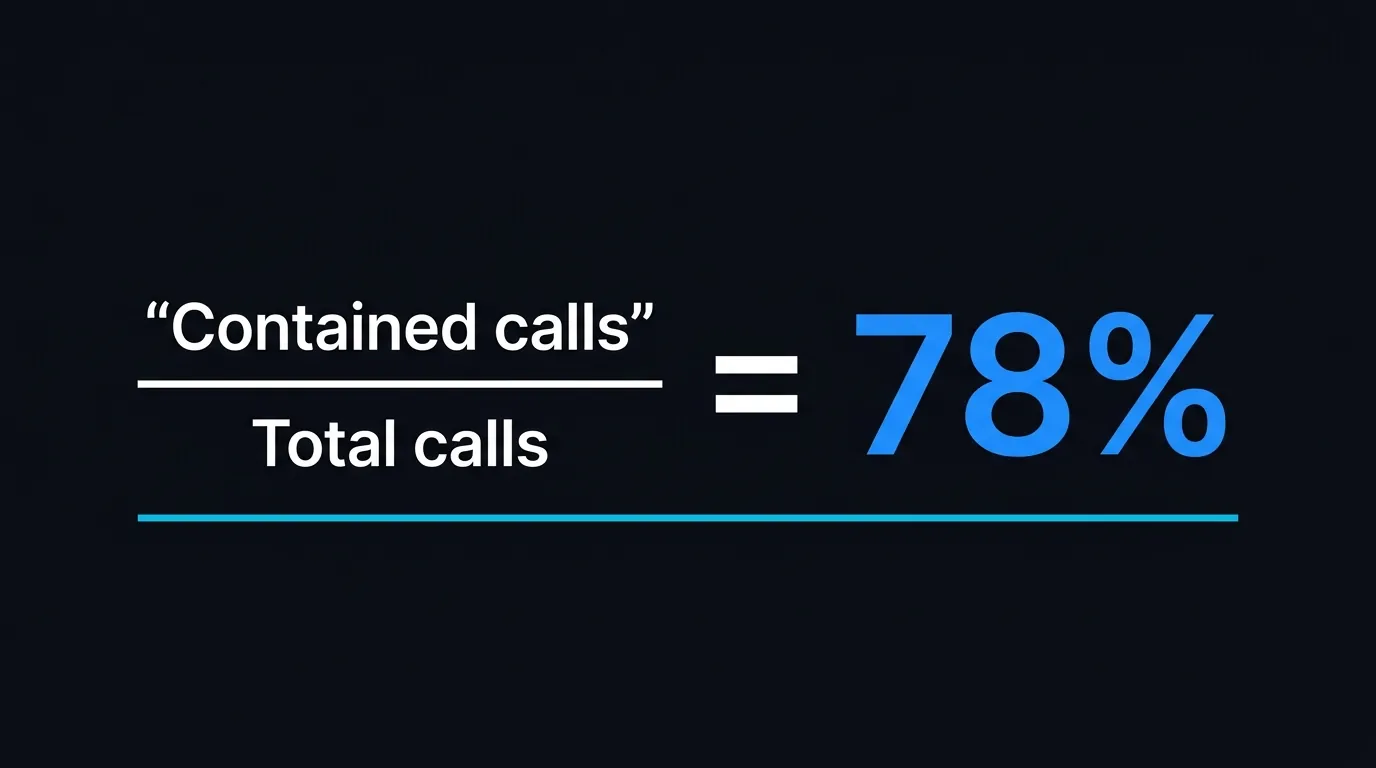
Containment is contained calls divided by total calls, read straight from your logs.
What is call containment rate?
Call containment rate is the percentage of inbound calls the AI handles from start to finish without escalating to a person. If the agent answers, books the appointment and ends the call, that call is contained. If it transfers to a human, it is not. The maths is simple. Contained calls divided by total calls.
So if 100 people ring and the agent fully handles 78 of them, containment is 78 percent. The other 22 went to a human or a voicemail.
Containment is not the same as answer rate. The agent answers 100 percent of calls. It does not contain 100 percent. A booking, a price question, an opening-hours check, a callback request. Those are contained. A legal complaint or a custom quote often is not.
Why is containment the metric that actually matters?
Containment matters because every contained call is a call your staff never touch. That is the whole point of an AI receptionist. A 30-second answered call costs about 40c. A contained call at scale removes hours of human phone time every week. Uncontained calls just add a robot in front of the same workload.
Think about the cost stack. A part-time NZ or AU receptionist runs about 28 to 35 dollars an hour before KiwiSaver or super, ACC and holiday pay. If your agent contains 75 percent of 140 monthly calls, that is roughly 105 calls your team skips.
Low containment with a friendly voice is a vanity result. It feels modern and changes nothing.
We dig into the full metric set in our guide on the receptionist KPIs worth tracking. Containment sits at the top of that list for a reason. If you want the foundations, start with our AI receptionist for inbound calls overview.
What containment can an AI realistically hold?
A well-built inbound agent for a typical NZ or AU service business holds 65 to 85 percent containment. Bookings, hours, location, pricing bands and message-taking sit at the high end. Complex quotes, disputes and edge cases pull it down. Anyone promising 95 percent for a varied small business is selling you a number, not a result.
The figure depends entirely on call mix. A dental clinic where 70 percent of calls are bookings or reschedules can sit near the top of the range. A building firm fielding bespoke quotes will sit lower, and that is fine.
We measured one property developer in Christchurch that contained the bulk of viewing requests. The agent booked viewings at 7.12 dollars each. The uncontained calls were genuine edge cases worth a human.
So the honest answer is a band, not a magic number. Set the target against your real call mix.
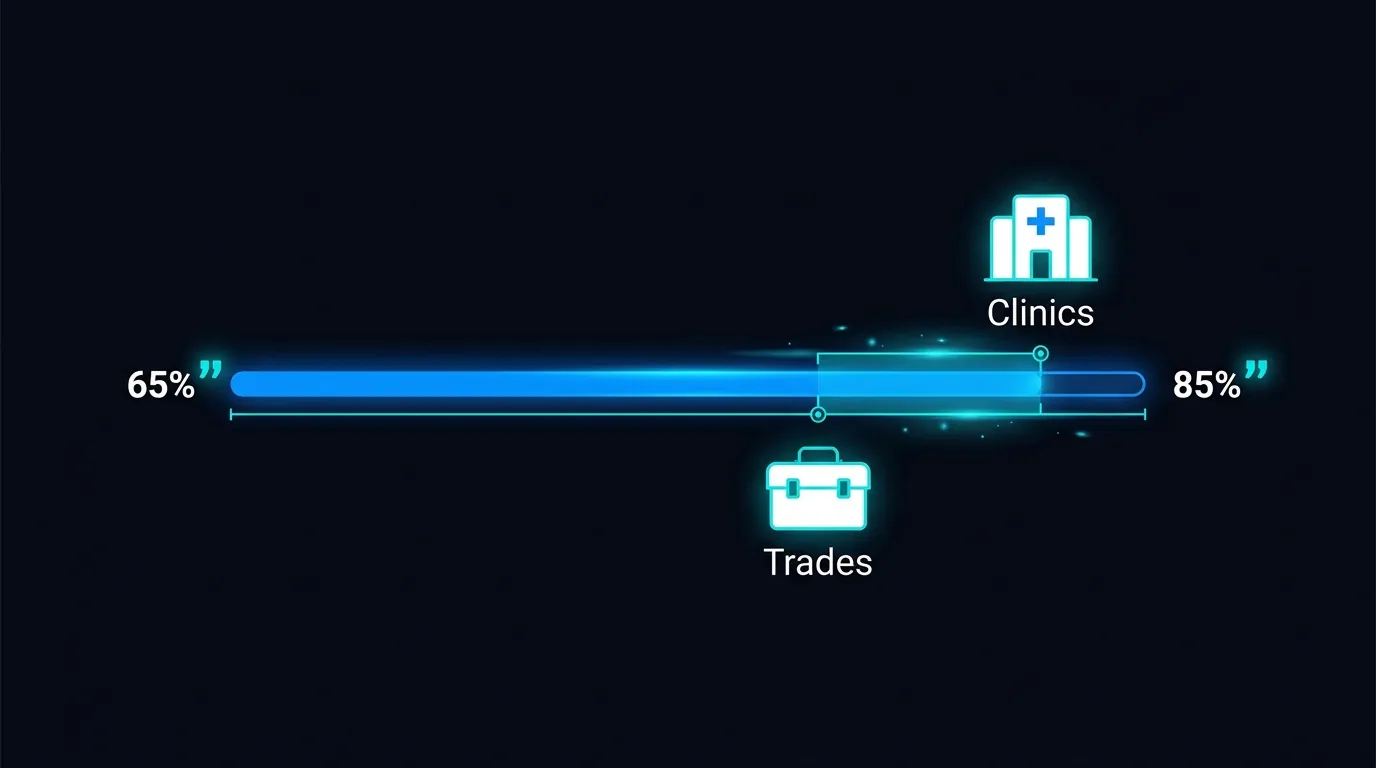
Realistic containment is a band, set by your call mix, not a single magic number.
How is containment measured, and how is it gamed?
Containment is measured as contained calls divided by total calls over a period, read straight from call logs and transcripts. The honest version counts a call as contained only when the caller's actual goal was met. The gamed version counts anything the agent technically finished, even if the caller hung up confused.
Here are the common tricks vendors use to inflate the figure.
Ask any vendor to define a contained call out loud. If the definition includes hang-ups or messages, the number is fiction. We count a call contained only when the caller got what they rang for, verified against the transcript.
A real containment figure should survive you reading ten random transcripts. If it does not, it is a marketing number.
Want a containment number you can defend?
See how we build agents that resolve real calls on our inbound AI receptionist page, then ask us to read ten of your transcripts.
What drags containment down?
Containment drops when calls fall outside the agent's knowledge, when routing is poor, or when the agent cannot take an action like booking. The fix is rarely the voice. It is the knowledge base, the integrations and the decision logic behind the conversation. Garbage in, transfers out.
The usual culprits we see in NZ and AU accounts.
Pathing is the quiet one. Good intelligent pathing for voice agents routes the right calls to the agent and the right calls to a person. Bad pathing either transfers too much or traps callers in loops.
The other big lever is call volume design. Our work on reducing inbound call volume with an AI voice agent shows how shaping demand lifts containment on the calls that remain.
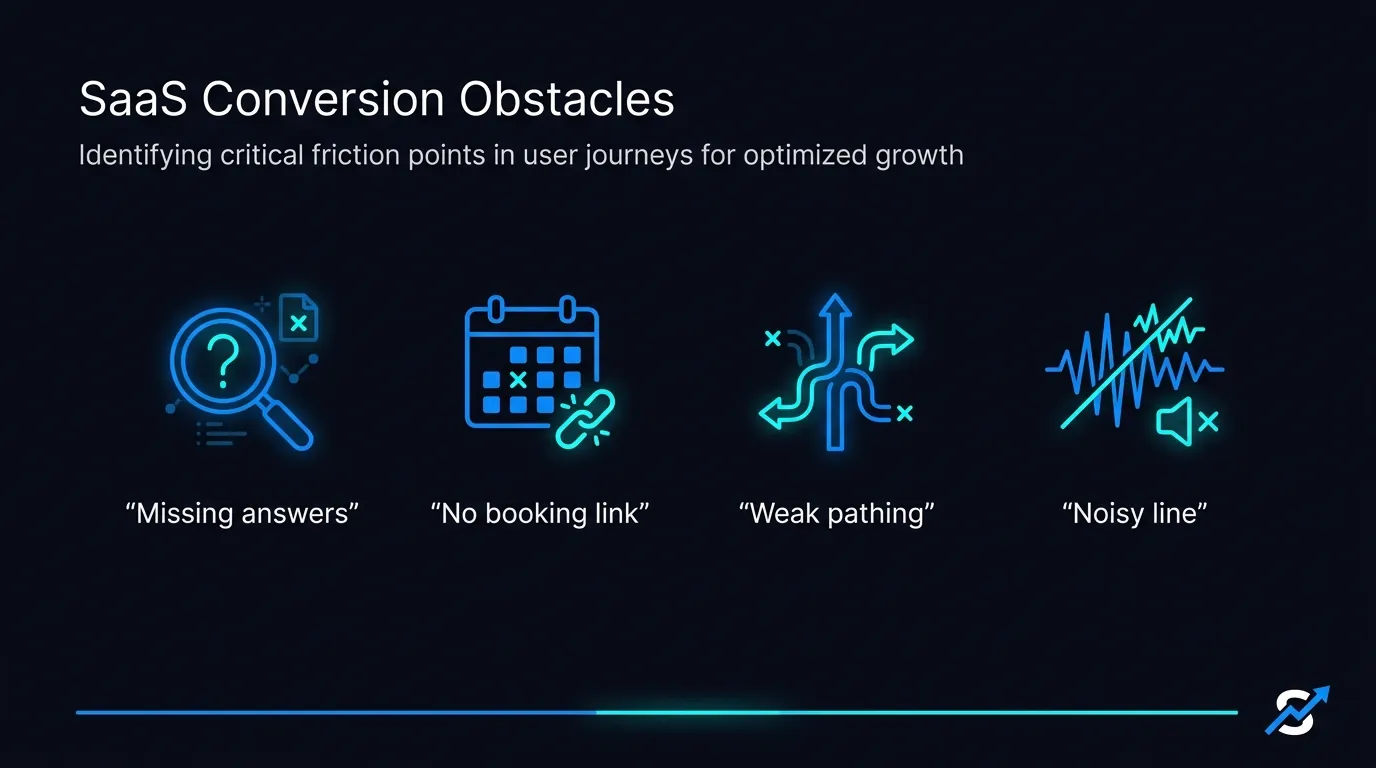
Most containment loss is knowledge and integration gaps, not the voice itself.
How does escalation to a human fit in?
Escalation is a feature, not a failure. A good agent contains the routine 75 percent and hands the hard 25 percent to a human cleanly, with context. The goal is never 100 percent containment. The goal is high containment on the calls that should be contained, and fast handoff on the calls that should not.
A clean handoff means the human gets the caller's name, reason and any details already gathered. No starting over. The caller does not repeat themselves.
We wrote about why voice AI agents still need humans because the handoff is where most vendors fall down. A cold transfer with no context burns the trust the agent just built.
Set escalation rules deliberately. Some calls, like a serious complaint, should escalate on the first sign. Forcing containment there hurts you.
How do you improve your containment rate?
You improve containment by widening the agent's knowledge, connecting it to your booking and CRM systems, and reading transcripts weekly to find the escalation patterns. Every recurring transfer reason is a gap you can close. Containment is a tuning process, not a one-time setup.
Here is the loop we run with clients.
Most accounts climb 10 to 15 points in the first month just by closing the obvious gaps. Then it plateaus at your call mix's natural ceiling.
You also control containment with budget honesty. Our breakdown of how much an AI receptionist costs shows why a cheap, under-built agent contains less and costs you more in transfers.
Containment is the scoreboard. Watch it weekly, tune it monthly, and judge any vendor by their willingness to define and defend the number.
Get a containment target set against your real calls.
Tell us your call mix and we will model a realistic number on our inbound AI receptionist page, then prove it on your transcripts.
Frequently Asked Questions
What is a good call containment rate for an AI receptionist?
A good call containment rate for a typical NZ or AU service business sits between 65 and 85 percent. Booking-heavy businesses like clinics land near the top. Quote-heavy trades land lower because more calls genuinely need a human. Treat any promise above 90 percent for varied calls as a warning sign, not a feature.
Does answering every call mean 100 percent containment?
No. The agent answers 100 percent of calls but contains far fewer. Answer rate measures pickup. Containment measures full resolution without a human. A call can be answered instantly and still need escalation. Always separate the two numbers, because vendors often blur them to make containment look higher than it is.
How do I know if a vendor is gaming the containment number?
Ask them to define a contained call out loud. If the definition counts hang-ups, voicemails or spam as contained, the figure is inflated. A real number survives you reading ten random transcripts. Insist on transcript access so you can verify resolution yourself rather than trusting a dashboard.
Is my call data safe with an AI receptionist?
Your portal, transcripts and structured records sit on our Sydney servers. Live audio is processed offshore through documented arrangements with our voice infrastructure partner. The agent discloses it is AI on every call. We operate under the NZ Privacy Act 2020 and the OPC. We also meet the AU Privacy Act 1988 and the 13 Australian Privacy Principles overseen by the OAIC. You can ask us to delete your data in 10 minutes.
How long until containment reaches a stable rate?
Most accounts climb 10 to 15 points in the first month as you close obvious knowledge gaps. After that it settles at the natural ceiling set by your call mix. Containment is a tuning process. We read uncontained transcripts weekly, fill the gaps that cause the most transfers, then re-measure against the same mix.
Should I aim for 100 percent containment?
No. Some calls should always reach a human, like serious complaints or bespoke quotes. The goal is high containment on routine calls and a clean, context-rich handoff on the rest. Forcing containment on calls that need a person damages trust and outcomes. Set escalation rules deliberately for the cases that warrant them.
New to the space? Start with our full guide to AI voice agents.
Leonardo Garcia-Curtis
Founder & CEO at Waboom AI. Building voice AI agents that convert.
Ready to Build Your AI Voice Agent?
Let's discuss how Waboom AI can help automate your customer conversations.
Book a Free Demo

