Every guide to call handling promises you will answer more calls. This one is about how to reduce inbound call volume instead. The best result an AI voice agent can deliver is a phone that rings less. Because the questions driving most of that volume got answered properly the first time.
In this article
- 1. Why is your phone ringing so much in the first place?
- 2. What is call deflection, and why does a voice agent change it?
- 3. Why is "more answered calls" the wrong KPI?
- 4. How does an AI voice agent actually reduce inbound call volume?
- 5. Which calls do you want more of?
- 6. How do you measure deflection without fooling yourself?
The Noise
Why is your phone ringing so much in the first place?
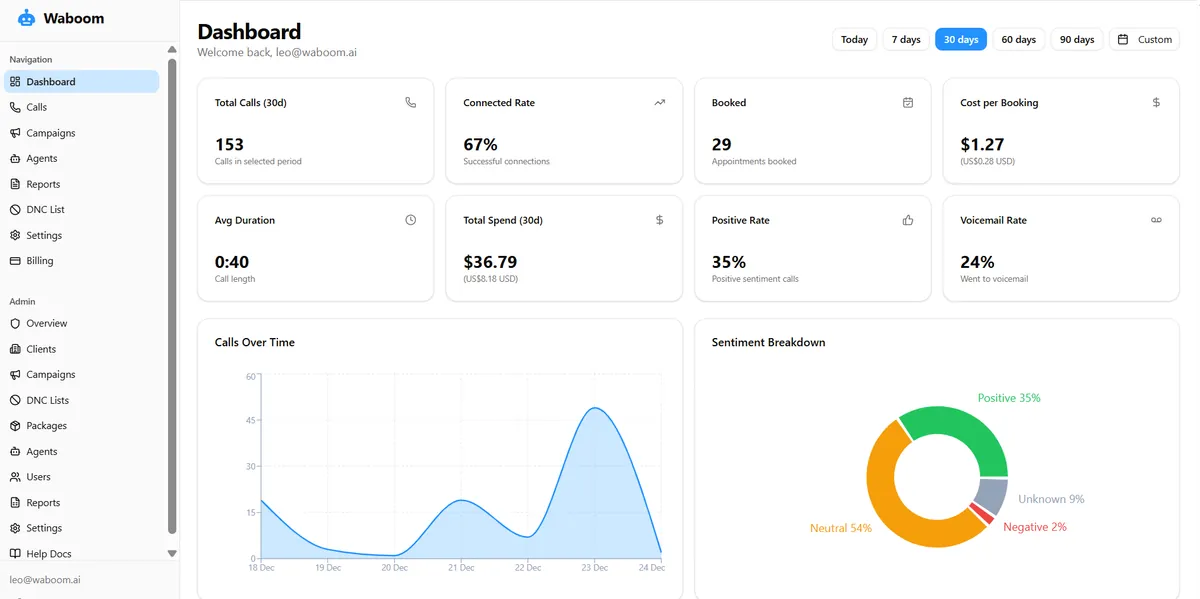
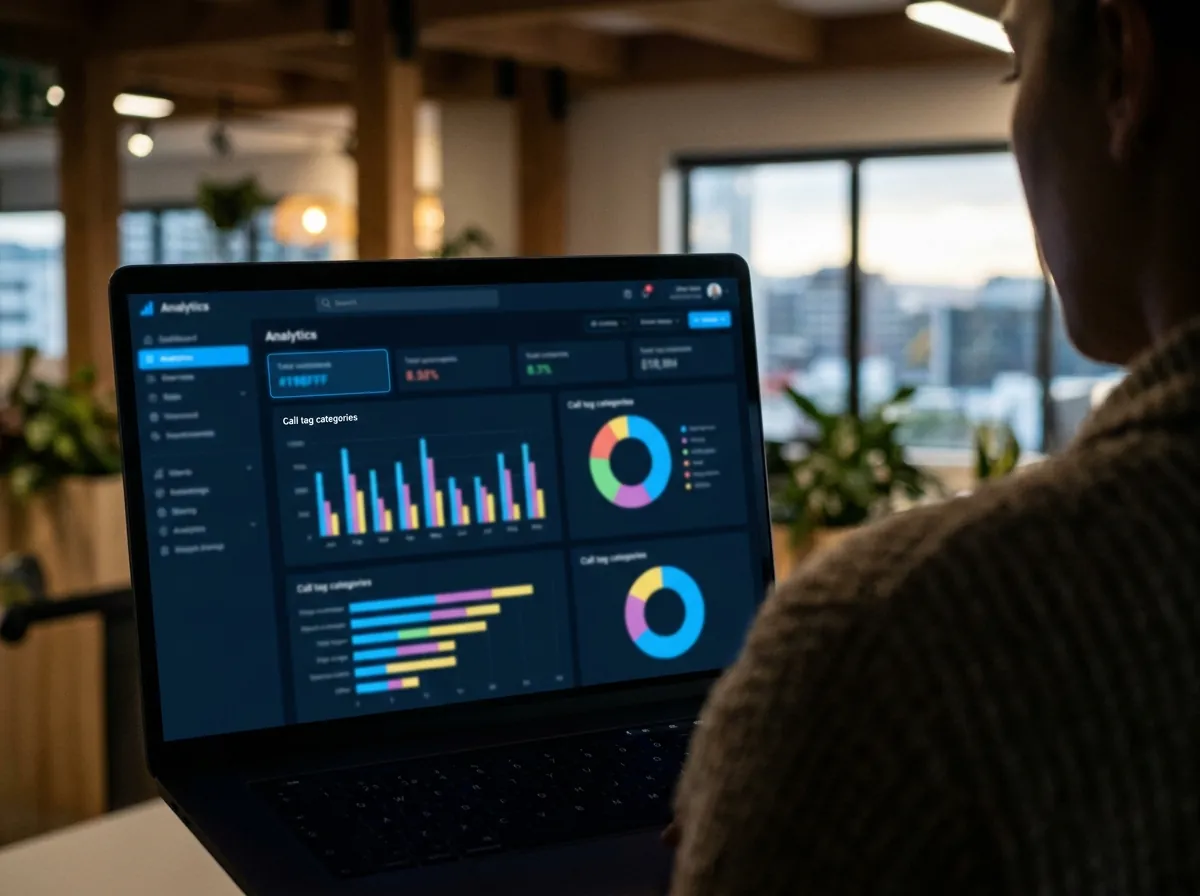
Because most of it is the same handful of questions on repeat. Pull up a real day from a Waboom AI client portal and the pattern is blunt: 80 inbound calls, 12 logged tickets. Three of those calls were genuine saves, customers about to walk out the door.
The other 68 were hours, pricing, directions, status checks, and questions the website already answers. (We tag every call in the portal. That is how I can quote these at you.) Each one pulled a human off real work for two or three minutes. None of them needed a human at all.
80 calls. 12 tickets. 68 repeats.
One real day of inbound calls from a Waboom AI client portal. The 68 routine calls are your deflection target. The 12 tickets and 3 saves are the calls a human should be free for.
The usual response is "we need another person on the phones". Me, looking at the tags: another person to do what, read out your opening hours 40 times? That 68 is a question-answering problem wearing a staffing costume. It is also the volume you can actually remove.
The Term
What is call deflection, and why does a voice agent change it?
Call deflection is the contact centre term for resolving an enquiry through automation so the caller never needs a human. The key word is resolving. A caller pushed into a dead-end FAQ has been blocked, and a blocked caller rings back.
The economics explain why enterprises obsess over it. Gartner puts a live phone contact at an average of US$8.01, against roughly US 10 cents for a self service interaction. An 80 to 1 cost gap.
The old deflection playbook pushed callers away from the phone: IVR menus, web forms, chatbots. An AI voice agent flips that. Your caller still rings, still talks to someone, and hangs up with the answer plus the booking. Deflection the caller experiences as service.
The KPI
Why is "more answered calls" the wrong KPI?
Counting answered calls measures activity. Your week is shaped by something else entirely: what still reaches your team after the agent picks up.
An agent that answers 100% of calls and transfers most of them has bought you a better organised queue. Useful, and a long way short of the point. The number that changes your Tuesday is calls resolved with zero human touch.
Answering more calls still matters where calls are being lost outright. Call abandonment is the leak you can see, and fixing it comes first. Deflection is the second gear. Once every call gets answered, start removing the reason most of them happen. The KPI framework for AI receptionists covers both sides.
The Mechanism
How does an AI voice agent actually reduce inbound call volume?
By finishing the job on the first call. A caller asking about Saturday availability gets the answer, the booking, and an SMS confirmation before they hang up. A complete answer prevents the ring-back that compounds your volume.
The repetitive enquiries an agent retires in its first week:
The answers stay current because the knowledge base is live. Change your price list at 9am and the agent quotes the new price on the next call. Stale answers create follow-up calls; live ones close the loop.
The same brain also runs your website chat, so a chunk of routine questions never become calls at all. See how customer service automation works across phone and web when both channels share one knowledge base.
Want to know what your 68 looks like?
A 15 minute call walks through your inbound mix and shows which enquiry types an agent would resolve without your team. Focused builds go live same day.
The Signal
Which calls do you want more of?
Deflection done bluntly kills good calls along with the noise. New business enquiries, urgent jobs, the unhappy customer one bad experience away from leaving. Those three saves in the 80-call day were worth more than the other 77 combined.
So the agent's job splits in two. Resolve the routine completely, and hand the valuable calls to a human warm, with the caller's name and reason attached. Voice agents still need humans; the win is that your people now spend their phone time only on calls that deserve them.
The Honesty Test
How do you measure deflection without fooling yourself?
Most published deflection numbers are deferral in disguise. Gartner found only 14% of customer service issues fully resolve in self service. The rest come back through another channel, slower and grumpier, and the dashboard still calls them deflected.
The honest measure: an enquiry only counts as deflected if no human touched it. Same customer back within a week about the same thing? Not deflected. Conversational agents raise the ceiling on that number because they answer follow-ups in the same call.
One thing we will not do is quote you a Waboom AI deflection percentage, because we have not published one yet. What we can give you is the method. Run call tags for a month and count the tags a human never touched; that is your baseline. The after-hours receptionist guide for NZ businesses shows the tagging setup in practice.
Ready to make your phone ring less?
We will map your inbound mix and build the agent on your real questions. Every call gets tagged, so you measure your own deflection from day one.
Frequently Asked Questions
What is call deflection?
Call deflection means resolving a customer enquiry through automation or self service so the caller never needs a human. The defining word is resolving. A caller blocked by a phone menu or an FAQ page that goes nowhere has been deferred, and deferred callers come back through another channel.
How do you calculate call deflection rate?
Divide enquiries fully resolved without a human by total enquiries. The strict version adds a condition: the customer did not return about the same issue within seven days. Without that condition the rate flatters whoever is reporting it.
What is a good call deflection rate?
Your call mix decides it, which is why generic benchmarks mislead. Gartner found only 14% of customer service issues fully resolve in traditional self service, so treat any vendor quoting 80% with suspicion. A conversational voice agent raises the ceiling because it handles follow-up questions inside the same call.
Does call deflection hurt customer experience?
Only when it blocks instead of answers. A caller forced through an IVR maze to avoid staffing costs has a worse experience and rings back anyway. A caller who gets the answer, the booking, and an SMS confirmation in 90 seconds got better service than anyone on hold.
How is an AI voice agent different from an IVR menu?
An IVR routes a call; a voice agent resolves it. The agent understands the actual question, answers it from a live knowledge base, books the appointment, and sends the confirmation before the caller hangs up. Mid-call actions are the difference between deflection and deferral.
Can a small NZ business measure deflection without a contact centre?
Yes. Tag every inbound enquiry type for a month, either manually or through your agent's call tagging, then count which tags never needed a human. That count is your deflection baseline, and it shows exactly which repeat questions are eating your team's day.
Leonardo Garcia-Curtis
Founder & CEO at Waboom AI. Building voice AI agents that convert.
Ready to Build Your AI Voice Agent?
Let's discuss how Waboom AI can help automate your customer conversations.
Book a Free Demo