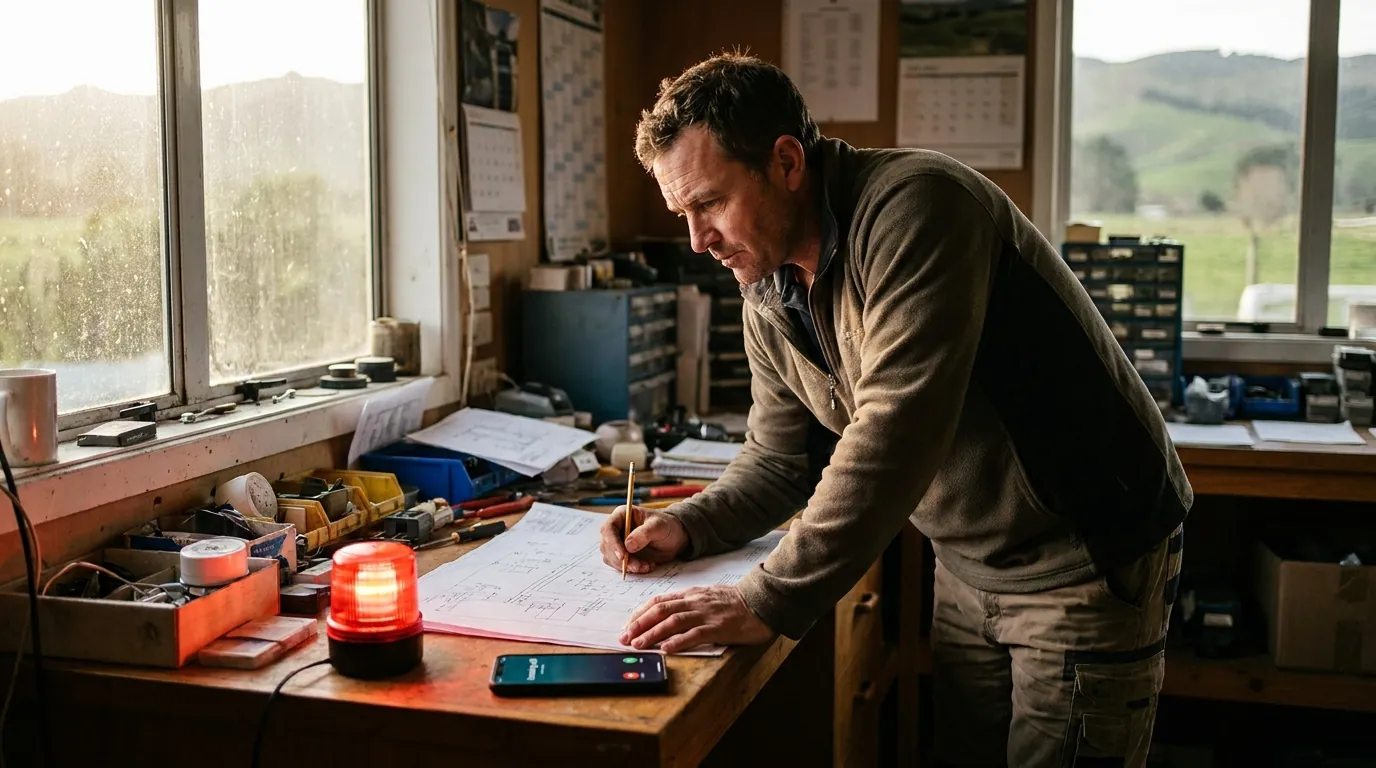
The call takes two minutes. "Are you open Saturday, what would a switchboard upgrade roughly cost, can someone come out Tuesday?" Easy questions, politely asked, worth answering. Then you hang up and stare at the job in front of you, trying to remember exactly where you were.
That second part is the bill nobody itemises. Gloria Mark's UC Irvine research timed it: interrupted work takes an average of 23 minutes and 15 seconds to properly come back from. The phone is stealing your focus and your team's, nearly half an hour at a time, every time someone gets interrupted.
The Science
What does a ringing phone actually cost your business?
Far more than the talk time. In field studies where researchers shadowed information workers second by second, Mark, González and Harris (CHI 2005) found people averaged just 11 minutes on a project before something pulled them off it. Interrupted work was usually picked up again the same day, but getting back took around 25 minutes.
23 min
to refocus after an interruption (UC Irvine)
11 min
of work between interruptions (CHI 2005)
28%
of the working day lost to interruptions and recovery (Basex)
Research firm Basex did the arithmetic back in 2005: unnecessary interruptions plus recovery time consumed about 28% of the average knowledge worker's day.
Put that on your payroll. At a typical New Zealand salary of $80,000, 28% of the working day is roughly $22,400 a year per person, paid out to interruptions and the recovery time they drag behind them. Across the Tasman the bill runs higher: Australia's average full-time wage is just over $106,000 a year, which puts the interruption share near $30,000 per person. Multiply by headcount and the ringing phone becomes the most expensive piece of equipment in the building.

The Reality
Who is really answering your phone right now?
Walk into any business without a dedicated front desk and the receptionist is whoever sits closest to the noise. The owner. The senior sparkie halfway through a switchboard in Te Rapa. The operations lead at a 40-person firm who should be in the pricing review. The person whose hour is worth the most ends up doing the job that pays the least.
Until now you had two ways out, and both cost you. Hire a full-time receptionist at $60,000 or so a year and the calls get caught, but you have bought a permanent overhead to solve a part-time problem. Or carry on as you are, and every ring either disrupts a productive person or goes unanswered, and an unanswered call is a missed sale.
And even with your best people playing catcher, most calls still get away. When 411 Locals monitored inbound calls to 85 small businesses for a month, only 37.8% were answered live. Invoca's analysis of more than 60 million home services calls found just 55% of callers ever reach a person, and under 3% of callers pushed to voicemail leave a message. BT Business research adds the kicker: customers will try a business at most twice before calling someone else.
The admin load is not hypothetical for tradies either. A 2018 EY Sweeney study for hipages found one in four Australian tradies had given up jobs because they were buried in admin, and the phone is a big slice of that pile. We broke down the trades case in our AI answering service for tradies post, and the clinic version in the medical clinic receptionist piece.
So you lose twice. The calls you answer cost you 23 minutes of focus each. The calls you miss cost you the job entirely.
The Fix
What does an AI receptionist actually do on a call?
A Waboom AI receptionist answers first, on the first ring, every time. Never on hold, never off sick, never standing in a ceiling cavity at 4pm. It runs several jobs in the one call, faster than a person juggling a counter and a phone ever could.
The routine asks get handled outright: hours, rough pricing, "are you open", "can someone come out", "where do I park". IBM put the ceiling for this years ago, estimating AI assistants can answer up to 80% of routine questions, and answering properly the first time is how you reduce inbound call volume for good.
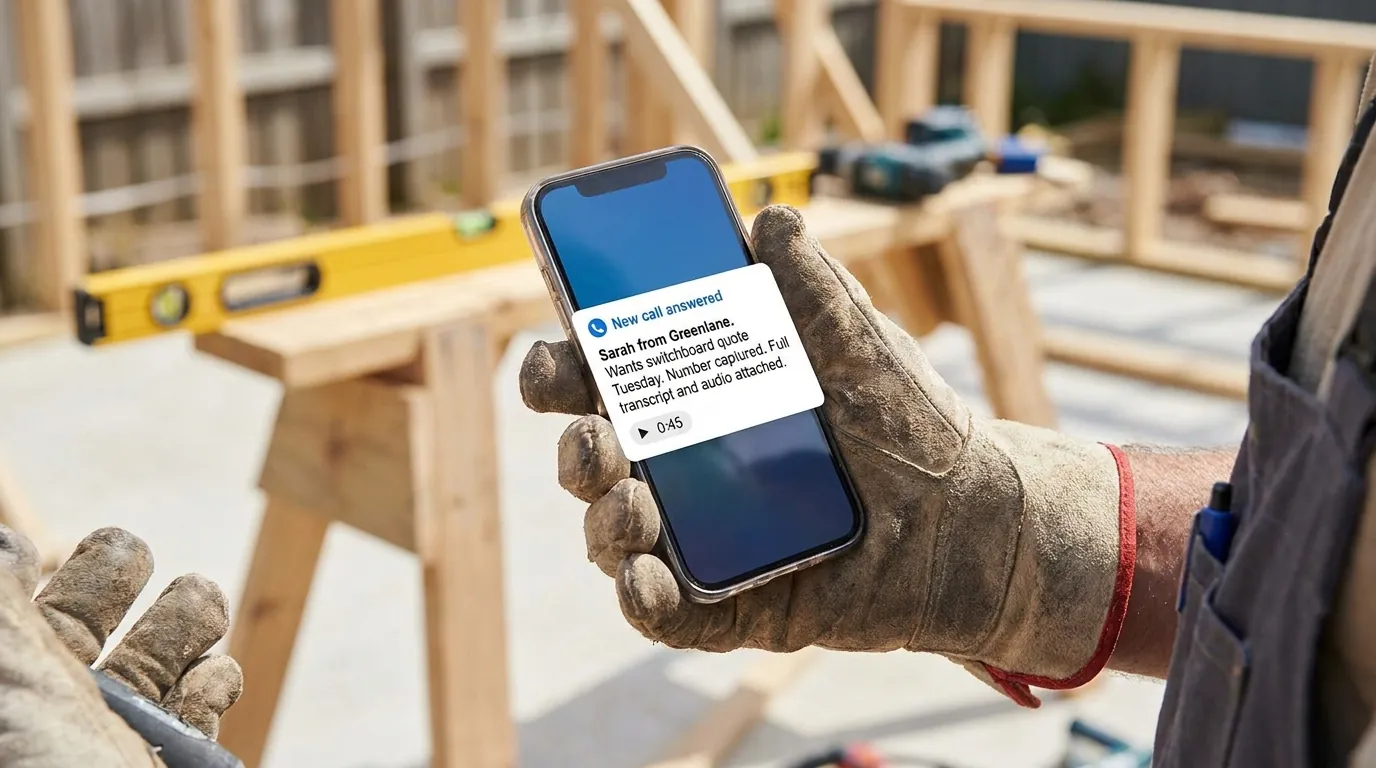
When a call genuinely needs you, the agent warm-transfers it by dialling you through, the same dial-pad transfer your office phone does today. You pick up already knowing who is on the line and what they want. If your line is busy or you cannot pick up, the agent takes the message and sends the full transcript, the audio recording, and a short summary straight to the right person. Nothing lands in a voicemail box nobody checks.
Hear it answer before you buy anything
Sam and Zoe are live on our AI receptionist page. Ring them from your couch, interrupt them, go off script. Then picture them on your number.
The Plumbing
Can you keep your own phone number?
Yes, and that is the path most clients take. You keep your existing number and forward calls to the agent, live the same day. We walked through the exact setup in how to forward calls to an AI receptionist.
Two other doors exist. We can stand the agent up on a Waboom AI number if you want a fresh line for a campaign or a new branch. And if you control your own SIP trunk, bring it, the agent sits on your carrier setup and your number stays exactly where it is.
The Money
How much does an AI receptionist cost?
$130 a month for the platform, then 95 cents a minute of talk time from a prepaid credit balance. You start with $500 of credit, so the first payment is $630, and when the balance drops under $50 it tops itself back up to $500. No bundles, no per-seat games, no contract. At 95 cents a minute, $500 buys around 525 minutes of answered calls.
Now line that price up against what it replaces. The full-time receptionist costs $60,000 a year before you add leave, sick days and a desk, and still clocks off at 5pm. Even a busy line that burns through the full $500 of credit every single month comes in around $7,500 a year, roughly an eighth of the hire, and it answers at 11pm on a Sunday.
Then add back the focus you stop losing. If your senior person bills $150 an hour and loses 23 minutes to each of six routine calls a day, that is about $345 of billable attention gone every day, call it $1,700 a week. The agent catches those calls for under a dollar a minute and your best person reads a tidy summary instead. Cost was never the headline here. It just happens to close the argument.
Once you are live, track it like an operator. We published the AI receptionist KPIs worth watching, and if missed calls are your sore spot, start with why your VoIP system cannot stop you losing calls.
The Role Shift
Where does the human receptionist go?
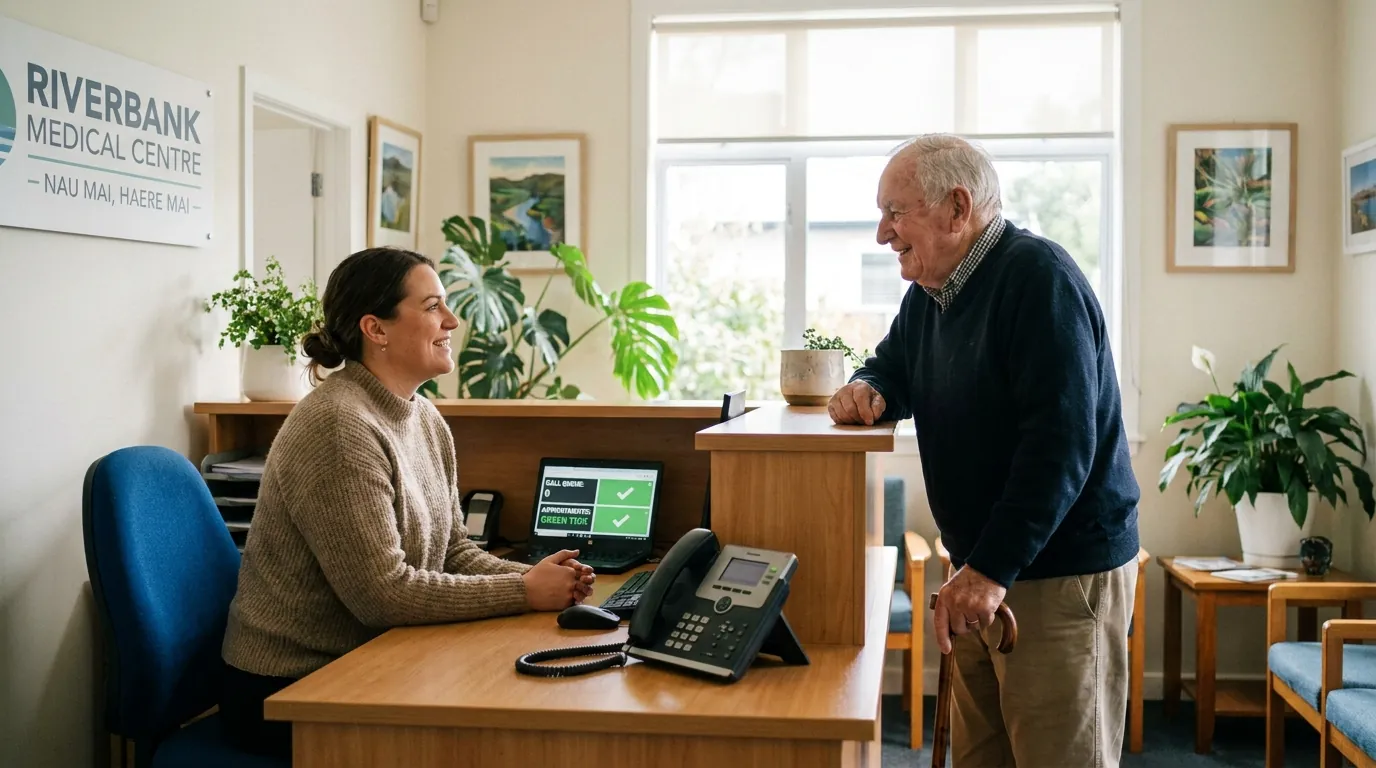
Up, not out. The receptionist seat was never really about catching a phone. It was about making people feel looked after, and that job gets bigger when the routine calls disappear.
Your front desk spends the day with the customers standing in front of them. Your senior tech finishes the quote. The owner gets a full afternoon of deep work, possibly for the first time in years.
The AI holds the front line and escalates the calls that genuinely need judgement, a relationship, or a person who can say yes to something unusual. Everything else gets answered, booked, logged and summarised without anyone breaking focus. That is the whole pitch: the phone stops pulling your best people off the work that actually pays.
Frequently Asked Questions
How long does it take to refocus after an interruption at work?
About 23 minutes. UC Irvine's Gloria Mark measured interrupted work taking an average of 23 minutes and 15 seconds to resume properly, based on field studies that shadowed information workers second by second. Her CHI 2005 paper also found workers averaged just 11 minutes on a task before being pulled away.
What does an AI receptionist actually do on a call?
It answers instantly, handles routine questions like hours, pricing and availability, books the simple jobs, and warm-transfers to the right person when the call needs a human. If nobody can pick up, it takes a message and sends the transcript, the audio recording, and a short summary to the right person in the business.
How much does an AI receptionist cost in New Zealand?
$130 a month for the platform plus 95 cents a minute of talk time from a prepaid credit balance, plus GST. You start with $500 of credit (first payment $630) and the balance tops itself back up automatically when it drops under $50. No per-seat fees and no contract.
Can an AI receptionist transfer a call to a real person?
Yes. The agent warm-transfers by dialling the right person through, the same way a human receptionist does with a dial-pad transfer. You answer already briefed on who is calling and why, and if your line is busy the agent simply takes the message instead.
Can I keep my existing phone number?
Yes. Most clients keep their number and forward calls to the agent, which goes live the same day. You can also run the agent on a Waboom AI number, or bring your own SIP trunk if you control your carrier setup.
Do callers know they are talking to an AI?
Some pick it, most do not. The agent identifies as an AI assistant when asked directly, which keeps you on the right side of every transparency rule. Callers genuinely stop minding once their question gets answered and their job gets booked on the first call.
Give your best person their day back
Forward your number today, live the same day. $130 a month plus 95 cents a minute, cancel anytime. Or ring the live demo agents first and try to trip them up.
Leonardo Garcia-Curtis
Founder & CEO at Waboom AI. Building voice AI agents that convert.
Ready to Build Your AI Voice Agent?
Let's discuss how Waboom AI can help automate your customer conversations.
Book a Free Demo