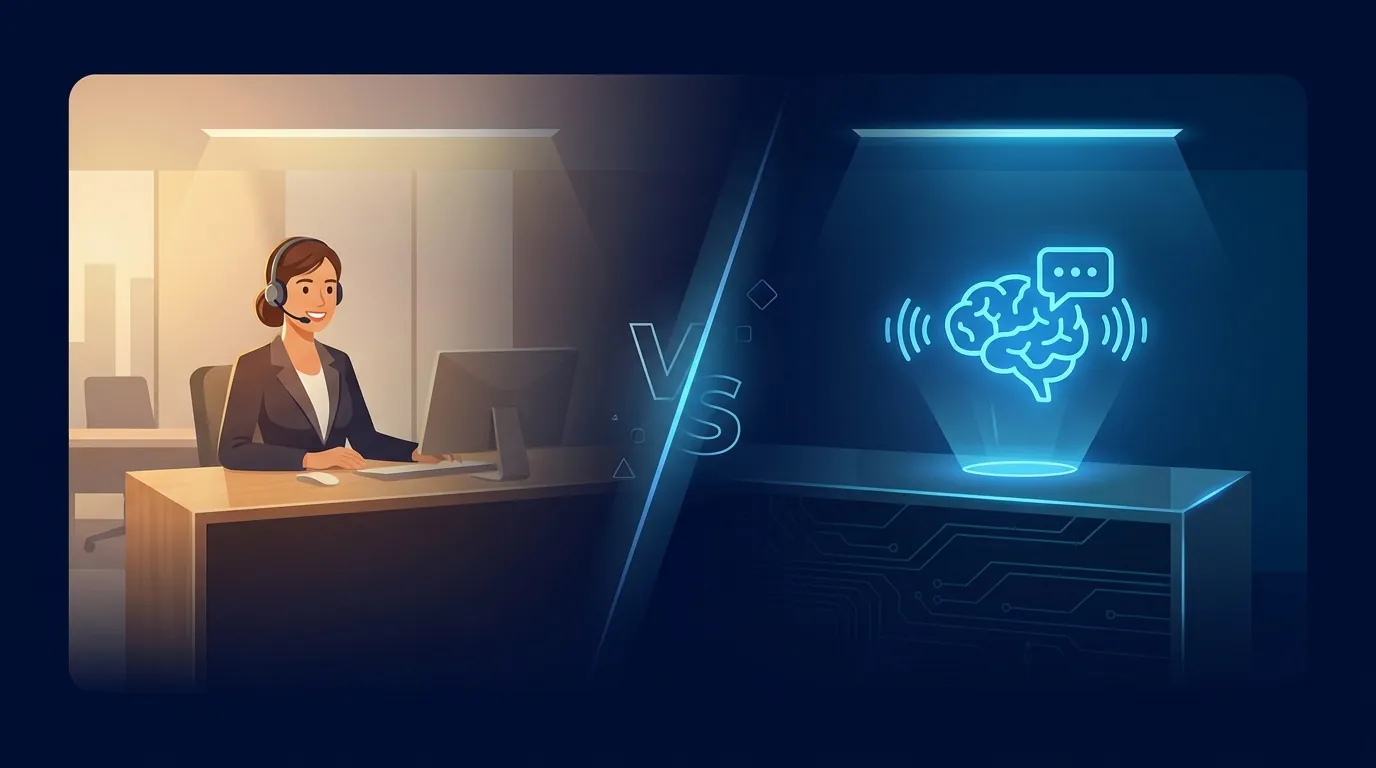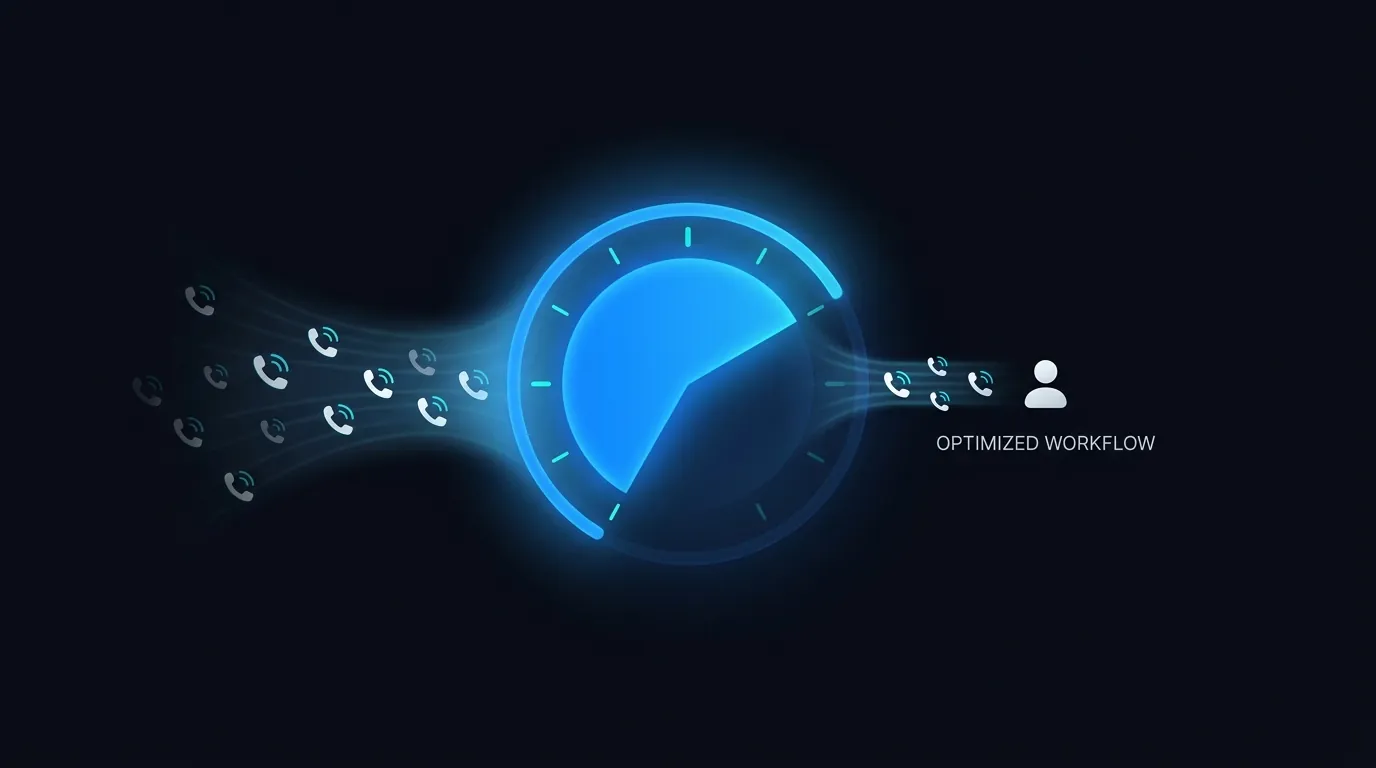
Your phone rings at 7:42pm on a Tuesday. The caller is a homeowner with a busted hot water cylinder. Your team has gone home. The call goes to voicemail. The homeowner hangs up and calls the next plumber on the Google list.
That call was worth roughly $1,800 in panel and labour. You will never know it happened.
An AI receptionist is what catches that call.
Contents
What an AI receptionist actually is
An AI receptionist is software that answers your business phone, talks to the caller, and acts on what the caller wants. It runs on the same model technology as ChatGPT or Claude, with a voice layer wrapped around it so the conversation flows the way a human conversation flows.
It is not a chatbot. Chatbots live in browsers. AI receptionists live on phone numbers.
It is not an IVR. IVRs press one for sales, two for support, and frustrate the human until they give up.
It is not voicemail. Voicemail captures roughly 33% of callers, because 67% of callers will not leave a message. The other two thirds hang up and try the next listing.
A good AI receptionist picks up inside one ring. It can handle hundreds of simultaneous calls. It books a job in your calendar without anyone in your office lifting a finger. And it sounds like a person, because the underlying voice models in 2026 do.
Two real businesses, one each side of the Tasman, show what that looks like in practice.
Auckland story: a mobile mechanic
We covered the full version of this in a separate teardown. The short version is here.
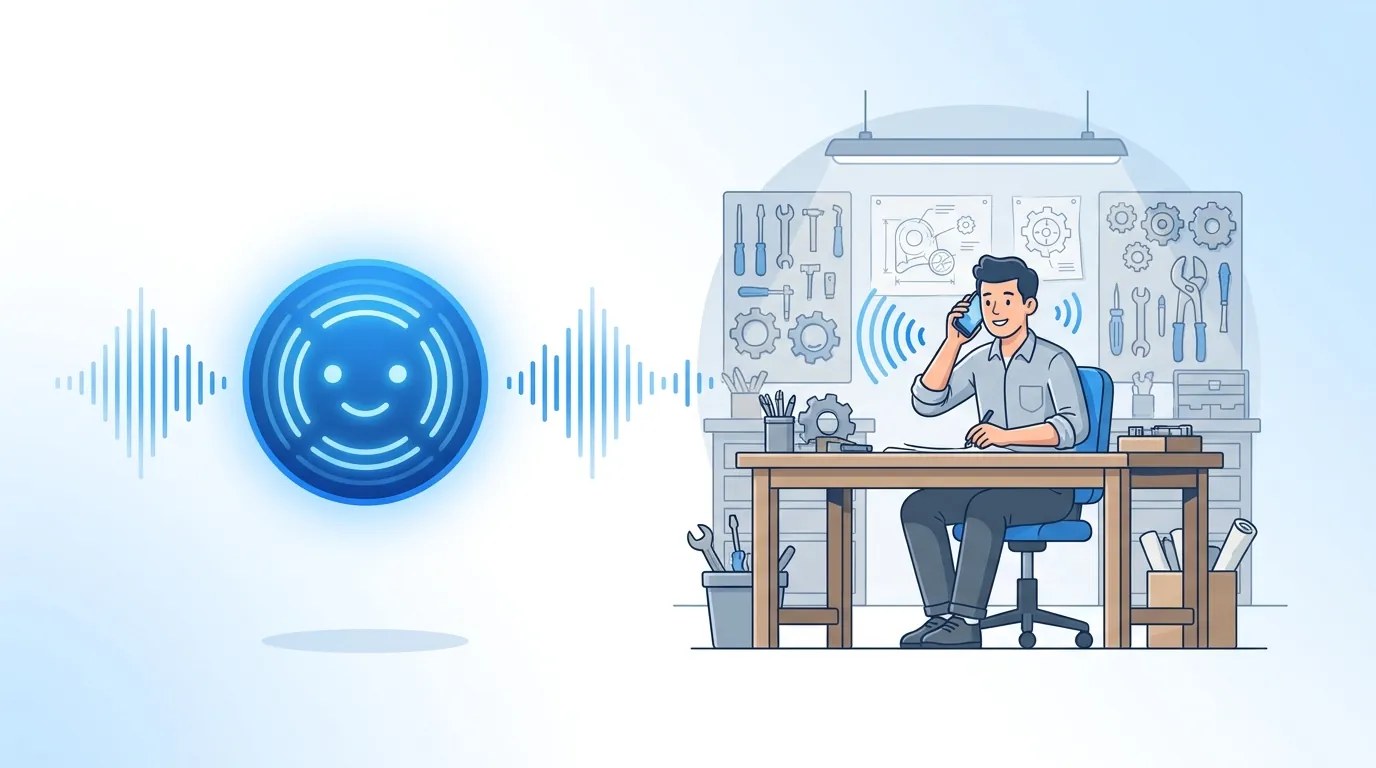
An Auckland mobile mechanic with one van and one pair of hands missed 463 after-hours calls in a single year. We pulled the data straight from his Vodafone bill. Every one of those calls came in between 5pm and 9am, when he was either under a bonnet, asleep, or trying to eat dinner with his kids.
His average job ticket was $340. The mid-range conversion on after-hours service calls in his market sits around 35%. That is roughly $55,000 in lost revenue. From one mechanic. In one year.
We turned on his AI receptionist on a Tuesday afternoon. By Friday it had booked 11 jobs that would have hit voicemail under the old setup. The numbers held the next month. And the next.
Read the full breakdown here: An Auckland mobile mechanic missed 463 after hours calls last year.
Sydney story: a bookkeeping practice
This one is a composite of three real Sydney bookkeeping practices we have worked with, anonymised for privacy. The numbers below are the median across the three.
A six-partner bookkeeping firm in inner-west Sydney was getting roughly 80 inbound calls a week, mostly from existing clients chasing BAS questions, payroll queries, or wanting to add a new entity to their account. The receptionist was a part-timer working Mondays, Wednesdays, and Fridays. Tuesday and Thursday calls hit voicemail. Friday afternoons got chaotic.
The partners did not want to hire a full-timer. They had tried an offshore answering service and pulled it after six weeks because clients kept ringing and saying "the woman who picked up did not understand what BAS meant".
We turned on an AI receptionist trained on their service catalogue and pricing. The agent could answer 31 of the most common client questions without a transfer (covered everything from "is my March BAS lodged" to "can you set up a new trust account for my family" by reading from their CRM). The remaining 49 question types went to a partner via a one-tap warm transfer with the call already summarised in Slack.
Within four weeks the firm went from 19% missed-call rate to under 2%. The Tuesday and Thursday gap closed. The part-timer was redeployed to actual bookkeeping work. The partners stopped getting paged at 6pm to confirm appointments.
That is what an AI receptionist looks like in a professional services practice. Not flashy. Just pickups that did not used to happen.
How it works under the bonnet
Four moving parts.
One. Telephony. A phone provider routes the inbound call to the AI agent. We use Twilio in Australasia. Most providers work.
Two. Speech to text. The caller's audio is transcribed in real time. Modern STT runs about 200ms behind the audio. You do not feel the lag.
Three. The language model. The transcript hits a model like Claude Haiku 4.5 or GPT-4.1-mini, paired with your business knowledge base. The model decides what to say back. It can also call functions: book an appointment, look up a client, fire a webhook.
Four. Text to speech. The model's reply gets spoken out in your chosen voice. We tune for sub 800ms total turn time, because past that the conversation feels off.
We wrote a deeper teardown on the latency budget here: Mastering voice AI latency.
AI receptionist vs virtual receptionist vs answering service
These three get used interchangeably online. They are not the same.
| AI receptionist | Virtual receptionist | Answering service | |
|---|---|---|---|
| Who picks up | Software | Remote human | Pooled human |
| Hours | 24/7 | Business hours | Often 24/7 |
| Knows your business | Yes, fully briefed | Partially | Reads a script |
| Books to your calendar | Yes, directly | Sometimes | Rare |
| Cost per month | $500 to $2,500 | $1,500 to $4,000 | $200 to $800 |
| Fits when | Volume, after hours, scale | Premium concierge feel | Basic message taking |
If you want the absolute warmest human touch and budget is not the issue, virtual receptionist wins. If you want every call answered, every booking captured, and every after-hours lead caught, AI receptionist wins. Answering services sit in the middle and capture the least value of the three.
When AI fits and when humans fit
AI fits when:
Humans fit when:
Most NZ and Australian SMEs sit firmly in the AI-fits column. The line moves further every year as models get better.
What it costs
Operating cost sits around $0.80 per active minute on most platforms in 2026. Average call length on a well-tuned receptionist is around 30 seconds. That works out to roughly $0.40 per call. Waboom runs this as a pay-as-you-go AI receptionist, prepaid from $130 a month with credits that top themselves up, live the same day.
A practice taking around 350 calls a month pays under $140 in usage. A trade business taking around 850 calls a month pays around $340. Compare that to a part-time receptionist salary in either Auckland or Sydney and the maths is a different conversation.
We publish full numbers here: Waboom AI voice agent pricing.
How to evaluate one
A buyer's checklist before you sign anything.
1. Listen to a real demo on your business. Not a generic demo. Your services, your pricing, your FAQs. If a vendor will not tune a demo for you in a week, walk.
2. Ask about turn latency. Sub 800ms total is the bar. We tear apart where the lag actually hides here.
3. Confirm calendar integration. Google Calendar and Outlook are table stakes. Pipedrive, HubSpot, Halaxy, Cliniko if you need them.
4. Ask about call transfer. Can the agent warm-transfer with context? Can it text you a summary? Can it page Slack?
5. Confirm data residency. NZ Privacy Act 2020 and Australian Privacy Principles both want you to know where the audio sits. Ask.
6. Read the cancel terms. No annual lock-ins. No exit fees. If a vendor needs you in a 12-month contract, they are not confident their product holds you on its merits.
Frequently asked questions
Does an AI receptionist sound robotic?
No, not on a properly tuned platform. Modern voice models in 2026 are indistinguishable from a human voice on a phone line in over 80% of blind tests. The giveaway used to be unnatural pauses. That is mostly solved at the sub 800ms turn budget.
How quickly can it go live?
Ten minutes from sign-off if your knowledge base is ready. Twenty four hours if we need to assemble it from your website and a quick conversation with your team.
Can it book appointments to my calendar?
Yes. Google Calendar, Outlook, Calendly, Cliniko, Halaxy, and most vertical scheduling tools all integrate.
What if the caller wants something complex?
The agent transfers to a human in your team with a one-line summary already typed. Your team picks up an in-context call instead of a cold one.
Is it compliant in New Zealand?
If the vendor follows NZ Privacy Act 2020, yes. Ask where the audio is stored, how long it is retained, and who can access it. We covered this in building compliant AI voice agents for New Zealand and Australia.
Is it compliant in Australia?
Same answer, with the Australian Privacy Principles and the Spam Act 2003 in play. The honest read on what is allowed and what is not, in plain English, is in the linked guide above.
Will customers know it is AI?
Some will, most will not. We tell agents to identify as an AI assistant when asked directly. That keeps you on the right side of every transparency rule and most callers genuinely do not mind once they realise the agent answers their question and books their job.
Can it speak Te Reo or other languages?
Yes, on multilingual platforms. Many of the smaller pure-AI vendors are English only. Check before you sign.
What if I want to cancel?
A good vendor lets you walk in 30 days. We do.
Want to hear ours on your business?
Try the live Auckland demo or the Sydney demo and ask it about your services. We tune it on your data inside a week.
See the NZ AI receptionist · See the Australian AI receptionist
Leonardo Garcia-Curtis
Founder & CEO at Waboom AI. Building voice AI agents that convert.
Ready to Build Your AI Voice Agent?
Let's discuss how Waboom AI can help automate your customer conversations.
Book a Free Demo