
So what is a virtual receptionist? It answers your calls without sitting in your office. It can be a remote human in a call centre, an AI agent like ours, or a phone menu. All three pick up when you can't. The difference is who or what does the talking, and what it costs you per month.
Most NZ and AU owners hit this the same way. The phone rings while you're on a job. You miss it. The caller rings the next business on the list. A virtual receptionist closes that gap.

A virtual receptionist picks up the call you would have missed.
What is a virtual receptionist?
A virtual receptionist is a service that answers your phone when you can't, without anyone sitting at your front desk. It comes in three forms: a remote human, an AI agent, or an automated phone menu. The job is the same. Pick up the call and help the caller.
What changes is who does the talking and what it costs. A human bureau staffs people who answer in your name. Our AI agent answers every call on the first ring. A phone menu just plays options.
The test that matters: does the caller get helped, or do they hang up and ring the next business? That single question decides whether the model earns its keep.
Human service, AI, or a phone menu: what are the options?
There are three. A human bureau staffs remote people who answer in your business name. An AI agent answers every call instantly and books jobs on its own. A phone menu plays press one for sales. Each suits a different volume and budget.
The human bureau feels personal but costs the most per call. The phone menu is cheap but callers hang up on it. The AI agent sits in the middle on warmth. It wins on speed and cost.
We run the AI option, so we'll be straight about where each one fits. A bureau charges per call or per minute. A menu charges almost nothing but loses the caller. Our agent charges about 80 cents per minute, billed by the second.
For a closer look at the human-versus-AI choice, read our side-by-side comparison of AI and human virtual receptionists.
What does a virtual receptionist actually do on a call?
It greets the caller, answers common questions, takes a message, and books the appointment into your calendar. A good one also captures the caller's name, number, and reason for calling. It then texts or emails you the details before you finish your current job.
Our agent does all of that on the first ring. It tells callers it's an AI, then handles the booking. The caller never sits in a queue.
A phone menu can't book anything. A bureau can book, but only when a human is free to take the call. Speed is where most missed revenue hides. If you want the mechanics, here's how an AI receptionist works on a real call.
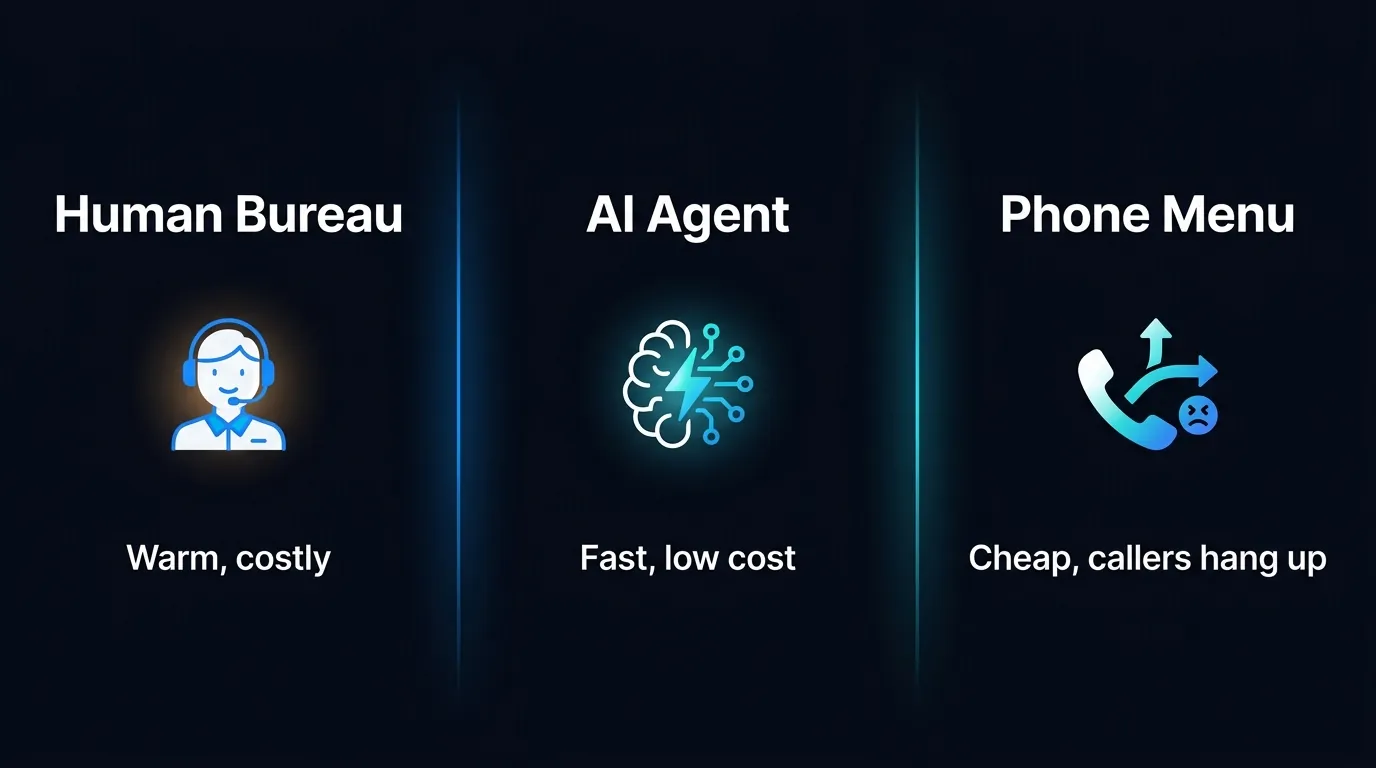
The three models, ranked by speed, warmth, and cost per call.
What does a virtual receptionist cost in NZ and Australia?
Cost tracks the model you pick. A part-time human receptionist runs about 28 to 35 dollars an hour before KiwiSaver or super, ACC and holiday pay. A bureau charges per call. Our AI agent costs about 80 cents per minute billed by the second, and the average answered call runs about 30 seconds.
Do the maths on that. A 30-second call costs about 40 cents. A one to two minute booking call costs about one to two dollars. There's no hourly wage running while the phone sits quiet.
A human costs the same whether 2 calls come in or 20. Our agent costs you only for the seconds it talks. For the full breakdown, read our guide on what an AI receptionist actually costs.
Want to stop losing calls to the next business on the list?
See how our AI receptionist answers every call at a known per-second cost.
Virtual receptionist versus an answering service: what is the difference?
An answering service mostly takes messages. A virtual receptionist does the job a front-desk person would do. It books appointments, answers pricing questions, and qualifies the caller. The line blurs, but the test is simple: can it complete the task, or only write it down?
Our agent completes tasks. It checks your calendar, offers a time, and confirms the booking while the caller is still on the line. A message-only service leaves you a callback list for later.
That gap matters at 5pm on a Friday. A message means you ring back Monday. A booking means the job is locked in before the caller forgets. If you're shopping around, here's our take on the best AI answering service for NZ and AU.
Is it a real person or an AI?
Either one, based on the model you choose. A bureau uses real remote staff. A phone menu is automated with no conversation. Our virtual receptionist is an AI agent, and it tells every caller that up front. Disclosure is built in, not optional.
Callers rarely mind once the agent solves their problem fast. We've watched people book viewings and ask follow-up questions without hesitation. A Christchurch developer used our agent to book property viewings at 7.12 dollars each.
Honesty on the call also keeps you onside with privacy rules. The NZ Privacy Act 2020 and the Office of the Privacy Commissioner expect clear handling of personal data. In Australia the Privacy Act 1988, the 13 Australian Privacy Principles, and the OAIC set the same bar.
Which option fits your business?
Match the model to your call volume and your margins. Low volume with high personal touch suits a small human team. Steady volume where speed wins suits our AI agent. A phone menu only suits callers who already know which extension they want.
Most trades, clinics, and property firms we onboard fit the AI agent. They miss calls during jobs, and every missed call is a lost booking. Our agent answers all of them at a known per-second cost.
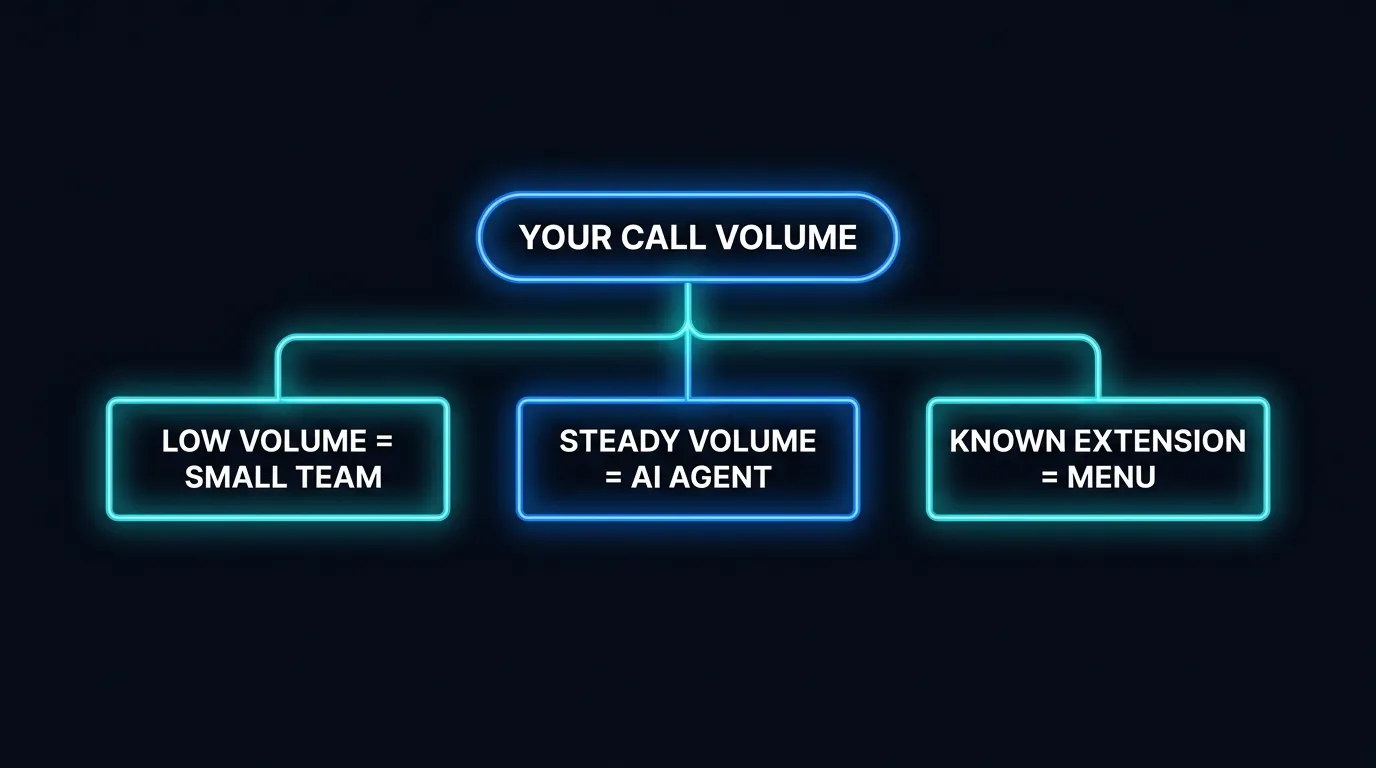
Match the model to your call volume, not the brochure.
If you want a person for complex cases and an agent for the overflow, run both. The agent catches the calls a human would have missed. NZ owners can see a live one on our inbound AI receptionist demo for New Zealand, and AU owners can read the virtual receptionist guide for Australia.
Where does your call data live?
Your structured records, transcripts, and portal data sit on our servers in Sydney. The live audio during the call is processed offshore under documented arrangements with our voice infrastructure partner. We won't tell you all data stays in Australia, because that wouldn't be true.
This split is normal and it's compliant. What matters is that you know where each piece sits. That clarity is what the OPC in NZ and the OAIC in Australia want you to be able to explain.
Ready to see which model fits your phone?
Start with our AI receptionist hub and listen to a real agent answer a call.
Frequently Asked Questions
What is a virtual receptionist in simple terms?
It's a service that answers your phone when you can't. It can be a remote human, an AI agent, or an automated menu. The job is the same. Pick up the call, help the caller, and book the work so you don't lose it to the next business on the list.
How much does a virtual receptionist cost in NZ or Australia?
A human runs about 28 to 35 dollars an hour before KiwiSaver or super, ACC and holiday pay. Our AI agent costs about 80 cents per minute billed by the second. With an average answered call near 30 seconds, that's about 40 cents a call. You pay only for talk time.
Is a virtual receptionist a real person?
It depends on the model you choose. A bureau uses real remote staff. Our virtual receptionist is an AI agent, and it tells every caller that on the call. Disclosure is automatic. Most callers don't mind once the agent books their job in under a minute.
Can a virtual receptionist book appointments?
Yes, a good one can. Our agent checks your calendar, offers a time, and confirms while the caller is still on the line. A message-only answering service can't do that. It leaves you a callback list, which usually means you ring back the next working day.
Does a virtual receptionist work for trades and clinics?
Yes, those are the businesses that gain the most. They miss calls during jobs or while with a patient. Every missed call is a lost booking. Our agent answers all of them instantly at a per-second cost, so the phone stops being a leak.
Where is my caller data stored?
Your transcripts and structured records sit on our Sydney servers. Live call audio is processed offshore under documented arrangements with our voice infrastructure partner. We're honest about that split. It keeps you able to explain your data handling to the OPC in NZ or the OAIC in Australia.
Leonardo Garcia-Curtis
Founder & CEO at Waboom AI. Building voice AI agents that convert.
Ready to Build Your AI Voice Agent?
Let's discuss how Waboom AI can help automate your customer conversations.
Book a Free Demo

