
It is 4pm on a Friday in Penrose. Three drivers are running late. The dispatch phone has rung eleven times in twenty minutes. Every caller wants the same thing. Where is my parcel, and can you pick one up before five.
Your dispatcher cannot plan routes and answer that phone at once. So either the routes slip or the calls go unanswered. Both cost you money.
An AI voice agent for courier and logistics answers those calls instead. It handles tracking, delivery windows and pickup bookings in plain English. Your dispatcher gets the phone back.
We build these agents for couriers and freight operators across New Zealand and Australia. Here is exactly how one works on the phones, what it costs, and where your data lives.
What does an AI voice agent do for a courier or logistics business?
An AI voice agent answers your inbound phone line, identifies what the caller wants, and handles the routine work itself. It quotes delivery status, books pickups, captures addresses and routes the hard calls to a human. It runs every hour you are open, and after hours too.
Think of it as a dispatcher who only does the phone. It does not get flustered when six calls land at once. It picks up on the first ring, every time, and never puts a customer on hold to plan a route.
The agent discloses it is an AI at the start of every call. Callers know they are talking to a machine. Most do not mind, because they get an answer in twenty seconds instead of a queue.
It is not trying to replace your team. It clears the repetitive calls so your people handle exceptions, escalations and the customers who genuinely need a person.
Why does dispatch drown in delivery and tracking calls?
Dispatch drowns because the phone competes with the road. One person cannot sequence twelve drops and answer a ringing line at the same time. So calls get missed, callbacks pile up, and a third of your day goes to status updates that a system could give in seconds.
Most courier calls are predictable. Where is my parcel. What time is the driver coming. Can you collect from this address today. The same handful of questions, all day, every day.
When those calls hit during the run, something has to give. Either your dispatcher stops planning to answer, or the call rings out. We have watched abandonment climb past one in four calls during the afternoon peak.
A missed call is not neutral. The sender rings a competitor, or the receiver lodges a complaint. Both are more expensive than the call would have been.
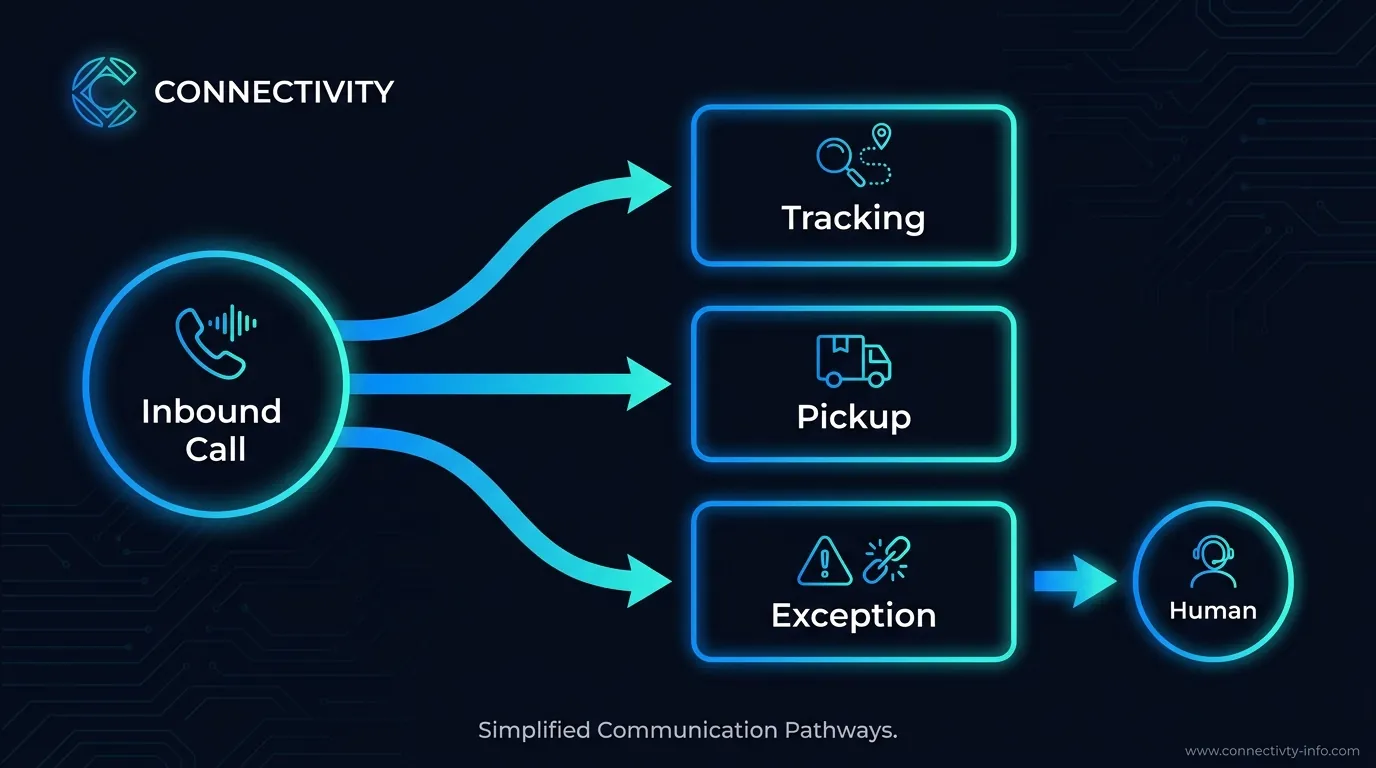
The agent sorts every inbound call into tracking, pickup or exception before a human is ever needed.
If your afternoon phone is bleeding callers, our guide on how to reduce call abandonment with a voice agent shows the pattern in numbers. See how to stop dropping calls at peak.
How does it handle a tracking or delivery enquiry?
The agent asks for a tracking number or sender details, looks the consignment up, and reads back the status. It does this in about thirty seconds. The caller gets a real answer, not a promise to call back.
Here is the flow on a real call. A receiver rings asking where their parcel is. The agent confirms the tracking number, checks the live status, and says the parcel is on the van for delivery before noon.
If the caller wants more, the agent offers to text the tracking link or flag the consignment for your driver. No hold music. No transfer.
When the consignment is genuinely stuck or lost, the agent does not guess. It captures the details and escalates to a person, which we cover further down.
The lookup runs against your own systems. Our agents connect to the freight platforms you already use. The status the caller hears matches what your dispatcher sees. More on that in our piece on connecting a voice agent to your CRM and back office.
How does it book a pickup?
The agent collects the pickup address, the destination, the parcel size and the ready time, then logs the job straight into your dispatch system. It confirms the details back to the caller before it hangs up. A pickup that used to take a three-minute phone call gets booked cleanly while your dispatcher keeps planning routes.
Watch it run. A regular sender calls at 3:45pm wanting a same-day collection. The agent confirms the address on file, asks for the number of cartons, and checks the ready time against your cut-off.
If the pickup fits your run, the agent books it and gives a collection window. If it misses your cut-off, the agent offers tomorrow morning instead. No back and forth, no missed details.
A Christchurch operator we work with cut their pickup-booking calls off the dispatcher entirely. The same pattern booked property viewings for a developer at 7.12 dollars each, and it works the same way for collections.
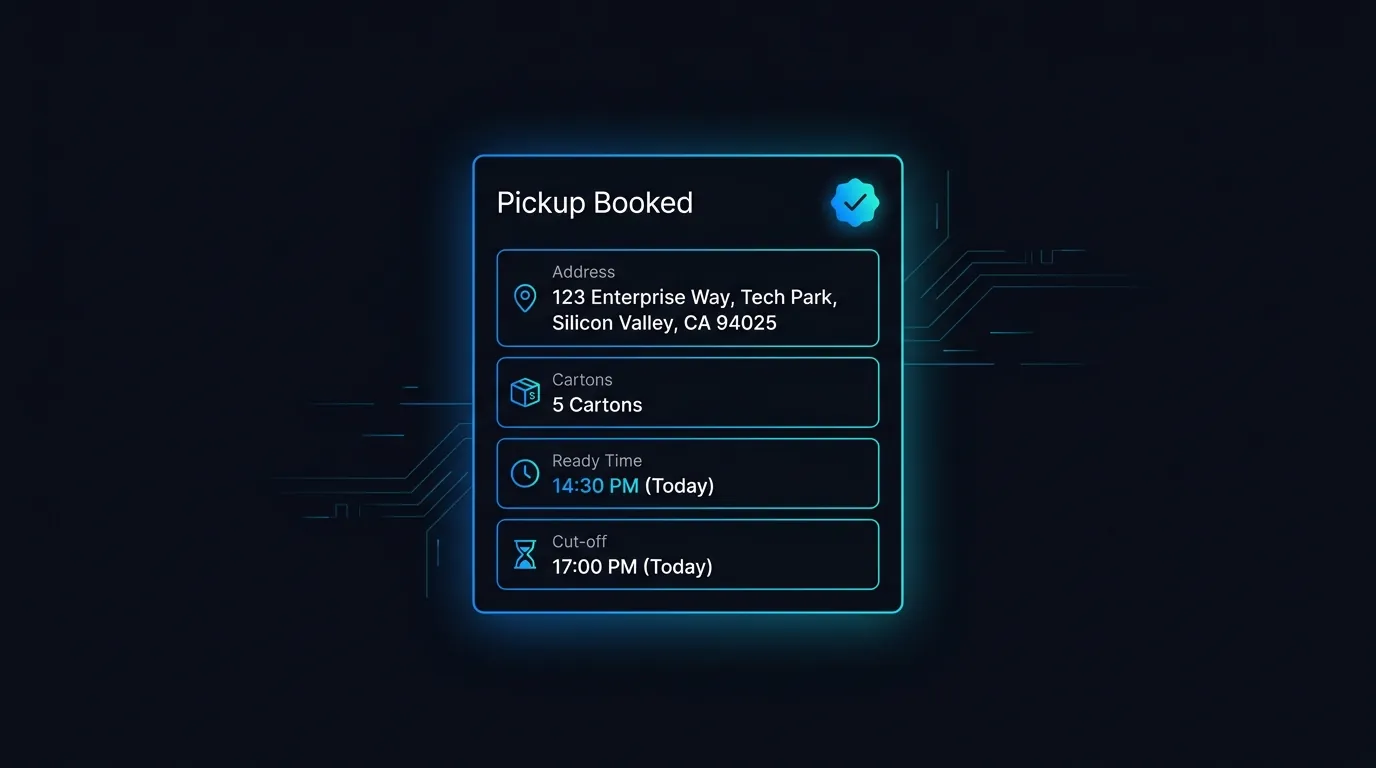
A pickup booked by the agent lands in dispatch with address, carton count and ready time already captured.
Stop choosing between the phone and the road.
See how our AI voice agents handle tracking, pickups and after-hours calls for couriers across NZ and AU.
How does it route an urgent or exception call?
The agent spots your urgent and exception calls and routes them to a human fast. A lost consignment, a damaged delivery or a complaint reaches your team with context gathered. Routine calls never block your line. Your people only pick up what needs them.
The agent reads intent, not just keywords. When a caller is upset, or says words like missing, damaged or urgent, it switches mode. It stops trying to self-serve and moves to escalation.
Before it transfers, it captures the tracking number, the issue and a callback number. Your dispatcher answers already knowing the problem. No starting from scratch.
If nobody is free, the agent takes a structured message and books a callback time. The caller is not abandoned, and the job does not vanish. This is the human-in-the-loop model we believe in. See why voice agents still need people.
The net effect is fewer interruptions for your dispatcher. We have seen total inbound load on staff drop sharply once routine calls are handled. We break the numbers down in how to cut inbound call volume.
How does it keep customer data private?
Your structured records, transcripts and call logs sit on our servers in Sydney. Live call audio is processed offshore by our voice infrastructure partner, under documented arrangements. We never claim all data stays in Australia, because that would not be true.
We are straight about the residency split. The portal you log into, the transcripts you read and the structured consignment records all live on Sydney infrastructure. The raw audio stream during a live call is handled offshore.
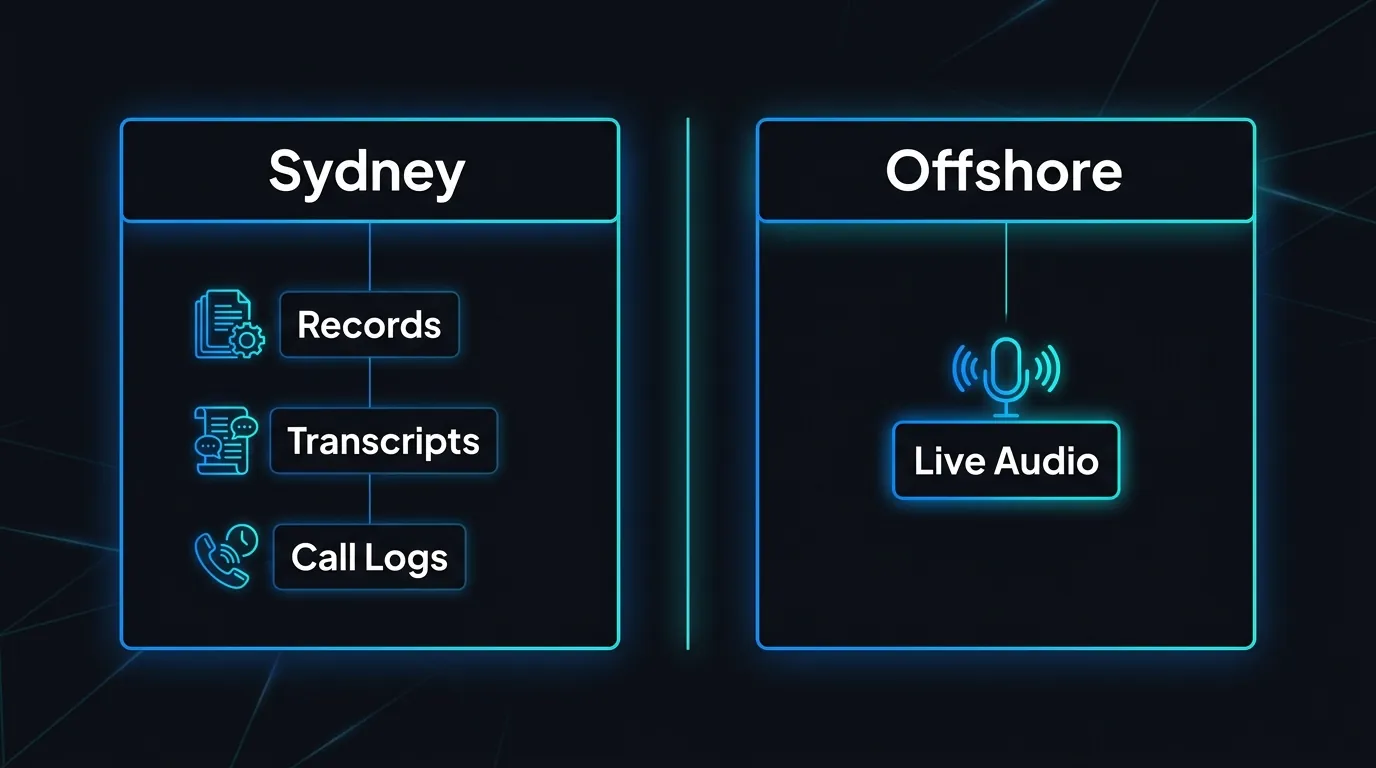
Structured records and transcripts stay in Sydney; live audio is processed offshore under documented arrangements.
For New Zealand operators, this falls under the Privacy Act 2020 and the Office of the Privacy Commissioner. For Australian operators, it falls under the Privacy Act 1988, the 13 Australian Privacy Principles, and the OAIC. The agent discloses it is an AI on every call, which keeps your consent posture clean.
You stay in control of retention. You decide how long transcripts and recordings are kept, and you can export or delete them.
What does it cost a NZ or AU operator?
We bill from 77c to 95c a minute depending on plan, charged by the second. An average answered courier call runs about thirty seconds, so roughly 48c. A longer pickup booking of one to two minutes costs about 95c to $1.90. There are no per-seat fees and no holiday pay.
Put that against a person. A part-time receptionist in NZ or AU costs about 28 to 35 dollars an hour before KiwiSaver or super, ACC and holiday pay. The agent only bills for the seconds it actually talks.
If you run outbound too, the same agent chases delivery confirmations or missed-card follow-ups. Connect rates land between 47 and 65 percent, and about 20 to 25 percent of dials become a real conversation. A 200-dial campaign costs about $125 NZD.
For a full breakdown against staffing, read our guide to what an AI receptionist costs. If you want to see the inbound build for your line, start with our NZ inbound voice agent page.
Frequently Asked Questions
Can an AI voice agent for courier and logistics handle our existing tracking numbers?
Yes. The agent looks up consignments against your own courier and freight platforms, so the status a caller hears matches what your dispatcher sees on screen. It reads back the current location and the next delivery window in about thirty seconds, then offers to text the tracking link.
What happens when a customer is angry about a lost parcel?
The agent detects the tone and intent, stops self-serving, and routes the call to a person. Before it transfers, it captures the tracking number, the issue and a callback number. Your dispatcher answers already knowing the problem, so the customer does not have to repeat themselves.
Does it work after hours and on weekends?
Yes. The agent answers every hour, nights and weekends, with no overtime cost. After-hours callers get tracking answers or book a pickup for the next run. Urgent calls get a structured message and a booked callback, so nothing falls through overnight.
How much does a typical courier call cost to handle?
About 48c. We bill from 77c to 95c a minute depending on plan, by the second, and an average answered tracking call runs about thirty seconds. A one to two minute pickup booking costs about 95c to $1.90. You pay only for talk time, with no per-seat or holiday costs.
Where is our customer data stored?
Your structured records, transcripts and call logs sit on our servers in Sydney. Live call audio is processed offshore by our voice infrastructure partner under documented arrangements. This sits under the NZ Privacy Act 2020 and the OPC, and the Australian Privacy Act 1988 and the 13 APPs overseen by the OAIC.
Will it replace our dispatch team?
No. It clears the routine tracking and pickup calls so your team handles exceptions, complaints and high-value accounts. The model is human-in-the-loop. Your people pick up the calls that actually need a person, and the phone stops competing with the road.
Give your dispatcher the phone back.
Book a walkthrough of our AI voice agents for courier and logistics and hear one field a live tracking call.
Leonardo Garcia-Curtis
Founder & CEO at Waboom AI. Building voice AI agents that convert.
Ready to Build Your AI Voice Agent?
Let's discuss how Waboom AI can help automate your customer conversations.
Book a Free Demo

