
An AI voice agent for hospitality answers every booking call, takes and changes reservations, handles function enquiries, and confirms bookings to cut no-shows. It works the Saturday rush and the dead of night without putting anyone on hold. Callers hear a natural voice, and the agent tells them up front it is an AI.
This is for any NZ or AU restaurant, cafe, or bar that loses bookings to a ringing phone nobody can answer. Below is what the agent does, why the Saturday rush costs you covers, and what it costs to run.
Stop dropping bookings during service.
See how an AI voice agent built for hospitality venues answers every call, even at 1pm on a Saturday.
What does an AI voice agent for hospitality do for a venue?
It picks up every call, books and changes tables, answers function enquiries, and sends confirmations. So your floor staff stop juggling the phone during service. An answered booking call runs about 30 seconds and costs roughly 40c. The agent never gets flustered at 7pm on a Friday.
Here is the plain version. Your phone rings during service and nobody can grab it. The host is seating a table of six. The duty manager is on the floor. That ringing phone is a booking walking out the door. Our platform answers on the first ring, every time.
The agent does four jobs well:
Each one is a call your team currently drops mid-service.
It also writes everything down. Every call leaves a transcript and a record in your booking system. So you can see who called, what they wanted, and what the agent did. No more guessing why table 12 has two names on it.
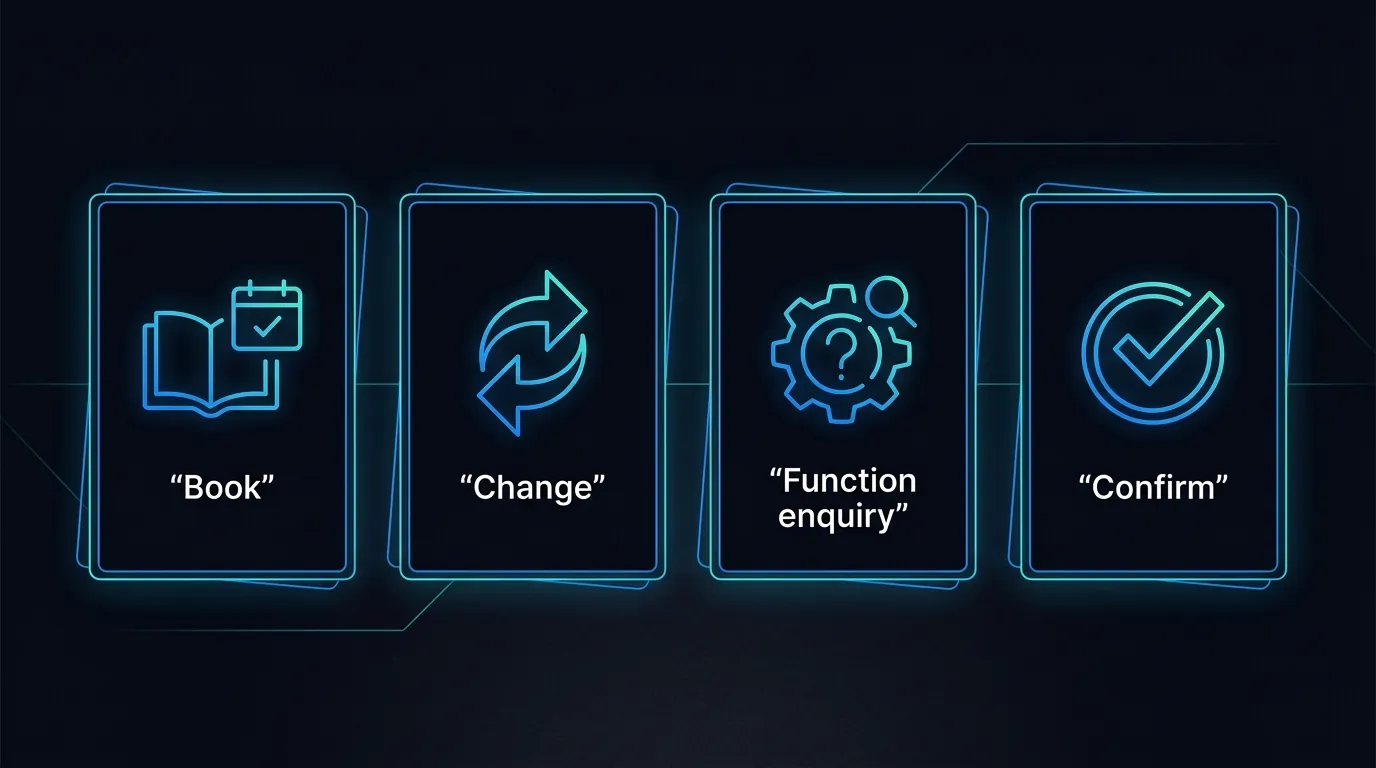
The agent covers the four phone jobs your floor staff drop during service.
Why does the Saturday rush cost you bookings?
Because your phone rings hardest when your staff are busiest. Saturday lunch and dinner are your peak revenue windows. They are also when nobody is free to answer. Missed calls during the rush are missed covers, and the agent answers all of them at once.
Picture 1pm on a Saturday. Forty covers in, twenty waiting. The phone rings four times in ten minutes. Your host catches one call and misses three. Those three were a birthday table of eight, a couple for tonight, and a regular changing their time.
A single human answers one call at a time. The agent answers every call at once, in parallel. So a queue never forms. There is no hold music and no voicemail. If thirty people ring in five minutes, thirty people get answered.
This is the same problem we solve for clinics and trades. We covered it in our piece on reducing call abandonment. The fix is the same here. Answer every call instantly and the lost bookings come back.
How does it take and change reservations?
The agent asks for the date, time, party size, and name, checks availability, and books the table. It also moves, shrinks, or cancels existing bookings the same way. The whole thing writes straight into your booking system, so no paper and no double-entry.
A real call sounds like this. A caller wants a table for four at 7:30 on Friday. The agent checks the book, confirms the slot, takes a name and mobile, and reads it back. Thirty seconds, about 40c. Done before your host would have reached the phone.
Changes work the same way. The caller gives a name or number, and the agent finds the booking and makes the edit. Moving a 6pm to 8pm takes one short call. So your team never untangles a scribbled change at the pass.
For venues that want the agent doing the same job for appointments and tables, our guide on AI receptionist appointment booking covers the booking flow in detail. The mechanics carry straight across.
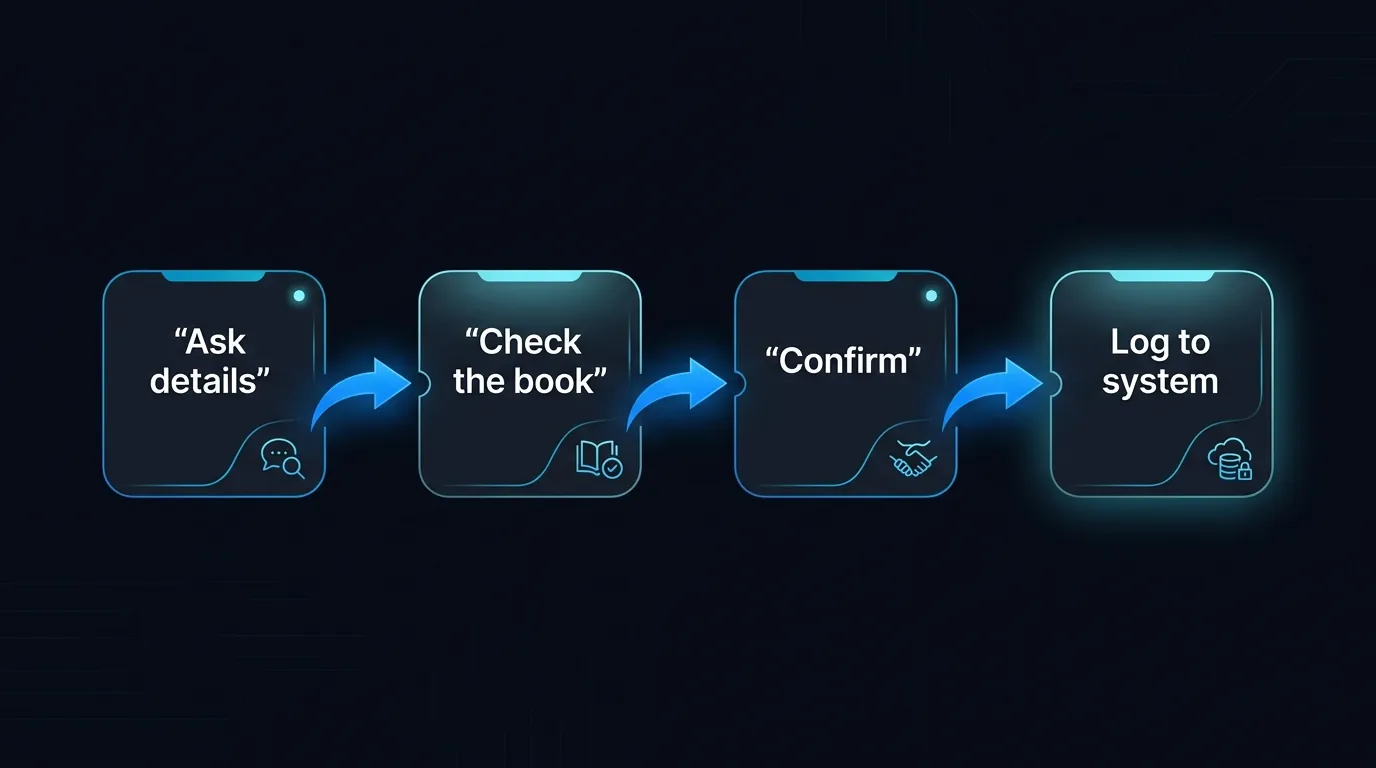
A booking call: ask, check the book, confirm, and log it straight to your system.
How does it handle function and group enquiries?
The agent captures the function brief, qualifies the enquiry, and routes it to your events person. It asks the date, head count, budget range, and what the group wants. Then it logs the lead and emails your team. So no big-spend enquiry sits in a voicemail over the weekend.
Function calls are your highest-value calls. A Christmas party of forty is worth more than ten walk-ins. You cannot afford to miss one. The agent treats every function enquiry as a qualified lead and gets it to a human fast.
It knows its limits too. A group of forty with a custom menu needs your events manager, not a bot. The agent gathers the detail and hands off cleanly. We are honest about where humans still matter, and we wrote about exactly that.
The handoff is the point. The agent does the boring intake. Your events person does the selling. So your best caller never waits and your team only touches enquiries that are ready to close.
How does it cut no-shows with confirmations?
The agent rings or texts the day before to confirm, and reschedules anyone who cannot make it. So empty tables get released and refilled instead of sitting dark. No-shows quietly cost you covers every week, and a confirmation call is the cheapest fix there is.
Here is the maths on a confirmation campaign. Two hundred confirmation dials cost about $100 NZD. Outbound calls connect 47 to 65 percent of the time. Roughly 20 to 25 percent of dials turn into a real conversation. Every reclaimed table pays for the whole run.
A no-show is not just an empty seat. It is food prepped, staff rostered, and a table you turned away someone else for. Catching even a handful a week changes your Saturday. The agent makes those calls while your team preps service.
When someone cannot make it, the agent reschedules on the spot or releases the table. So the slot goes back into the book. You fill it from your waitlist instead of staring at an empty four-top at 8pm.
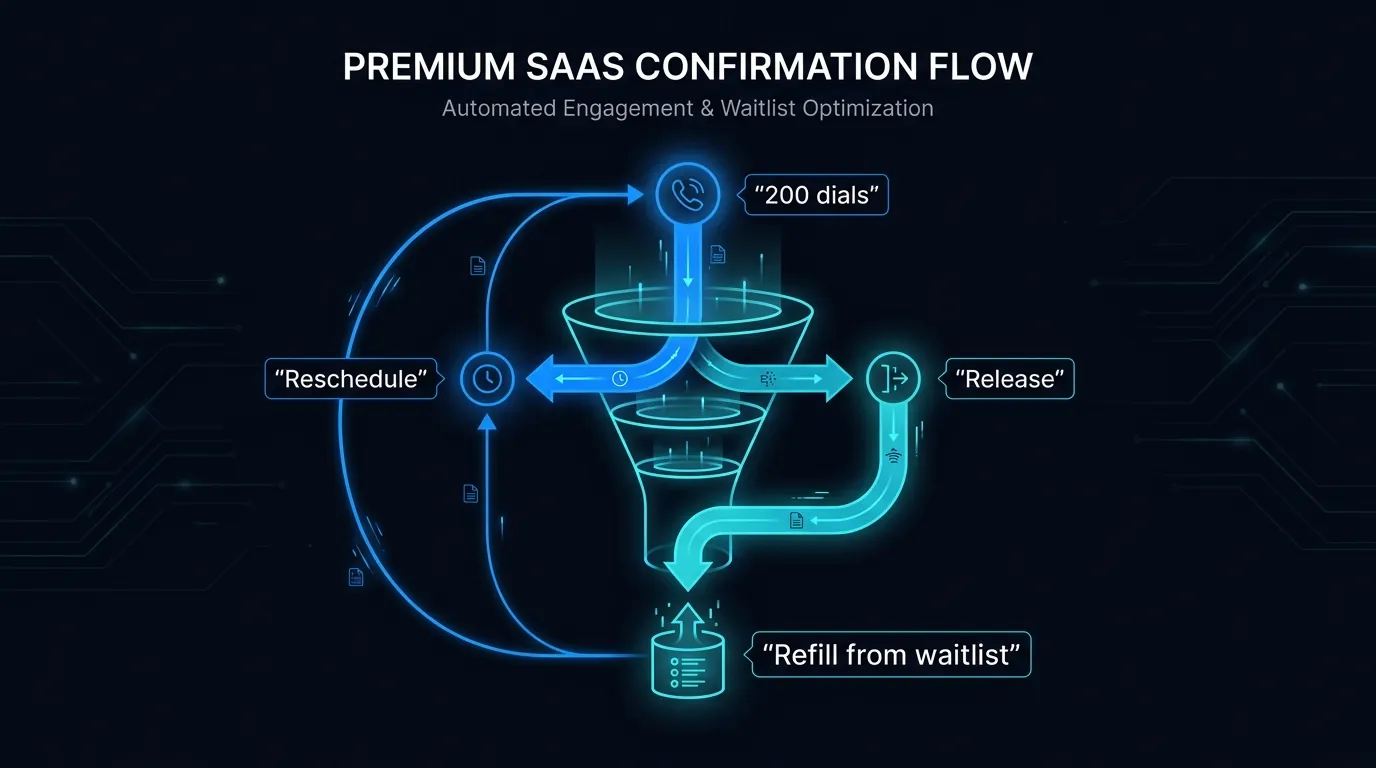
A confirmation run reclaims tables: confirm, reschedule, or release the slot back into the book.
How does it cover after-hours booking calls?
The agent answers overnight, on public holidays, and between services when nobody is rostered. People book restaurants at 11pm from the couch. The agent takes the booking, confirms it, and logs it. So you wake up to a fuller book instead of three missed calls.
Most booking calls come outside service prep. Someone decides on dinner while watching telly. If your phone goes to voicemail, they ring the place down the road. After-hours cover is not a nice-to-have. It is bookings you are handing to competitors.
You can point your existing number at the agent after hours and keep it for staff during the day. Our walkthrough on forwarding calls to an AI receptionist shows the setup. It takes minutes and you keep your number.
For the bigger picture on why overnight cover matters, we broke it down in our after-hours receptionist guide. The short version is simple. The bookings are real and they happen when you are closed.
Never miss a booking again.
Put an AI voice agent for your hospitality venue on your phone and cover every call, day or night.
What does it cost a NZ or AU venue?
Calls are billed by the second at about 80c a minute. An answered booking call runs around 30 seconds, so about 40c. A longer function enquiry of one to two minutes runs $1 to $2. A part-time receptionist costs $28 to $35 an hour before KiwiSaver or super, ACC, holiday pay, and breaks.
Run the comparison. A human answers one call at a time and goes home at five. The agent answers every call at once and never clocks off. For the price of a few hours of wages a week, you cover every call around the clock.
For a full breakdown by call volume, our guide on how much an AI receptionist costs runs the numbers. It compares wages, missed-call value, and per-call pricing. The hospitality figures land the same way.
On data, here is the honest split. Your booking records and transcripts sit on servers in Sydney. The live audio is processed offshore during the call. We do not claim all data stays in Australia, because it does not.
You stay compliant in both countries. New Zealand venues sit under the Privacy Act 2020 and the Office of the Privacy Commissioner. Australian venues sit under the Privacy Act 1988, the thirteen Australian Privacy Principles, and the OAIC. The agent discloses it is an AI on every call. Our compliance guide goes deeper. For inbound call handling across other industries, see our inbound voice agent overview.
Frequently Asked Questions
Does the AI voice agent tell callers it is an AI?
Yes. The agent discloses it is an AI at the start of every call. Callers know they are talking to a booking assistant, not a person. This keeps you on the right side of the Privacy Act 2020 in New Zealand and the Privacy Act 1988 in Australia. Honesty lands better than a bot pretending to be human.
Can it handle two callers at the same time?
Yes. The agent answers every call at once, in parallel. If thirty people ring during your Saturday rush, all thirty get answered with no hold music. A single human answers one call at a time. That is the whole reason missed bookings disappear once the agent is live.
What happens with a complicated function enquiry?
The agent captures the brief and hands off to your events person. It asks the date, head count, and budget, then logs the lead and emails your team. A forty-person custom menu needs a human to close. The agent does the intake so your best enquiry never sits in voicemail over the weekend.
Where does my booking data live?
Your booking records and transcripts sit on servers in Sydney. The live call audio is processed offshore while the call happens. We do not claim all data stays in Australia, because that would not be true. You stay covered under the relevant privacy law in both New Zealand and Australia.
How much does it cost to run?
Calls are billed by the second at about 80c a minute. A typical booking call runs about 30 seconds, so roughly 40c. A confirmation run of two hundred dials costs about $100 NZD. Compare that to a receptionist at $28 to $35 an hour plus KiwiSaver or super, ACC, and holiday pay.
Can I keep my existing phone number?
Yes. You forward your current number to the agent, all day or after hours only. Your number stays the same and callers never know the difference. Setup takes minutes. You can route to staff during service and to the agent overnight, or send every call straight to the agent.
For context on the wider category, see how AI voice agents work for local businesses.
Leonardo Garcia-Curtis
Founder & CEO at Waboom AI. Building voice AI agents that convert.
Ready to Build Your AI Voice Agent?
Let's discuss how Waboom AI can help automate your customer conversations.
Book a Free Demo

