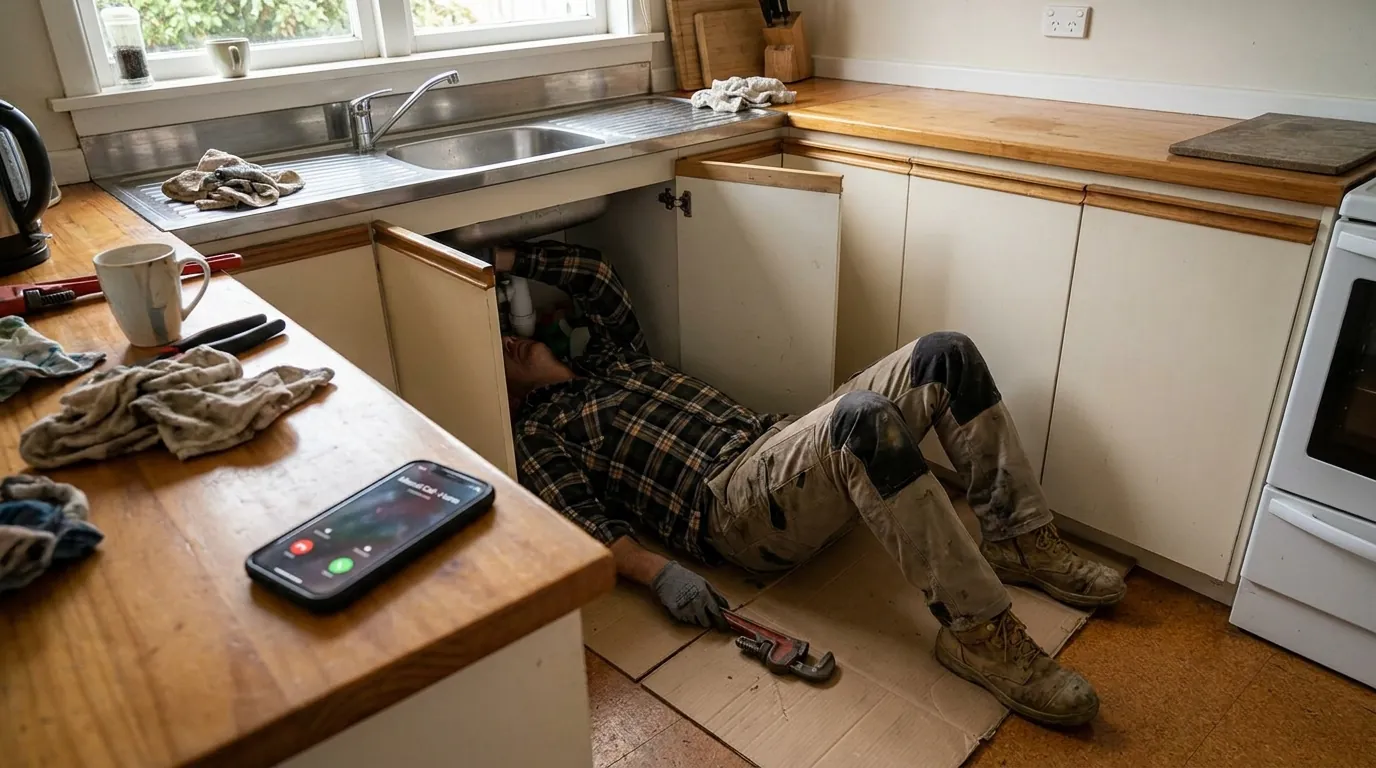
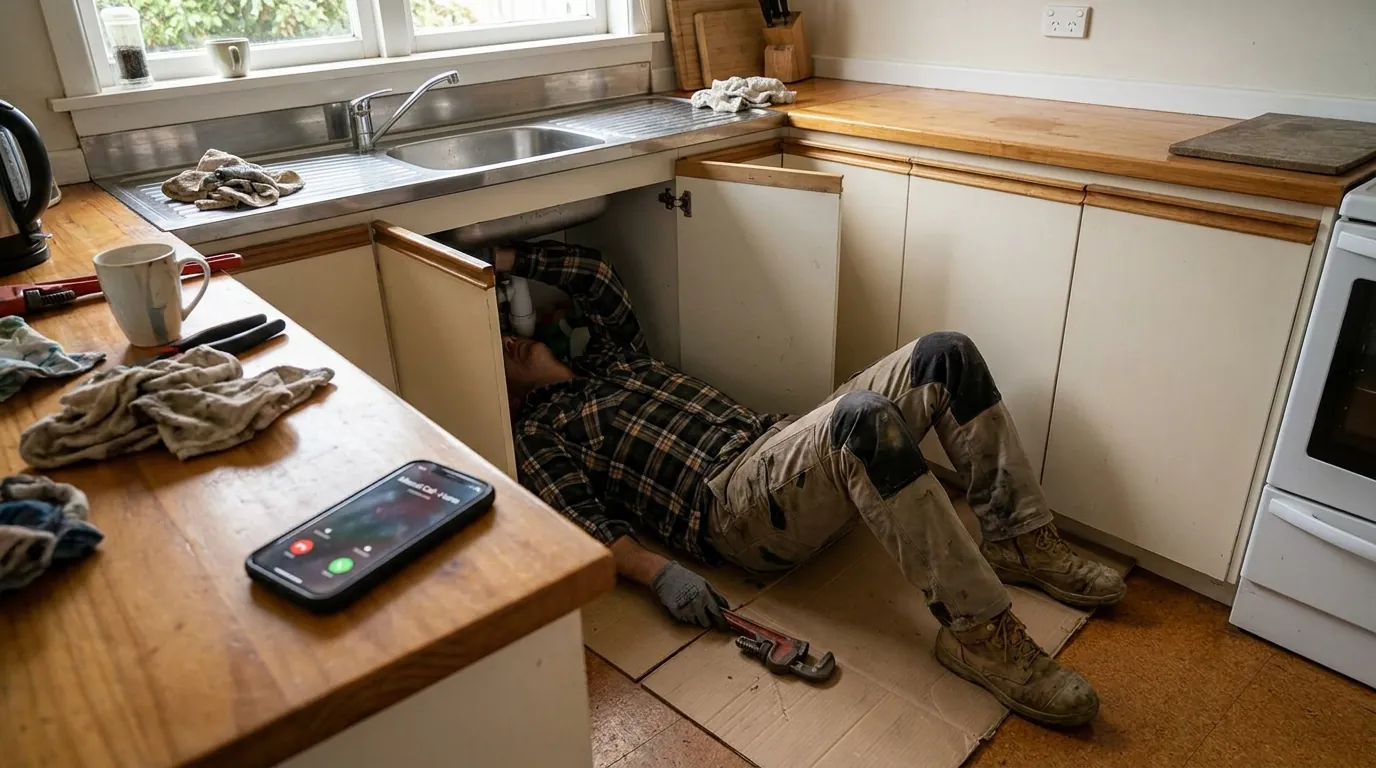
A tradie's phone rings while he's halfway under a sink. He can't answer. By the time he's out, the caller has already rung the next plumber on Google. That lead is gone, and he never even knew it existed.
An AI voice agent missed call text back fixes that exact moment. The agent answers what you can't, and when a call still slips through, it fires a text back in seconds. Then it carries the conversation, qualifies the caller, and books the job.
We built this because missed calls are the quietest leak in any NZ or AU business. You don't see them. They just stop calling and ring someone else.
The call you can't reach is the lead your competitor just answered.
What is missed call text back?
Missed call text back is an automatic text the agent sends the second a call goes unanswered. It says you saw them, asks what they need, and invites them to keep talking by text or jump back on a call. No staff member has to notice or remember.
The old version of this was a CRM rule that fired a generic SMS. Useful, but dumb. It couldn't answer a question. It couldn't book anything.
Our platform does the full loop. The agent answers live first. If a call still rings out, it texts back, then continues the actual conversation and books the caller in.
Why does an unanswered call cost you the lead?
An unanswered call costs you the lead because the caller rings the next business in under a minute. Most people calling a tradie, clinic, or agency are ready to buy now. They won't leave a voicemail and wait. They'll just dial the next result.
Think about who calls a business by phone in 2026. It's the urgent ones. The burst pipe, the sick dog, the buyer who wants a viewing this weekend.
Voicemail doesn't save these calls. Most callers hang up the moment they hear the beep. We see this constantly in call abandonment patterns across inbound lines.
The cost is invisible, which makes it worse. A missed sale leaves no trace in your inbox. You just quietly do less revenue than you should.
How does the agent text back instantly?
The agent texts back within seconds of a call going unanswered, using the caller's own number. The text greets them by the business name, asks what they need, and keeps the thread open. The caller can reply in plain language and the agent answers straight away.
Here's the order of events. The phone rings. The agent picks up live if it can.
If the line is busy or the call drops, our platform logs the miss and fires the text. The caller gets a reply while they're still holding their phone. That timing is the whole game.
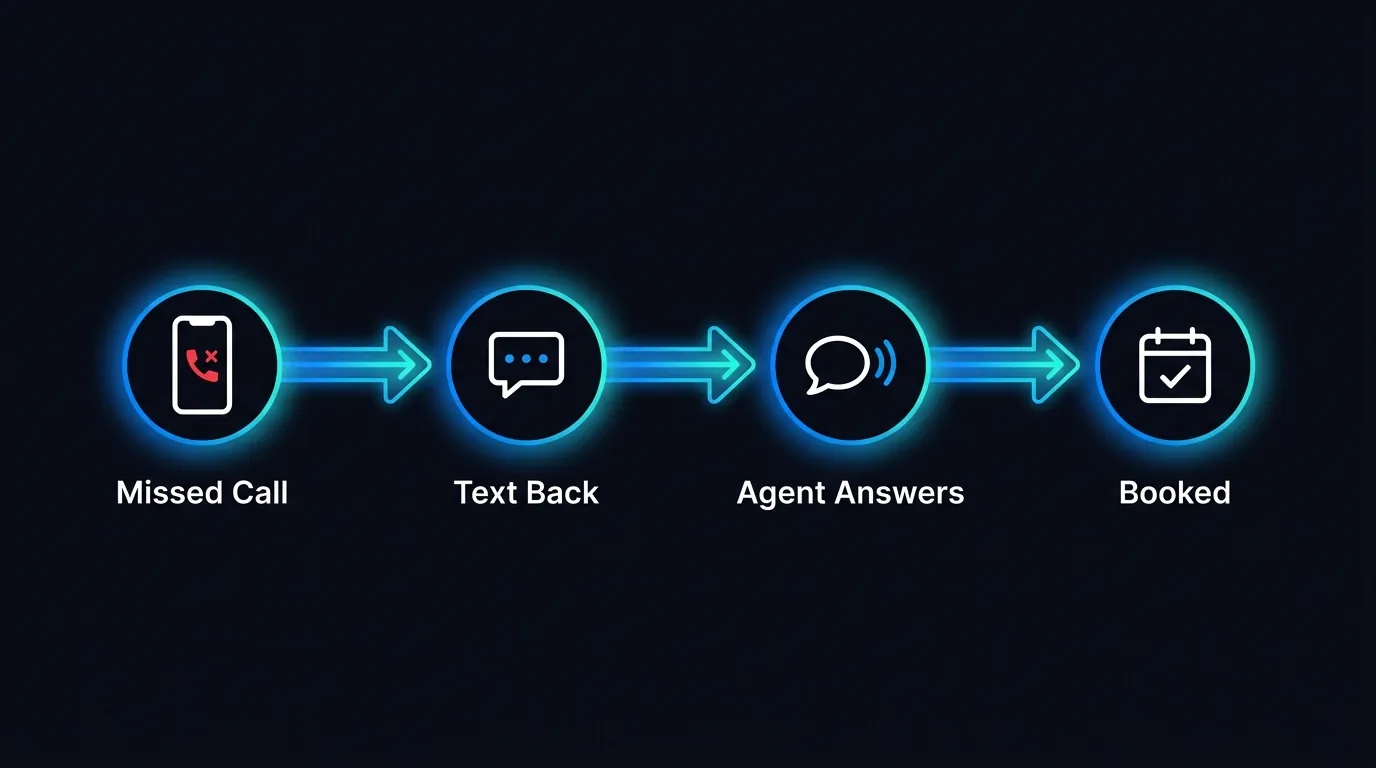
The loop runs from a missed ring to a confirmed booking without a human touching it.
Speed matters because attention has a short fuse. A text back five minutes later lands after they've booked elsewhere. A text back in 10 seconds catches them mid-thought.
Can it then answer and book the caller?
Yes. After the text back, the agent runs a real conversation by text or voice. It answers questions about price, availability, and scope. Then it offers times and books straight into your calendar. The caller never has to wait for a human to call back.
This is the part that separates us from a basic auto-reply. The agent isn't just acknowledging the miss. It's closing the loop.
Say a caller asks if you do same-day callouts. The agent confirms, quotes a callout range, and offers two time slots. The caller picks one. Done.
It works the same way for warm leads who go quiet. The agent chases them with a follow-up, the same logic we cover in our guide to chasing hot leads before they cool.
Every missed call should answer itself.
See how an always-on agent catches the calls your team can't on our inbound AI voice agent page.
How does it work with after-hours cover?
It works around the clock. The agent answers and texts back at 11pm, on a Sunday, and on a public holiday, with no overtime. Most missed calls happen outside business hours, so this is where the biggest leak usually sits. The agent covers all of it at the same per-minute rate.
After-hours is where missed call text back earns its keep. Your team is asleep. Your competitor's team is asleep too.
The first business to reply in the morning often wins. Except the agent doesn't wait until morning. It books the job at midnight.
We go deeper on this in our piece on running an after-hours AI receptionist in New Zealand. You can also point your existing line at the agent without changing your number, which we explain in our call-forwarding setup guide.
Does it stay within the Privacy Act and Spam rules?
Yes, when set up right. The agent discloses it's an AI on every call. It only texts back the number that just rang you, which is a reply to an enquiry the caller started, not cold marketing. That keeps you inside NZ and AU rules.
On privacy, you're covered under the NZ Privacy Act 2020, overseen by the Office of the Privacy Commissioner. In Australia the same conversation sits under the Privacy Act 1988 and the 13 Australian Privacy Principles, or APPs, overseen by the OAIC.
On spam, the text back is a response to an inbound call. It's not unsolicited bulk messaging under NZ's Unsolicited Electronic Messages Act or Australia's Spam Act 2003. The caller reached out first.
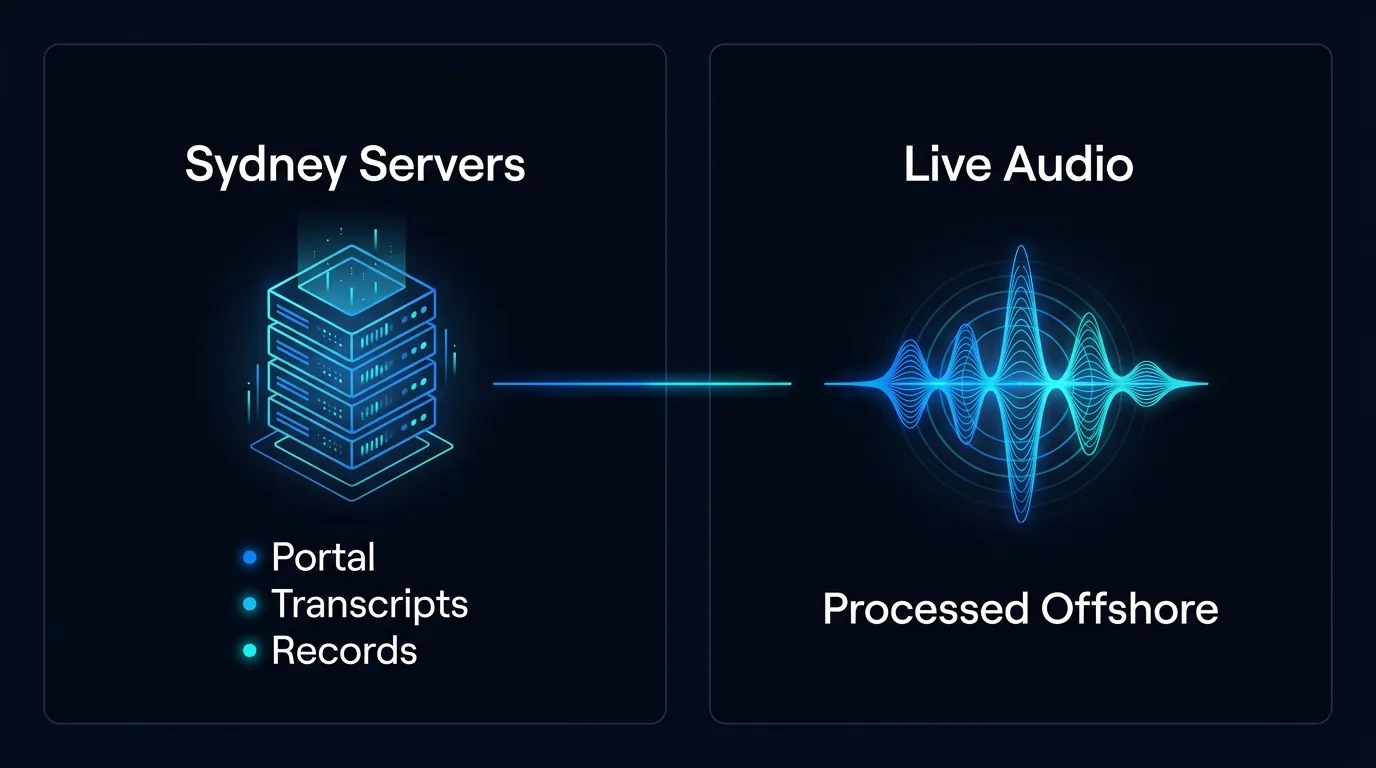
Your records sit in Sydney while live audio is processed offshore, and we are upfront about the split.
On data residency, your portal, transcripts, and structured call records live on our Sydney servers. Live audio is processed offshore under documented arrangements with our voice infrastructure partner. We're honest about that split rather than claiming everything sits in one country.
Disclosure is non-negotiable. The agent tells callers it's an AI up front, every time.
What does it cost?
It costs about 80 cents per minute in NZD or AUD, billed by the second. There's no monthly seat fee, no overtime, and no holiday pay. An answered call averages about 30 seconds, so roughly 40 cents. A one to two minute booking conversation runs about one to two dollars.
Compare that to staff. A part-time receptionist in NZ or AU runs about 28 to 35 dollars an hour before KiwiSaver or super, ACC, and holiday pay. And they can't answer two calls at once or work at 2am.
The maths gets stark fast. Catch even 3 missed calls a week and the agent pays for itself several times over. One booked plumbing job covers a month of per-minute charges.
For a full breakdown of pricing models, see what an AI receptionist actually costs.
Stop losing leads to your voicemail.
Set up an AI voice agent that answers and texts back automatically on our inbound voice agent page.
Frequently Asked Questions
Does the AI voice agent missed call text back use my own phone number?
Yes. The text back goes out so it reads as your business, replying to the exact number that just rang. The caller sees your name, not a random shortcode. The agent only ever texts numbers that called you first, which keeps the reply inside enquiry-response rules rather than cold marketing.
How fast is the text back after a missed call?
Within seconds. The agent logs the missed call the instant the line rings out, then fires the text while the caller is still holding their phone. That speed is the whole point. A reply in 10 seconds catches the caller mid-thought, before they've dialled the next business on their list.
Can the agent book a job without any staff involved?
Yes. After the text back, the agent runs the conversation, answers questions on price and availability, then books a slot straight into your calendar. No human needs to call back or approve it. Your team wakes up to confirmed bookings rather than a list of missed calls to chase.
Is texting people back legal under NZ and AU spam law?
Yes, because it's a reply to an inbound enquiry. The caller contacted you first, so the text back isn't unsolicited messaging under NZ's Unsolicited Electronic Messages Act or Australia's Spam Act 2003. It's the same as picking up the phone, just by text. The agent never cold-messages numbers that didn't call.
Where is my call data stored?
Your portal, transcripts, and structured call records sit on our Sydney servers. Live audio is processed offshore under documented arrangements with our voice infrastructure partner. We're upfront about that split. You stay covered under the NZ Privacy Act 2020 and, for Australian callers, the Privacy Act 1988 and the 13 APPs.
What happens if the caller would rather speak to a person?
The agent hands off. If a caller asks for a human or the request is outside its scope, it can take a message or warm-transfer to your team. The text thread stays open either way, so nothing gets dropped. You decide where the line between agent and human sits when you set it up.
Want the fundamentals first? Read the full AI voice agent guide.
Leonardo Garcia-Curtis
Founder & CEO at Waboom AI. Building voice AI agents that convert.
Ready to Build Your AI Voice Agent?
Let's discuss how Waboom AI can help automate your customer conversations.
Book a Free Demo