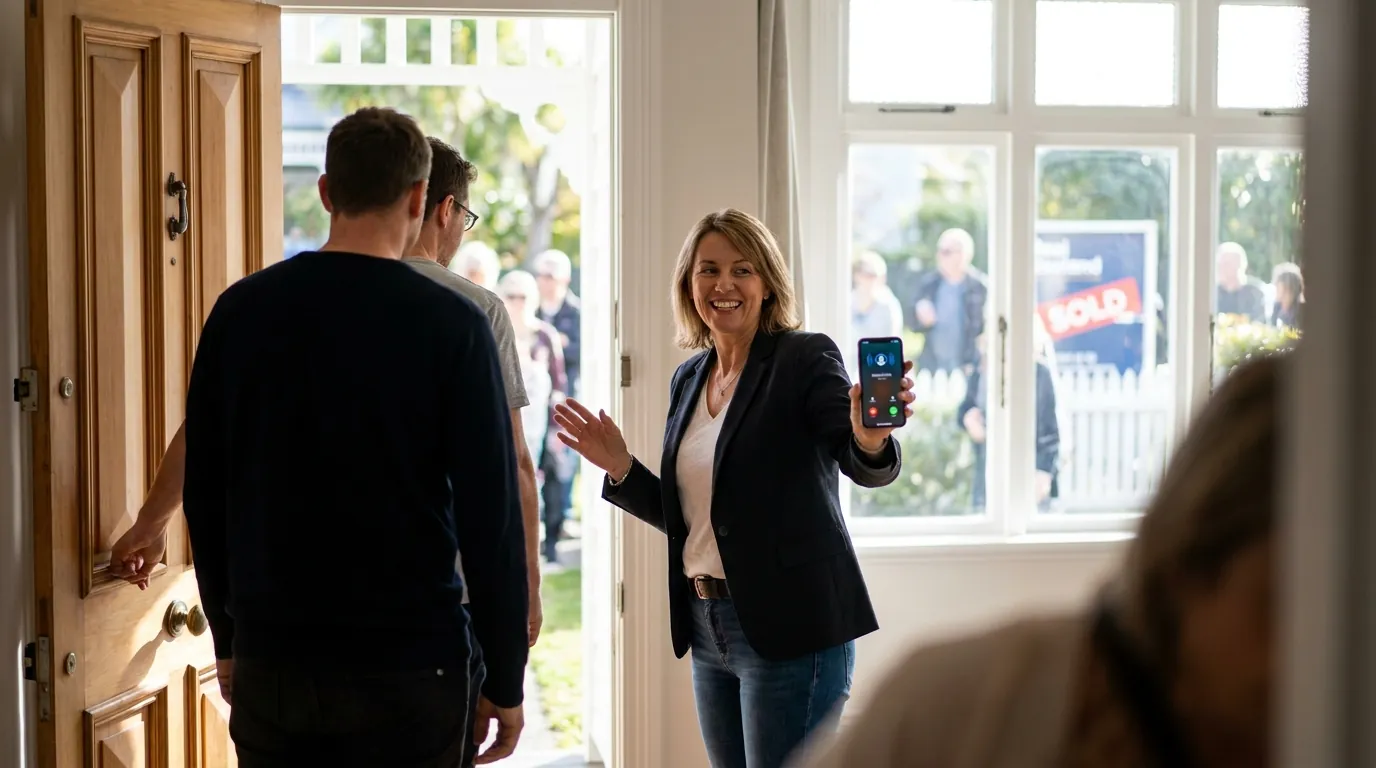
You are showing a three-bedroom villa in Mount Eden. Your phone buzzes three times in twenty minutes. Two were buyers. One was a vendor wanting an appraisal. By the time the open home wraps, all three have gone quiet.
That is the real cost of being good at your job. You sell by being in the room, not by the phone. But the phone is where the next listing lives.
An AI voice agent for real estate agents answers every one of those calls in a ring or two. It qualifies the caller, books the viewing, captures the appraisal request, and texts you the lead. You keep selling. Nothing leaks.
We build these for residential agents across New Zealand and Australia. Here is exactly how it works, what it qualifies, and what it costs.
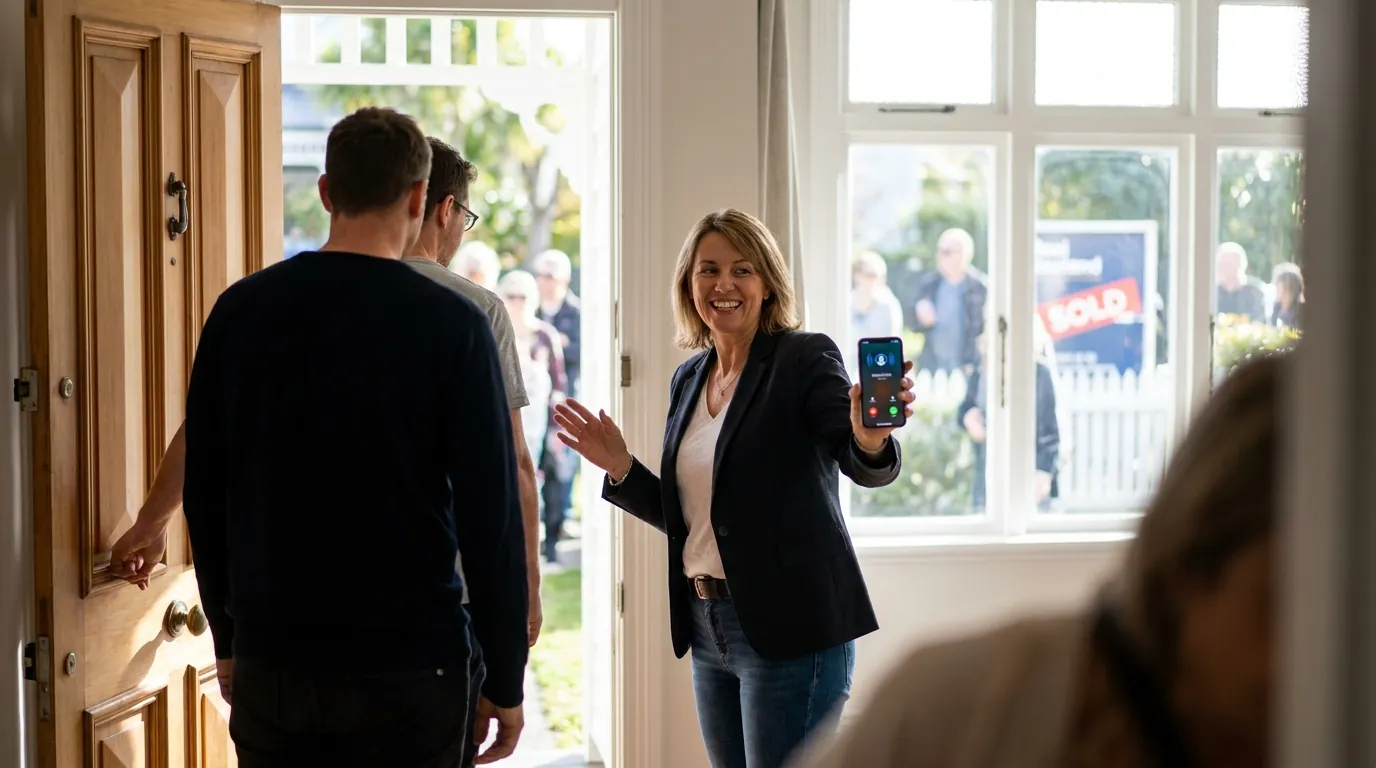
An agent mid open home cannot answer the next buyer ringing in, so the AI voice agent picks up instead.
What does an AI voice agent do for a real estate agent?
An AI voice agent answers your inbound calls in a ring or two, all day and after hours. It greets the caller, works out whether they are a buyer or a vendor, captures the property they care about, and either books a viewing or flags an appraisal request straight to you. You never touch the phone mid open home.
Think of it as a receptionist who never goes to lunch and never misses a Saturday. It picks up while you are mid handshake at an open home. It picks up at 8pm when a vendor finally has time to call. It picks up when you are driving between three properties with no hands free.
The agent discloses it is an AI at the start of every call. That builds trust, and it is the honest thing to do. Callers do not mind. They mind being sent to voicemail.
Every call produces a transcript and a structured record. You get the caller name, the property, the intent, and a callback time. No more scribbling on the back of a flyer.
Why do agents miss buyer and vendor calls?
Agents miss calls because the job happens away from the desk. You are at open homes, doing appraisals, or driving. Most buyer enquiries come in clusters on weekends, exactly when you are least free. A missed call is rarely retried. The buyer just rings the next listing.
A buyer who cannot reach you does not wait. They scroll to the next agent on the portal and call them instead. That call took eight seconds to make and you lost it in silence.
Vendors are worse to lose. A vendor calling about an appraisal is a potential listing worth thousands in commission. If that call hits voicemail at 7pm on a Tuesday, they may book a rival agent by Wednesday morning.
The maths is brutal. One missed appraisal call a month can be one lost listing. At average residential commission, that dwarfs the cost of answering every call automatically.
We covered the wider playbook in our guide to AI calling for real estate. This article goes deeper on the one job most agents lose to: the unanswered phone.
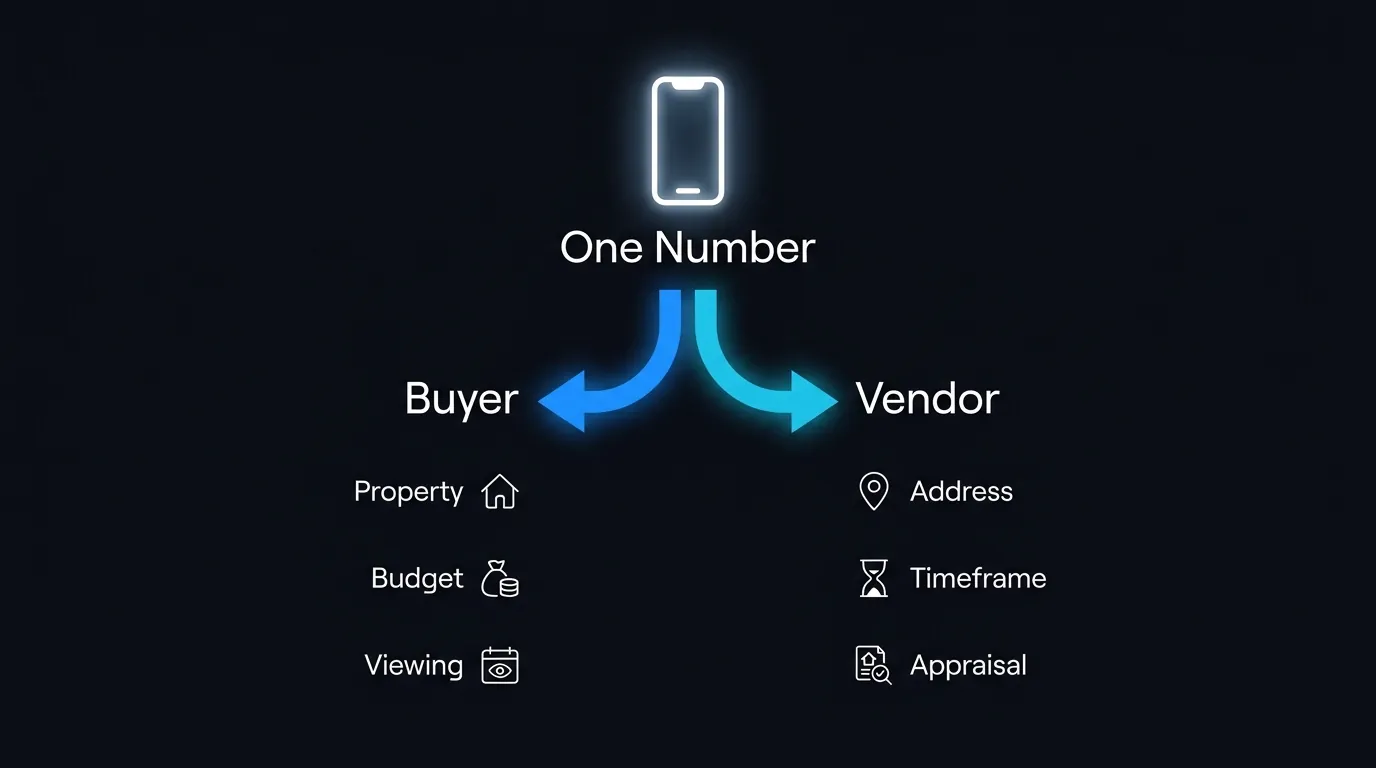
One number, two paths: the agent routes buyers and vendors down separate scripts in seconds.
How does it qualify a buyer versus a vendor?
The agent asks a few natural questions in the first fifteen seconds and routes from there. A buyer gets asked which property, their budget range, and viewing availability. A vendor gets asked the property address, the reason for selling, and a good appraisal time. Two paths, one phone number.
For a buyer, the agent confirms the listing address, checks they are pre-approved or paying cash, and asks when they can view. That single filter separates a serious buyer from someone killing time on a Sunday.
For a vendor, the tone shifts. The agent treats an appraisal request as the prize it is. It captures the address, the rough timeframe to sell, and books you a callback or an in-person appraisal. It never lets a vendor hang up cold.
The whole flow is scripted to your patch and your rules. You decide the budget bands, the suburbs, the questions. We tune the wording so it sounds like your office, not a call centre.
How does it book viewings and appraisals?
The agent reads your live calendar, offers real open slots, and writes the booking straight into it. A buyer picks a viewing time on the call. A vendor gets an appraisal locked in before they hang up. You wake up to a booked diary, not a list of people to chase.
No double bookings. The agent only offers slots that are genuinely free. When the buyer confirms, the viewing lands in your calendar and a confirmation text goes to the caller. The same flow we describe in our appointment booking walkthrough applies to property viewings.
For vendors, an appraisal is the booking that matters most. The agent offers your appraisal windows and confirms one. That converts a curious phone call into a diarised meeting at the kitchen table.
A Christchurch developer we work with used this to book property viewings at 7.12 dollars each. Every viewing booked without the agent lifting a finger. That is the number that makes the phone pay for itself.
Stop losing the next listing to voicemail.
See how our agents answer, qualify, and book on our AI voice agents hub.
How does it follow up vendor leads?
The agent can call vendor leads back automatically on a schedule you set. If a vendor enquired but did not book, the agent rings them within the window you choose. It references their property and tries again for the appraisal. Persistence without you burning an evening on the phone.
Speed is the whole game with a hot vendor. Our data on hot lead follow-up timing shows the first agent to reach back usually wins the listing. The voice agent can attempt the callback minutes after the enquiry, not days.
On outbound, expect a 47 to 65 percent connect rate. About 20 to 25 percent of dials turn into a real conversation over a minute long. A 200-dial vendor follow-up campaign costs about 100 dollars NZD. That is cheaper than one printed mailer drop.
A Sydney agent ran this and produced 141 vendor leads in 90 days at 32.74 dollars per seller. Not 141 calls. 141 actual vendor leads. The proof is in our Sydney agent case study.
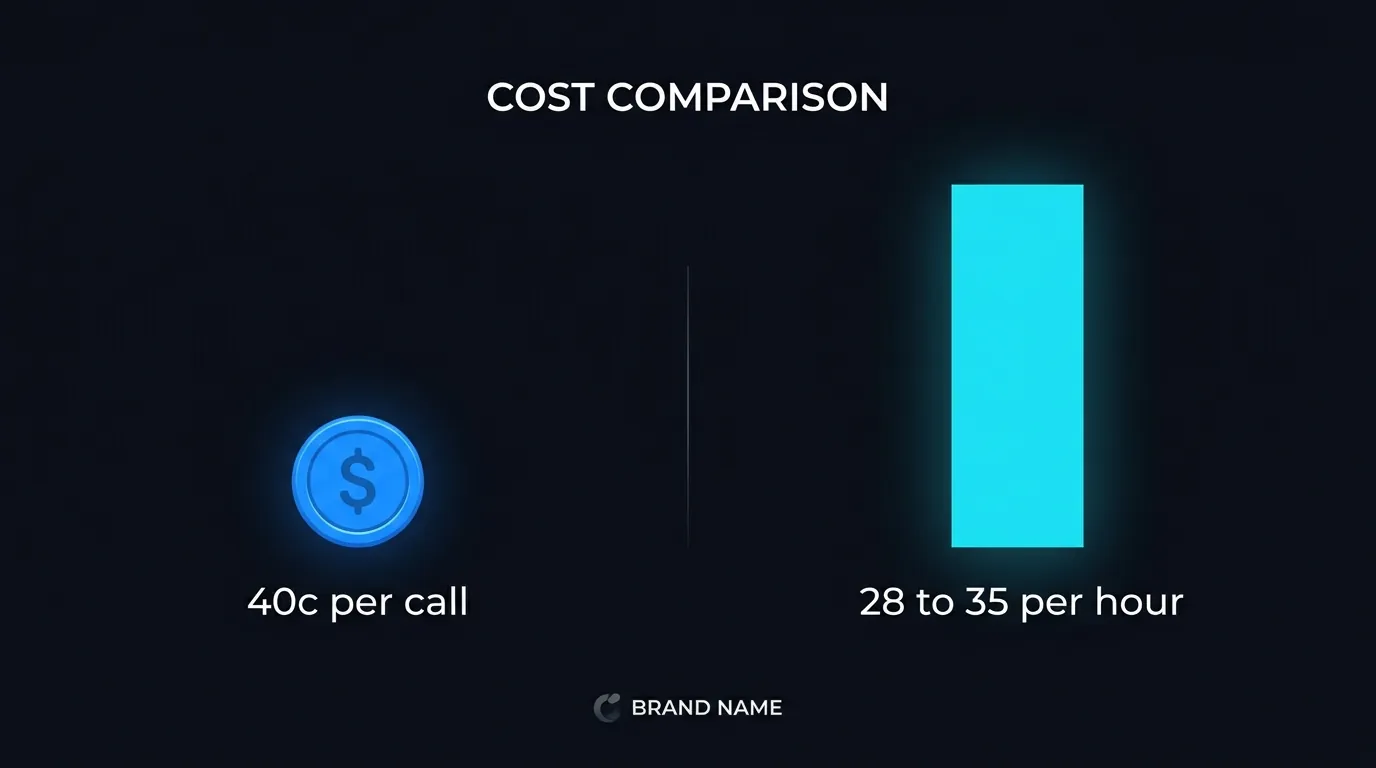
You pay about 40 cents for a 30-second enquiry, versus a receptionist paid by the hour whether the phone rings or not.
How does it keep enquiry data private?
Your enquiry data is handled under a clear residency split. The portal, transcripts, and structured caller records sit on our Sydney servers. Live call audio is processed offshore under documented arrangements with our voice infrastructure partner. We never claim all data stays in Australia, because that would not be true.
In New Zealand we work to the Privacy Act 2020 and the Office of the Privacy Commissioner. In Australia the Privacy Act 1988 applies, along with the 13 Australian Privacy Principles, or APPs, overseen by the OAIC. Buyer and vendor details are personal information under both, and we treat them that way.
Every call opens with the agent disclosing it is an AI. Callers know they are talking to software from the first sentence. That is good practice and good manners.
You control retention and access. Caller records are yours, exportable, and tied to your agency only. No shared pool, no leakage to another office down the road.
What does it cost a NZ or AU agent?
Calls bill at about 80 cents per minute NZD or AUD, charged by the second. An average answered enquiry runs about 30 seconds, so roughly 40 cents. A solid one to two minute qualifying call is about one to two dollars. You pay for conversations, not for a seat sitting idle.
Compare that to a part-time receptionist at 28 to 35 dollars an hour before KiwiSaver or super, ACC, and holiday pay. The phone person costs the same whether ten calls come in or zero. The agent only costs you when it is actually working a lead.
For the full breakdown, see our pricing explainer. The headline: one saved appraisal call pays for months of answering. The Christchurch 7.12 dollar viewings and the Sydney 32.74 dollar leads tell the same story.
Hear it answer a property enquiry.
Try a live demo and set up your own agent on our inbound AI receptionist page.
Frequently Asked Questions
Can an AI voice agent for real estate agents handle both buyer and vendor calls on one number?
Yes. The agent works out within the first fifteen seconds whether the caller is a buyer or a vendor, then runs a different script for each. Buyers get qualified on budget and viewing time. Vendors get steered toward an appraisal booking. One phone number, two intelligent paths.
Does the agent tell callers it is an AI?
Yes, on every single call. The agent discloses it is an AI in the opening sentence. We have found callers respond better to honest disclosure than to a human-sounding bot that fools them. Disclosure is both good manners and aligned with privacy expectations in New Zealand and Australia.
Will it book viewings directly into my calendar?
Yes. The agent reads your live calendar and only offers slots that are genuinely free, so no double bookings. When a buyer confirms a viewing or a vendor confirms an appraisal, it writes straight into your diary and texts the caller a confirmation. You wake up to a booked day.
How much does it cost per call?
Calls bill at about 80 cents per minute NZD or AUD, charged by the second. A typical 30-second enquiry costs about 40 cents. A one to two minute qualifying call runs about one to two dollars. You only pay when the agent is actually on a live conversation, never for idle time.
Is my buyer and vendor data kept private?
Yes. Transcripts and structured caller records sit on our Sydney servers, while live audio is processed offshore under documented arrangements. In New Zealand we follow the Privacy Act 2020 and the OPC. In Australia we follow the Privacy Act 1988 and the 13 Australian Privacy Principles under the OAIC.
Can it chase vendor leads who did not book?
Yes. The agent can call vendor leads back automatically on a schedule you set, reference their property, and try again for the appraisal. Outbound connects about 47 to 65 percent of the time. A 200-dial follow-up campaign costs roughly 100 dollars NZD, far less than a mailer drop.
See everything Waboom does in AI for real estate businesses.
Leonardo Garcia-Curtis
Founder & CEO at Waboom AI. Building voice AI agents that convert.
Ready to Build Your AI Voice Agent?
Let's discuss how Waboom AI can help automate your customer conversations.
Book a Free Demo