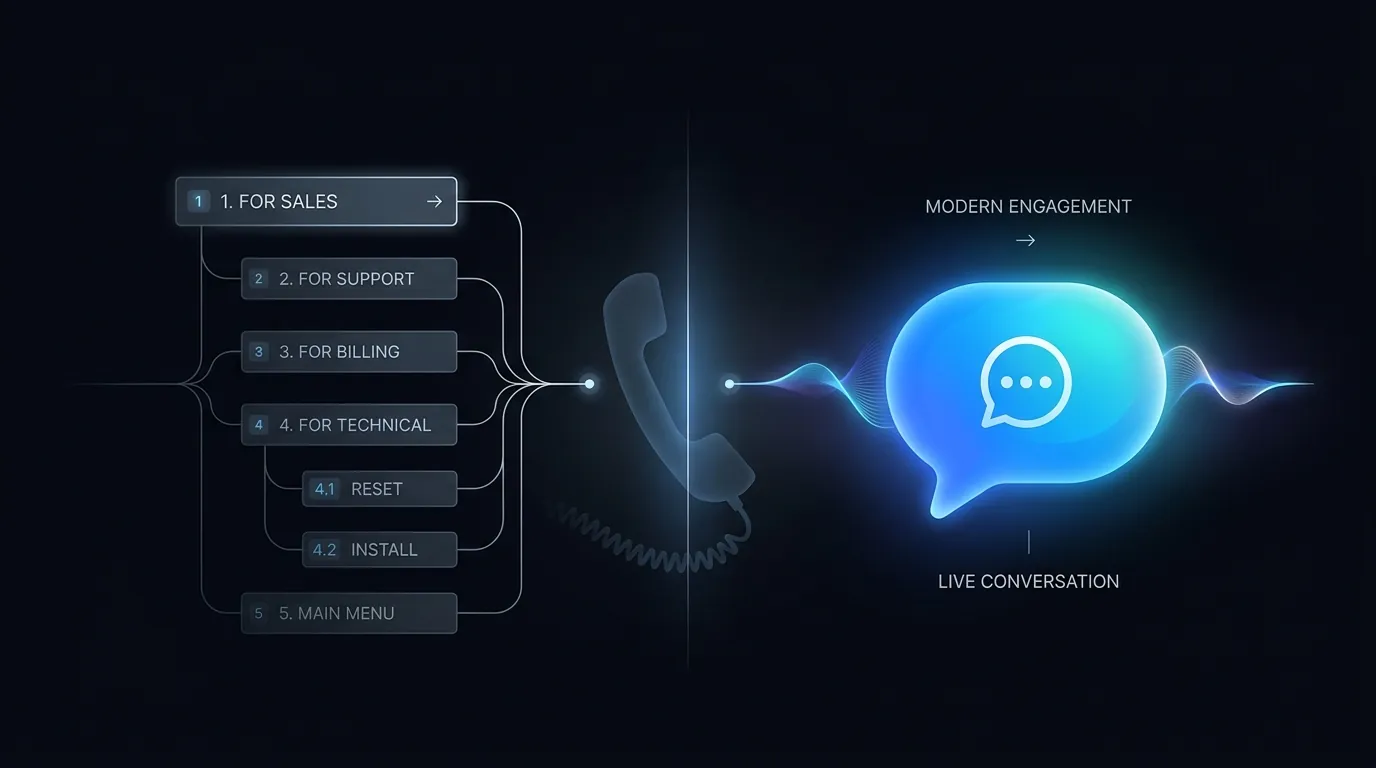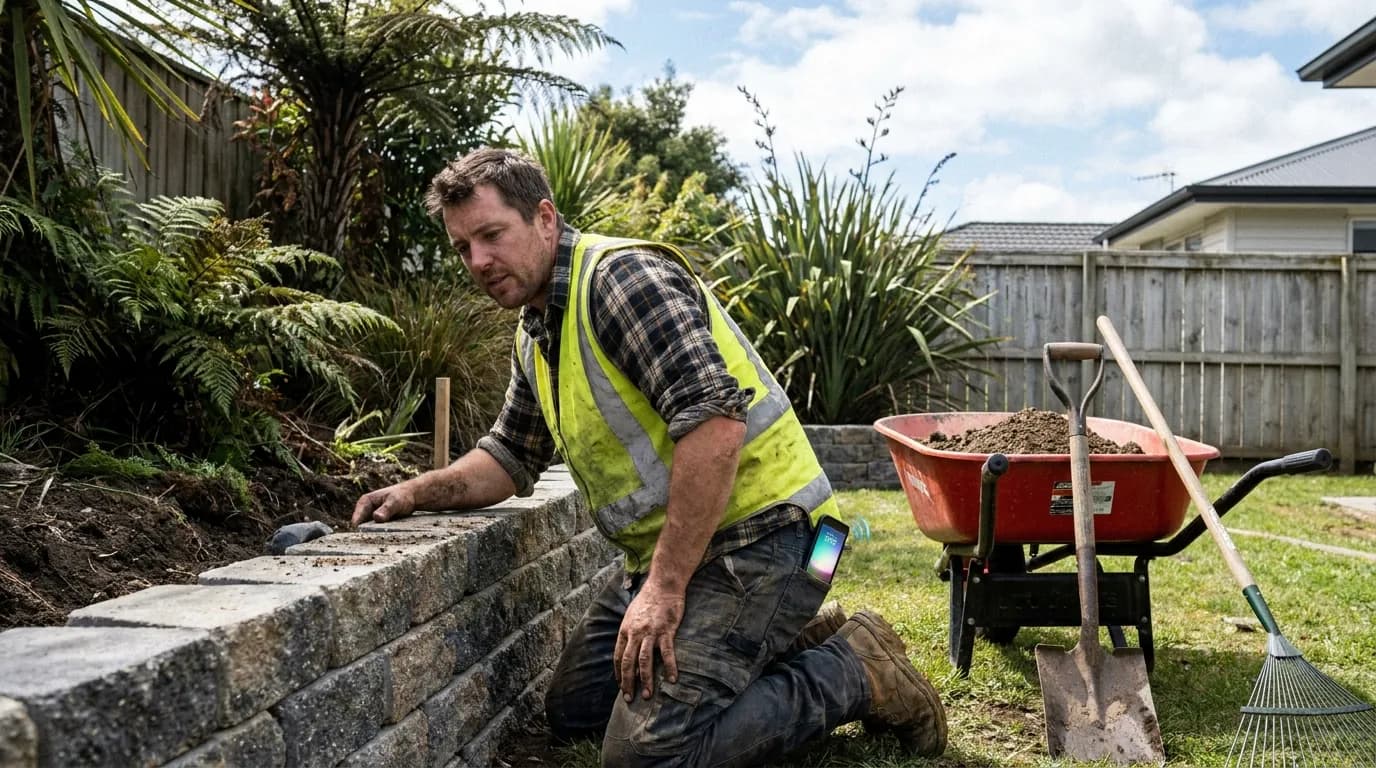
An AI voice agent for landscapers answers the calls your crew cannot. It picks up while the team is mowing, digging, or laying pavers. It qualifies the job, books a site visit, and writes the lead into your system. No call goes to voicemail. No quote walks to the next number on Google.
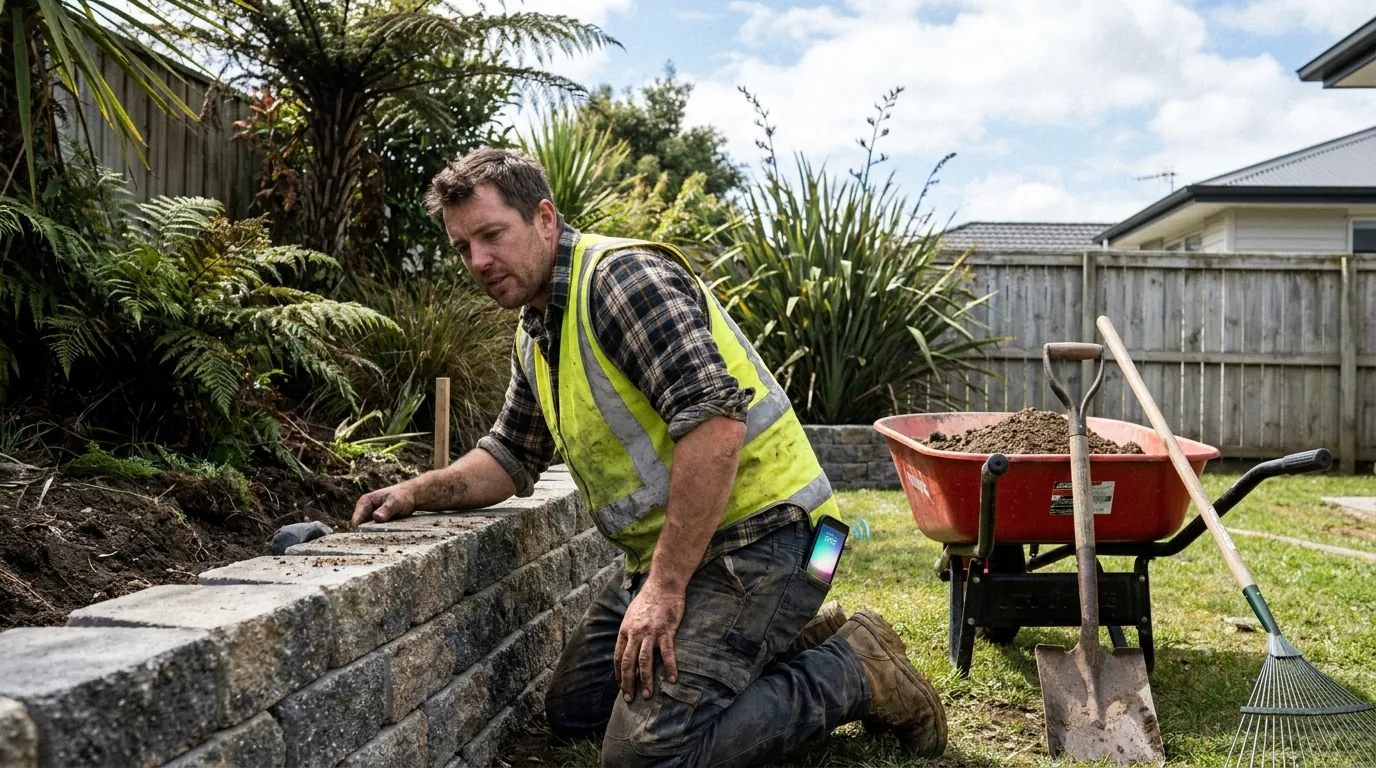
The quote calls land exactly when your hands are full.
What does an AI voice agent do for a landscaping business?
It answers your phone when nobody can. The agent greets the caller, takes the job details, books a site visit, and logs the lead. It runs every hour of every day, including Saturday mornings when half your quote calls come in. The agent tells callers it is an AI.
Picture a Tuesday in spring. Your two crews are on site. One is retaining a steep section in the Waitakere ranges. The other is laying a deck in Mount Eden. Your phone rings nine times before lunch. You answer none of them.
That is the problem. The agent fixes it. It books the easy jobs and flags the big ones for you. To see the full picture of what these agents handle, start with our AI voice agents hub.
Why do landscapers miss quote calls?
Because the work happens away from the phone. You are on a digger, behind a mower, or under a ute. A NZ or AU landscaping crew spends most of the day on tools, not on calls. So enquiries land in voicemail, and most callers never leave a message.
People ringing for a quote are shopping. They call three landscapers in ten minutes. The first one who answers gets the job. Voicemail loses you the race before you knew it started.
It gets worse in season. Spring and early summer bring a flood of fence, deck, and garden-tidy calls. That is exactly when you are flat out and least able to pick up. The busy weeks are the leaky weeks. We dig into the cost of dropped calls in our piece on cutting call abandonment with a voice agent.
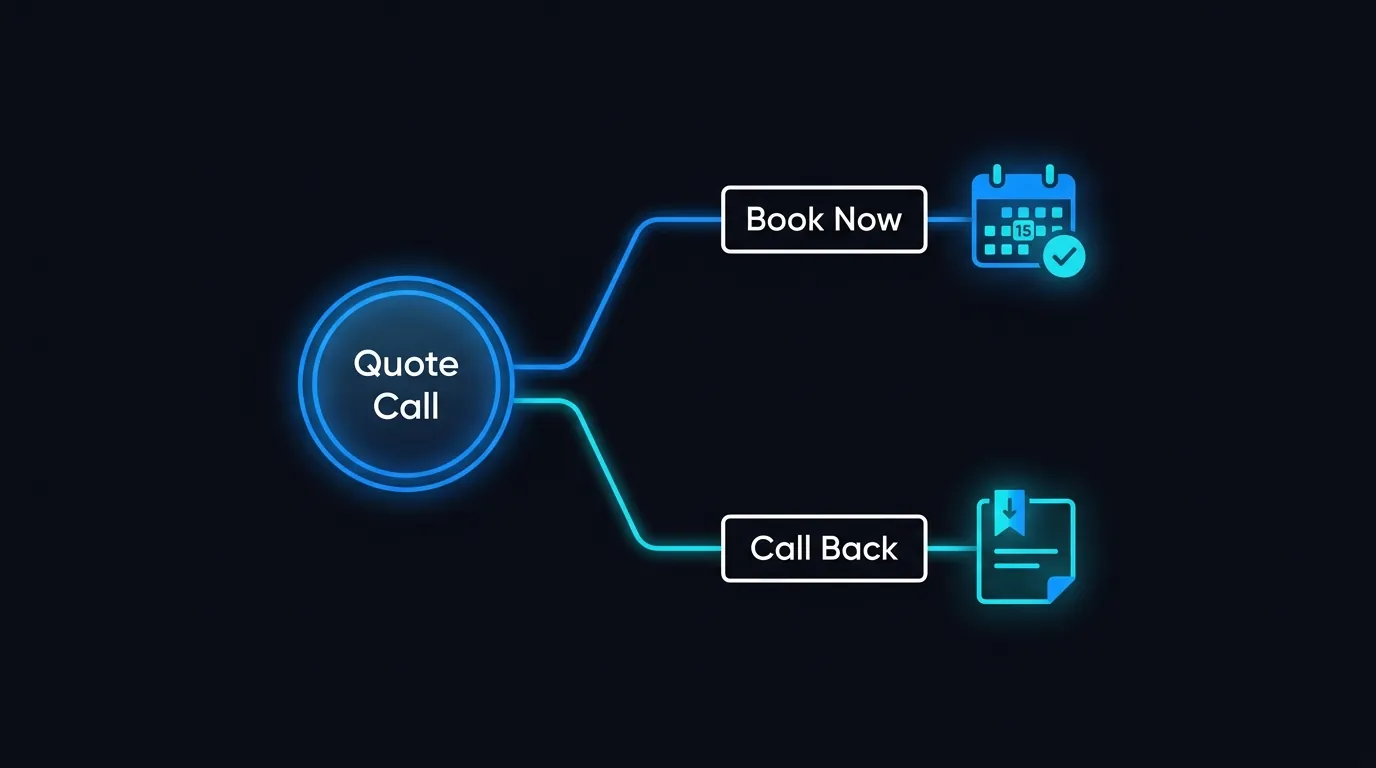
The agent sorts every enquiry into book-now or call-back the moment the caller hangs up.
How does it qualify a quote enquiry?
The agent asks the questions you would ask. Job type, suburb, rough size, timing, and budget range. It captures the caller's name and number first, so the lead is never lost even if they hang up. Then it sorts the job into book-now or call-back.
Say someone wants a hedge trimmed in Ponsonby. Small job, clear scope. The agent books a site visit on the spot. Say someone wants a full backyard redesign with retaining and drainage. Bigger job. The agent takes the detail and tags it for you to quote.
You set the rules once. The agent follows them on every call. It never forgets to ask about access for a truck or whether there is a dog on site.
How does it book a site visit?
It reads your calendar and offers real open slots. The caller picks a time. The agent confirms the address, sends a text, and writes the visit into your diary. No double-booking. No back-and-forth.
This matters for landscaping because the quote is the visit. You cannot price a slope you have not seen. Getting a real human onto the section is the whole game. The agent turns a phone enquiry into a booked walk-through in under two minutes.
A Christchurch developer used the same booking flow to set property viewings at 7.12 dollars each. Same idea for your quotes. Cheap bookings, no admin, no missed slots. We cover the mechanics in our guide on AI receptionist appointment booking.
Stop losing quotes to voicemail.
See how an agent answers, qualifies, and books for your trade on our AI voice agents hub.
How does it handle seasonal demand spikes?
It answers all of them at once. A human receptionist can take one call at a time. The agent takes fifty. When a long weekend ad drives forty calls in an afternoon, none of them ring out. Every caller gets a real conversation.
This is the unfair advantage in landscaping. Demand is lumpy. You get quiet July weeks and frantic October weeks. Staffing for the peak is expensive. Staffing for the average means you drop calls when it counts.
The agent does not care if it is one call or one hundred. It scales to the spike and costs the same per minute either way. You stop losing the spring rush to whoever picked up.
Outbound works the same way. If you run a winter promo, the agent can dial your old quote list and rebook the jobs that stalled. Connect rates sit around 47 to 65 percent, and roughly 20 to 25 percent of dials turn into a real conversation. A 200-dial campaign costs about 100 dollars NZD. One Sydney sales agent produced 141 leads in 90 days at 32.74 dollars each.
How does it write the job into your system?
It pushes the lead straight into your CRM or job software. Name, number, suburb, job type, and notes land as a new record the moment the call ends. No paper. No texting yourself the details. No lead lost in a glovebox.
You get a structured record every time. The same fields, the same shape, ready to quote or schedule. We go deep on this in our piece on AI voice agent CRM integration.
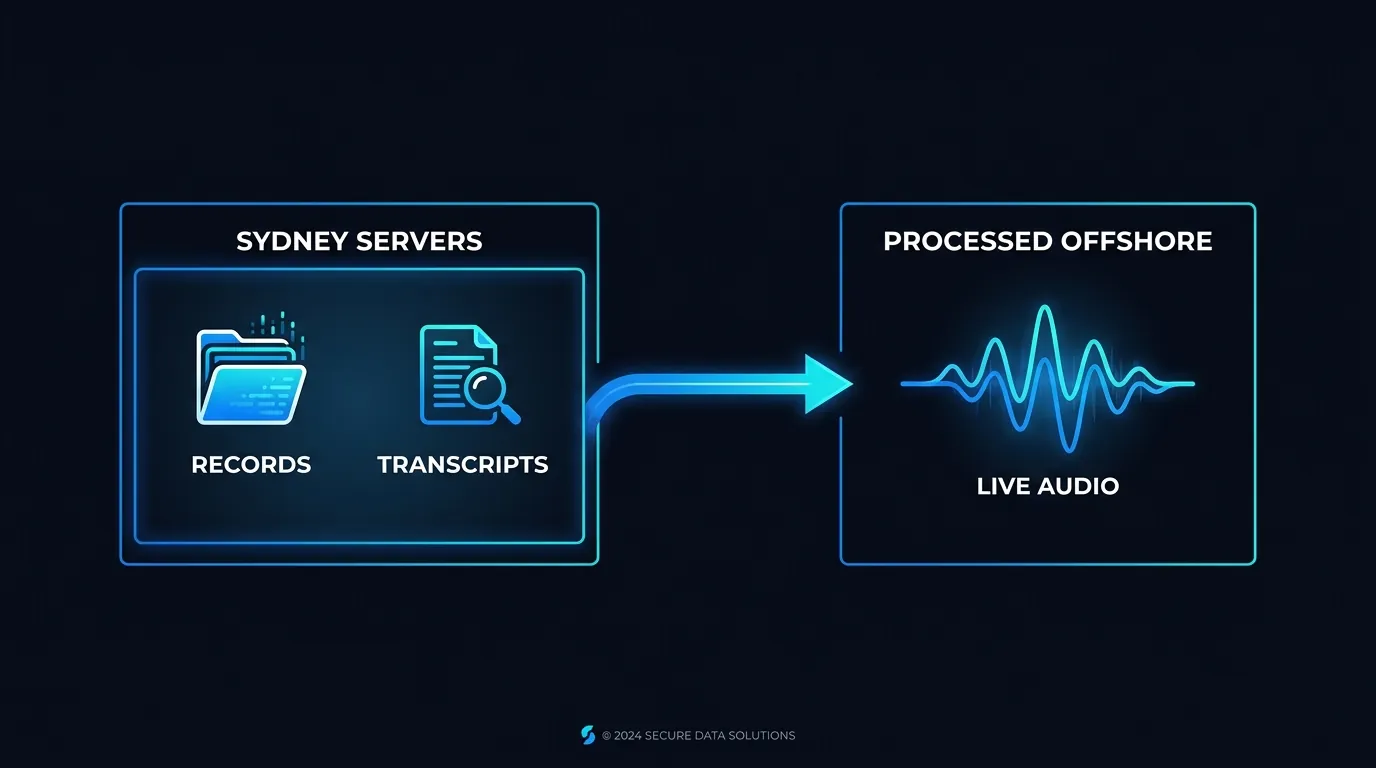
Your records and transcripts sit in Sydney while live audio is processed offshore.
Your structured records, transcripts, and the portal live on our servers in Sydney. The live audio is processed offshore, under documented arrangements with our voice infrastructure partner. We never claim all data stays in Australia, because that would not be true. Every call discloses the AI to the caller.
We follow the NZ Privacy Act 2020, overseen by the Office of the Privacy Commissioner. For Australian businesses, we follow the Privacy Act 1988 and the 13 Australian Privacy Principles, overseen by the OAIC. Honest residency, plain rules.
What does it cost a NZ or AU business?
About 80 cents a minute, billed by the second, in NZD or AUD. An average answered quote call runs about 30 seconds, so roughly 40 cents. A solid one-to-two minute conversation costs about one to two dollars. You pay for talk time, not for a seat.
Compare that to a part-time receptionist at 28 to 35 dollars an hour before KiwiSaver or super, ACC, and holiday pay. The agent has no idle hours. It bills only when it is on a call. Quiet week, tiny bill. Busy week, it earns its keep.
One missed deck job pays for months of the agent. That is the maths. We break the full numbers down in our guide on how much an AI receptionist costs.
The agent is not a replacement for your judgement on big jobs. It is the front door that never closes. For the calls that need a human touch, it hands them to you with the context already gathered. We are honest about where AI voice agents still need humans.
Never miss another quote call.
Book a look at the live demo on our NZ inbound receptionist page.
Want to see it answer, book, and log a job for your business? Start with our AI voice agents hub. Or look at our NZ inbound receptionist page.
Frequently Asked Questions
Does the AI voice agent tell callers it is an AI?
Yes. The agent discloses that it is an AI at the start of every call. This is standard practice and keeps you on the right side of both the NZ Privacy Act 2020 and the Australian Privacy Principles. Callers know who they are talking to, and most do not mind once the job gets booked fast.
Can it handle a complex landscaping quote over the phone?
It does not try to price complex jobs on the call. It gathers the scope, suburb, size, and timing, then books a site visit so you can quote in person. For a slope, a retaining wall, or drainage, the visit is the only way to price it. The agent gets the human onto the section.
What happens to a lead if the caller hangs up early?
You still get it. The agent captures the name and number first, before anything else. If the caller drops off mid-call, the partial lead lands in your system anyway. You can ring them back. Nothing is lost to a dropped call or a noisy work site.
How fast can I get this running for my business?
Most landscaping setups go live in a few days. You give us your services, your suburbs, your calendar, and your call rules. We build the agent to match how you quote and book. Then we test it together before it answers a single real customer.
Does it work for both New Zealand and Australian landscapers?
Yes. The agent works for NZ and AU landscaping and gardening businesses. Pricing is in NZD or AUD. We follow the NZ Privacy Act 2020 and the OPC, and the Australian Privacy Act 1988 with the 13 Australian Privacy Principles and the OAIC. Your structured records sit on our Sydney servers.
What if I only want it to answer after hours?
You choose when it answers. Some landscapers run the agent only from 7am to 4pm when the crew is on site, and take calls themselves at night. Others let it answer all 24 hours so no call ever rings out. You set the hours, and you can change them whenever the season shifts.
Waboom builds call answering for trade businesses that never misses a job call.
Leonardo Garcia-Curtis
Founder & CEO at Waboom AI. Building voice AI agents that convert.
Ready to Build Your AI Voice Agent?
Let's discuss how Waboom AI can help automate your customer conversations.
Book a Free Demo