
When is an AI voice agent the wrong tool?
An AI voice agent is the wrong tool when the call needs human judgement, the volume is tiny, or your process is a mess. We sell these agents for a living. We still tell roughly one in five enquiries to wait. This is the honest guide to when not to use an AI voice agent, written by the people who sell them. A bad fit wastes their money and our reputation.
Everyone in this market sells the upside. Hands-free booking. Calls answered at 2am. Costs that look like a rounding error next to a receptionist on $28 to $35 an hour.
That part is true. We have the case data to prove it. A Sydney sales agent produced 141 vendor leads in 90 days at $32.74 each. A Christchurch developer booked property viewings at $7.12 a pop.
But the honest version of this story includes the times you should walk away. Here are the situations where we say not yet, or not at all. If you are still weighing the basics, our guide to how AI voice agents work for NZ and AU businesses covers the upside first.
The honest version of the sales pitch includes the cases where you walk away.
Which calls should always reach a human?
Calls that carry legal, safety, or financial weight should always reach a human. Think a distressed customer threatening to leave, a complaint heading toward the Disputes Tribunal (NZ) or NCAT or a state tribunal (AU), or a deal worth five figures. The agent can greet, qualify, and route in under 30 seconds. The decision stays with a person.
We disclose on every call that the caller is speaking with an AI. That honesty is non-negotiable. It also tells you something. If a caller would feel betrayed to learn a machine handled their moment, that call belonged to a human.
We build the handoff first, not last. The agent answers, reads the situation, and warm-transfers the hard ones. You get coverage without pretending a machine has empathy. We wrote more on that in our piece on why voice AI still needs humans in the loop.
Is your call volume too low to bother?
If you take fewer than five callable contacts a day, an AI voice agent rarely pays for itself in effort. The technology is cheap. Calls run about 80 cents a minute, billed by the second, so a 30-second answer costs around 40 cents. The cost is your time setting it up.
A 200-dial outbound campaign costs about $100. That maths is brilliant at scale. At ten dials a week, the setup and tuning outweigh the saving. You would do better answering the phone yourself.
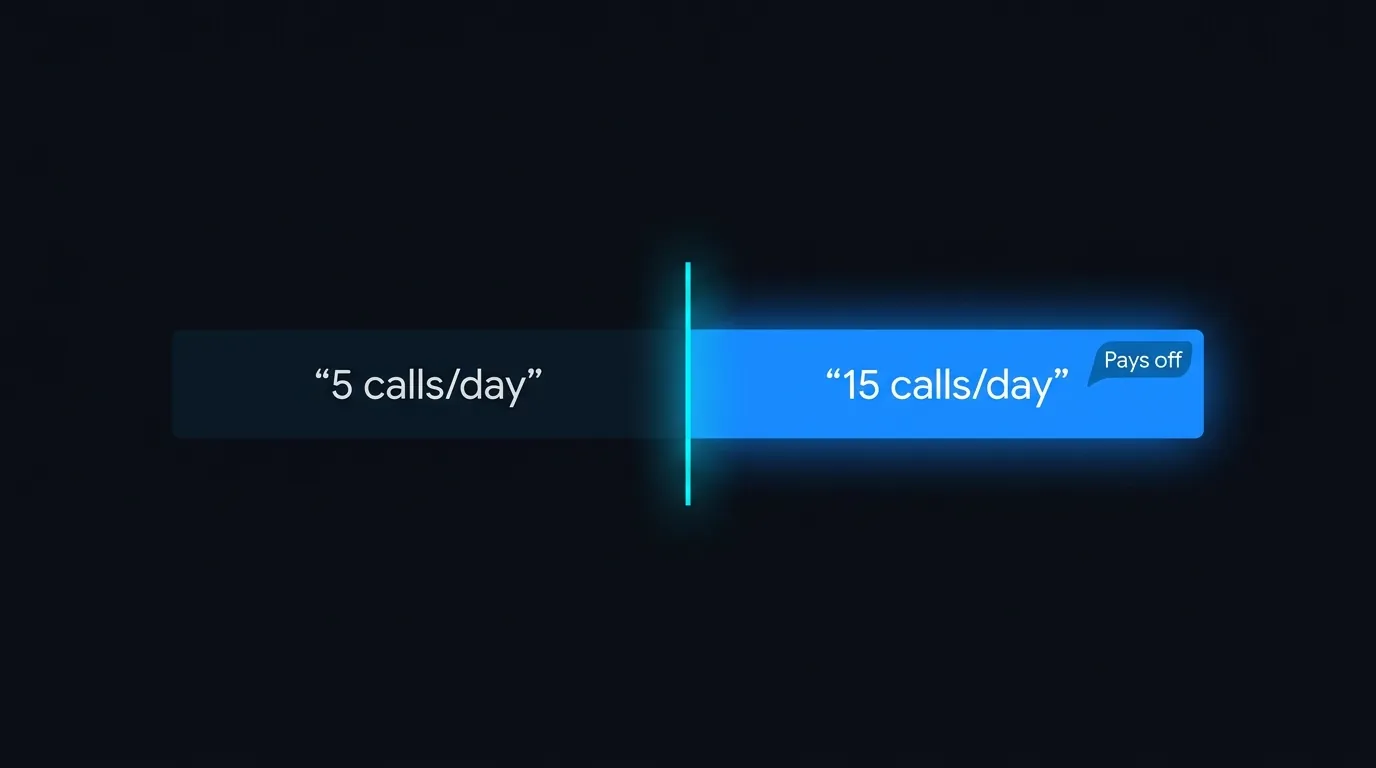
Above 15 callable contacts a day the agent earns its keep; below five it usually does not.
There is a threshold where it flips. A clinic missing 15 calls a week loses real bookings, and the agent catches every one. A sole trader fielding two calls a day does not. Be honest about which one you are.
Not sure your volume clears the bar?
See the real economics and use cases on our AI voice agents hub before you spend a cent.
What if your calls are all complex or emotional?
If every call is bespoke, emotional, or technical, an AI voice agent will frustrate people. A grief counsellor, a complex insurance claim, a custom engineering quote. These need a human who can sit in the ambiguity. The agent handles patterns, not one-off improvisation.
The trick is that most businesses are not all complex. They have a long tail of simple, repeated calls. Opening hours. Booking changes. Where is my order. Those are perfect for an agent.
So the real question is the mix. If 80 percent of your calls are bespoke, skip it. If 80 percent are routine, the agent clears the routine and frees your people for the hard 20 percent. Most NZ and AU businesses sit closer to the second case than they think. Our look at voice agent playbooks beyond the receptionist shows where the routine tail hides.
When is your data or process not ready yet?
If you cannot answer your own FAQs in writing, your data is not ready. The agent is only as good as the information behind it. No price list, no booking rules, no clear escalation path, and the agent guesses. Guessing on a live call is worse than a missed call.
We see this constantly. A business wants an agent but has three conflicting versions of its opening hours. Fix the source of truth first. A week of cleanup beats a month of the agent confidently telling callers the wrong thing.
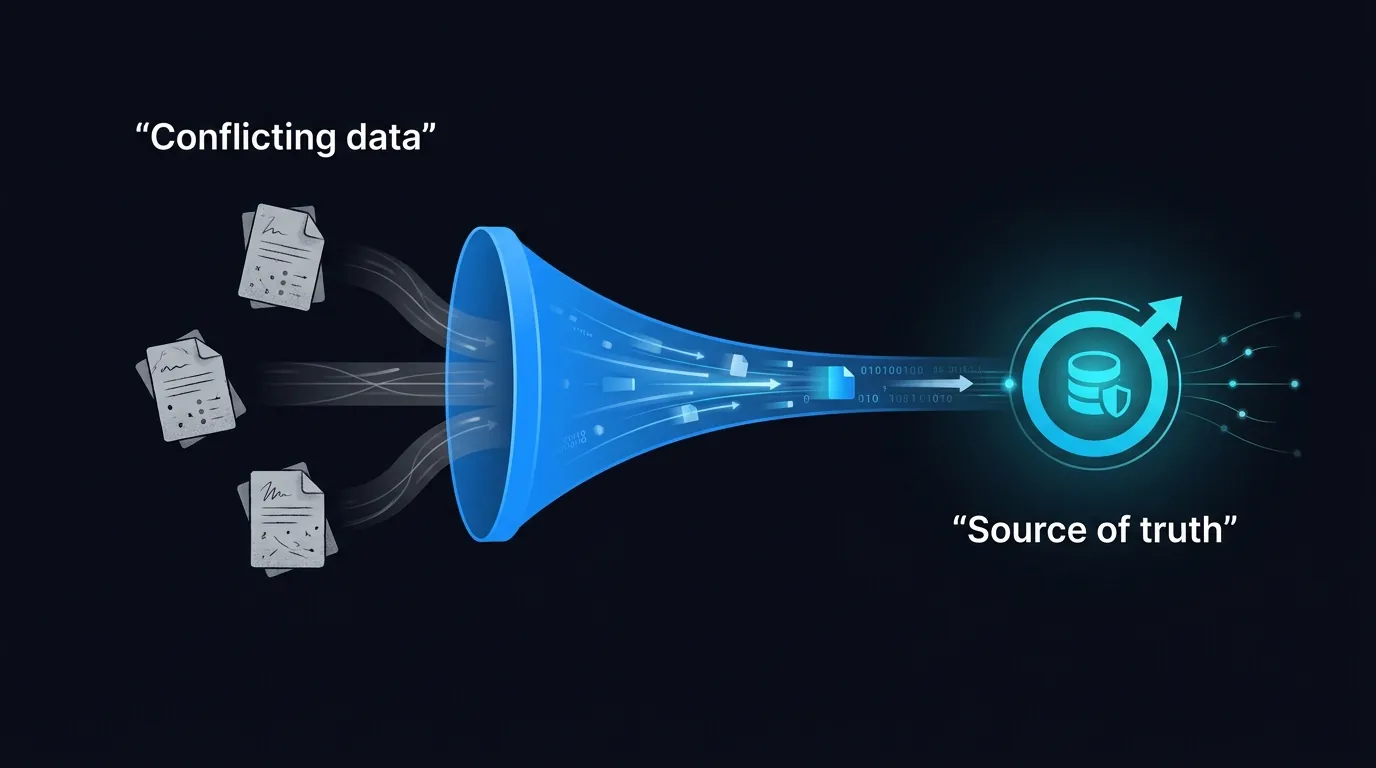
Conflicting data in, confident wrong answers out; fix the source of truth before you launch.
This is the most common reason we hit pause. Not the technology. The process underneath it. We covered the messy middle in our note on why DIY voice agents fail.
What should you do instead in those cases?
Start with a pilot, fix the data, and route the hard calls to people. If volume is low, just answer the phone. If process is broken, document it before you automate it. If the calls are emotional, keep them human and let the agent handle the routine tail.
The fastest path is a small, scoped pilot. One use case. One clear FAQ. Real calls for two weeks. You learn whether the fit is real before you spend on scale. We are strict about that order, and we wrote a whole piece on piloting before you scale a voice agent.
When the fit is right, the numbers are hard to argue with. Around 47 to 65 percent of outbound dials connect. Roughly 20 to 25 percent become a real conversation over a minute long. At $32.74 a lead, the maths sells itself. Just make sure you are in the right case first.
Right tool, right case.
If you are unsure where you land, start on our AI voice agents hub or compare options in how to choose an AI voice agent in NZ and AU.
Frequently Asked Questions
Is an AI voice agent worth it for a small business?
It depends on volume. If you take 15 or more callable contacts a day, an agent at about 80 cents a minute usually beats a receptionist on $28 to $35 an hour. Below five callable contacts a day, the setup effort rarely pays back. Answer the phone yourself until the volume justifies it.
Can an AI voice agent handle complaints?
It can greet, log, and route a complaint in under 30 seconds, but it should not resolve a serious one. Anything heading toward the Consumer Guarantees Act (NZ) or Australian Consumer Law (AU), or a tribunal, belongs with a human. We build the agent to spot those calls and warm-transfer them fast, so nothing serious gets stuck with a machine.
What happens if my data is wrong?
The agent repeats your data, so wrong data means confident wrong answers on live calls. Fix your FAQs, price list, and booking rules before you launch. We pause projects for exactly this reason. A week of cleanup prevents a month of the agent telling callers the wrong opening hours.
Do callers know they are talking to an AI?
Yes. We disclose on every call that the caller is speaking with an AI. It is the honest thing to do and it sets the right expectation. If a caller would feel betrayed to learn a machine handled their moment, that call should reach a human instead, and we route it that way by design.
How do I know if I am ready for an AI voice agent?
Run a small pilot. Pick one use case, write one clean FAQ, and put real calls through it for two weeks. If your routine calls clear well and your data holds up, you are ready to scale. If the calls are mostly bespoke or your process is unclear, fix that first.
Leonardo Garcia-Curtis
Founder & CEO at Waboom AI. Building voice AI agents that convert.
Ready to Build Your AI Voice Agent?
Let's discuss how Waboom AI can help automate your customer conversations.
Book a Free Demo

