An AI voice agent for pest control answers every callout when your technician is under a house. It triages a wasp nest from a quote request, books the urgent job, and writes it into your system. No missed callout, no voicemail black hole.
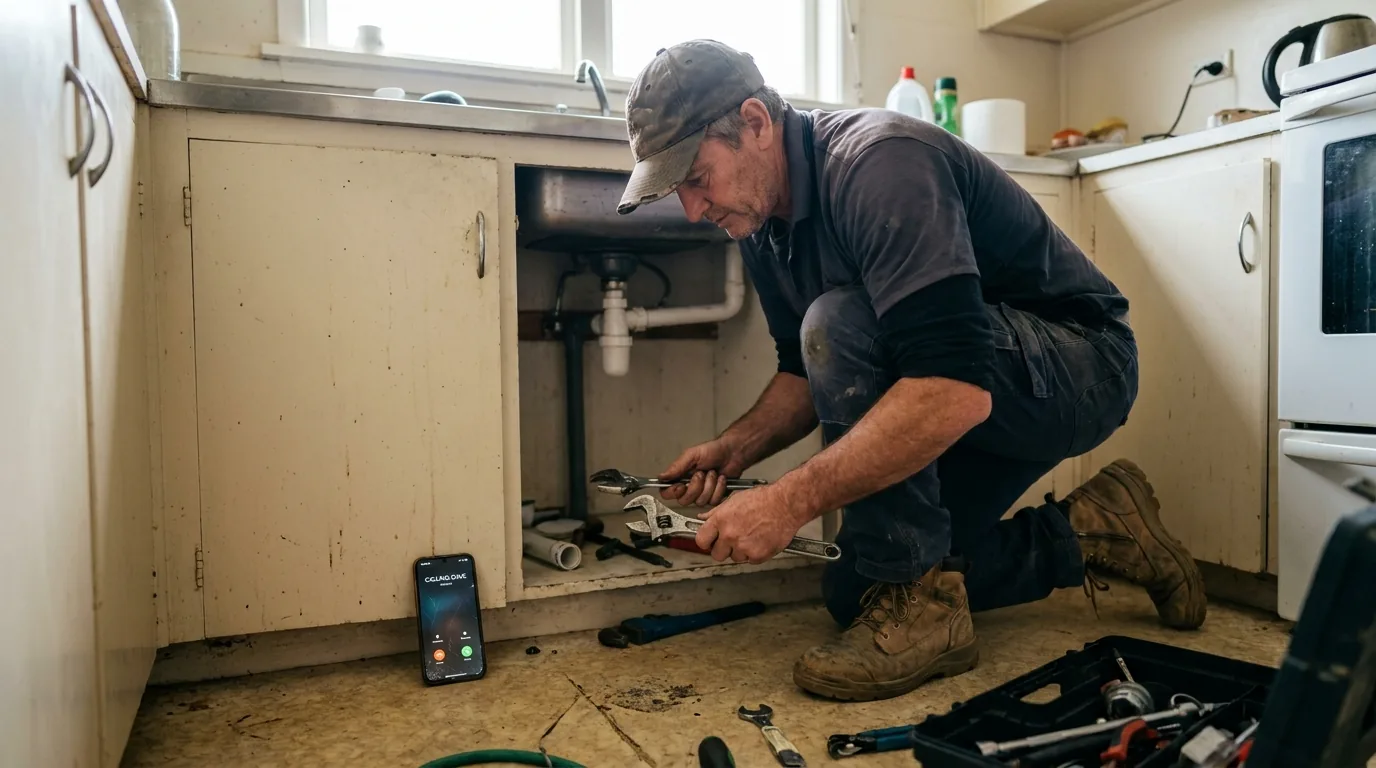
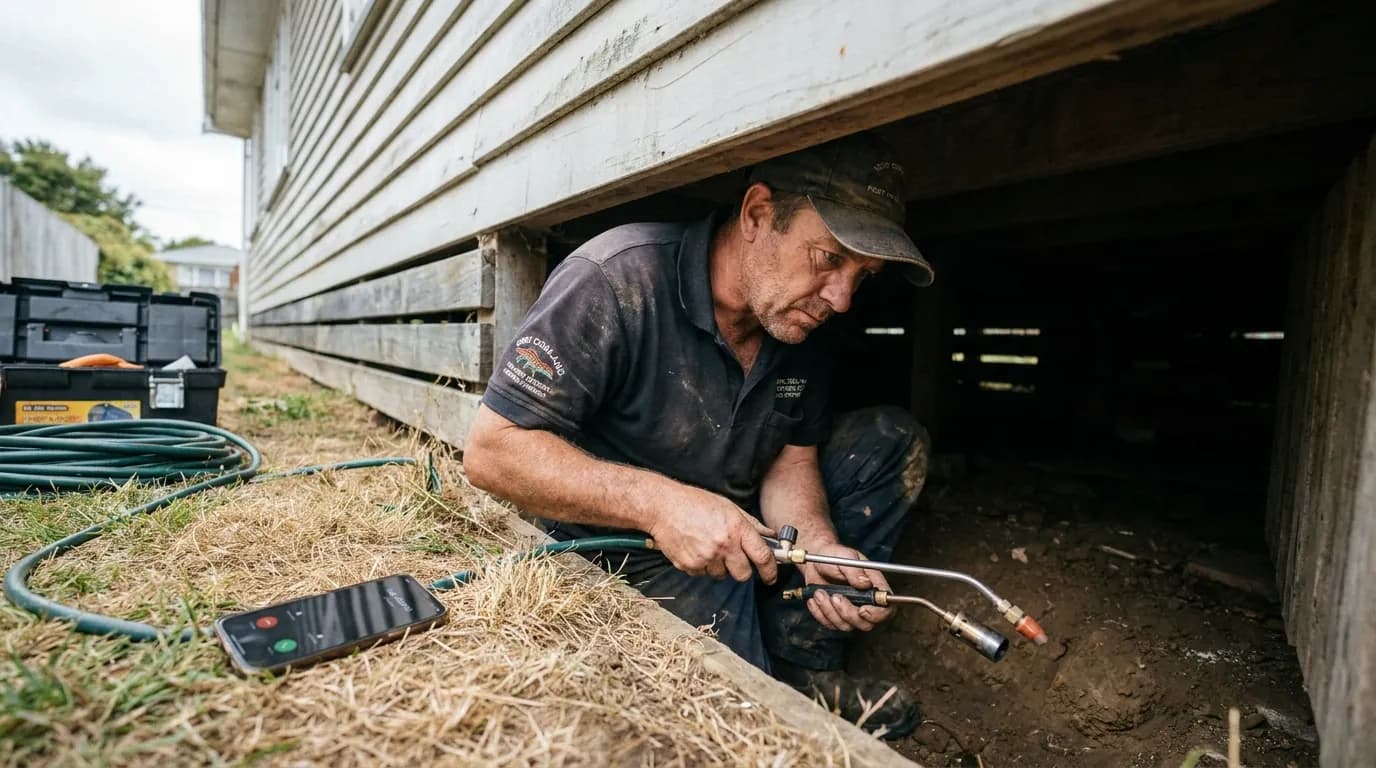
The scene plays out the same way in Hamilton and Hobart. A panicked caller has wasps in the wall cavity. Your one tech is two suburbs away, gloves on, phone buzzing in the van.
The call rings out. They ring the next pest controller in the search results. You just lost a 280 dollar callout to voicemail.
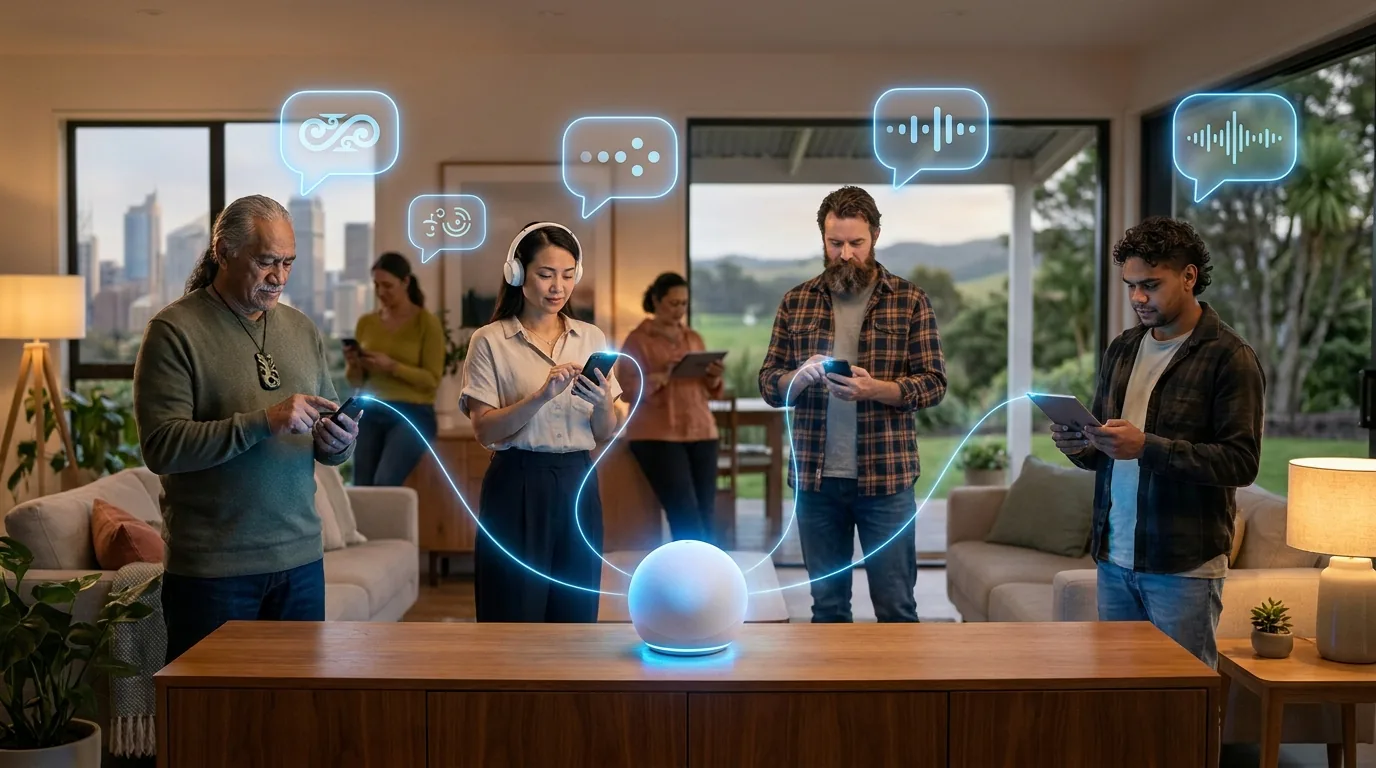
That is the gap an AI voice agent closes. It picks up on the first ring, every time, day or night. It sounds like a calm human who knows pest control.
It gathers the pest type, the address, the urgency. Then it books and dispatches before the caller can ring anyone else.
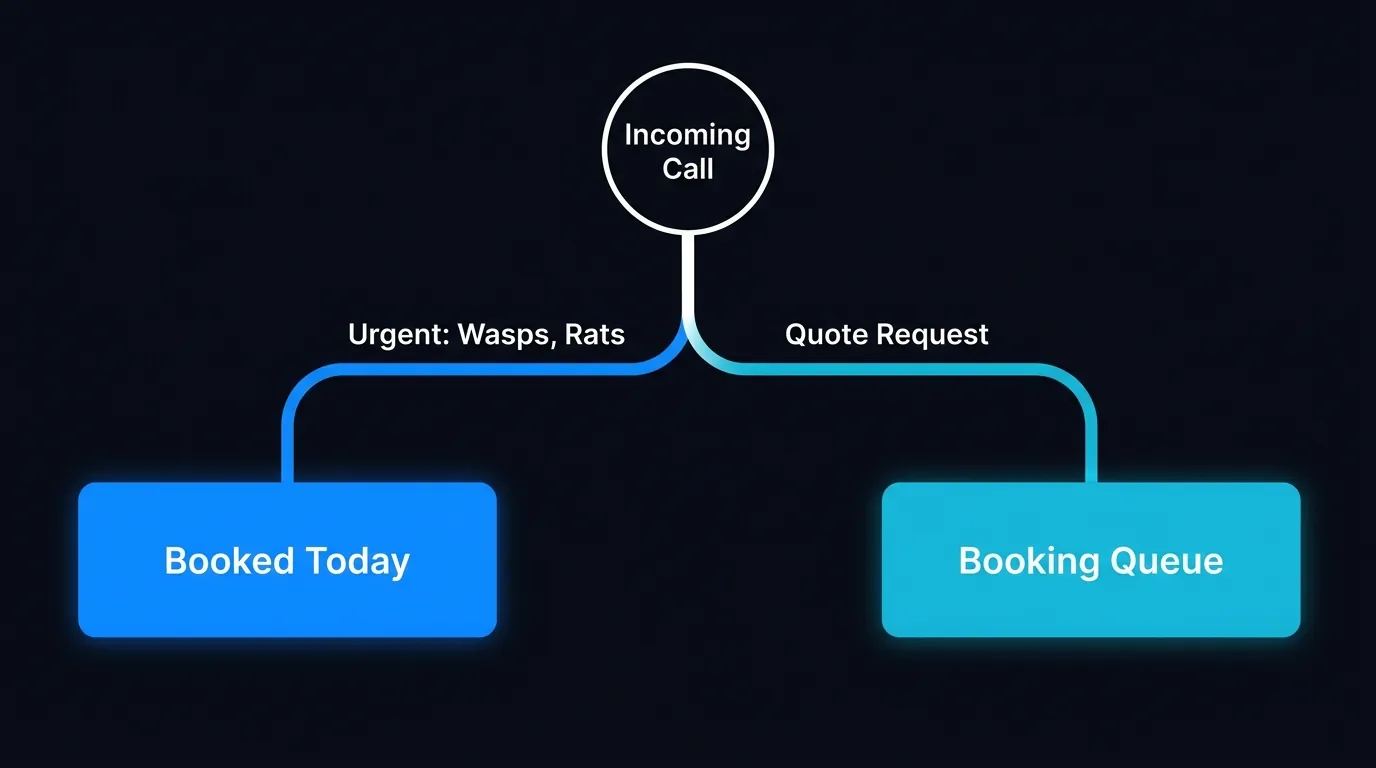
The agent sorts every caller into urgent or routine before your phone would have stopped ringing.
What does an AI voice agent do for a pest control business?
An AI voice agent answers your phone, triages the pest problem, books the callout, and logs the job. It runs on our platform, sounds human, and discloses it is an AI. The result is fewer missed calls and more booked jobs, without hiring another person.
Think of it as a receptionist who never eats lunch and never sleeps. Every caller gets a warm hello in under a second. Wasps, rats, ants, fleas, the agent knows what each one needs.
For a trade where the owner is also the technician, this is the missing hand. You cannot answer a phone with your arm up a wall cavity. The agent does it for you, and books the next job while you finish this one.
The agent also handles the boring volume. Quote enquiries, opening hours, service area questions. The agent clears them so the urgent ones get through.
Why do pest controllers miss urgent calls?
Pest controllers miss calls because the job is hands-on and mobile. You are under a house, on a roof, or driving between sites. Many callers who hit voicemail never leave a message. They ring the next name on the list.
Pest control demand spikes hard and fast. A summer wasp season or an autumn rat surge floods your phone in waves. One person cannot treat a property and answer three queued callers at once.
After-hours is worse. A family finds a wasp nest at 7pm and wants it gone tonight. That caller will not wait until 8am.
Missed calls are not small money. A single callout sits around 180 to 320 dollars depending on the pest and the property. Lose three a week and that is real revenue walking to a competitor.
How does it triage an urgent infestation versus a quote?
The agent asks two or three quick questions to sort urgent from routine. A wasp nest near a doorway or rats in a kitchen gets flagged as priority and slotted into today. A general quote for an annual treatment goes into the normal booking queue.
Triage is where pest control differs from other trades. A bee swarm is a now problem. A termite inspection on a house sale is a this-week problem.
You set the logic once. Tell the agent that stinging insects near children are always urgent. The agent follows your playbook on call number 400 exactly as it did on call number one.
It also captures the detail that makes the callout efficient. Single-storey or double. Inside, outside, or both. Your tech rolls up already knowing what gear to load.
For the booking mechanics behind this, see how our AI receptionist handles appointment booking.
Stop losing callouts to voicemail.
See how the full system answers, triages, and books on our AI voice agents hub.
How does it book and dispatch the callout?
The agent checks your live calendar, offers real open slots, and confirms the booking by voice. It then dispatches the job detail to your tech by text or app, with address, pest type, and urgency. The caller hangs up booked, and your tech gets a buzz with everything they need.
No double-bookings, no guesswork. The agent reads the same calendar your technician uses. If the 2pm slot is gone, it offers 4pm.
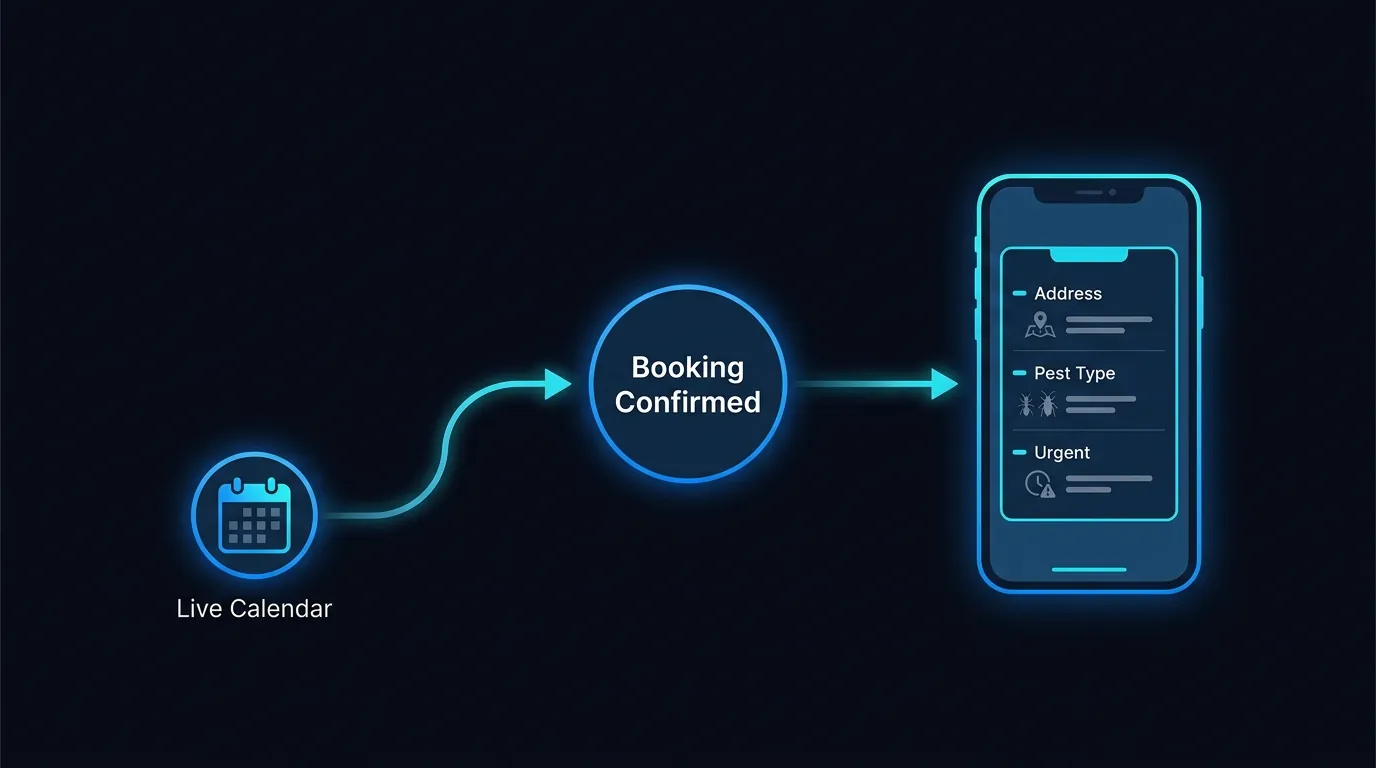
A booked call becomes a clean job card on your tech's phone, not a voicemail to chase.
Dispatch is the part that saves your evening. Instead of a voicemail to call back later, your tech gets a clean job card. Wasp nest, 14 Rata Street, single-storey, near the front door, urgent.
A Christchurch developer used the same booking pattern to lock in property viewings at 7.12 dollars each. The pest control version works identically. Cheap, instant, and booked before the caller can shop around.
Our platform plugs into the tools you already run, which we cover in our guide to CRM integration.
How does it cover after-hours calls?
The agent answers nights, weekends, and public holidays with the same triage and booking. A 9pm wasp panic gets logged, triaged, and booked into tomorrow morning, or flagged for a callback if you offer emergency service. The caller feels heard, and the job is yours instead of the competitor who also went home.
After-hours is where most callouts are won or lost. People notice pests at home, in the evening, when they are not at work. The agent is not switched off.
You decide the after-hours rules. Maybe everything books for the morning. Maybe stinging insects trigger a text to your on-call number. Either way the caller gets a real conversation, not a beep.
Reducing those dead-end calls is the whole point, which we unpack in how to cut call abandonment.
How does it write the job into your system?
After every call the agent writes a structured record into your system. Caller name, phone, address, pest type, urgency, and the booked slot all land in your CRM or job sheet. Your morning starts with clean jobs ready to run, not a list of numbers to chase.
This is the difference between a message and a job. A voicemail says someone called. A structured record says exactly who, what, where, and when.
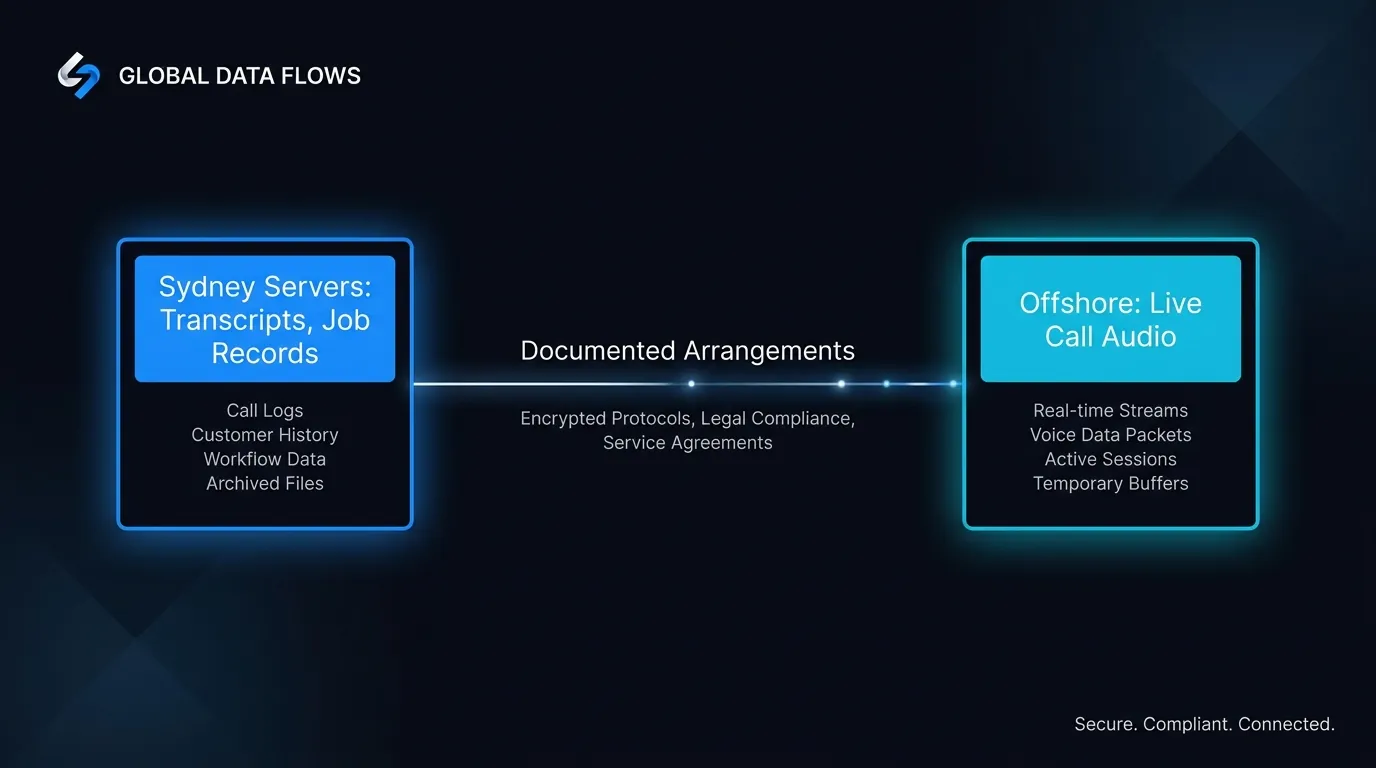
Transcripts and job records stay on our Sydney servers; live audio is processed offshore under documented arrangements.
Your customer records also stay protected. Transcripts and structured job records sit on our Sydney servers. Live call audio is processed offshore under documented arrangements with our voice infrastructure partner. We never claim all data stays in Australia, because that would not be true.
Both privacy regimes are covered. In New Zealand we work within the Privacy Act 2020 overseen by the Office of the Privacy Commissioner. In Australia we follow the Privacy Act 1988 and the 13 Australian Privacy Principles overseen by the OAIC. Every call also discloses it is an AI, up front, every time.
What does it cost a NZ or AU operator?
You pay by the second, at roughly 80 cents a minute NZD or AUD. An average answered call runs about 30 seconds, so around 40 cents. A proper triage-and-book call of one to two minutes costs about one to two dollars.
Compare that to a part-time receptionist at 28 to 35 dollars an hour, before KiwiSaver or super, ACC, and holiday pay. The agent costs cents per call and never takes leave. For one tech swamped in wasp season, that maths is not close.
The agent also captures jobs you were losing for free. One recovered 280 dollar callout pays for hundreds of answered calls. The phone stops being a leak.
For a full breakdown, read what an AI receptionist actually costs.
You do not have to choose between the agent and your people. The agent handles volume and after-hours. Your humans handle the judgement calls and the complex jobs, which we explain in why voice AI still needs humans.
Never miss a wasp-season callout again.
Look at a live inbound setup on our NZ inbound agent page, or start on the AI voice agents hub.
Frequently Asked Questions
Will callers know they are talking to an AI?
Yes. The agent discloses it is an AI at the start of every call, in New Zealand and Australia. Callers still get a calm, human-sounding conversation that books their job. In practice most people just want their wasp problem sorted fast, and the agent does that without the awkward voicemail wait.
Can it handle a real infestation emergency at midnight?
It answers, triages, and logs the call instantly at any hour. Whether it books an emergency callout or schedules the morning depends on your rules. You decide which pests trigger an after-hours text to your phone. The caller always gets a real conversation, so the job stays yours instead of the next listing.
How does it know which pest is urgent?
You set the triage rules once, and the agent applies them on every call. Stinging insects near children, rodents in a commercial kitchen, or termites on a house sale can all be flagged urgent. Routine quotes and precautionary sprays go in the normal queue. The agent never forgets your priorities.
Where does my customer data live?
Your transcripts and structured job records sit on our Sydney servers. Live call audio is processed offshore under documented arrangements with our voice infrastructure partner. We work within the NZ Privacy Act 2020 and the Australian Privacy Act 1988 with its 13 Australian Privacy Principles. We never claim all data stays in Australia.
Does it replace my receptionist or my techs?
No. The agent handles call volume, triage, and after-hours so nothing rings out. Your people handle the judgement calls, the tricky quotes, and the actual treatments. Most operators use the agent to stop losing callouts, not to cut staff. It is the extra hand a busy one-tech business never had.
What does a typical booked call cost?
A triage-and-book call of one to two minutes costs about one to two dollars, billed by the second at roughly 80 cents a minute. A quick quote enquiry of 30 seconds is around 40 cents. One recovered callout worth a few hundred dollars covers a huge volume of answered calls.
Waboom builds call answering for trade businesses that never misses a job call.
Leonardo Garcia-Curtis
Founder & CEO at Waboom AI. Building voice AI agents that convert.
Ready to Build Your AI Voice Agent?
Let's discuss how Waboom AI can help automate your customer conversations.
Book a Free Demo