
An AI voice agent for plumbers answers every inbound call, qualifies the job, and books it into your diary. It does this while you are under a house with your phone buzzing in the van. It runs day and night. It never sends a burst-pipe job to the next plumber on the list.
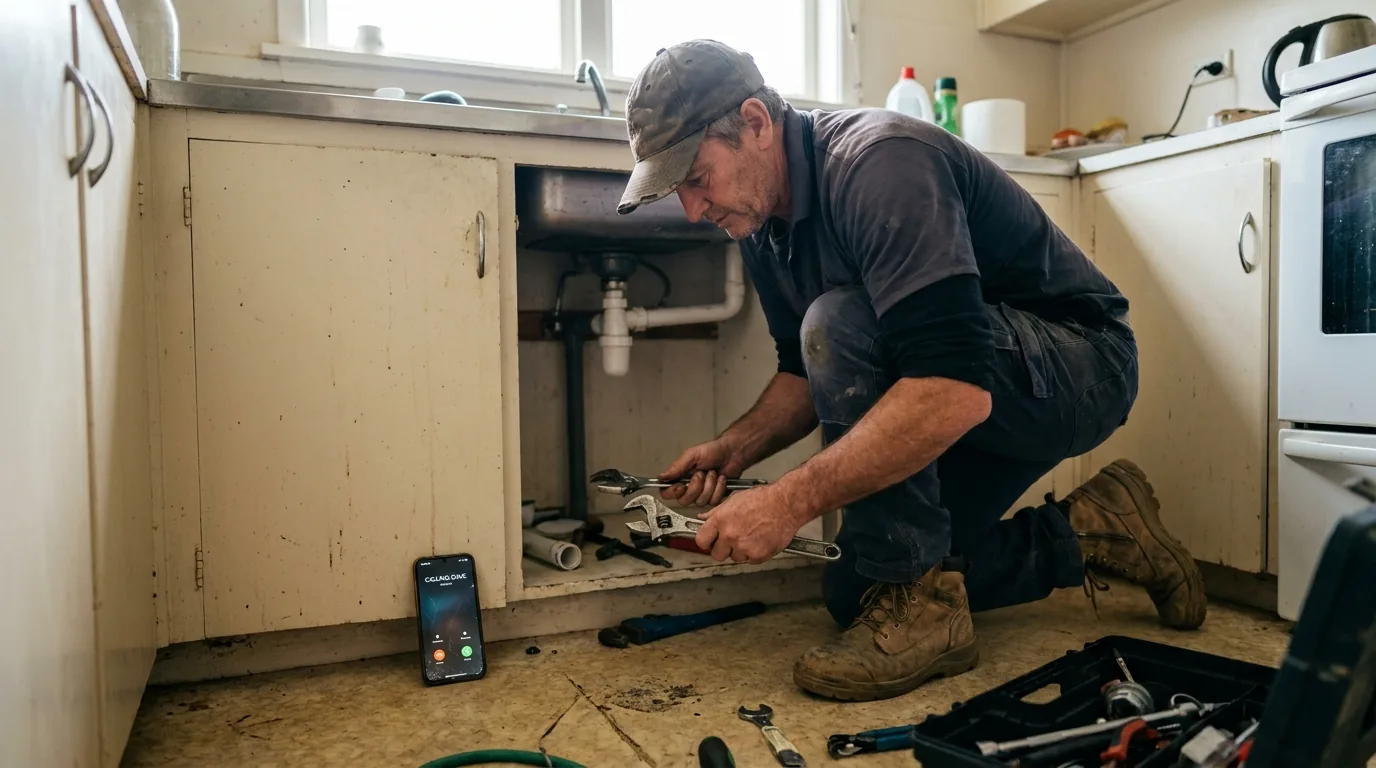
Both hands on the tools, the phone still answered. That is the whole job.
What does an AI voice agent do for a plumbing business?
It picks up the phone when you cannot, finds out what the caller needs, and books or escalates the job. The agent greets the caller, tells them it is an AI, takes the address and the fault, and writes it into your calendar. A 30-second answered call costs about 40 cents.
That is the whole point. You are on the tools most of the day. The phone is in the van or on a roof. A missed call from a panicked homeowner becomes a job for whoever picks up second.
Our platform answers in under a second and asks the three things a plumber actually needs: what is broken, where, and how urgent. Then it acts. It books the routine job or it pages you for the emergency.
This is the same pattern we run for every trade. See how the booking side works in our guide to AI receptionist appointment booking.
Why do plumbers miss jobs while on the tools?
Plumbers miss jobs because both hands are busy and the phone is not. You are lying under a sink with a wrench when the call comes. By the time you wash up and ring back, the caller has phoned three other plumbers. Many missed callers never leave a voicemail.
A blocked drain or a leaking hot-water cylinder is an urgent buy. The homeowner is not shopping around for the best plumber. They are ringing down a list until someone answers.
So the first plumber to pick up wins the job. Not the best one. The available one.
That is why an unanswered phone is the most expensive thing in your business. Every ring you miss is a job your competitor banks. Our AI voice agent built for plumbers removes that gap. It answers on the first ring, every ring.
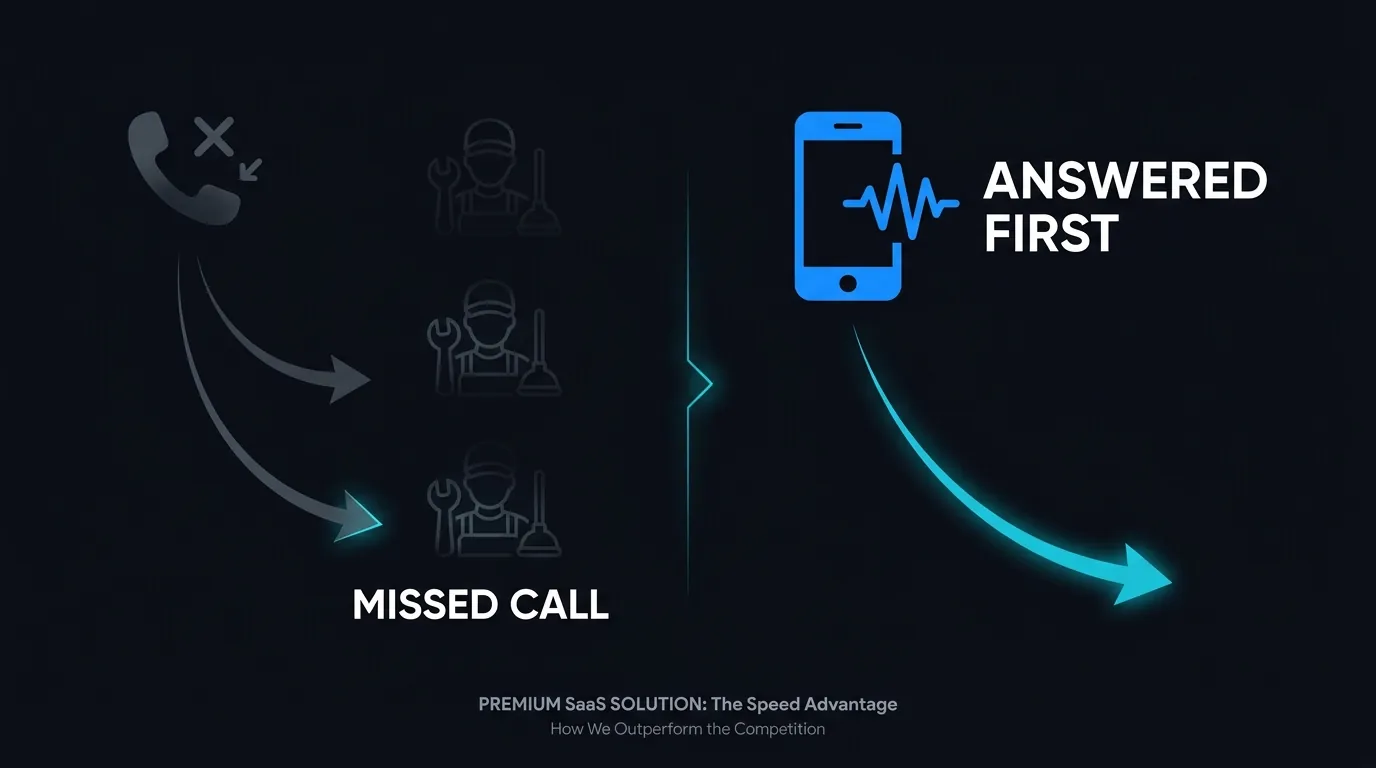
A missed call rings down the list. An answered call ends the search.
How does it tell an emergency from a routine job?
The agent listens for the signals that separate a flooding kitchen from a dripping tap, then routes each accordingly. Words like burst, flooding, no hot water, and gas smell trigger the emergency path. A slow leak or a quote request goes to the standard booking path.
You set the rules. You decide what counts as an emergency in your business. The agent follows them on every call, the same way, all day.
For a true emergency it can do three things. It can ring or text your mobile. It can offer the next emergency slot. It can take card details to hold the after-hours callout fee. You pick which.
For a routine job it just books the visit. No interruption to your work. You see it in the diary when you next look at your phone.
That triage is the difference between a tool that annoys you and one that earns its keep. A plumber does not want every dripping-tap call buzzing the mobile mid-job.
Stop losing the 11pm burst-pipe call.
See exactly how we set up an AI voice agent for plumbers that triages emergencies and books the rest.
How does it book and dispatch the work?
The agent collects the address, the fault, the access details, and a preferred time, then writes the job straight into your calendar or job system. No double-entry. No notepad in the van that you transcribe at 9pm. The booking lands where you already work.
It can capture the things that waste a callout. Is there parking. Is someone home. Is the water main accessible. Those questions save a wasted trip across town.
We connect the agent to your existing tools so jobs flow without you retyping anything. See how that wiring works in our guide to AI voice agent CRM integration.
Every call is logged with a transcript. So if a homeowner says nobody mentioned a callout fee, you have the recording. You also get a tidy record of who rang, when, and what they wanted.
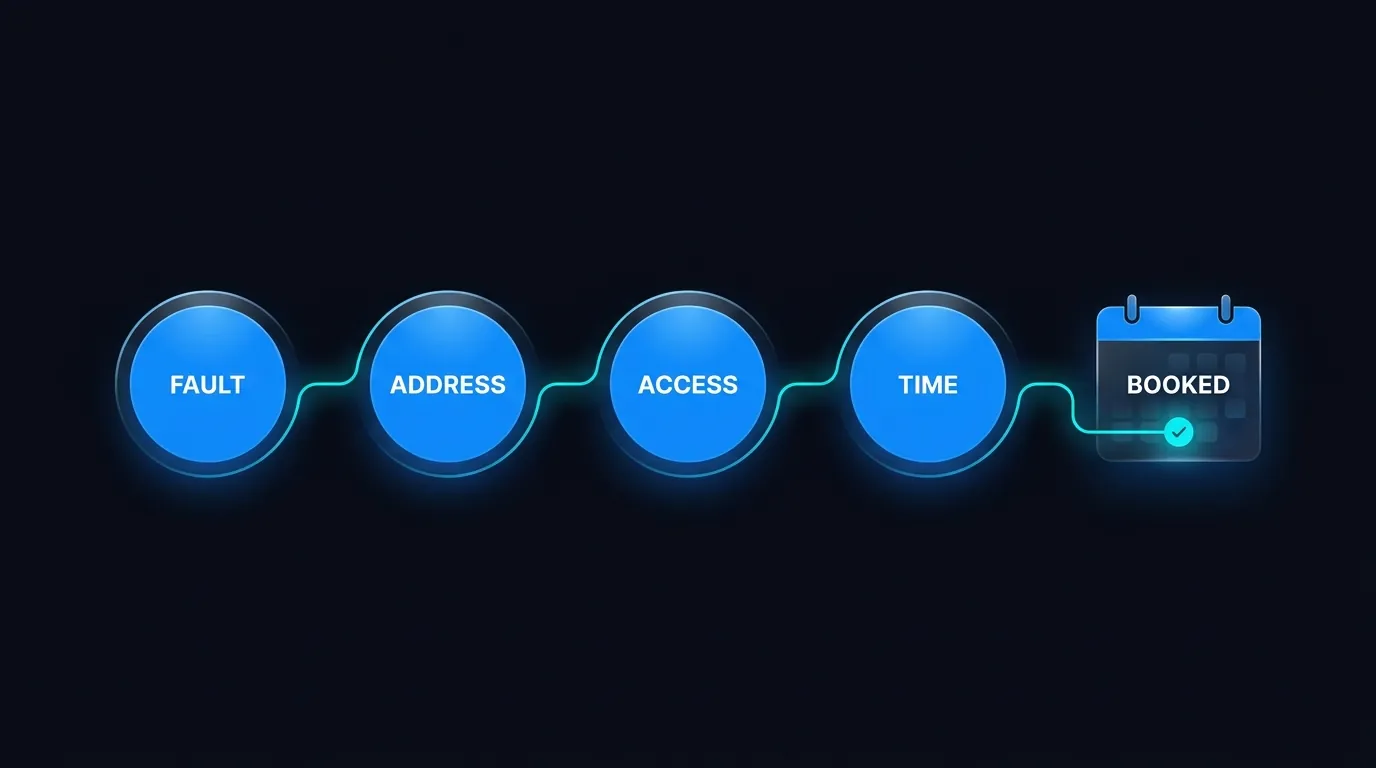
Fault, address, access, time. Written straight to your diary, no retyping.
How does it cover after-hours calls?
It answers nights, weekends, and public holidays the same way it answers at noon. A burst pipe at 11pm does not wait for business hours, and neither does the homeowner. The agent picks up, triages, and either books the morning slot or pages you for the emergency.
This is where most plumbing revenue leaks. The after-hours call goes to voicemail, the homeowner panics, and they ring the next plumber who runs a 24-hour line.
You do not need a 24-hour line. You need a phone that answers and a rule for when to wake you. The agent gives you both. Read our breakdown of after-hours receptionist cover for the full picture.
You also avoid paying a human to sit by a phone overnight. A part-time receptionist in NZ or AU runs about 28 to 35 dollars an hour before KiwiSaver or super, ACC, and holiday pay. The agent costs cents per call.
What does a missed job cost versus the agent?
A single missed hot-water-cylinder replacement can be a 2,000-dollar job walking to a competitor. The agent that would have caught it costs about 40 cents for that 30-second call. The maths is not close.
Run it across a month. Say you miss two jobs a week while on the tools. That is eight jobs a month. Even at a modest 400 dollars each, that is 3,200 dollars gone.
Now the agent side. A one to two minute call runs about one to two dollars. Even at a few hundred calls a month, your bill is small money against one saved job.
For a full cost breakdown read our guide on how much an AI receptionist costs. It walks through the per-second billing in plain numbers.
The honest part. The agent will not replace your judgement on a tricky job. It books, triages, and qualifies. You still plumb. Our piece on why voice AI agents still need humans covers where the line sits.
How fast can a plumber get it live?
Most plumbing businesses are live within a few days, not weeks. We build the agent around your jobs, your suburbs, your emergency rules, and your callout fees. Then you point your existing number at it. No new number to print on the van.
The simplest start is call forwarding. You forward calls you miss, or all calls, to the agent. Our step-by-step on forwarding calls to an AI receptionist shows the exact setup.
From there you tune it. You listen to a week of transcripts and adjust the wording. The agent learns your suburbs and your pricing. It gets sharper every week.
On data and privacy, your portal, transcripts, and call records sit on servers in Sydney. The live audio is processed offshore while the call happens. We disclose the AI on every call. That keeps you square with the NZ Privacy Act 2020 and the Australian Privacy Act 1988 and its 13 Australian Privacy Principles. More in our note on Privacy Act compliance for voice agents.
Catch the next burst-pipe call instead of your competitor.
Want fewer hang-ups while you are on a job? See how we reduce call abandonment, then check the inbound AI receptionist built for NZ and AU trades.
Frequently Asked Questions
Will the AI voice agent for plumbers tell callers it is not a human?
Yes. The agent discloses that it is an AI at the start of every call. That keeps you compliant with the NZ Privacy Act 2020 and the Australian Privacy Act 1988. Most homeowners do not mind once their job is booked. They care that the phone got answered.
Can it handle a burst pipe at 2am?
Yes. After-hours calls are answered the same as daytime calls. For a true emergency the agent can ring or text your mobile, offer the next emergency slot, or take card details to hold the callout fee. You set which actions fire and for which keywords.
What happens to the recordings of my calls?
Your transcripts and call records are stored on servers in Sydney. The live audio is processed offshore during the call itself. Every call is logged, so you have a record of what was promised, who rang, and when. You control retention and access.
How much does it cost per call?
Billing is by the second at about 80 cents a minute. An average answered call of 30 seconds runs about 40 cents. A one to two minute booking call runs about one to two dollars. Against a single saved job worth hundreds or thousands, the cost is tiny.
Do I need a new phone number?
No. You keep your existing number. You point it at the agent with call forwarding, either for missed calls only or for every call. Nothing new goes on the van or the website. Your customers ring the same number they always have.
Can it book straight into my calendar?
Yes. The agent writes jobs into your calendar or job-management system with the address, fault, and access notes. We connect it to the tools you already use, so nothing needs retyping. You see the booking next time you check your phone.
Leonardo Garcia-Curtis
Founder & CEO at Waboom AI. Building voice AI agents that convert.
Ready to Build Your AI Voice Agent?
Let's discuss how Waboom AI can help automate your customer conversations.
Book a Free Demo

