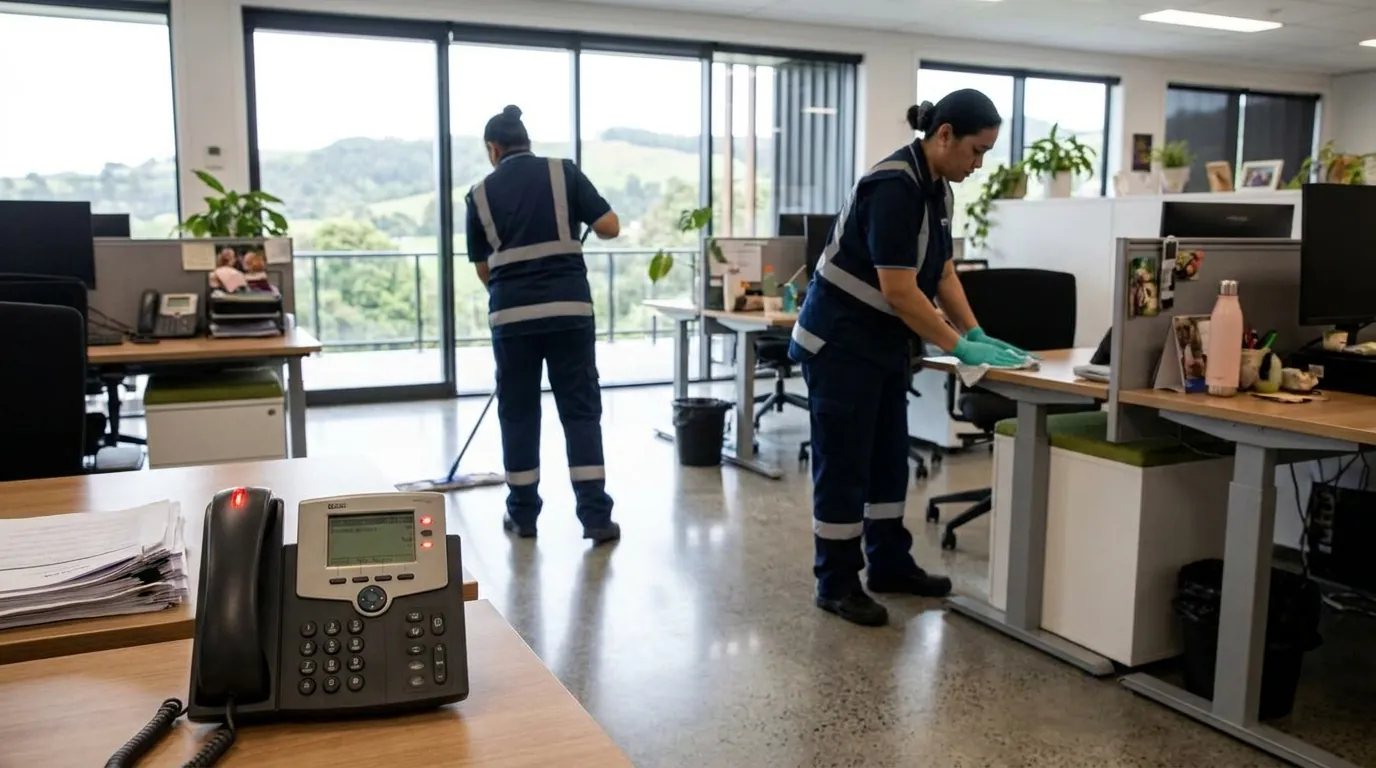
An AI voice agent for cleaning companies answers the calls your crew cannot. It picks up while your team is mid-job, takes quote enquiries, books one-off and recurring cleans, and covers after-hours. Every call gets answered the same way, at any hour.
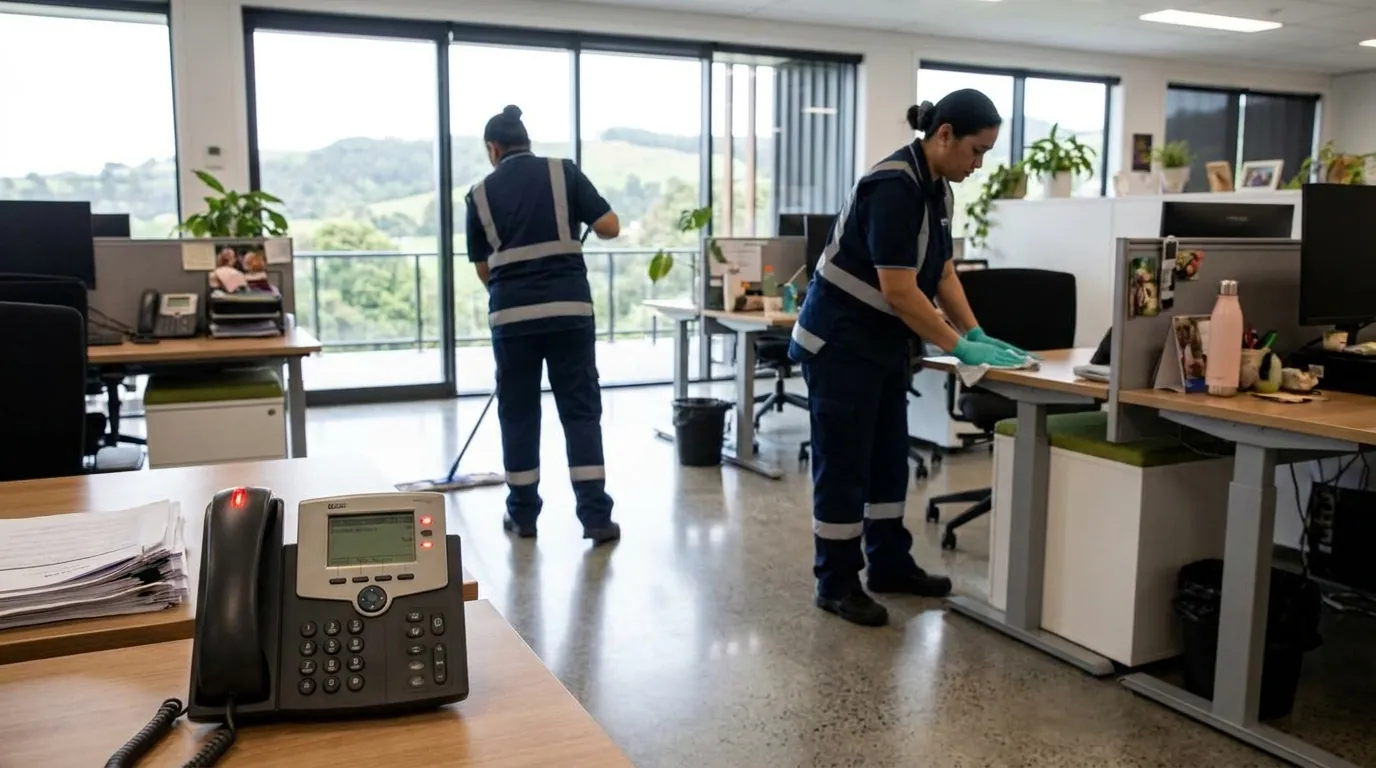
The phone always rings while your crew has gloves on.
What does an AI voice agent do for a cleaning business?
It answers every inbound call, qualifies the enquiry, and books the job while your crew keeps working. Our platform picks up in about one second, asks the right questions, and writes the lead into your system. No voicemail, no missed quote, no callback you forget to make.
Think about a Tuesday at 11am. Your two cleaners are halfway through an office in Penrose. The phone rings, and a property manager wants a quote for an end-of-tenancy clean. That call used to go to voicemail and die there.
Now the agent takes it. It greets the caller, confirms the suburb, asks the bedroom and bathroom count, and books a quote time. The whole thing lands in your inbox before your crew finishes the kitchen.
Why do cleaners miss quote and booking calls?
Because your best people are on the tools, not at a desk. A cleaning business runs lean. The owner cleans, the crew cleans, and the phone rings during exactly the hours when everyone has gloves on. Most enquiries hit voicemail, and most callers ring the next cleaner.
When everyone is on the tools, most work-hour calls hit voicemail and the caller rings the next cleaner. Each missed quote call could be a recurring fortnightly clean worth hundreds a month.
A part-time receptionist sounds like the fix. But a NZ or AU part-timer runs about 28 to 35 dollars an hour before KiwiSaver or super, ACC and holiday pay. And they still go home at 5pm, right when after-work enquiries start.
We wrote more about this gap in our piece on why call abandonment hurts service businesses. The pattern is the same across cleaning, plumbing and trades.
How does it qualify a quote enquiry?
It asks the same questions your best estimator would, in order, and records every answer. The agent confirms the property type, the suburb, the size, and the kind of clean. Then it tags the lead by value so you quote the big ones first.
Cleaning quotes hinge on a few facts. The agent collects them every time:
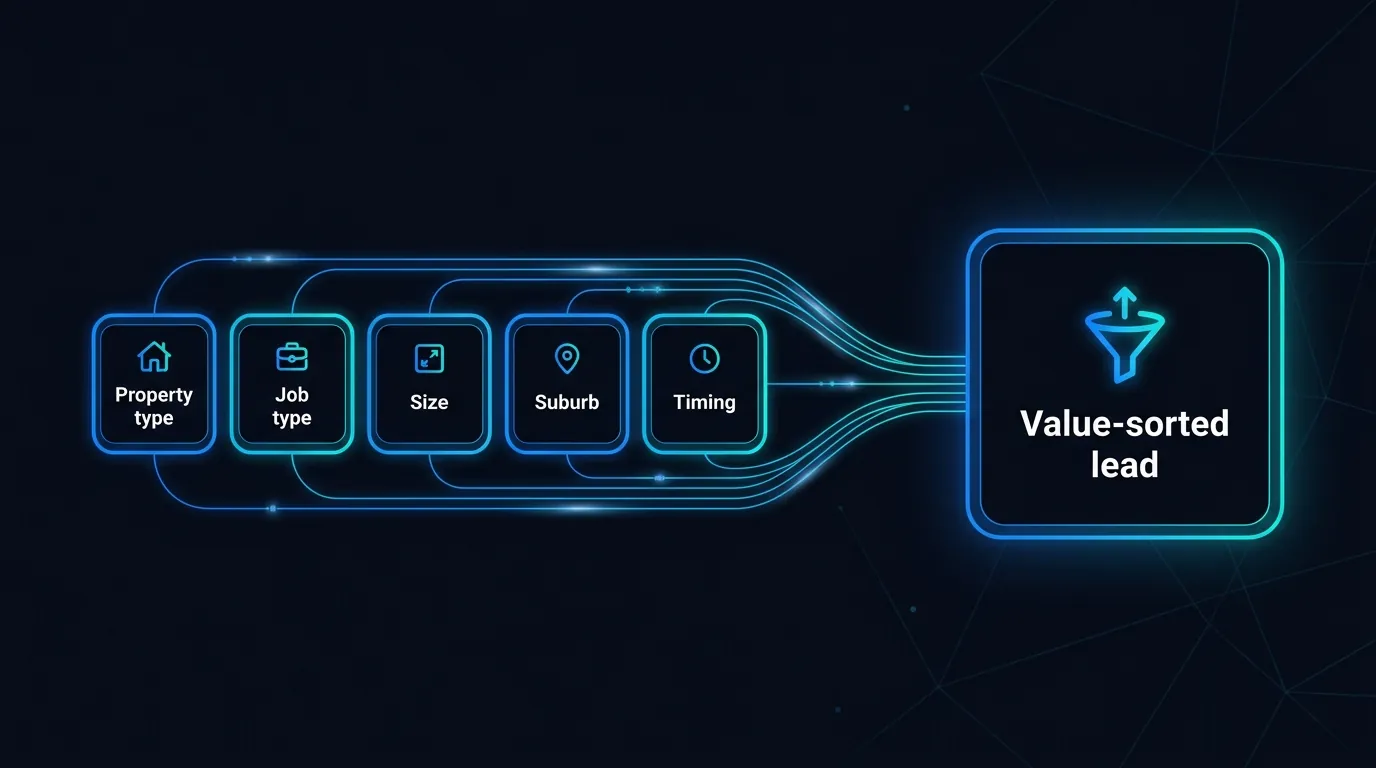
Five questions, asked every time, sort your quote list automatically.
A real example shows the value. A Sydney sales agent we built produced 141 qualified leads in 90 days at 32.74 dollars per seller. The same qualifying discipline works for cleaning enquiries. Ask the right five things, every time, and your quote list sorts itself.
The agent never guesses a price. It gathers the facts and hands you a ready-to-quote lead. You still set the number.
How does it book a recurring or one-off clean?
It checks your live calendar and offers real open slots, then confirms the booking back to the caller. For a recurring clean it sets the cadence, weekly or fortnightly, and locks the first visit. For a one-off it finds the next free window that fits the job size.
Say a caller wants a fortnightly house clean in Ponsonby. The agent confirms three bedrooms, two bathrooms, and a Thursday preference, then offers this Thursday at 9am and books it. The caller gets a confirmation. You get a new recurring client without touching the phone.
We go deep on this in our guide to AI receptionist appointment booking. The booking logic is the same whether you clean homes or run a clinic.
Booking accuracy matters more than speed. The agent confirms the slot out loud, repeats the address, and only writes the job once the caller agrees. No double-bookings, no phantom visits.
Tired of quote calls dying in voicemail?
See how the agent answers, qualifies and books on our AI voice agents hub.
How does it cover after-hours enquiries?
It answers at 8pm, on Sundays, and over the long weekend, exactly the same as 11am Tuesday. A surprising share of cleaning enquiries arrive after work, when people finally sit down and deal with the house. A receptionist who clocks off at 5pm misses all of them.
Picture a landlord at 9pm with a tenant moving out Friday. They need an end-of-tenancy clean booked tonight. Your competitors are at voicemail, but your agent answers, qualifies the urgency, and books a Thursday slot.
Every call still discloses it is an AI. The agent tells callers it is an AI assistant at the start. That honesty builds trust, and it keeps you onside with the rules in both countries.
After-hours coverage is where the economics shine. An answered call averages about 30 seconds, roughly 40 cents. A one-to-two-minute booking call runs about one to two dollars. You are paying cents to catch jobs you would otherwise lose entirely.
How does it write the job into your system?
It writes the lead straight into your CRM or job-management tool the moment the call ends. Name, suburb, job type, size, and preferred time all land as structured fields. No retyping, no sticky notes, no lost details between the call and the calendar.
This is the part that saves your evenings. The agent does not just take a message. It creates a real job record your crew can action in the morning. We cover the mechanics in our write-up on AI voice agent CRM integration.
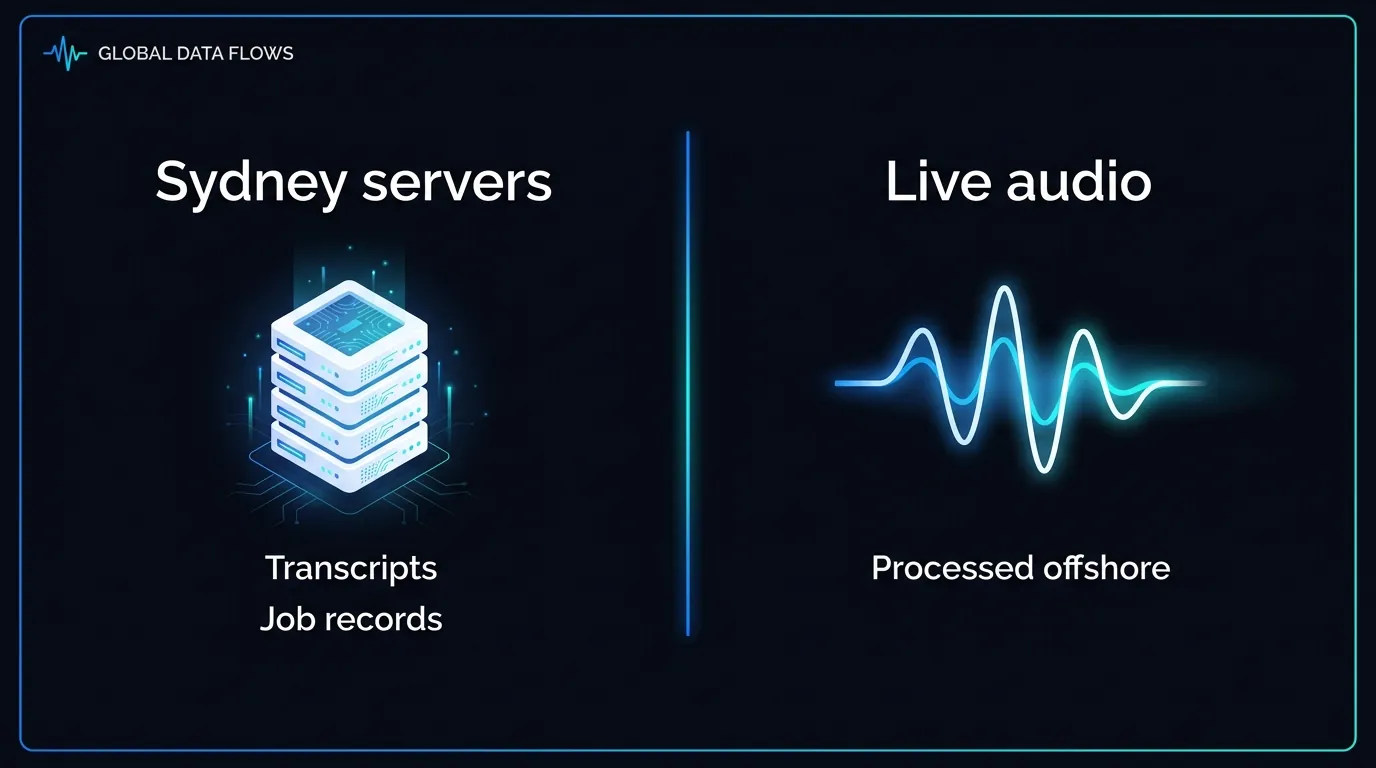
The honest residency split: records in Sydney, live audio processed offshore.
Here is the honest residency picture, because it matters for your customers' data. Your portal, transcripts and structured job records sit on our Sydney servers. Live call audio is processed offshore under documented arrangements with our voice infrastructure partner. We never claim all data stays in Australia, because that would not be true.
Both countries' privacy rules apply, and we follow them. In New Zealand that means the Privacy Act 2020 and the Office of the Privacy Commissioner. In Australia that means the Privacy Act 1988, the 13 Australian Privacy Principles, and the OAIC. Disclosing AI on every call is part of that compliance, not an afterthought.
What does it cost a NZ or AU cleaning business?
You pay about 80 cents per minute, billed by the second, only for calls the agent handles. No salary, no holiday pay, no ACC or super. An answered 30-second call costs about 40 cents. A full booking call of one to two minutes costs about one to two dollars.
Run the comparison. A part-time receptionist costs 28 to 35 dollars an hour and covers maybe eight hours a day. The agent covers all 24 hours and only charges when a call comes in. For most cleaning firms that is the difference between a fixed wage bill and a few dollars a day.
The math gets better when you count won jobs. Catch four extra recurring cleans a month at a few dollars in call cost each, and the agent pays for itself several times over. Our full breakdown lives in how much an AI receptionist costs.
One honest caveat. The agent handles enquiries, qualifying and booking. It does not replace your judgement on tricky quotes or awkward complaints. We are clear about that in our piece on why voice agents still need humans.
Stop sending quote calls to voicemail.
See how an AI voice agent for cleaning companies fits your business on our AI voice agents hub, or look at our inbound receptionist setup.
Frequently Asked Questions
Does the AI voice agent tell callers it is an AI?
Yes, on every single call. The agent introduces itself as an AI assistant at the start. This keeps you compliant in both New Zealand and Australia, under the Privacy Act 2020 and the Australian Privacy Principles. Most callers do not mind once their enquiry gets handled fast and politely.
Can it quote a price for a clean over the phone?
No, and that is deliberate. The agent gathers the facts a quote needs, the property type, size, suburb and job type, then hands you a ready-to-quote lead. You set the price. Cleaning quotes vary too much for an agent to guess, so it qualifies rather than commits you to a number.
Where is my customers' data stored?
Your portal, transcripts and structured job records sit on our Sydney servers. Live call audio is processed offshore under documented arrangements with our voice infrastructure partner. We follow the NZ Privacy Act 2020 and the Australian Privacy Principles. We never claim all data stays in Australia, because the honest picture is a split.
How much does it cost to run?
About 80 cents per minute, billed by the second, only when the agent handles a call. A 30-second answered call is about 40 cents. A one-to-two-minute booking call is about one to two dollars. Compare that to 28 to 35 dollars an hour for a part-time receptionist who still goes home at 5pm.
Will it work with my job-management software?
In most cases, yes. The agent writes leads and bookings as structured fields straight into your CRM or job tool when the call ends. Name, suburb, job type, size and timing all transfer automatically. See our CRM integration guide for how the handover works in practice.
Can it handle after-hours and weekend calls?
Yes, around the clock. The agent answers at 8pm, on Sundays and over long weekends exactly as it does midweek. A large share of cleaning enquiries arrive after work hours, when a 5pm receptionist has already gone home. The agent catches every one of them at cents per call.
Leonardo Garcia-Curtis
Founder & CEO at Waboom AI. Building voice AI agents that convert.
Ready to Build Your AI Voice Agent?
Let's discuss how Waboom AI can help automate your customer conversations.
Book a Free Demo