
We priced a do it yourself voice agent in March. The carrier invoice came first. Then the speech bill. Then the model usage line. Three suppliers, three logins, three support queues, and not one real call answered yet.
This is the AI voice agent bundle vs build question every NZ and AU operator hits. You can buy a managed agent that just works. Or you can wire the telephony, the voice, and the model together yourself. We have done both. Here is the honest comparison, with real numbers.
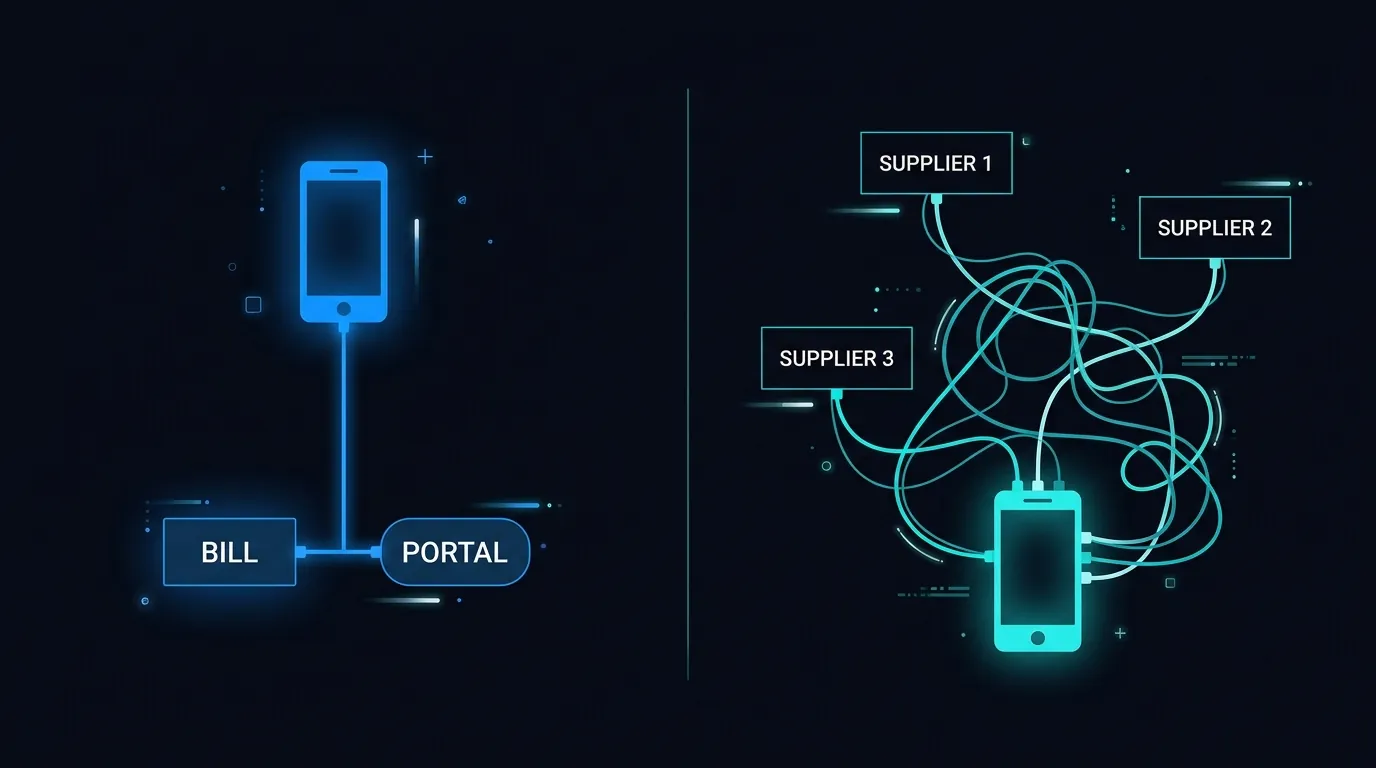
One supplier and one bill, or three suppliers you stitch together yourself.
What is the difference between a managed AI voice agent and a DIY build?
A managed AI voice agent is one supplier, one bill, one phone number that works on day one. A DIY build means you buy the carrier, the voice layer, and the language model separately, then write the code that stitches them into a single live phone call. One is a product. The other is a project.
With a bundle, we run the whole stack for you. You get a number, a portal, transcripts, and a working agent. With a build, you become the systems integrator. You own every seam between the three suppliers. When a seam breaks, it is your phone that rings.
The gap is not the idea. Anyone can demo a voice bot in an afternoon. The gap is the production work between a demo and a phone line that takes 300 real calls a month without dropping one. For the full numbers on each path, see our AI voice agent pricing page.
What do you actually have to wire together yourself?
A DIY build needs three things wired together. A carrier for the phone line. A voice layer for speech to text and text to speech. A language model for the conversation. Then you write the glue code that times them so the caller hears a reply in under one second.
Here is the part the demo hides. The carrier sends audio one way. The speech layer turns it into text. The model decides what to say. The voice layer speaks it back. Every hop adds delay. Miss the timing and the caller talks over a silent line, then hangs up.
You also build the boring half nobody films. Call recording and storage. Transcript capture. Booking writes into a calendar. A CRM update after the call. Voicemail handling. A fallback when the model stalls. That boring half is where most projects die. We wrote up the reasons in our guide to why DIY voice agents fail.
A managed bundle ships all of that on day one. The seams are already tested. You configure the agent, not the plumbing.
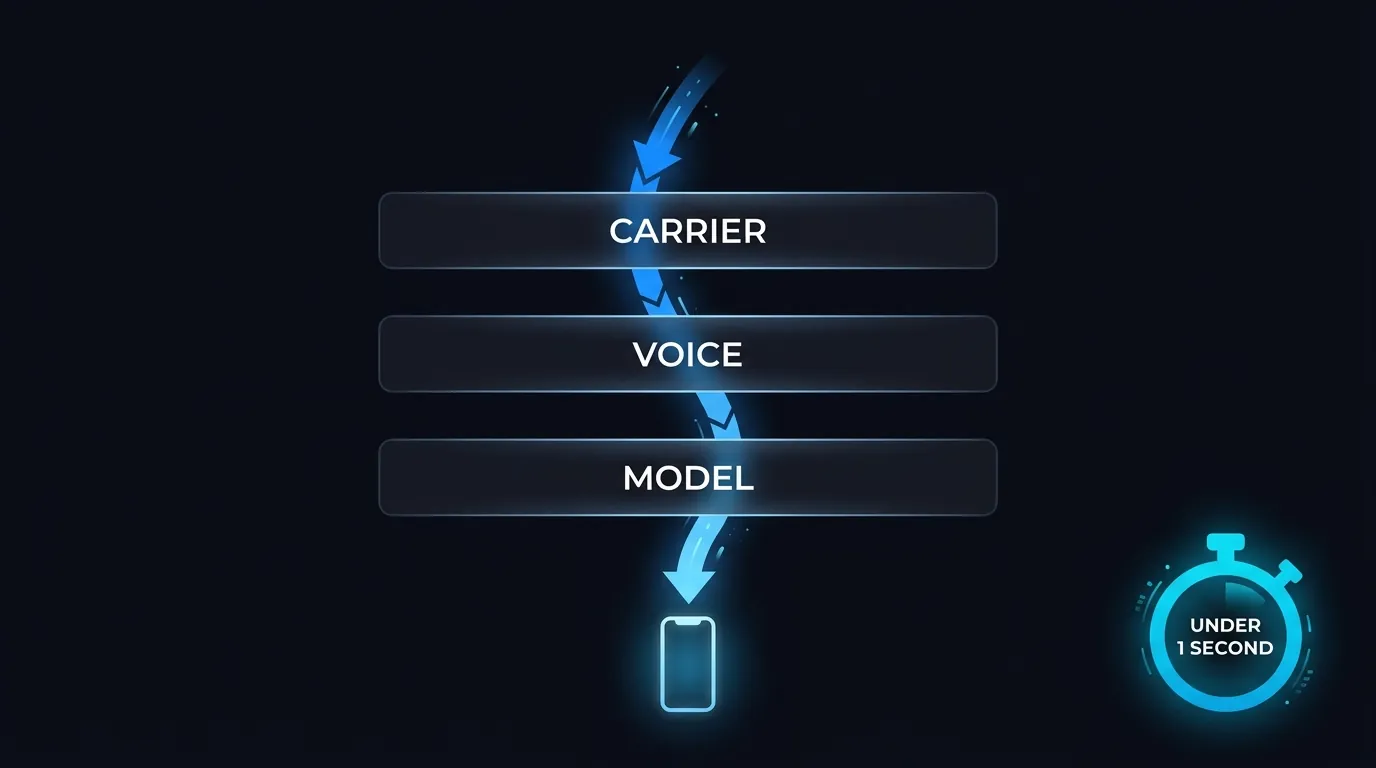
Three suppliers, one timing budget under a second, and the boring half nobody films.
What does a DIY build really cost once you add it up?
A DIY build does not cost less. You still pay roughly 80 cents a minute for the talk time underneath, billed by the second, the same as a managed agent. On top of that you pay engineering hours to build it, then more hours every month to keep it alive when a supplier changes an API.
Run the sums on a single average call. An answered call lasts about 30 seconds, so the talk time is around 40 cents. A one to two minute call is roughly $1 to $2. Those numbers do not change because you built it yourself. The carrier, voice, and model still meter every second.
What does change is everything around the call. A part time receptionist in NZ or AU runs roughly $28 to $35 an hour before KiwiSaver or super, ACC, and holiday pay. A developer to build and babysit a voice stack costs far more per hour. That meter runs whether or not the phone is ringing.
We see the same per call economics work hard in the field. A Sydney sales agent produced 141 vendor leads in 90 days at $32.74 per seller. A Christchurch developer booked property viewings at $7.12 each. A 200 dial outbound campaign costs about $100. Those numbers came from a managed agent doing the work, not from a half built stack waiting on a fix. For the full breakdown by plan, see our NZD and AUD pricing, and read how much an AI receptionist costs for the per minute detail.
A bundle that works beats a build you maintain.
A DIY voice agent looks cheaper on a spreadsheet and costs more in real life. The talk time is identical at about 80 cents a minute. See the managed numbers on our AI voice agent pricing page before you commit a developer.
How long does each take to get live and working?
A managed bundle goes live in days. A DIY build takes weeks to months before it handles real calls reliably, and longer to handle the edge cases. The demo is fast. The production hardening is slow, and that is the part that actually matters when a customer is on the line.
With a bundle, we set up the agent, connect your calendar and CRM, load your knowledge, and put a working number live. You watch real calls in the portal that week. The first booking often lands inside the first few days.
With a build, week one is a demo. Week four you are still chasing dropped audio and timing. The reason is simple. Getting one clean call is easy. Getting the 5 percent of calls that go sideways to behave is the whole job. We argue for testing small before scaling in our note on pilot before scale discipline.
Who fixes it at 2am when a real call breaks?
With a managed bundle, we do. With a DIY build, you do. A voice agent that takes calls overnight will eventually break overnight, and the question is whose phone rings when it does. That single answer separates a product you buy from a project you own forever.
Calls do not break politely at 10am. A carrier hiccups at 2am. A supplier ships an API change on a Friday. The model stalls mid sentence on a Sunday. With three suppliers, you also get three support queues pointing at each other while your line stays down.
A bundle gives you one number to call and one team that owns the whole chain. We watch uptime, swap a failing supplier behind the scenes, and keep the line answering. You never learn which layer broke, because fixing it is our job, not yours.
This is also where trust lives. Your portal, transcripts, and structured call records sit on our Sydney servers. Live audio is processed offshore during the call. We disclose on every call that the caller is speaking with an AI. That keeps you straight with the NZ Privacy Act 2020 and the Australian Privacy Principles. On a DIY build, that compliance work is yours to design and defend.
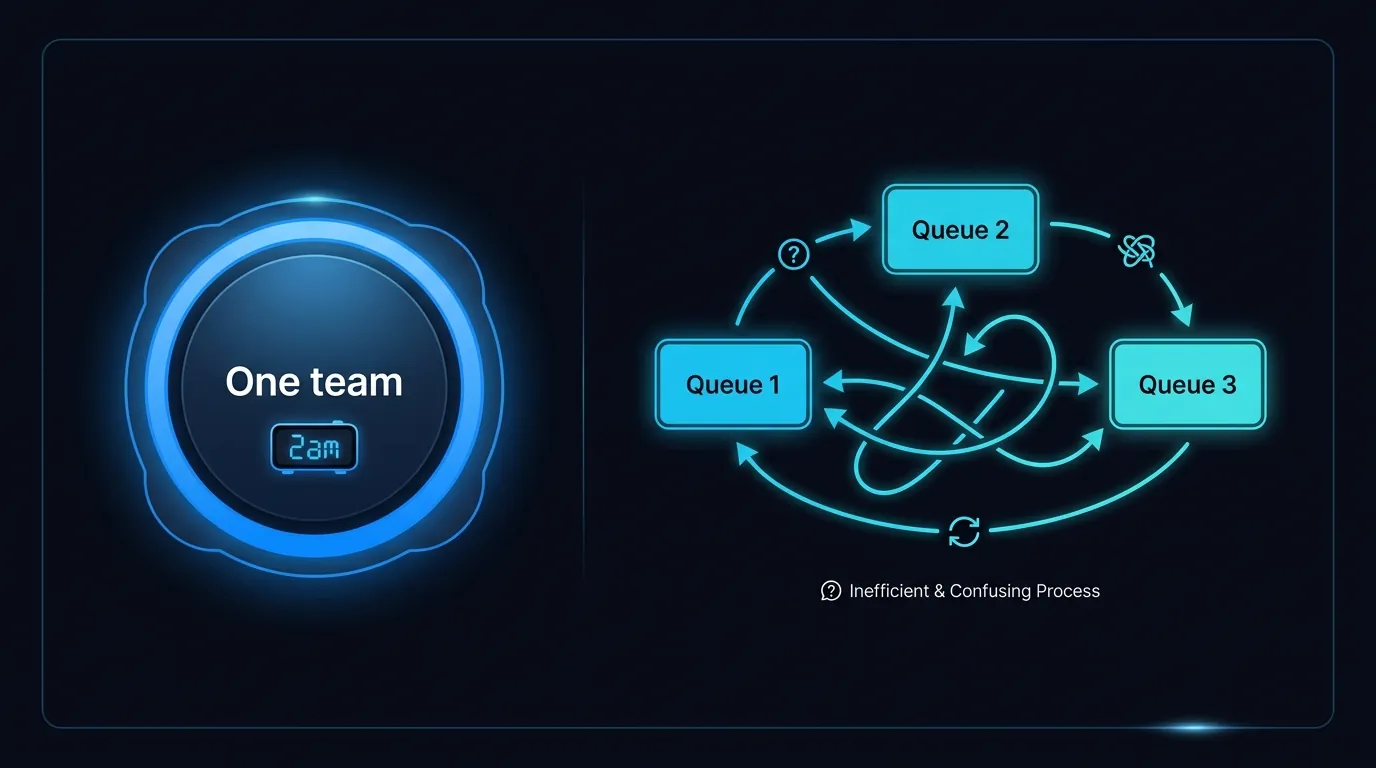
One number and one team that owns uptime, versus three queues pointing at each other.
When does building your own make sense?
Building your own makes sense when you have a software team that wants to own voice as a core product. If a paid engineer can spend months on the build and the upkeep, a custom stack can be worth it. That holds when voice is central to what you sell.
That is a narrow set. It usually means a tech company building voice into its own software. Their engineers will treat the agent as a product they ship and patch for years. They want control of every layer, and they have the team to pay for it.
For almost everyone else, the maths goes the other way. A trades firm, a clinic, a law office, or an agency wants caught calls and booked jobs, not a telephony project. They want the outcome by Friday, not an integration backlog. If that is you, read our buyer guide on how to choose an AI voice agent before you scope a build.
What should a NZ or AU business choose?
Most NZ and AU businesses should choose the managed bundle. Unless you run a software team that wants voice as a product, a build costs more, takes longer, and leaves you holding the 2am pager. The talk time is the same either way, so the only real choice is who does the work around it.
Be honest about what you are buying. A bundle buys you a working line, one bill, and a team that owns uptime and compliance. A build buys you control and a long maintenance commitment. Both meter at about 80 cents a minute underneath. Everything else is labour, and labour is where the money goes.
We have watched 3 DIY projects stall in a row after the carrier and voice invoices started arriving with no live call to show for it. If you want the phone answered this month, a managed agent is the faster, cheaper path in practice. Browse the AI voice agents overview to see what a working setup includes.
Buy the outcome, not the integration project.
The cheapest voice agent is the one that is answering calls, not the one still in development. Let us run the stack so you can run the business. See plans on our AI voice agent pricing page.
Frequently Asked Questions
Is a DIY AI voice agent cheaper than a managed one?
No, not once you add it all up. The talk time is identical at about 80 cents a minute, billed by the second, on both. A DIY build adds weeks of engineering plus ongoing maintenance hours. A developer costs far more per hour than the call itself, and that labour is where a build quietly gets expensive.
How long does it take to get a managed AI voice agent live?
A managed agent usually goes live in days, not weeks. We set up the agent, connect your calendar and CRM, load your knowledge, and put a working number live. You watch real calls in the portal that same week, and the first booking often lands inside the first few days of going live.
What do I have to build myself in a DIY voice agent?
You wire together a carrier for the line, a voice layer for speech, and a language model. Then you write glue code to time them under one second. You also build recording, transcripts, calendar and CRM writes, voicemail, and a fallback when the model stalls. That boring half is where most builds fail.
Who handles support when a DIY voice agent breaks overnight?
You do. With three separate suppliers you get three support queues, and they often point at each other while your line stays down. A managed bundle gives you one number and one team that owns the whole chain. We swap a failing supplier behind the scenes and keep the line answering.
When does building my own voice agent make sense?
It makes sense for a software team that wants voice as a core product and has paid engineers to maintain it for years. Picture a trades firm, clinic, law office, or agency that just wants caught calls and booked jobs. For them, a managed bundle is faster, cheaper, and far less risky than a custom build.
Where does my call data live with a managed agent?
Your portal, transcripts, and structured call records sit on our Sydney servers. Live audio is processed offshore during the call. We disclose on every call that the caller is speaking with an AI. That keeps you aligned with the NZ Privacy Act 2020 and the Australian Privacy Principles. On a DIY build, that compliance design is yours to own.
If you would rather have the whole thing built and run for you, that is exactly what our AI agency service for Australian businesses does.
Leonardo Garcia-Curtis
Founder & CEO at Waboom AI. Building voice AI agents that convert.
Ready to Build Your AI Voice Agent?
Let's discuss how Waboom AI can help automate your customer conversations.
Book a Free Demo

