It's 4:55pm. The 5pm slot is empty. Nobody rang to cancel.
That gap costs you more than an hour of staff time. It costs the revenue, the rebooking, and the chair that sat idle. An AI voice agent appointment reminders system rings every booked customer the day before, confirms they're coming, and reschedules the ones who can't. Before the slot is wasted, not after.
We run these calls for clinics, salons, trades, and property firms across New Zealand and Australia. People don't mean to no-show. They forget, double-book, or the time stops working.
A short reminder call catches that 18 hours early. That's the whole idea.
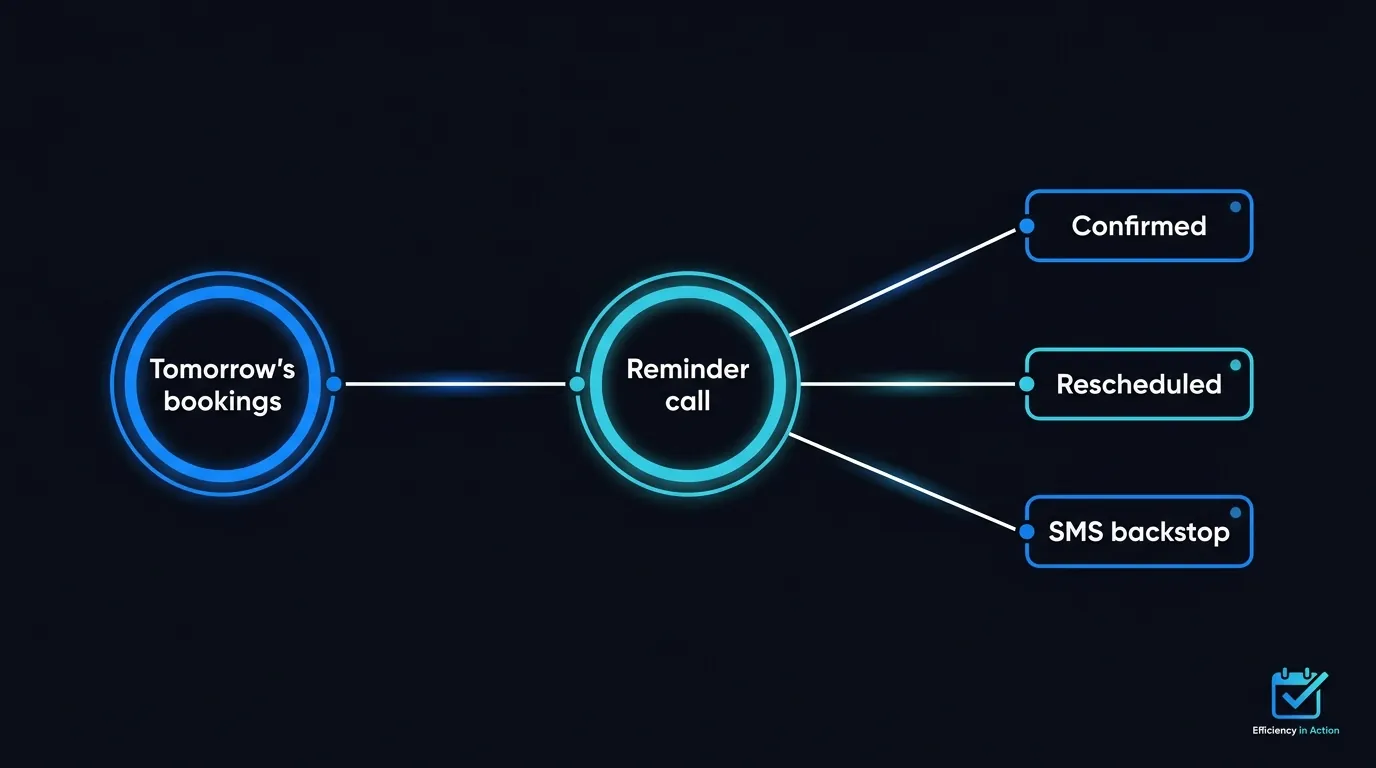
The reminder call resolves each booking the day before: confirmed, rescheduled, or backed up by an SMS.
What do AI voice agent appointment reminders do?
The agent rings each booked customer ahead of the appointment, confirms the time out loud, and handles the reply. If they're coming, it logs the confirmation. If they can't make it, it reschedules on the spot. Every call is two-way and natural.
This isn't a recorded message. The customer talks back. They say "actually Thursday's better" and the agent moves the booking, checks the new slot, and reads it back. No app, no portal, no waiting on hold.
It works from your existing calendar. The agent pulls tomorrow's bookings, dials each one, and updates the record after every call. Confirmed, rescheduled, or no answer. Your front desk wakes up to a clean list instead of a guessing game.
We disclose the AI on every call. The agent says it's an automated assistant calling on your behalf. Customers handle that well when the call is useful and short.
Why does a no-show cost more than an empty slot?
A no-show costs the slot plus everything around it. You've already paid the staff, kept the room, and turned away the person who wanted that time. The empty chair is just the visible part. The lost rebooking is the expensive part.
Run the numbers on a clinic. A 30-minute consult bills 120 dollars. Three no-shows a week is 360 dollars gone, every week. Over a year that's roughly 18,000 dollars of capacity you paid to staff and never sold.
Trades feel it differently. A plumber who blocks a two-hour window loses the drive time and the held slot. The next customer who couldn't book is gone too. You can't resell 2pm at 1:55pm.
The fix isn't punishing customers. It's reaching them early enough to either lock them in or free the slot. That's the whole job of the reminder call.
How does the agent confirm or reschedule on the call?
The agent reads the booking, confirms the customer still wants it, and acts on the answer. A yes gets logged as confirmed. A no opens the calendar, offers the next open times, and books the new one while the customer's on the line. One call, resolved.
Here's a real exchange. The agent says your appointment is tomorrow at 2pm, can you still make it. The customer says no, I'm working. The agent offers Thursday 10am or Friday 3pm. The customer picks Thursday. The old slot frees up automatically.
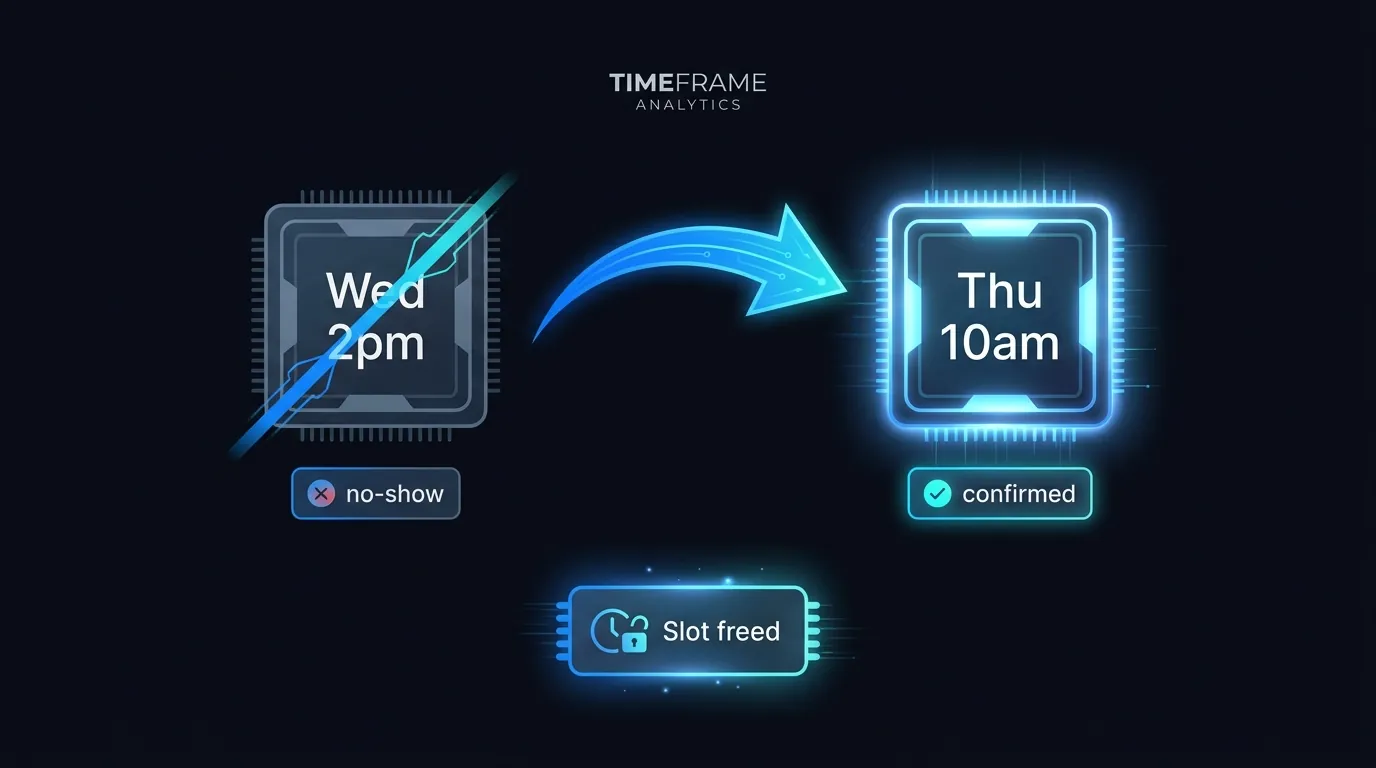
A reschedule found 18 hours out is sellable. One found at 4:55pm is dead.
That freed slot matters. Now your front desk can offer it to a waitlisted customer or a same-week booking. An empty slot found at 4:55pm is dead. One found 18 hours out is sellable.
The agent also follows your rules. Cancellation windows, deposit policies, which staff member, which location. We build those into the script so it never offers something you can't honour.
If you want the same engine handling inbound bookings too, that's the other half of the system. Our AI receptionist that books appointments takes the calls coming in while the reminder agent works the ones already on the books.
Stop losing the slot at 4:55pm.
See how the same engine handles your inbound calls on our AI voice agent for inbound calls page.
Does it use voice, SMS, or both?
Both, and they work together. The agent calls first, because a live voice gets a real answer and can reschedule in the moment. If nobody picks up, it follows with a text so the reminder still lands. Voice for the conversation, SMS for the backstop.
Voice does the heavy lifting. A text can be ignored or buried. A short call asks a direct question and gets a direct answer. About 47 to 65 percent of outbound calls connect, and the ones that do resolve cleanly.
SMS catches the rest. No answer on the first try, the customer gets a text. It has the time and a quick way to confirm or change it. Some reply by text, some ring back. Either way the slot doesn't quietly die.
You decide the mix. Voice-only for high-value bookings where a reschedule saves real money. Voice-plus-SMS for volume. We set the cadence to your business, not a template.
Is reminding existing customers allowed under the Privacy Act?
Yes, when you're contacting your own customers about a booking they made with you. That's a reasonable, expected use of the details they already gave you. Both the New Zealand Privacy Act 2020 and the Australian Privacy Act 1988 allow it. A confirmation call is the kind of use customers anticipate.
In New Zealand the Office of the Privacy Commissioner expects you to use personal information for the purpose it was collected. A reminder about an appointment they booked fits squarely inside that.
In Australia the 13 Australian Privacy Principles set the same logic, and the Office of the Australian Information Commissioner oversees them. APP 6 covers using information for a related purpose the customer would reasonably expect. A booking reminder qualifies.
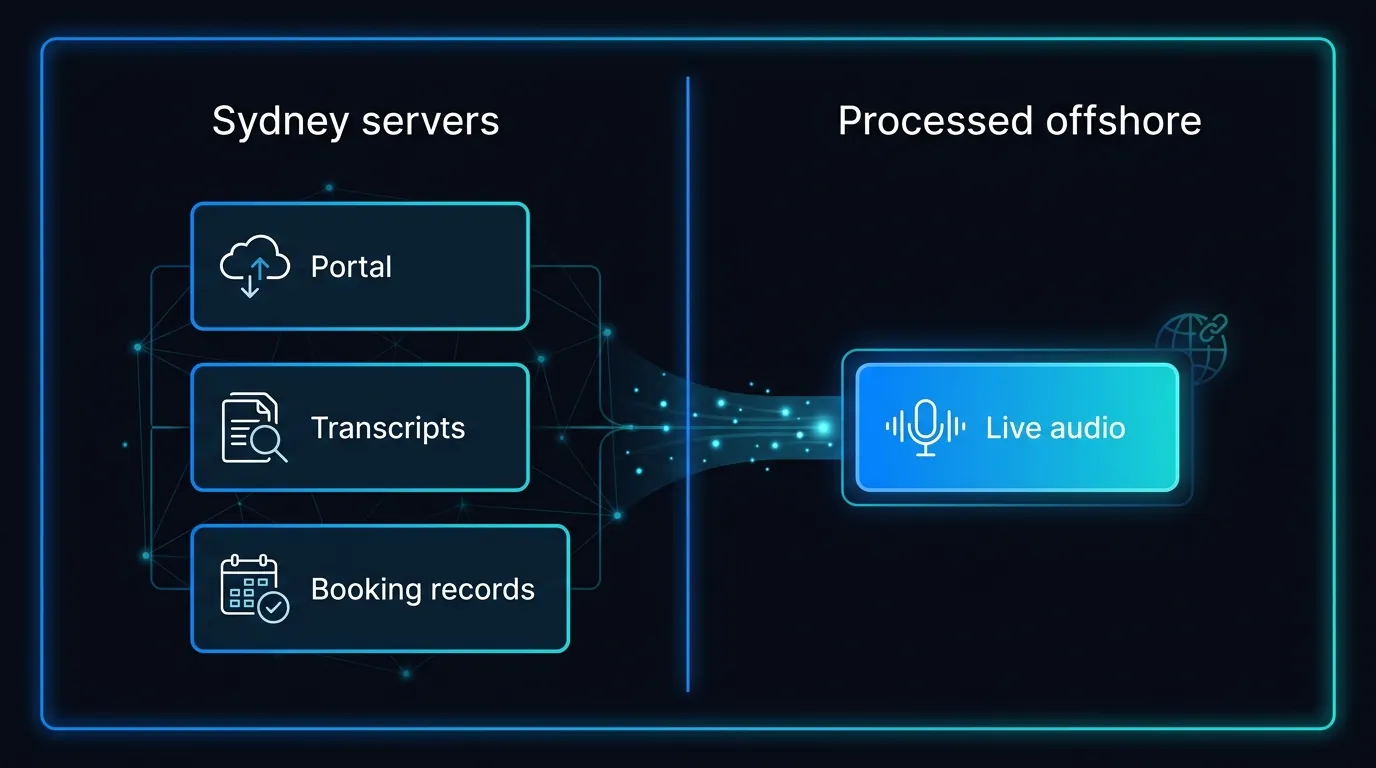
Your portal and booking records sit on Sydney servers; live audio is processed offshore under documented arrangements.
Where your data lives matters too. Your portal, your transcripts, and your structured booking records sit on our servers in Sydney. The live audio is processed offshore under documented arrangements with our voice infrastructure partner. We never claim every byte stays in Australia, because that wouldn't be true.
This is reminding people, not cold-calling strangers. Cold outbound to people who never opted in is a different conversation. For warm follow-up to leads who already raised their hand, see how we handle fast follow-up on hot leads.
What no-show drop can you expect?
A well-run reminder call typically cuts no-shows by a third to a half, because most missed appointments are forgotten ones, not deliberate ones. The exact number depends on your industry and how far ahead you call. The mechanism is simple. A confirmed customer turns up, and a rescheduled one keeps the slot working.
Think about who actually no-shows. Most aren't dodging you. They lost track of the date or the time clashed with something. A call the day before fixes both before they cost you anything.
The reschedules are the quiet win. A customer who would have ghosted instead picks a new time. You keep the revenue and they keep the service. Nobody loses.
Confirmed bookings also let you plan. By 9am your front desk knows which slots are real. They fill the gaps and adjust staffing. They stop holding rooms for people who aren't coming.
How much does it cost to run?
Reminder calls are cheap because they're short. We bill about 80 cents a minute, charged by the second, and an answered reminder runs about 30 seconds. That's roughly 40 cents a confirmed booking. Far less than one no-show costs you.
Run a week of 200 reminders. Maybe half connect on voice at 40 cents each, the rest get an SMS backstop. You're looking at well under 100 dollars for the whole week. One saved no-show in a clinic covers it many times over.
Compare that to a part-time receptionist at 28 to 35 dollars an hour before KiwiSaver or super, ACC and holiday pay. Reminder calls aren't where you want a person spending afternoons. The agent does them all before lunch.
The real return isn't the call cost. It's the slots you keep sold. For the full breakdown, read what an AI receptionist costs to run. You can also try the live demo on our AI voice agent for inbound calls page.
The reminder agent also pairs well with outbound work. If you're filling a pipeline rather than confirming a calendar, our AI sales agent dials leads instead of customers. Same engine, different job. And if dropped inbound calls are also bleeding revenue, here's how we cut call abandonment.
Once customers turn up, you can also measure how they felt. Some clients add a short NPS survey call a day after the appointment. Same warm-contact rules apply.
Turn empty slots back into revenue.
Want reminder calls running on your calendar this month? Start on our AI voice agent page and we'll size it to your bookings.
Frequently Asked Questions
Will customers find the reminder calls annoying?
Most don't, because the call is short and useful. The agent confirms one thing and gets off the line in about 30 seconds. It discloses it's automated up front. Customers tend to prefer a quick confirm-or-reschedule over a missed appointment and a wasted trip. You also control the timing so calls land at sensible hours.
How far ahead should the reminder call go out?
The day before works best for most businesses, usually 18 to 24 hours out. That's far enough that a customer can sort a clash and you can resell a freed slot. For longer or higher-value appointments, some clients add a second reminder a week ahead. We set the cadence to match how your bookings behave.
Does the agent update my calendar automatically?
Yes. After each call it writes the result back to your booking system. Confirmed, rescheduled with the new time, or no answer. Your front desk sees a clean status on every appointment without retyping anything. Reschedules free the old slot automatically so it's available to rebook the same morning.
Is it really compliant to call existing customers in Australia?
Yes, under the 13 Australian Privacy Principles overseen by the OAIC. APP 6 allows using a customer's details for a purpose they'd reasonably expect, and a reminder about a booking they made qualifies. The same logic applies in New Zealand under the Privacy Act 2020 and the Office of the Privacy Commissioner. We disclose the AI on every call.
What happens if nobody answers the reminder call?
The agent leaves it as no-answer and sends an SMS backstop with the appointment time and a way to confirm or change it. Some customers reply by text, some ring your number. Either way the reminder still lands, and your front desk can see who hasn't confirmed and chase the few that matter.
Can it handle deposits and cancellation policies?
Yes. We build your rules into the script. The agent can mention a cancellation window or confirm a deposit is held. It flags when a late change breaches policy. It only offers options you can honour. The goal is fewer no-shows without bending the rules you already run.
For the bigger picture, read our complete guide to AI voice agents for NZ and Australian businesses.
Leonardo Garcia-Curtis
Founder & CEO at Waboom AI. Building voice AI agents that convert.
Ready to Build Your AI Voice Agent?
Let's discuss how Waboom AI can help automate your customer conversations.
Book a Free Demo