
Most teams measure satisfaction from a survey almost nobody fills in. Only a small fraction of callers ever answer a post-call survey. So you are judging your whole front desk on a tiny, self-selected sliver. Meanwhile every other call holds the same signal, sitting unread in a transcript.
We think that is backwards. The call already told you how the caller felt. You just need to read it at scale.
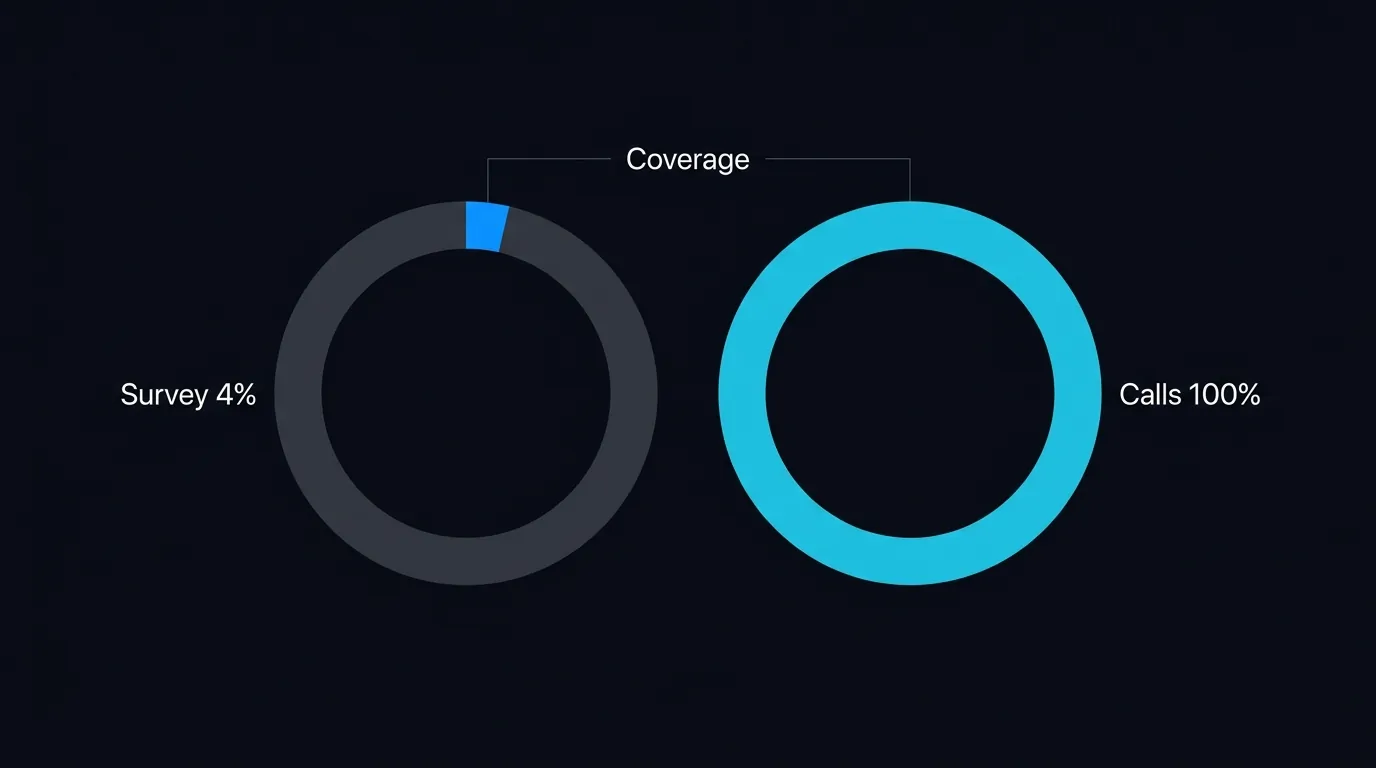
A survey hears from only a sliver of callers. Transcript scoring reads all of them.
Can you measure NPS and CSAT from the calls themselves?
Yes. Our platform can track NPS and CSAT from calls by reading every transcript right after the call ends. It scores tone, frustration, and resolution. Then it writes a satisfaction signal to the record. You measure every call, not just the handful who answer a survey.
This is the same post-call step that tags outcomes and flags problems. It just adds a satisfaction lens on top. For the wider picture, see our guide to what post-call analysis pulls from every conversation.
The agent already discloses it is an AI on every call. That honesty also makes the sentiment read cleaner, because callers speak plainly.
If you want the bigger picture of what a phone agent can do for you, start with our overview of AI voice agents for NZ and AU teams.
How does the agent read sentiment from a transcript?
The agent runs each finished transcript through a language model that scores the conversation. It looks at the caller's words, not just keywords, and rates the call on a simple satisfaction scale. That score lands in your record within seconds of the call ending.
It is the same engine that powers how an AI voice agent works on a call. After the goodbye, the transcript gets one more pass. The model reads the whole exchange in context.
So "fine, whatever" is not scored the same as a genuine "that's perfect, thank you". Context decides. A flat word in an angry call reads very differently from the same word in a warm one.
What signals predict a happy or unhappy caller?
The strongest signals are resolution, effort, and tone shift. A happy caller gets their answer fast and ends on a warm note. An unhappy caller repeats themselves, raises their voice in the text, or hangs up before the job is done. The model weighs all three.
Here are the patterns that move the score:
None of these alone decides the score. The model reads them together, in order. A single "still" in a happy call means nothing. Three of them stacked late in the call means trouble.
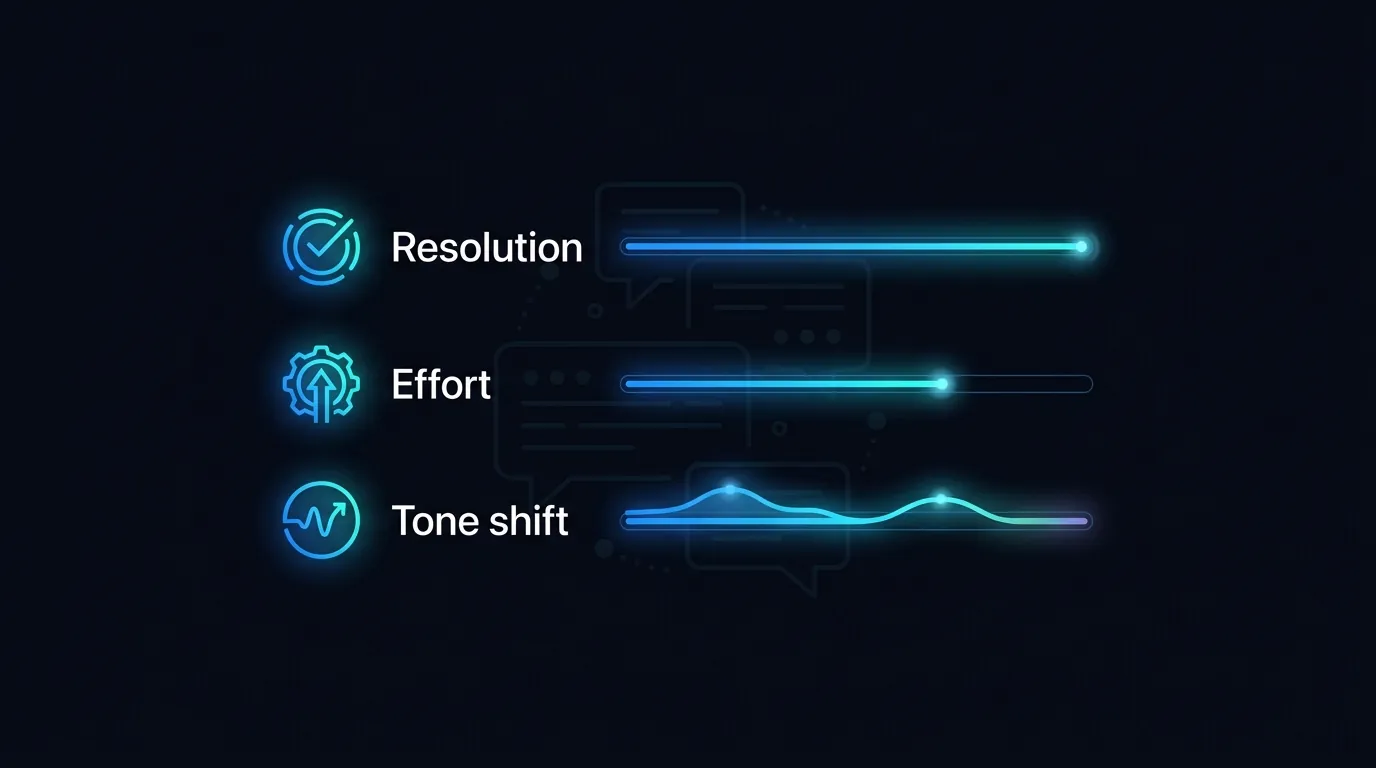
Resolution, effort, and tone shift are the signals that move the satisfaction score.
How does it surface this in your CRM?
Each call writes a satisfaction score and a short reason straight to the contact or deal in your CRM. You see it next to the call summary, no extra clicks. Low scores can trigger an instant alert to a manager.
That alert path is the same one we use for call tags and voice agent alerts. A 1-out-of-5 call can ping a human in seconds. So an unhappy caller gets a callback today, not after a monthly report.
This sits alongside the other numbers worth watching. See our list of AI receptionist KPIs to track for the full dashboard view. Satisfaction is one column among answer rate, booking rate, and call cost.
Stop guessing from a handful of replies.
See how scoring fits the rest of the front desk on our AI voice agents page, then we can switch it on for your line.
How accurate is it compared with a survey?
It is more representative, because it reads every call instead of a thin, self-selected sample. A survey tells you how your loudest callers felt. Transcript scoring tells you how all of them felt. The trade is precision for coverage, and coverage usually wins.
A survey gives you a clean number from a tiny, biased group. Happy people and furious people answer surveys. The quiet middle never does. So your average is skewed before you start.
Transcript scoring is not a perfect read of any single call. But across hundreds of calls the pattern is solid. You stop guessing from a self-selected few and start measuring from every conversation.
We pair the two when a client wants both. The survey confirms the trend. The transcript scoring catches the calls the survey missed.
What do you do with the data?
Use it to find the calls that need a human and the patterns that need a fix. Sort by lowest score and call those people back today. Then group the low scores and ask what they share. The answer is usually one broken process.
A few concrete moves:
All of this feeds the same record. Satisfaction is one more field in the structured call data your agent already captures. Read it next to the rest of the call data we capture and the booking.
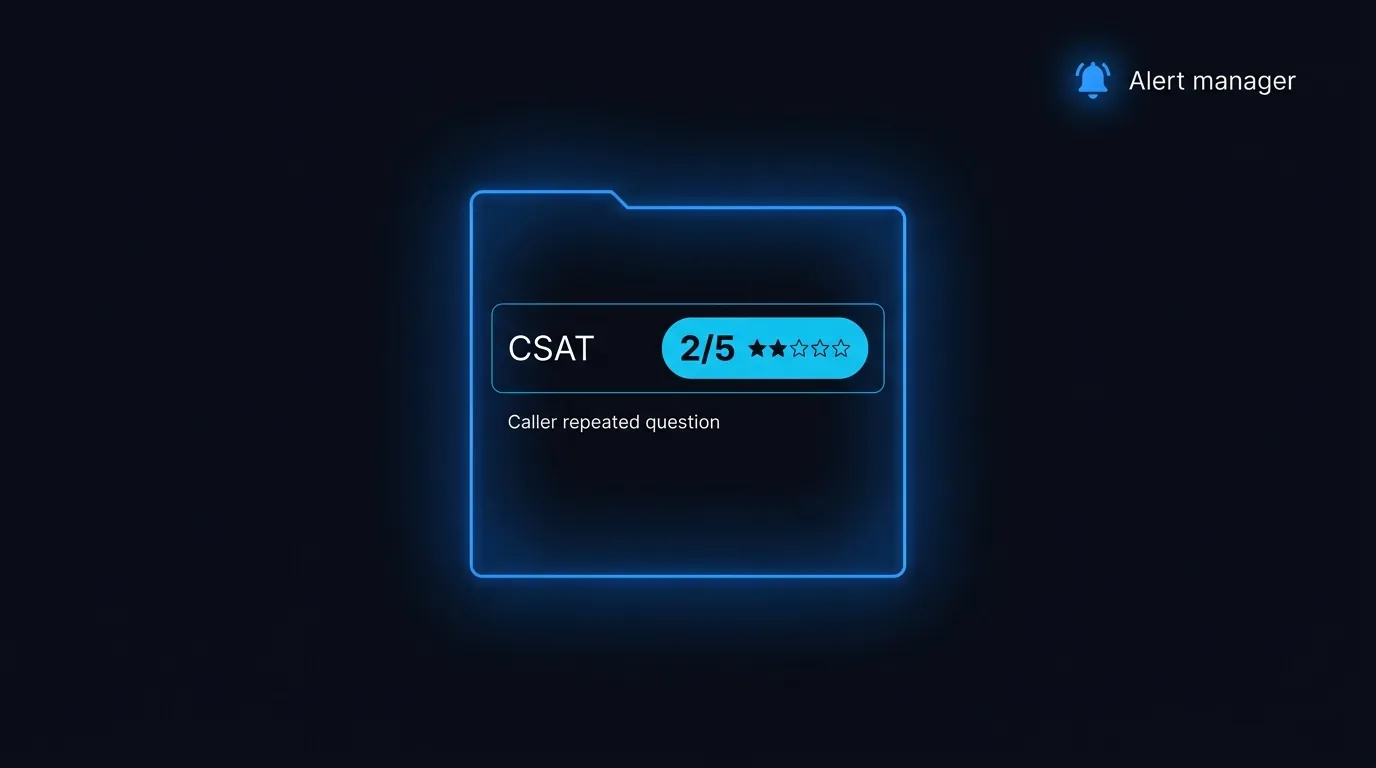
The score and a short reason land on the contact, and a low one can ping a manager.
Where are the limits?
Sentiment scoring reads intent, not certainty. A sarcastic "great, just great" can fool any model some of the time. Short calls give it little to work with. So treat the score as a strong signal, not a verdict.
The honest split matters here too. Your portal, transcripts, and these structured scores live on our Sydney servers. The live audio is processed offshore under documented arrangements with our voice infrastructure partner. We never claim all data stays in Australia, because it does not.
On privacy, the agent discloses it is an AI on every call, which supports your disclosure obligations. In New Zealand that supports the Privacy Act 2020 and the Office of the Privacy Commissioner. In Australia it supports the Privacy Act 1988 and the 13 Australian Privacy Principles, overseen by the OAIC. Breaches there are reported through the Notifiable Data Breaches scheme. You can delete any caller's records in 10 minutes.
One more limit. Scores are only as useful as the action behind them. A dashboard nobody reads changes nothing. The win comes from the callback you make this afternoon.
Measure every call, not a sliver.
We will turn on satisfaction scoring for your team and wire the alerts. Start on the AI voice agents page and we will take it from there.
Frequently Asked Questions
Can it really track NPS and CSAT from calls without a survey?
Yes. Our platform scores every transcript right after the call. It writes a satisfaction signal to the record. You get coverage on every call, not just the small share who answer a survey. You can still run a survey alongside to confirm the trend.
How fast does the satisfaction score appear?
Within seconds of the call ending. The transcript runs a scoring pass as soon as the caller hangs up. The score and a short reason then land on the contact or deal in your CRM. Low scores can trigger a manager alert in the same moment.
Does it work for both inbound and outbound calls?
Yes. Inbound calls show how callers feel about your service. Outbound calls show how prospects react to your pitch. Given outbound connect runs 47 to 65 percent, scoring helps you spot which connected calls actually went well versus which ones soured.
Is the sentiment score accurate enough to act on?
Across volume, yes. A single call can be misread, especially a short or sarcastic one. But over hundreds of calls the pattern is reliable. Treat the score as a strong signal that tells you which calls to listen to, not a final verdict on any one caller.
Where is this satisfaction data stored?
Your portal, transcripts, and structured scores sit on our Sydney servers. Live call audio is processed offshore under documented arrangements with our voice infrastructure partner. We do not claim all data stays in Australia. You can delete any caller's records in 10 minutes on request.
How much does scoring add to the call cost?
Almost nothing on top of the call itself. Calls bill around 80 cents a minute by the second. An average answered call runs about 30 seconds, so roughly 40 cents. The post-call scoring pass is a small fixed step, not a per-minute charge.
Leonardo Garcia-Curtis
Founder & CEO at Waboom AI. Building voice AI agents that convert.
Ready to Build Your AI Voice Agent?
Let's discuss how Waboom AI can help automate your customer conversations.
Book a Free Demo

