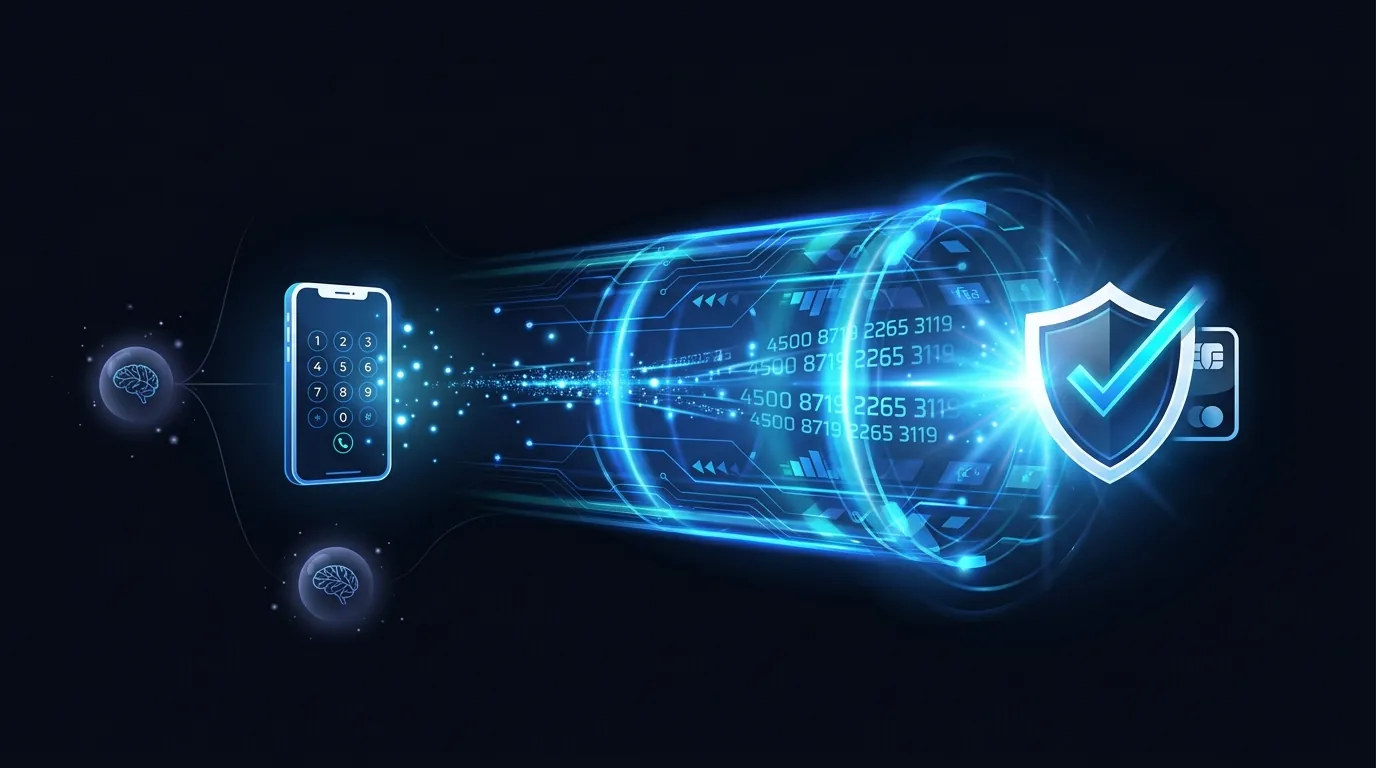
Mid call, someone reads out their card number. Then their address, then a health detail they would never put in an email. Your agent just heard all of it.
So the fair question any customer or auditor asks is simple. Where does that go, who can see it, and how long does it stay?
Here is the honest answer for AI voice agent call data, in plain terms, without the security jargon.
What happens to what a caller says on the line?
Every call produces three things: the live audio, a recording, and a written transcript. Each is handled differently, and that difference matters.
The sensitive parts, names, numbers, health details, are personal information the law protects. So the question is not academic.
You should be able to answer it for any customer who asks, in one breath. Here is how.
Where does your AI voice agent call data actually live?
The honest answer is a split, and anyone telling you otherwise is glossing over it. Your structured call data, transcripts and logs sit on servers in Sydney.
The live audio, the recordings and the model that powers the call run offshore. That is the real architecture of voice AI today.
So be wary of any provider claiming everything stays in Australia. We lay out the honest split in building compliant voice agents for NZ and Australia.
How long is your call data kept, and can you delete it?
You set the retention, not the platform. Keep recordings for zero days, or seven, thirty or ninety, whatever your policy needs.
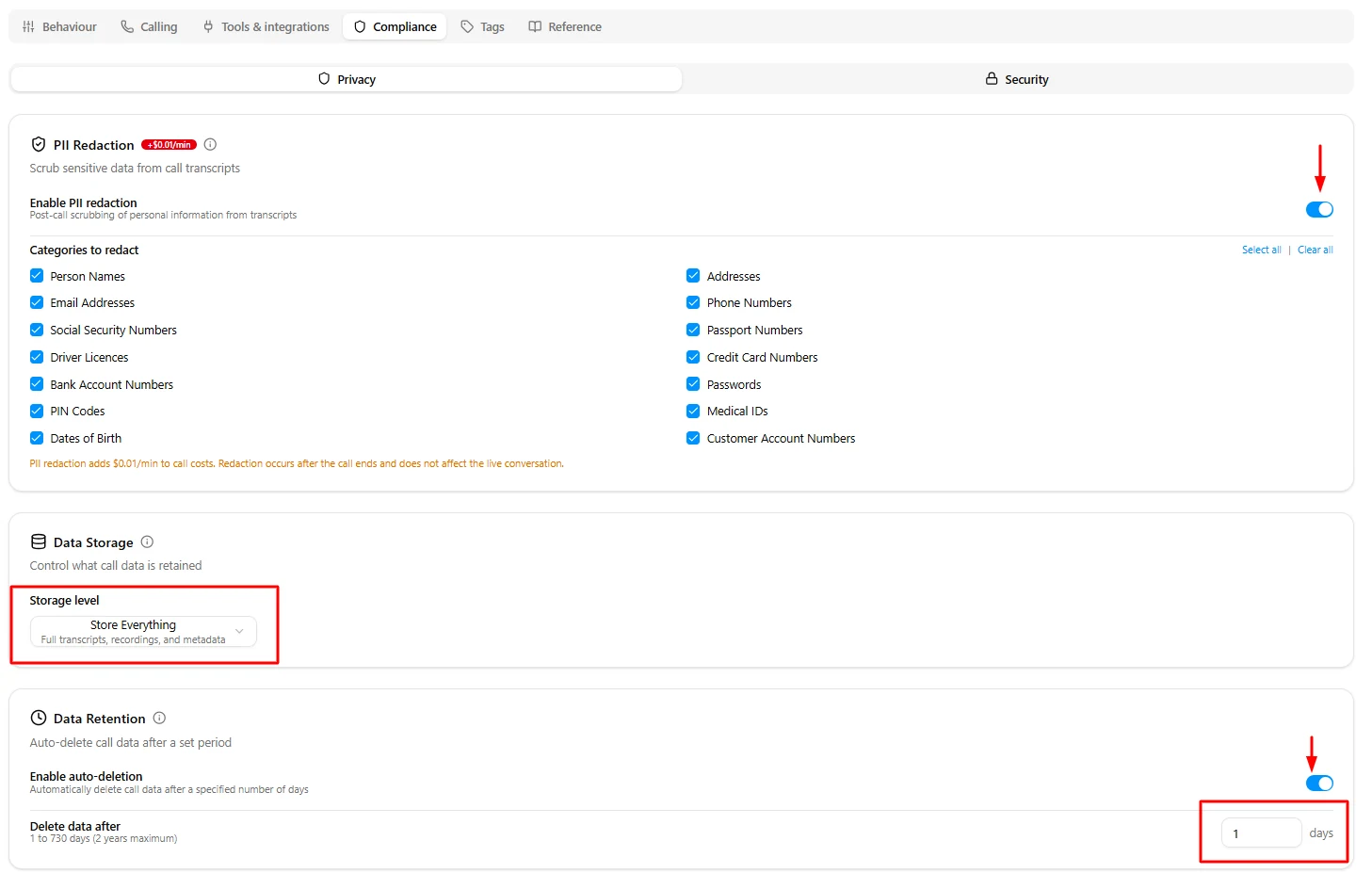
And you can delete on request. Ask to remove a caller's data, and you act on it in minutes. Not a support ticket fortnight.
We describe the privacy first setup in the zero retention build we deploy.
What about the sensitive bits, like card numbers?
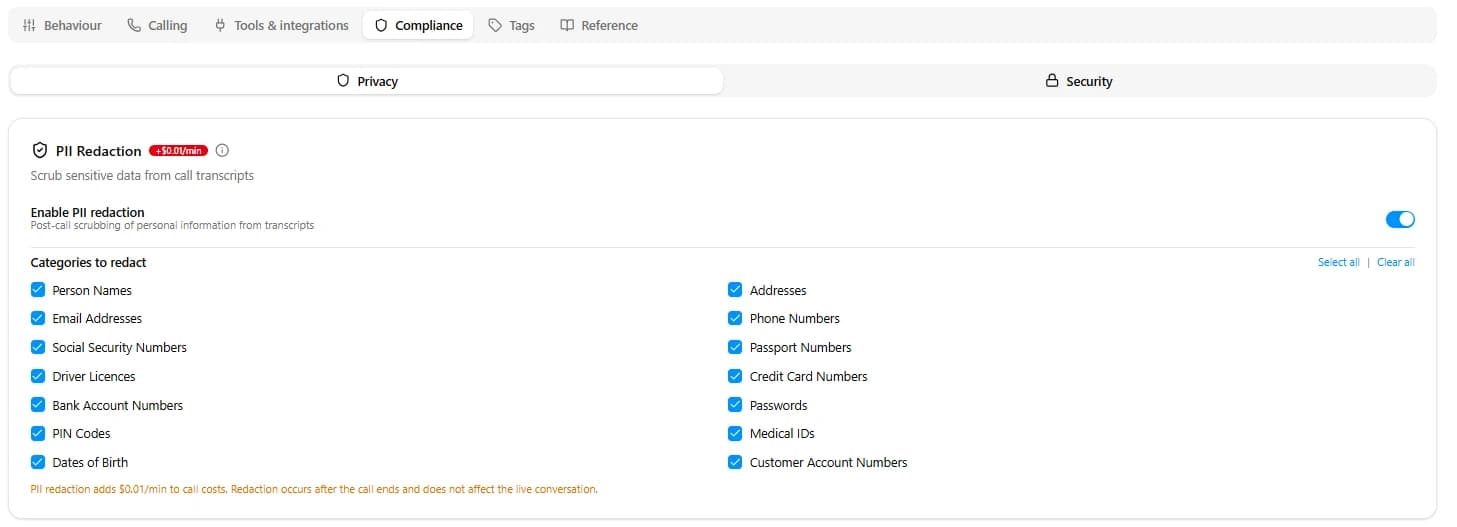
You do not want a card number sitting in a transcript forever. So the sensitive parts can be stripped out, which is called redaction.
The transcript keeps what your team needs and masks what it does not. The detail does its job on the call, then it leaves the record.
That keeps your call notes useful without turning them into a liability.
Who can actually see your call data?
Your team, through your portal, with the access you control. Not the whole internet, and not anyone who finds a link.
The wider security picture, from jailbreak testing to toll fraud protection, sits on our security overview.
If your sector has hard rules, we scope the setup to them. The point is you can answer the auditor, not hope they do not ask.
Frequently Asked Questions
Where is my AI voice agent call data stored?
Structured call data, transcripts and logs sit on servers in Sydney. The live audio, recordings and model inference run offshore. Be wary of anyone claiming everything stays in Australia, because that is not how voice AI works.
How long are call recordings kept?
As long as your policy says. You set the window, from zero days to ninety, and you can delete a caller's data on request in minutes.
Can sensitive details be removed from transcripts?
Yes. Redaction strips the sensitive parts, like card numbers, from the written record, so your call notes stay useful without becoming a liability.
Who can see the call data?
Your team, through your portal, with the access you set. The wider protections, from jailbreak testing to toll fraud, are on our security overview, and we disclose recording up front per our disclosure approach.
Sensitive things get said on phone calls. That is not the risk. The risk is not being able to say where it went.
Want clear answers on every line of this for your sector? Book a setup conversation and we will set the data handling to your rules.
Leonardo Garcia-Curtis
Founder & CEO at Waboom AI. Building voice AI agents that convert.
Ready to Build Your AI Voice Agent?
Let's discuss how Waboom AI can help automate your customer conversations.
Book a Free Demo