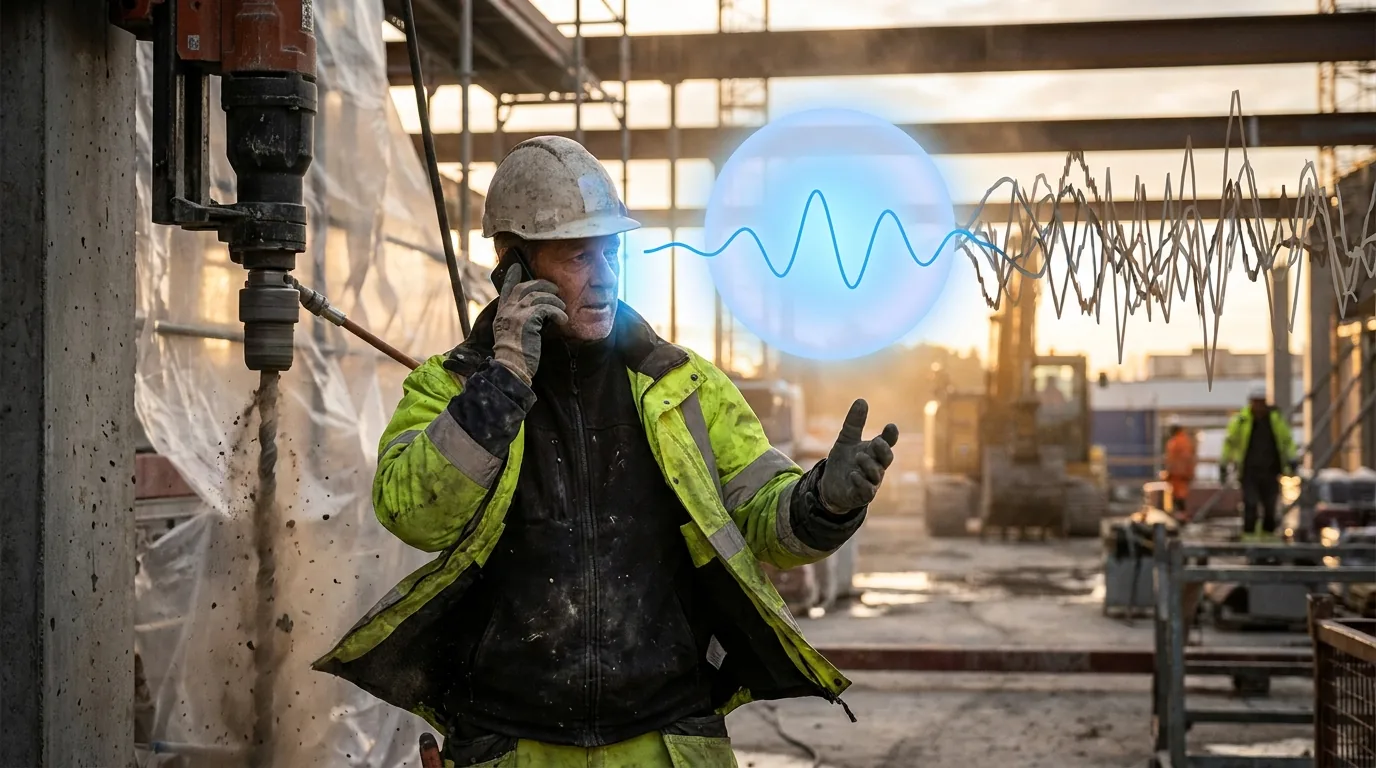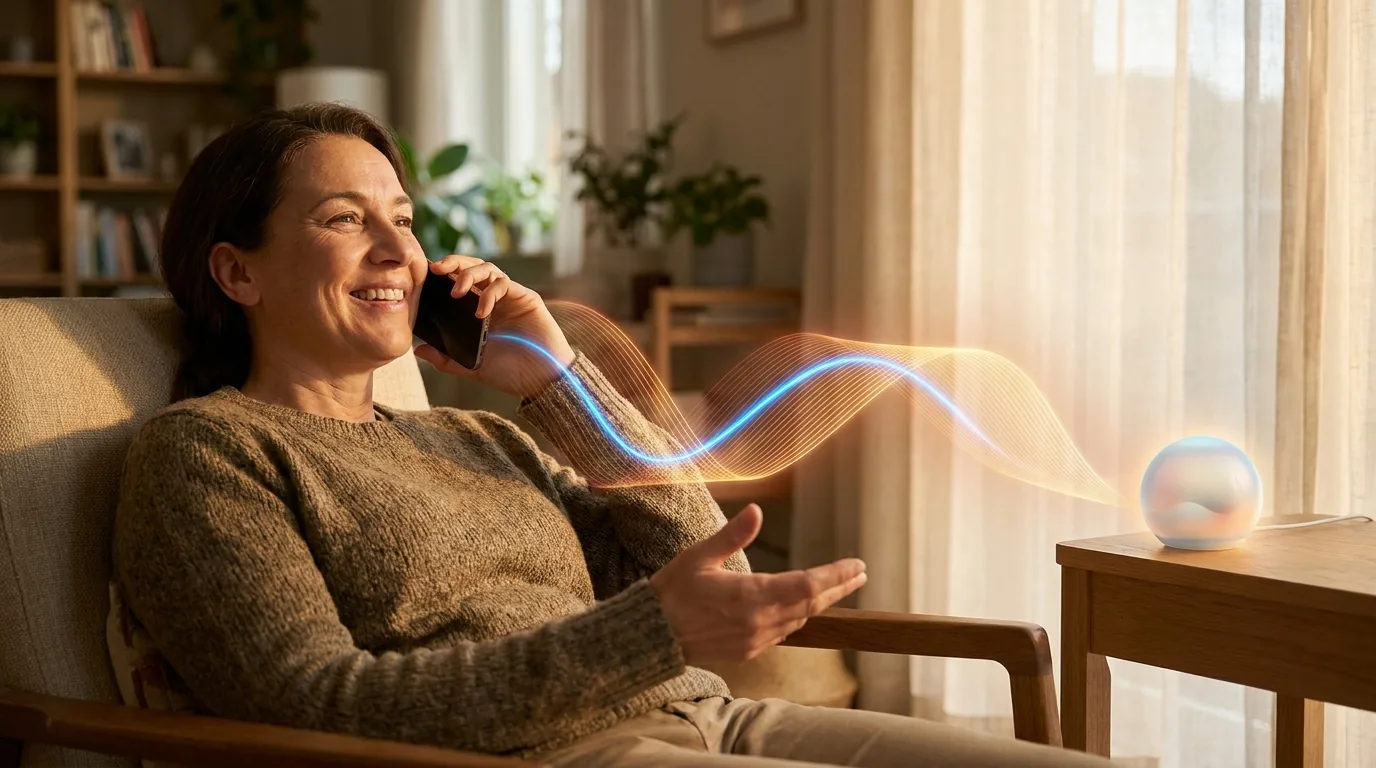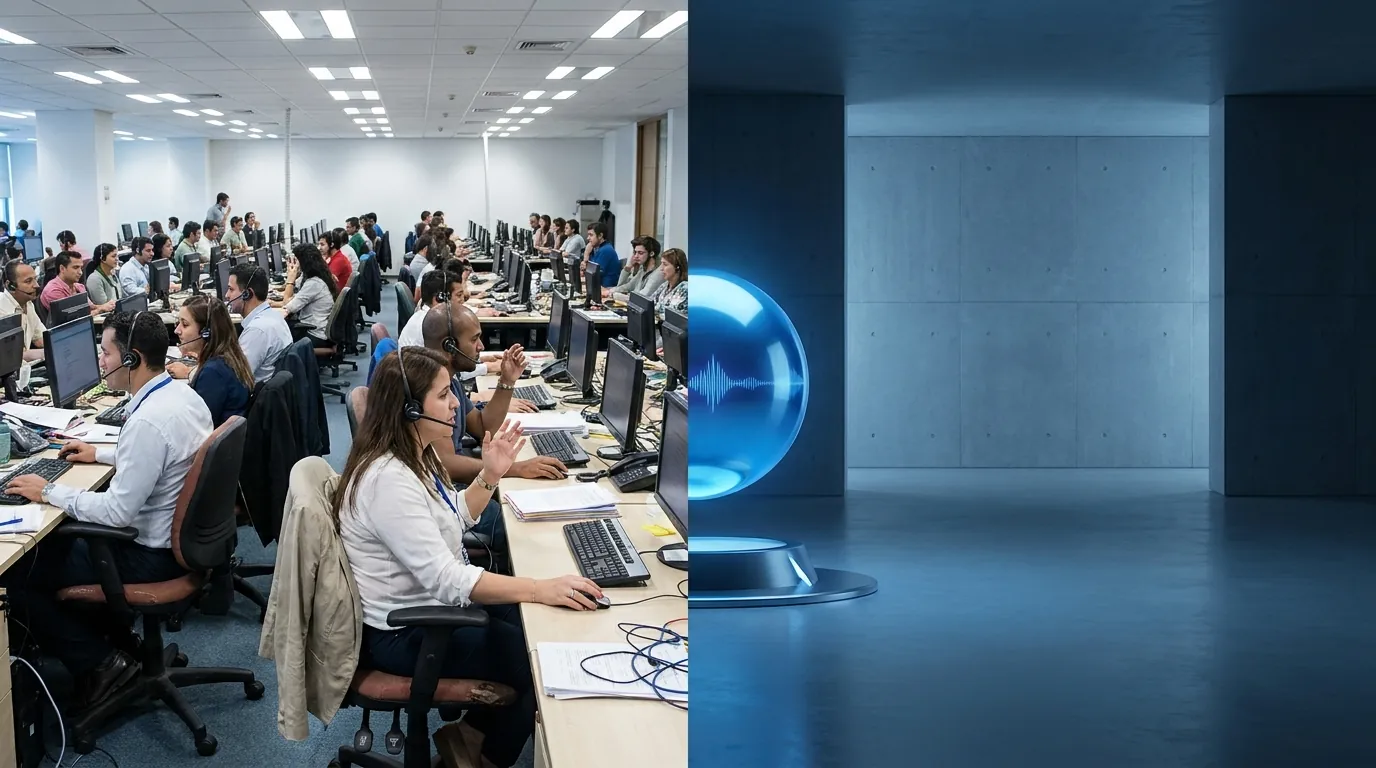
If your business still routes every inbound call through a traditional call centre, you are paying more than you need to. An inbound call centre AI voice agent answers in under a second. It runs around the clock and costs a fraction of a human seat.
This article shows you exactly how the three main options compare. All numbers come from real NZ and AU deployments.
The Options
What are the three ways to handle inbound calls in 2026?
Every inbound call ends one of three ways: a bot resolves it, a human resolves it, or the caller hangs up. Your job is to push that third outcome as close to zero as possible, as cheaply as possible.
AI voice agent platforms automate the conversation end to end. The agent answers, qualifies, resolves what it can, and hands the rest to a human with full context already attached. Waboom AI builds these for NZ and AU businesses.
CCaaS (contact centre as a service) platforms route and orchestrate calls between bots and human agents. They modernise old phone systems but do not replace the humans underneath, so your wage bill barely moves.
Traditional call centres (BPO) staff the seats, offshore or onshore. High empathy, high cost, slow to spin up.
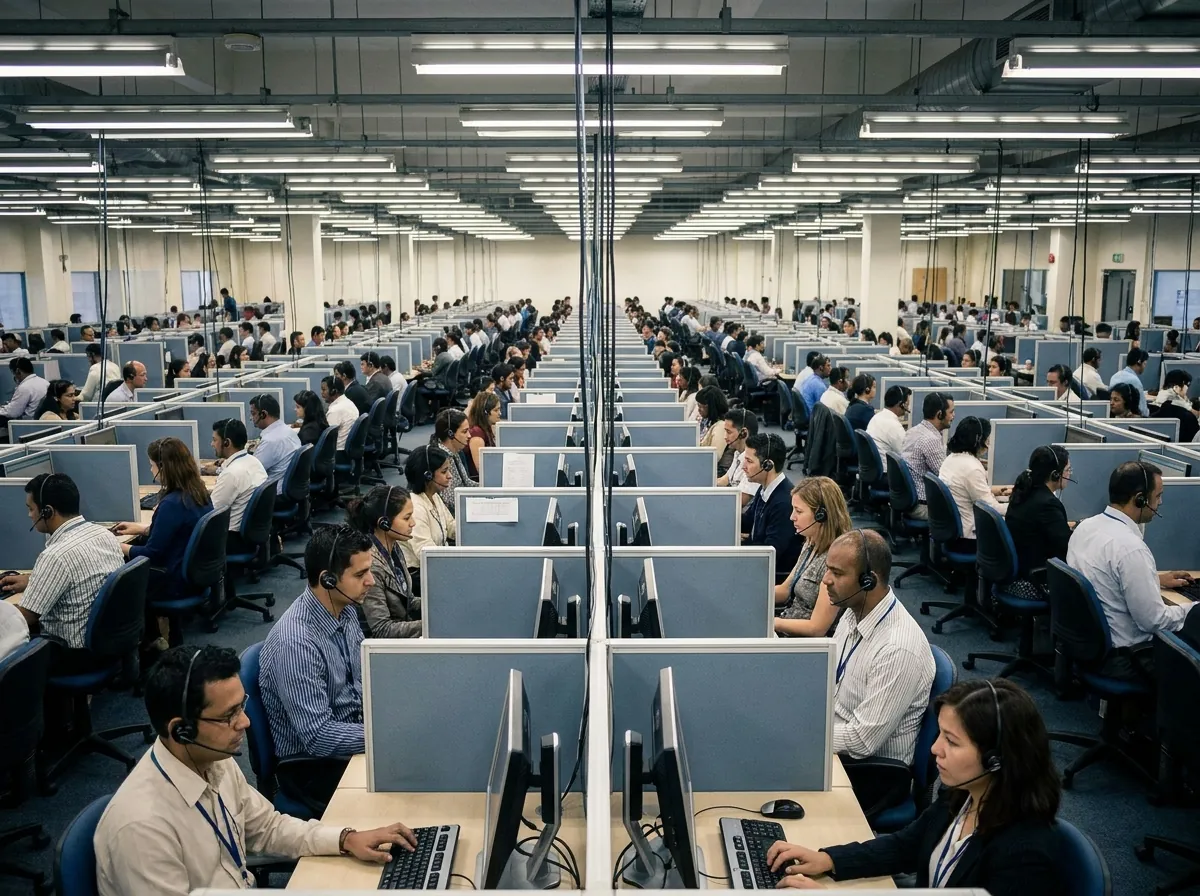
The line between categories is dissolving. Most buyers now pair an AI voice agent for tier-1 calls with a smaller human team for escalations. That costs less than a full BPO roster around the clock. Which one fits your call volume? Read on.
The Real Cost
What does an inbound call centre actually cost per call?
The number that matters is not the headline rate. It is the cost per resolved call, once you load everything in.
A traditional BPO seat in New Zealand or Australia carries wages, recruitment, management, quality assurance, and telephony. That stacks quickly. Abandonment, unresolved transfers, and repeat callers push the real cost per resolved outcome well above the per-call rate.
A Dunedin property manager handled 300 missed calls a month before switching to an AI voice agent. Those missed calls were not free. Each one was a lost resolution that still consumed marketing spend to generate.
The Comparison
How do AI voice agents compare on cost?
$0.43 per call. $2.31 per conversation.
Across a 90-day outbound campaign in Sydney, the Waboom AI portal recorded 9,856 dials and identified 141 sellers. No roster, no overtime, no lunch break.
Inbound is a different motion, but the cost structure is the same. The agent answers every call with no idle seat cost. You pay for what the agent actually does.
For a Christchurch property developer, the Waboom AI agent booked 49 viewings in 14 days at $7.12 per booked viewing. Read the full AI voice agent pricing breakdown for NZ and AU to model your own numbers.
The Hidden Loss
What is the real cost of inbound calls you are not answering?
Abandoned inbound calls are not a KPI problem. They are a revenue problem.
A Hamilton home care agency lost an estimated $641,000 a year in revenue from calls that rang out after 5pm. An Auckland mobile mechanic missed 463 after-hours calls in one year. An Auckland hotel generated 47% more after-hours bookings once an AI voice agent covered the overnight window.
None of those businesses had a staffing budget to fix the gap with humans. The AI agent covered every call for less than the cost of one part-time hire. To map your own abandonment to revenue loss, this post on reducing call abandonment walks through the model step by step.
The Speed
How quickly can you deploy an inbound call centre AI voice agent?
This is where the gap becomes stark. A traditional BPO contract runs 6 to 12 weeks before the agent team makes the first call. That includes onboarding, scripting, and quality assurance cycles. A CCaaS integration with existing telephony takes a similar runway.
A Waboom AI voice agent goes from briefing to live calls in days. The Auckland mobile mechanic was live and answering calls within 11 days of sign-up. Every week of delay is another week of abandoned calls. Why DIY voice agents fail covers what goes wrong when businesses try to shortcut the setup.

The Team
Does an AI voice agent replace my inbound team or support them?
It handles the calls your team should not spend time on. Your team handles the ones only they can close.
Waboom AI agents handle qualification, FAQs, booking, after-hours coverage, and spike load. They fire mid-call functions to book calendar slots, send confirmation SMS, and look up orders. They also update your CRM while the caller is still on the line.
When a call needs a human, the agent does a warm transfer with full context already attached. The human knows who is calling and why before they say hello. Your team stops triaging easy calls and starts closing the ones that actually need a person.
The metrics that separate a working inbound call centre AI voice agent from a failing one are not call volume. They are outcome rates. Track these five in your Waboom AI portal dashboard.
The KPIs
What KPIs should you track for inbound AI voice agents?
The AI receptionist KPIs post goes deeper on each. It shows you what a healthy dashboard looks like at 30, 60, and 90 days.
The Checklist
What should you look for before choosing an inbound AI voice platform?
Four things separate platforms that perform from platforms that demo well.
See what your inbound numbers would look like
A 15 minute demo maps your current cost per resolved call against an inbound call centre AI voice agent on your own volume.
Frequently Asked Questions
What is the difference between an AI voice agent and a traditional inbound call centre?
A traditional call centre uses humans to answer and resolve calls. An inbound call centre AI voice agent handles the conversation automatically, answering in under a second and resolving routine requests without a person involved. When a call needs a human, the agent transfers it with full context already attached.
How much does an inbound call centre AI voice agent cost in New Zealand or Australia?
Across real Waboom AI campaigns, cost per call has come in at $0.43 and cost per conversation at $2.31. A Christchurch property developer paid $7.12 per booked viewing. Read the full NZ and AU pricing breakdown to model your own scenario.
Will an AI voice agent handle my inbound calls 24 hours a day?
Yes. The agent answers every call, including after hours, weekends, and public holidays, without overtime costs. An Auckland hotel generated 47% more after-hours bookings once an agent covered the overnight window. A Hamilton home care agency lost an estimated $641,000 a year from missed after-hours calls before making the switch.
Can an AI voice agent book appointments and update my CRM during the call?
Yes. Waboom AI agents fire function calls mid-conversation to book into your calendar, send confirmation messages, look up customer records, or push updates to your CRM. These actions happen while the caller is still on the line, before the call ends. See how mid-call functions work for a full walkthrough.
Is an AI voice agent compliant with NZ and AU privacy law?
Waboom AI agents include AI disclosure on every call and built-in Do Not Call suppression that persists across campaigns. Waboom AI builds every agent with NZ and Australian privacy principles in mind. See the NZ privacy compliance guide for detail.
How long does it take to go live with an inbound AI voice agent?
A Waboom AI agent goes from briefing to live calls in days. The Auckland mobile mechanic went live within 11 days. Traditional BPO and CCaaS contracts typically run 6 to 12 weeks before the team handles the first call. Every week of delay is another week of missed calls and lost revenue for your business.
See what an AI receptionist costs on our pricing page.
Leonardo Garcia-Curtis
Founder & CEO at Waboom AI. Building voice AI agents that convert.
Ready to Build Your AI Voice Agent?
Let's discuss how Waboom AI can help automate your customer conversations.
Book a Free Demo