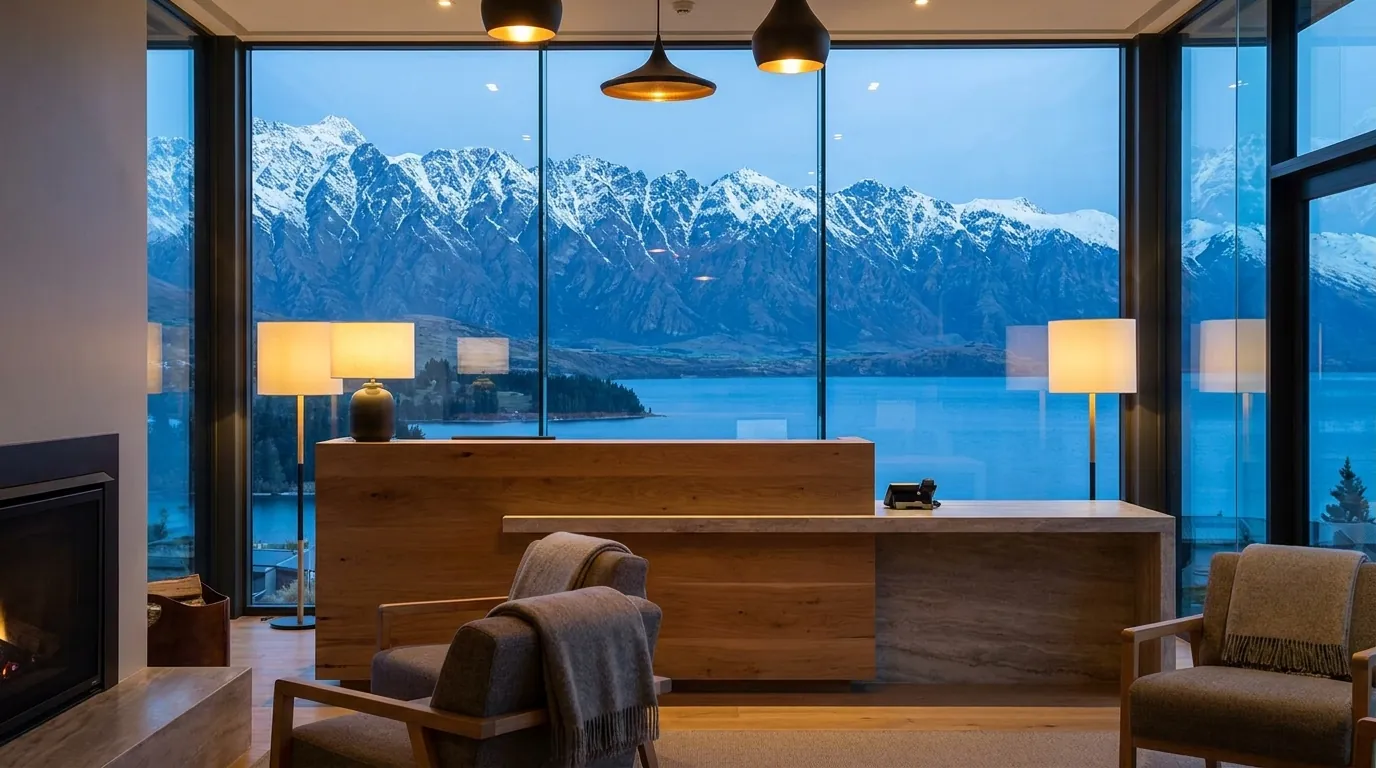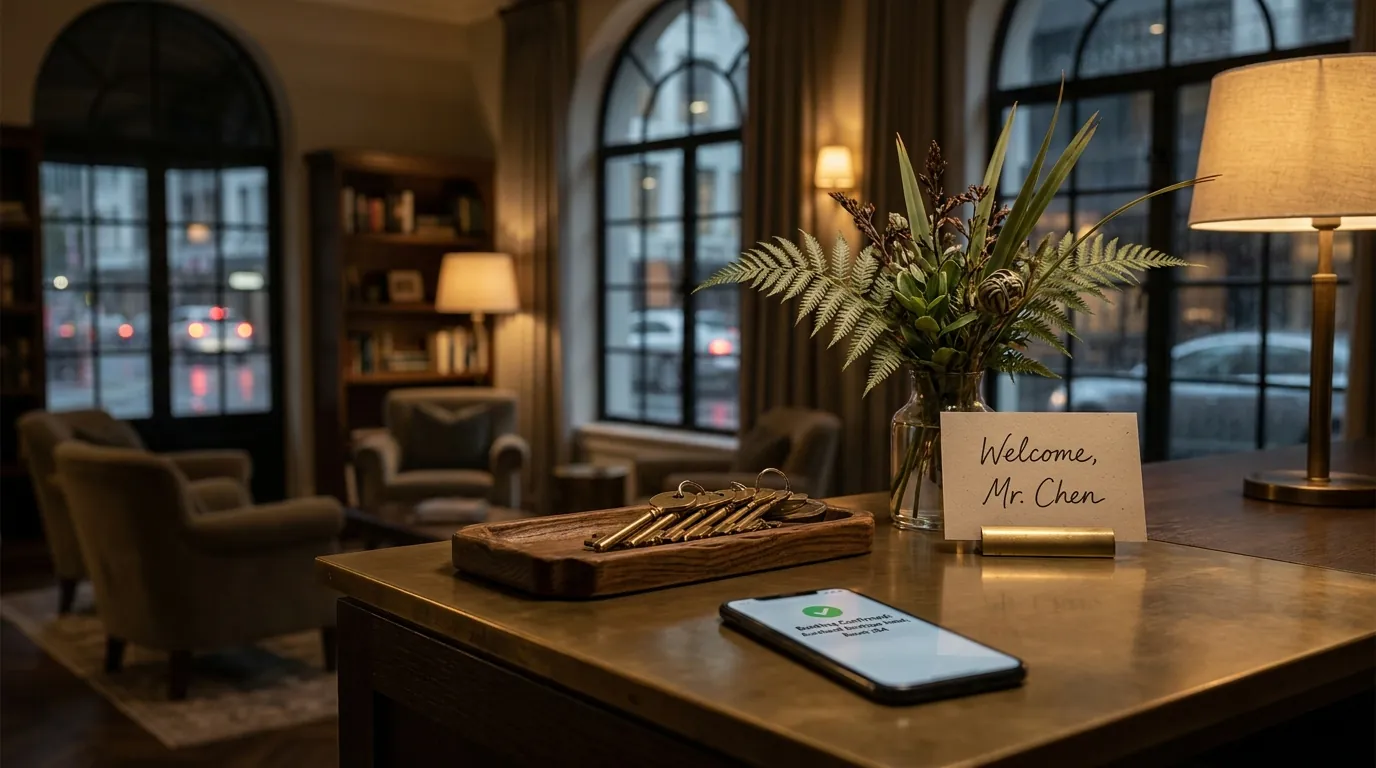
A 40-room boutique hotel in central Auckland. Reception staffed 7am to 11pm, seven days. After 11pm and before 7am the line rolled to voicemail with a "we will call you back in the morning" greeting. The morning callback rate was about 60%. The voicemail-to-actual-booking conversion was 11%.
The general manager, who I'll call Sarah, ran the numbers in late February. Of 320 monthly inbound calls, 122 (38%) hit voicemail. Of those, the team called back 73, of which 8 became bookings (11% conversion from voicemail). At an average room rate of $295 a night and a typical 1.6 night stay, those 8 monthly after-hours bookings were worth around $3,776 in room revenue.
The voicemail bounces she'd never even called back: 49 a month. Walking, not even a follow-up.
The deployment
Sarah picked an AI voice agent for the after-hours line specifically. In-hours stayed with reception. The agent's job was narrow: answer the after-hours line, take a reservation if the caller wanted one, route truly urgent issues (lockouts, room key trouble) to the on-duty night manager, and log every other request for the team to handle at 7am.
Setup time: 36 hours from kickoff to first answered call. The script was tight. The agent introduced itself, disclosed AI and recording, asked what the caller needed, and either booked, transferred, or messaged.
Voice was a NZ-trained female. Accent matters in hospitality. We covered why a US voice fails on NZ inbound in our Queenstown hotel test.
What happened in month one
Inbound after-hours volume actually grew slightly (122 to 138), partly because the team stopped manually triaging the voicemail backlog and partly because the AI made its way into a couple of TripAdvisor reviews ("they answered straight away at 1am, very impressed").
Of the 138 after-hours calls:
39 confirmed bookings vs 8 voicemail-to-bookings. A 387% lift in booked rooms from after-hours calls. Or, framed as conversion of total after-hours volume: 6.6% → 28.3% (4.3x).
Average room rate, average night count, and seasonality all stayed the same. The only variable that changed was who answered the phone.
What the team actually did differently
Three operational changes:
1. The voicemail greeting was retired. Calls forwarded straight to the AI from 11pm.
2. The morning callback queue disappeared. Reception staff used to spend 25 to 40 minutes each morning calling back overnight voicemails. That time went into other tasks.
3. The night manager got a tighter triage flow. The AI's warm transfers came with a 30-second context summary, so the night manager wasn't fielding cold calls at 2am.
What they spent
136 minutes of AI usage in month one (calls averaged 58 seconds). At $0.80 per minute, the bill was $108.80. The 31 additional bookings at $295/night × 1.6 nights = $14,632 in incremental room revenue. Net contribution after the AI cost: $14,523.
Sarah's words on the ROI: "We pay for it on the first booking of the day."
Why this works for hospitality specifically
Three reasons hospitality is unusually good for AI after-hours coverage:
1. The decision is fast. Hotel bookings are a 60-second decision: dates, room type, price. A scripted agent handles 90%+ of them on the call without needing judgement.
2. The cost of a missed call is high. A lost reservation is $300-$1,500 in revenue, not a $50 enquiry. The unit economics make AI a no-brainer above 30 calls a month.
3. The phone is still where bookings happen, even in 2026. Despite Booking.com and direct-website bookings, ~30% of boutique-hotel reservations still come through the phone, particularly for groups, special requests, or last-minute stays.
What to copy
Three takeaways for any NZ hospitality operator considering this:
1. Start with after-hours only, not 24/7. Lower stakes for the script, faster validation, and the ROI maths is brutal in your favour after-hours.
2. Use a NZ-accent voice. A US voice on a NZ booking line is a 22% drop in caller trust on inbound (we tested it).
3. Connect the AI to your PMS and email. Bookings should land in the system, not in someone's inbox to re-key the next morning.
We covered the broader after-hours economics in our after-hours pillar.
Frequently asked questions
Did the hotel keep its human reception staff?
Yes. All five reception staff are still employed. The AI only covers the after-hours window (11pm to 7am). In-hours reception is unchanged. The team's mornings got easier because they stopped starting each shift calling back overnight voicemails.
What if a guest wants something complex, like a complaint or a private event enquiry?
The agent is trained to recognise complaints, private event requests, and anything that smells like special-handling. Those calls are warm-transferred to the duty night manager with a 30-second context summary. Routine bookings and standard enquiries are handled in full.
Could a guest tell they were talking to AI?
Most did not. The agent uses a NZ-trained female voice with natural turn-taking. The recording disclosure at call start covers AI involvement (a legal requirement under NZ Privacy Act IPP 3A from 1 May 2026). No deception, just quiet competence.
How does the AI integrate with the property management system?
Bookings flow into the PMS via API in real time. No double-bookings, no morning re-keying, no email summaries to process the next day. The agent checks live availability before confirming.
What was the all-in cost compared to hiring night-shift cover?
Month-one usage was 136 minutes at $0.80 a minute, total $108.80. A part-time night-shift receptionist for the same coverage runs roughly $4,500 to $6,000 a month in NZ. The AI option is around 98% cheaper for the same window.
Run the numbers for your hotel
Plug your room count, average rate, and call volume into the calculator. Returns expected ROI and payback period.
Leonardo Garcia-Curtis
Founder & CEO at Waboom AI. Building voice AI agents that convert.
Ready to Build Your AI Voice Agent?
Let's discuss how Waboom AI can help automate your customer conversations.
Book a Free Demo