
Most AI voice agent quotes hide costs in the fine print. The biggest culprits are setup fees, after-hours surcharges, overage tiers, integration work and minute rounding. A tidy headline rate can double once these land on the invoice. Ask about all five before you sign.
We run AI voice agents for businesses across New Zealand and Australia. We see the same shock every month. A quote looks clean at the start. Then the first invoice arrives with line items nobody mentioned on the sales call.
A part-time receptionist in NZ or AU costs roughly 28 to 35 dollars an hour before KiwiSaver or super, ACC and holiday pay. Compare that to an answered call at around 40 cents. The gap is real. But only if the quote is honest.
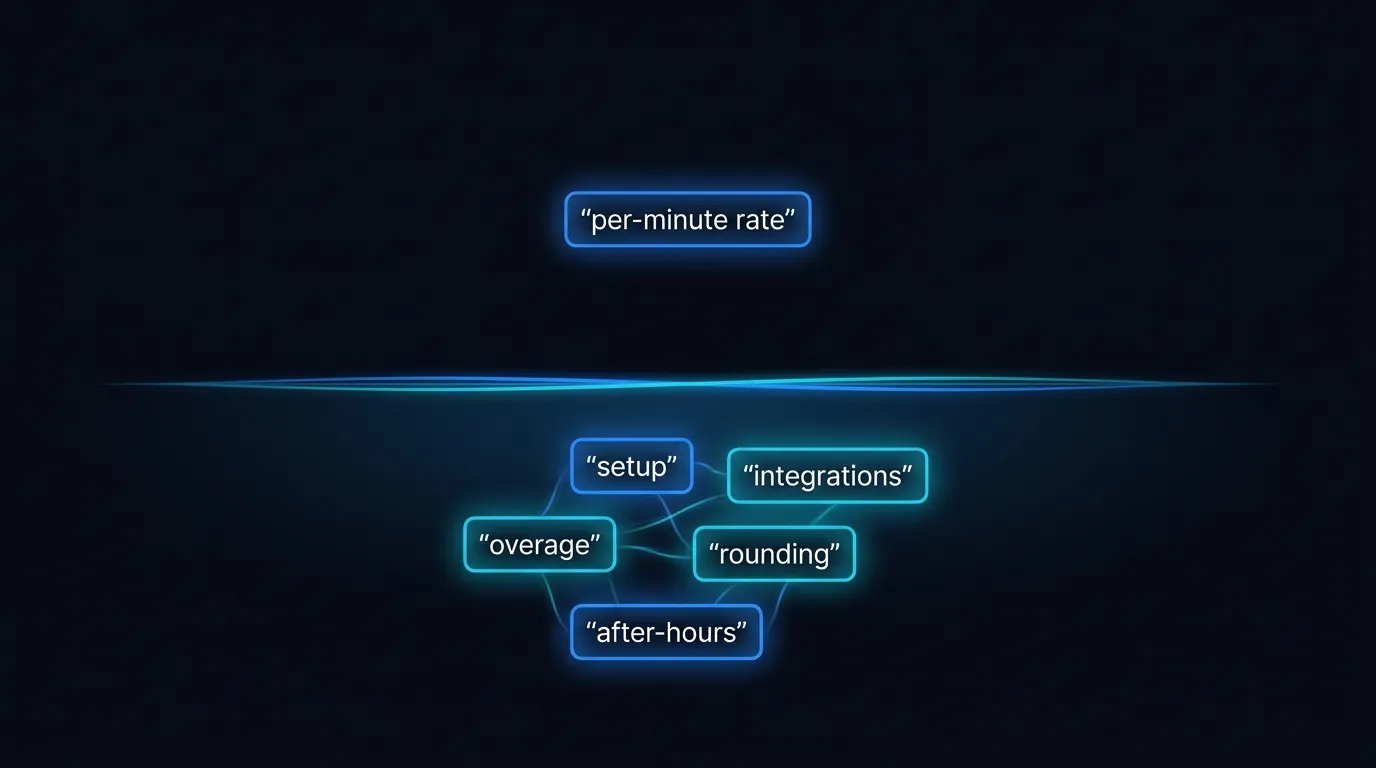
The per-minute rate is the tip. Setup, overage and rounding sit below the waterline.
What hidden costs should you watch for in an AI voice agent quote?
Watch for five AI voice agent hidden costs: setup fees, after-hours surcharges, overage tiers, per-integration charges and minute rounding. Any one of these can lift a clean per-minute rate into a much bigger monthly bill. The fix is simple. Ask for a single all-in figure before you sign anything.
Picture a cafe owner who signs on a clean per-minute price. The first call runs 30 seconds and costs about 40 cents. Fair. Then the setup invoice lands. Then a minimum monthly commitment shows up.
The per-minute math was never the full story. Vendors who quote only the rate are hoping you forget to ask about the rest. We bill by the second at around 80 cents a minute. That part is simple. The trap is everything around it.
For a baseline on the real numbers, start with our AI voice agent pricing page. It lists the all-in figure, not just the rate.
Why does the headline per-minute rate mislead you?
The headline per-minute rate gets you in the door. It rarely reflects your total bill. Setup, integrations, after-hours handling and rounding all sit outside that number. An 80 cent quote can still produce a far larger monthly invoice once the extras stack up.
The rate only covers talk time. It excludes the build. It excludes the work to connect your booking system. It excludes any monthly minimum you did not see on the brochure.
Ask one blunt question. What does this rate not include? A good vendor answers in one breath. A vague vendor changes the subject. For a deeper breakdown, read what actually sits inside the per-minute cost.
What does setup and onboarding really cost?
Setup and onboarding is where the first surprise lives. Building your agent, writing the script, recording the voice and testing edge cases all take real time. Some vendors fold this into the monthly fee. Others charge a one-off setup fee that runs into the hundreds or thousands.
A proper build includes call flow design, your real answers to common questions and a tested handover to a human. It is not a template with your name dropped in.
Ask whether setup is included or billed separately. Ask how many revision rounds you get. Ask who writes the script. If the answer is you, that is unpaid labour dressed up as a feature.
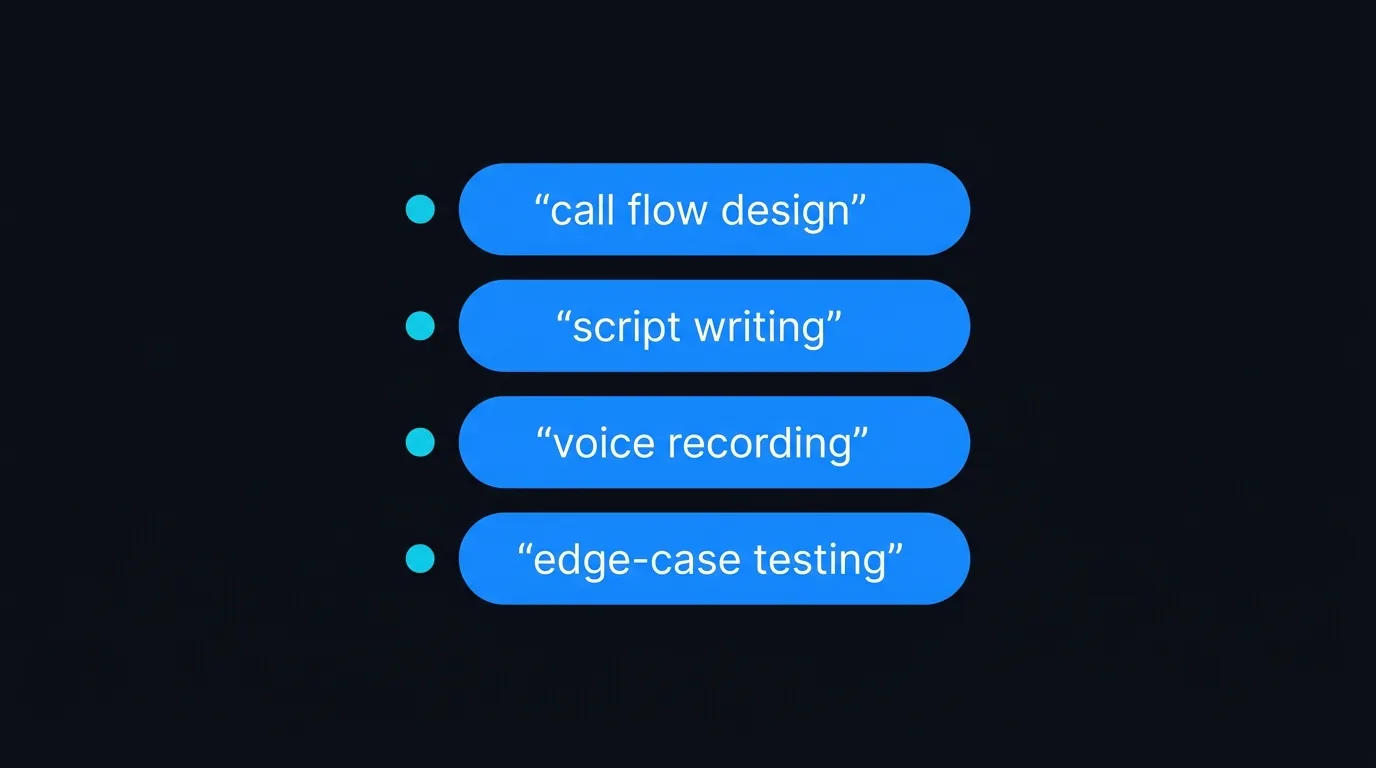
A real build has four work streams. Ask which ones land on your invoice.
This is exactly why we wrote about why DIY voice agents fail. The build looks easy in a demo. The edge cases eat your evenings.
Tired of guessing what the real bill will be?
See every line item before you commit on our transparent pricing page. One all-in number, no surprises.
Do after-hours and overage tiers cost extra?
Sometimes, and that is the second trap. Some vendors charge a premium for calls answered overnight or on weekends. Others cap your included minutes, then bill overage at a higher rate once you cross the line. The agent runs 24 hours, so your wallet should not get punished for it.
Overage tiers work like mobile data. You get a bundle. Cross it and the per-minute rate jumps. A campaign of 200 dials costs roughly 100 dollars NZD at a normal rate. The same volume on an overage tier can cost far more.
After-hours is the whole point of an AI voice agent. A caller at 9pm should cost the same as one at 9am. If a quote charges extra for nights or weekends, you are paying twice for the feature you bought.
Does minute rounding inflate your bill?
Yes, especially if your calls are short. If a vendor rounds every call up to the nearest minute, a 30 second call bills as 60 seconds. That doubles the cost of your shortest calls. Across thousands of calls, rounding becomes a real number.
We bill by the second. A 30 second answered call costs about 40 cents, not 80. That sounds small. At 1000 short calls a month, per-minute rounding adds roughly 400 dollars you never agreed to.
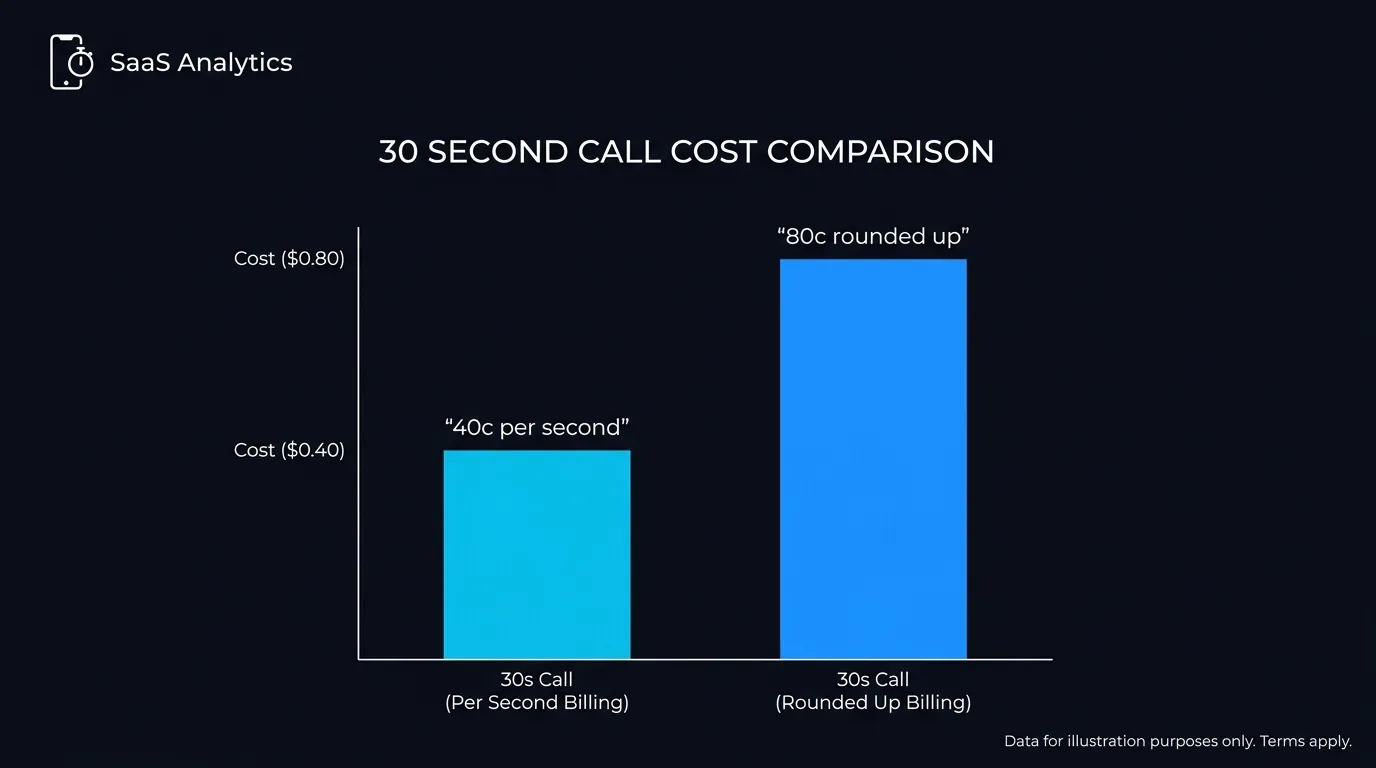
Per-second versus per-minute rounding on the same 30 second call. Double the bill.
Ask the vendor one direct question. Do you bill by the second or round up to the minute? If they round, ask them to model your real call mix. The shorter your average call, the more rounding hurts you. Our 2026 pricing guide walks through this math in full.
What do integrations add to the price?
Integrations add cost the quote often skips. Connecting the agent to your booking system, your CRM or your calendar takes engineering time. Some vendors include one integration. Others charge per connection, plus a monthly fee to keep it running.
A booking write-back into your calendar saves your team hours. But it needs building, testing and maintenance. Ask if the integration is one-off or ongoing, and who fixes it when your software updates.
A Sydney sales agent we ran booked 141 vendor leads in 90 days at 32.74 dollars per seller. That worked because the agent fed a clean pipeline. The integration earned its keep. But it was scoped and priced up front, not sprung later. If you are weighing build options, read our bundle versus DIY build comparison.
How do you get an honest all-in quote?
Ask for one monthly figure. It should include setup, your expected minutes, after-hours, integrations and any minimums. A vendor who cannot give you that single number is hiding something.
Use this checklist on every quote. It turns a vague rate into a real budget.
We publish our pricing openly because the all-in number should never be a surprise. A Christchurch real estate agent we ran booked viewings at 7.12 dollars each. That figure held because nothing was hidden behind it. For a plain-English starting point, see how much an AI receptionist costs or browse what we offer on the AI voice agents overview.
Your data carries no hidden cost with us either. Your portal, transcripts and call records sit on servers in Sydney. Live audio is processed offshore during the call. We disclose the AI on every call, which keeps you square with the NZ Privacy Act 2020 and the Office of the Privacy Commissioner. The same disclosure keeps you aligned with the Australian Privacy Act 1988, its 13 Australian Privacy Principles and the OAIC.
Want a quote with nothing hidden behind it?
Get your all-in monthly figure on our pricing page. Setup, minutes, after-hours and integrations, all in one number.
Frequently Asked Questions
What hidden costs should I watch for in an AI voice agent quote?
Watch for setup fees, after-hours surcharges, overage tiers, per-integration charges and minute rounding. Any one of these can lift a clean per-minute rate into a much bigger monthly bill. Ask for a single all-in figure that bundles every line item before you sign anything.
Why does the per-minute rate mislead me?
The per-minute rate only covers talk time. It excludes the build, the integrations and any monthly minimum. A fair 80 cent rate still produces a large invoice if setup, rounding and overage sit outside it. Always ask what the rate does not include.
Does minute rounding really matter?
Yes, especially if your calls are short. Rounding a 30 second call up to a full minute doubles its cost. At 1000 short calls a month that adds hundreds of dollars. We bill by the second, so a 30 second answered call costs about 40 cents, not 80.
Should after-hours calls cost extra?
No. The whole value of an AI voice agent is answering at 9pm and on weekends. A 9pm caller should cost the same as a 9am one. If a quote charges a premium for nights or weekends, you are paying twice for the feature you already bought.
Where does my data live?
Your portal, transcripts and call records sit on servers in Sydney. Live audio is processed offshore while the call happens. We disclose the AI on every call. That setup keeps you aligned with the NZ Privacy Act 2020 and the Australian Privacy Act 1988 and its 13 Privacy Principles.
How do I get an honest all-in quote?
Ask for one monthly number that includes setup, your expected minutes, after-hours, integrations and any minimum. Ask whether billing is by the second. Ask about lock-in terms. A vendor who answers all three plainly is one you can trust with your phones.
Leonardo Garcia-Curtis
Founder & CEO at Waboom AI. Building voice AI agents that convert.
Ready to Build Your AI Voice Agent?
Let's discuss how Waboom AI can help automate your customer conversations.
Book a Free Demo

