
Picture a Hamilton plumber paying a fixed monthly plan but taking nine calls a week. That is the wrong plan. We see it constantly.
Most owners pick a billing model before they know their own call pattern. Then they overpay for months. The choice between AI voice agent subscription vs pay as you go is not about which is cheaper on paper. It is about which one matches the calls you actually get.
We run AI voice agents for plumbers, clinics, agencies and developers across New Zealand and Australia. We have watched a quiet salon overpay on a fixed plan. We have watched a busy property firm save real money by switching.
The model is the lever. Here is how to pull it right.
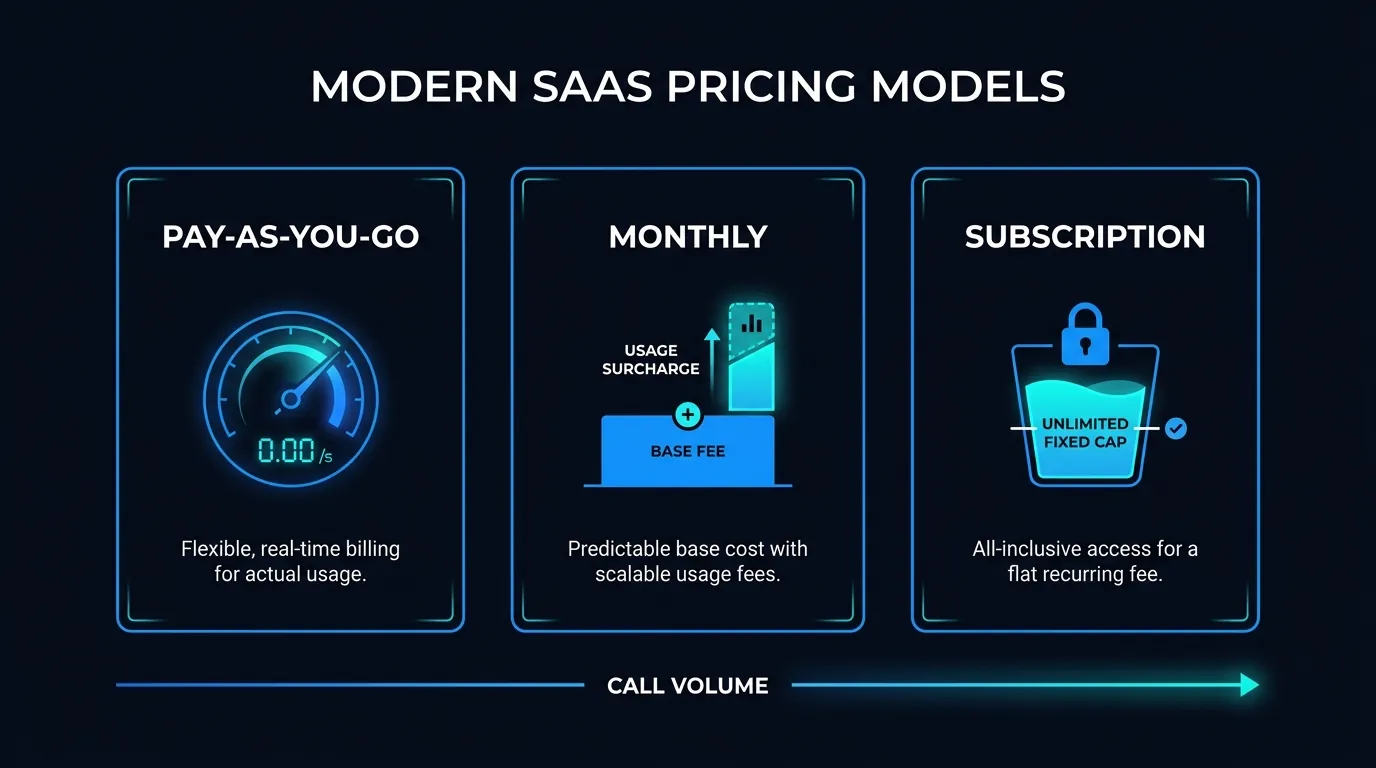
Three billing models, one question: which matches your real call pattern.
Subscription, pay-as-you-go, or monthly: what is the difference?
A subscription bills a flat fee for a fixed bucket of minutes or calls. Pay-as-you-go bills only for what you use, about 80c per minute in NZD or AUD, charged by the second. A monthly plan sits between them, a recurring base fee plus usage on top.
The difference is who carries the risk of a quiet month. On pay-as-you-go, a slow week costs you almost nothing. On a subscription, you pay the same whether you take 20 calls or 200.
Each model bills the same underlying work. An answered call still costs around 40c at 30 seconds. A one to two minute call still runs about one to two dollars. What changes is how that usage gets packaged and when you pay for it.
Think of it like power plans. A flat rate suits a house that runs the heat pump all day. A usage rate suits a holiday home that sits empty for weeks. Your call volume decides which house you live in.
The model itself is just a wrapper around the same per-second cost. Your job is to pick the wrapper that fits your diary.
Which suits a low-volume business?
Pay-as-you-go suits low-volume businesses almost every time. If you take fewer than about 100 answered calls a month, you should only pay for the calls you get. A subscription forces you to pre-buy minutes you will not use.
Run the maths on a quiet trade business. Say you take 60 answered calls a month, mostly 30 to 60 seconds. That is roughly 40 to 60 dollars in usage. A fixed plan priced for a busy office would charge you several times that for the same volume.
The trap with low volume is buying for the month you hope for. Owners imagine a flood of leads and size the plan to match. The flood does not come. You pay for the dream, not the diary.
Pay-as-you-go also protects you during seasonal dips. A landscaper goes quiet in winter. A tax agent goes quiet after July. Usage billing follows that curve down. A subscription does not.
Still sizing your real volume? Our guide on how much an AI receptionist costs lists the typical ranges for a small NZ or AU business.
Which suits a high-volume business?
A subscription or monthly plan suits high-volume businesses. Once you pass a few hundred answered calls a month, a committed plan usually beats raw usage. The base fee buys a lower effective rate per minute, so heavy volume gets cheaper.
Picture a busy clinic taking 400 to 600 calls a month. At pure usage that climbs fast. A monthly plan smooths the bill. It lowers the per-minute cost once you are past break-even.
High outbound volume tilts the same way. We ran a Sydney sales agent that produced 141 vendor leads in 90 days at 32.74 dollars per seller. At that intensity, a committed plan is cheaper than dialling on raw usage.
The number that matters is your monthly minutes, not your call count. Two firms can both take 300 calls. The one with longer conversations burns far more minutes. Size the plan to minutes, not headline call totals.
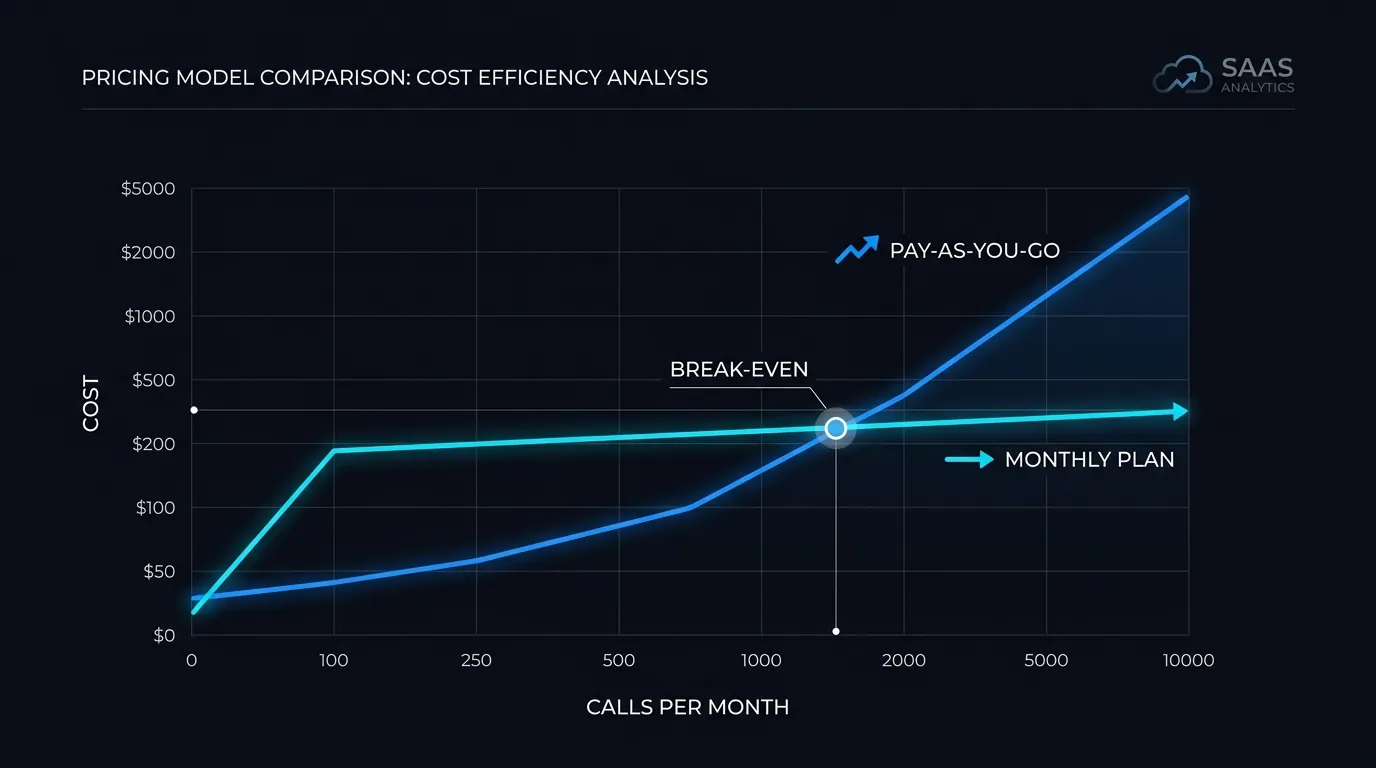
Below break-even, usage wins. Above it, a committed plan wins.
Want a clean way to project your monthly spend? Our monthly cost forecast guide shows the model we use with clients.
Not sure which side of break-even you sit on?
Compare every plan against your real call volume on our AI voice agent pricing page and pick the one that matches your diary.
How does per-second billing change the maths?
Per-second billing changes the maths by removing rounding waste. We bill by the second, not by rounding every call up to the next full minute. A 35 second call costs you 35 seconds, not 60. Over thousands of calls, that gap is real money.
Most answered calls are short. The average answered call runs about 30 seconds, roughly 40c. If you rounded every one up to a minute, you would pay 80c instead. That doubles the cost of your most common call.
This is exactly why low-volume businesses do well on pay-as-you-go with us. Your bill tracks the true length of each conversation. Short reception calls stay cheap. You never subsidise dead air or a rounded-up minute.
It also makes campaign budgeting honest. A 200-dial outbound campaign lands around 100 dollars NZD. Connect rates sit at 47 to 65 percent. About 20 to 25 percent of dials become a real conversation over a minute. The short non-conversations barely register.
For the full breakdown of where each minute goes, see our piece on what is inside the cost per minute.
What are the traps in each model?
Every model has a trap, and the trap is always a mismatch with your real call pattern. Subscriptions trap you in unused minutes. Pay-as-you-go can sting in a sudden busy month. Monthly plans trap you if the base fee is sized wrong.
The subscription trap is the most common one we fix. Owners buy a generous bucket, use a fraction, and never review it. Three quiet months later they have paid for hundreds of minutes that vanished. Always check your usage against your bucket.
The pay-as-you-go trap is the opposite. A viral month or a big campaign spikes your usage and your bill. That is not a fault, it is volume. But if it becomes your new normal, you have outgrown usage billing and should move to a committed plan.
The monthly-plan trap is the base fee. If the recurring fee assumes volume you do not have, you pay for capacity you never touch. If it is too small, you blow through it and pay premium overage. The base fee has to match your floor, not your ceiling.
There is also a hidden trap people forget. A NZ or AU part-time receptionist costs about 28 to 35 dollars an hour before KiwiSaver or super, ACC and holiday pay. Compare the agent against that fully loaded number, not the bare wage.
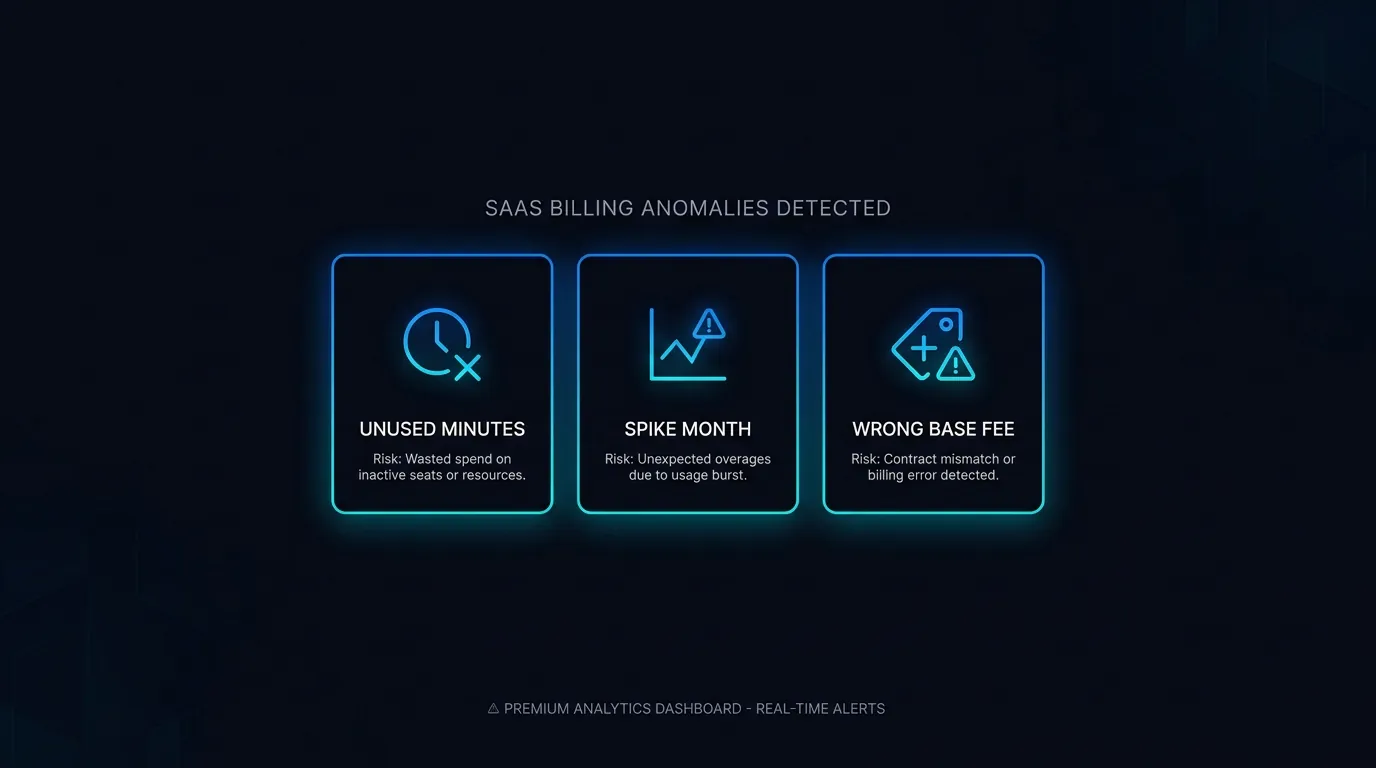
Each model has one trap, and each one comes from a volume mismatch.
How do you switch plans as you grow?
You switch plans by watching one number: your monthly minutes against your break-even point. When usage billing starts costing more than a committed plan would, you move up. When a subscription sits half-unused, you move down. We make both changes simple.
There is no rebuild and no new agent. Your agent, scripts and call history stay the same. We change the billing model behind it. The caller experience does not change at all.
We tell clients to review every quarter. Pull three months of minutes. If two of three are pushing past your plan, size up. If all three sit well under, size down and keep the difference.
A Christchurch developer is a clean example. They booked viewings at 7.12 dollars each. As campaigns scaled, the volume justified a committed plan, so we moved them and the per-booking cost dropped further.
Your data does not move when your plan does. Portal records, transcripts and structured call data stay on our Sydney servers throughout. Live audio is processed offshore under documented arrangements with our voice infrastructure partner, same as always.
Which should you start on?
Start on pay-as-you-go unless you already know you are high volume. It is the lowest-risk way to learn your real call pattern. You pay only for calls you get, then switch to a committed plan once your minutes prove it pays off.
Most new clients do exactly this. They run usage billing for a quarter. The numbers tell them whether they are a low-volume business that should stay, or a high-volume one that should commit. The diary decides, not the brochure.
Every plan discloses AI on every call. The agent tells callers it is an AI assistant, in plain language, on every model. That does not change whether you are on usage or a subscription.
You can compare every plan side by side on our pricing page, and read the full 2026 pricing breakdown before you choose. Want to see what an agent actually does first? Start with our AI voice agents overview.
Pick the plan that fits your calls, not the brochure.
See pay-as-you-go, monthly and subscription side by side on the Waboom AI pricing page and start on the model your diary actually justifies.
Frequently Asked Questions
Is a subscription always more expensive for small businesses?
Not always, but usually for genuinely low volume. If you take fewer than about 100 answered calls a month, pay-as-you-go at roughly 80c per minute almost always wins. A subscription only pays off once your monthly minutes are high enough that the lower effective rate beats raw usage. Below that line, you are pre-buying minutes you will not use.
How do I know if I am high volume enough for a monthly plan?
Look at your monthly minutes, not your call count. Once you are clearly past a few hundred answered calls a month, or running heavy outbound campaigns, a monthly plan usually beats usage. We pull three months of your data and show you the break-even point so the choice is based on your numbers, not a guess.
Can I switch between subscription and pay-as-you-go later?
Yes, and it is simple. Your agent, scripts and call history stay exactly the same. We change only the billing model behind your agent, so callers notice nothing. We tell clients to review every quarter and move up or down based on three months of real minutes.
Does per-second billing really make a difference?
Yes, especially for short reception calls. The average answered call runs about 30 seconds, roughly 40c. We bill that as 30 seconds, not a rounded-up full minute that would cost 80c. Across thousands of calls a year, per-second billing keeps your most common call type at its true cost.
How is my data handled regardless of plan?
The same way on every plan. Portal records, transcripts and structured call data stay on our Sydney servers. Live audio is processed offshore under documented arrangements with our voice infrastructure partner. This sits inside the NZ Privacy Act 2020 and the AU Privacy Act 1988 with its 13 Australian Privacy Principles. You can ask us to delete your data in 10 minutes.
Which regulators oversee AI call data in NZ and Australia?
In New Zealand it is the Office of the Privacy Commissioner under the Privacy Act 2020. In Australia it is the Office of the Australian Information Commissioner under the Privacy Act 1988 and the 13 Australian Privacy Principles. Serious breaches are reported through the Notifiable Data Breaches scheme. We disclose AI on every call to stay clear with both.
Leonardo Garcia-Curtis
Founder & CEO at Waboom AI. Building voice AI agents that convert.
Ready to Build Your AI Voice Agent?
Let's discuss how Waboom AI can help automate your customer conversations.
Book a Free Demo

