
You sit down to cost an outbound calling campaign. You guess the number too high. Almost everyone does. Here is the real AI voice agent campaign cost when you put 30-second dials and a 47 to 65 percent connect rate into the maths. A 200-dial campaign runs about $100 NZD.
Most people anchor on the per-minute price and stop there. That is the wrong number to obsess over. The number that decides whether a campaign pays is cost per booked outcome, not cost per minute. This is the maths, the worked example, and the real result behind it.
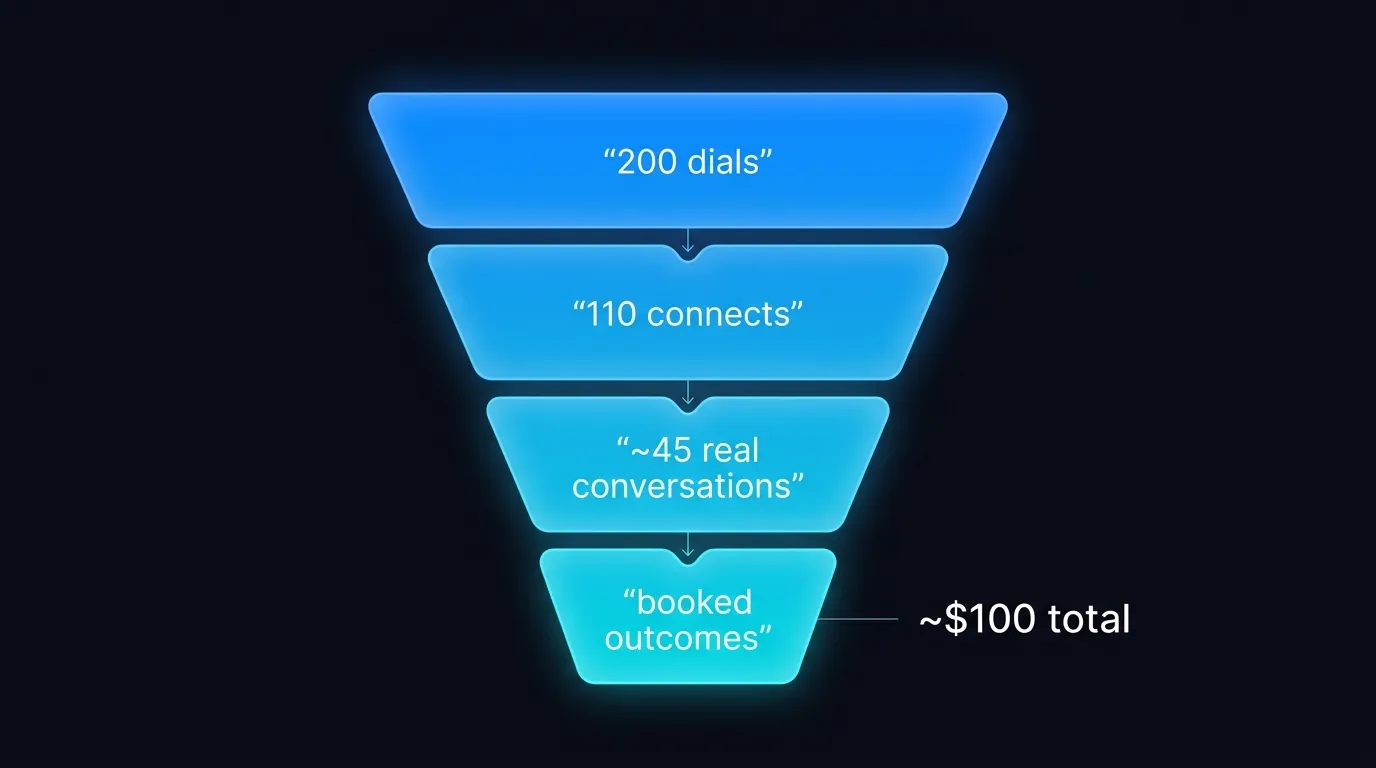
Two hundred dials narrow to a handful of real conversations, and the whole list costs about $100.
What does a 200-dial AI outbound campaign actually cost?
A 200-dial campaign runs about $100 NZD on our platform. Calls bill at roughly 80 cents a minute, by the second, so short dials cost almost nothing. Most dials are voicemails or no-answers. The handful that turn into real conversations carry the bill, and even those land at one to two dollars each.
Picture a real estate office running a vendor campaign on a Tuesday. Two hundred numbers loaded in the morning. By lunch the agent has worked the list. The total spend reads like a single tank of fuel, not a payroll line.
That is the headline most buyers do not believe until they see the receipt. Our pricing makes outbound the cheap channel, not the scary one. See the full breakdown on our pricing page for AI voice agents.
How does the maths work at 80 cents a minute, billed by the second?
The maths is simple once you stop assuming every dial is a full conversation. At 80 cents a minute billed by the second, a 30-second answered call costs about 40 cents. A one to two minute booking call costs one to two dollars. Voicemails and no-answers cost a few cents each.
Run 200 dials. Say 55 percent connect, the middle of the 47 to 65 percent band. That is about 110 answered calls. Most are short. A slice run past a minute. Add the seconds up and the bill lands near $100 NZD for the whole list.
The billing-by-the-second part matters more than people think. You do not pay a flat per-call fee that punishes you for short calls. A two-second voicemail costs two seconds. That is why the average works out so low.
Compare that to a part-time receptionist at $28 to $35 an hour before KiwiSaver, ACC, and holiday pay. One hour of that wage runs the agent through 200 dials with change to spare. The agent does not slow down at dial 150 either.
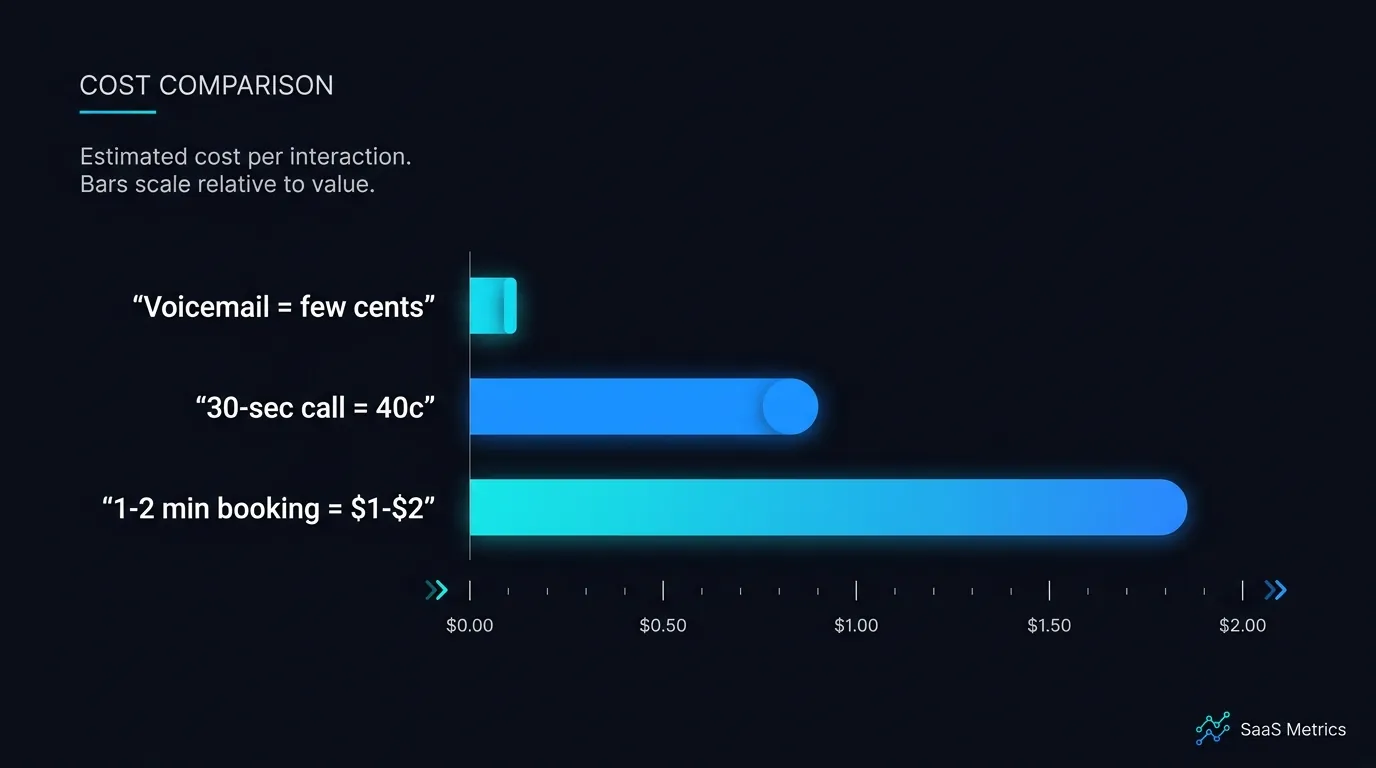
Billed by the second, a short dial costs cents, so the list average stays near 50 cents a call.
Why is connect rate not the same as booking rate?
Connect rate is how many people pick up. Booking rate is how many say yes. They are different numbers, and confusing them wrecks your forecast. On outbound, 47 to 65 percent connect. Of all dials, only about 20 to 25 percent become a real conversation longer than a minute. Fewer still book.
A common mistake is treating a 55 percent connect rate as a 55 percent booking rate. That would have you forecasting 110 bookings from 200 dials. Reality is a fraction of that. The connect is just the door opening. The conversation is the sale.
This is why we tell buyers to track the funnel, not one vanity number. Dials, connects, real conversations, then outcomes. Each stage drops. We wrote a full guide on the AI outbound calling KPIs worth tracking so you forecast on the right numbers, not the flattering ones.
What is the real cost per booked outcome?
Cost per booked outcome is your total spend divided by the outcomes you actually got. It is the only number that tells you if the campaign paid. A $100 campaign that books 14 viewings costs about $7 per viewing. The same spend that books two costs $50 each.
This is where per-minute pricing stops mattering. Nobody buys minutes. They buy booked meetings, qualified leads, or filled diaries. A campaign can have a brilliant per-minute rate and a terrible cost per outcome if the list is dead or the script is weak.
So we report the number that matters. Total spend, total outcomes, cost per outcome. A Christchurch developer booked viewings at $7.12 each on real calls. That is the figure a business owner can act on, not a per-minute line item buried in an invoice.
If you are weighing this against hiring, the comparison is not minutes versus salary. It is cost per booked outcome versus cost per booked outcome. See how the AI sales agent stacks up when you cost it on outcomes.
Stop costing minutes. Start costing outcomes.
The number that decides whether outbound pays is cost per booked meeting, not cost per minute. See what our AI sales agent does on a real campaign and judge it on the figure that matters.
What did a real NZ or AU campaign produce?
A Sydney sales agent produced 141 vendor leads in 90 days at $32.74 per seller. That is the real, costed result, not a demo figure. The agent ran the dials, billed by the second. Total spend divided by 141 leads gave a cost per seller no human dialler matches.
Sit with that number. A vendor lead is a property owner thinking about selling. A human cold-caller producing 141 of those in 90 days would cost you a wage, super, and a lot of patience. The agent did it for the price of the calls.
The Christchurch case sits alongside it. Viewings booked at $7.12 each. Two different cities, two different jobs, the same lesson. When you cost on outcomes, the AI voice agent campaign cost reads like a bargain. We broke the Sydney campaign down dial by dial if you want the full story.
How does batch calling keep the cost down?
Batch calling keeps cost down by running the whole list without idle time or wasted wages. The agent does not sit between calls. It dials the next number the second the last one ends. There is no smoke break, no admin gap, no slow Monday. You pay for talk time and almost nothing else.
A human dialler spends maybe half the hour actually talking. The rest goes on dialling, waiting, voicemails, and notes. The agent collapses that. Two hundred numbers get worked in the time it takes a person to make coffee and warm up.
That efficiency is why the per-outcome cost stays low. You are not funding dead time. Before you load a big list, test the script on a small batch first. We wrote up how we batch test voice AI agents so you fix the open before the full run.
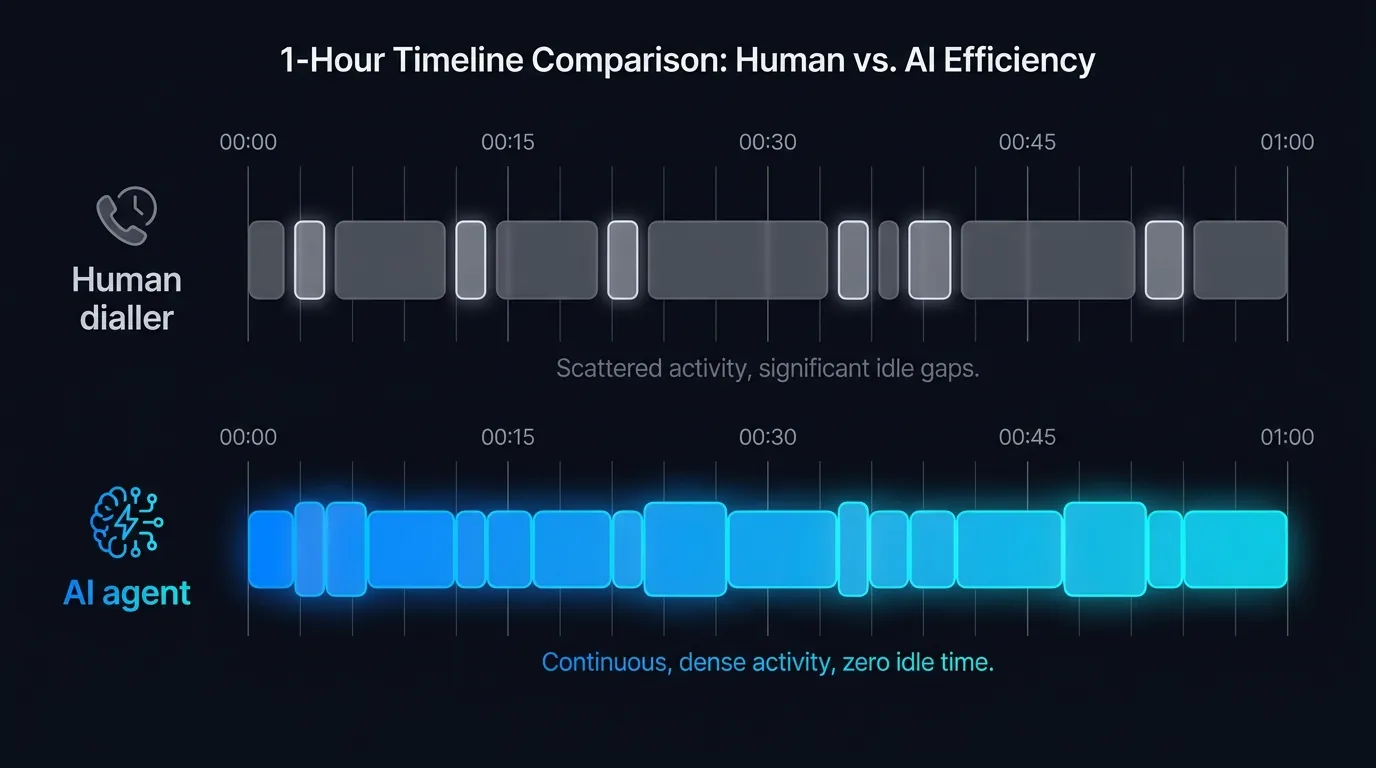
No smoke break, no admin gap: the agent works the whole list in the time a person warms up.
How do you budget a campaign before you run it?
Budget backwards from the outcome you need. Decide how many bookings or leads you want. Work back through your real conversion rates to the dials required. Then multiply dials by the per-call average. For a 200-dial run, budget about $100 NZD and treat anything under that as upside.
Here is the worked frame. You want 10 booked meetings. Your list converts roughly 5 percent of dials to a meeting. That is 200 dials. At about 50 cents a dial averaged across connects and voicemails, you are looking at $100. Cost per meeting, $10. Now you can decide if that pays.
The honest part is that conversion rate is yours, not ours. A warm list beats a cold one. A sharp script beats a vague one. If you are dialling a cold database, the data layer matters as much as the dialler. We wrote about turning a cold home-builder database into a callable data layer for exactly this reason.
Once the numbers stack, the implementation is the easy part. We have a full guide on how to implement AI outbound sales calls from list to live. Start small, measure cost per outcome, then scale the spend once the maths proves out.
Want a worked Australian example at volume? Our piece on voice AI agent pricing in Australia across 10,000 calls shows how the per-outcome cost holds as you scale.
We disclose on every call that the caller is speaking with an AI, in line with guidance from the Office of the Privacy Commissioner and the OAIC. That honesty does not dent the connect rate or the booking rate. It just means nobody feels tricked, which matters when the person on the other end could become a customer.
Run the maths on your own list.
Tell us the outcome you need and we will cost the dials backwards. See the per-call pricing or book a demo of the AI sales agent and judge it on cost per booked outcome.
Frequently Asked Questions
How much does a 200-dial AI voice agent campaign cost in NZ or AU?
The full list costs about $100 NZD or AUD. Calls bill at roughly 80 cents a minute by the second, so short dials and voicemails cost almost nothing. With a 47 to 65 percent connect rate, most of that $100 buys the handful of real conversations, each landing around one to two dollars.
What is the difference between cost per minute and cost per booked outcome?
Cost per minute is what a minute of talk time costs, about 80 cents. Cost per booked outcome is your total campaign spend divided by the meetings or leads you actually got. The second number is the one that tells you if the campaign paid. Nobody buys minutes. They buy booked outcomes.
Is connect rate the same as booking rate?
No. Connect rate is how many people pick up, 47 to 65 percent on outbound. Booking rate is how many say yes, which is far lower. Only about 20 to 25 percent of dials become a real conversation past a minute, and fewer book. Treating connect rate as booking rate will badly overstate your forecast.
What was the cost per result on a real campaign?
A Sydney sales agent produced 141 vendor leads in 90 days at $32.74 per seller. A Christchurch developer booked viewings at $7.12 each. Both are real, costed figures from live calls, not demos. They are the numbers we report because cost per outcome is what a business owner can actually act on.
How do I budget an outbound campaign before running it?
Work backwards from the outcome. Decide how many leads or bookings you need, divide by your real conversion rate to get the dials required, then multiply by the per-call average. For 200 dials, budget about $100. Start with a small test batch, measure cost per outcome, then scale once the maths proves out.
Does the agent tell people it is an AI?
Yes, on every single call. We disclose that the caller is speaking with an AI at the open. It does not dent the connect rate or the booking rate. It just means nobody feels tricked, which matters when the person you dialled could end up being a paying customer.
Leonardo Garcia-Curtis
Founder & CEO at Waboom AI. Building voice AI agents that convert.
Ready to Build Your AI Voice Agent?
Let's discuss how Waboom AI can help automate your customer conversations.
Book a Free Demo

