What does it mean to treat inbound calls as a revenue engine?
It means the phone line gets a revenue number, and someone looks at it every month.
Most businesses run the phone as a cost centre. The goal is fewer calls, shorter calls, less time off the tools. Nobody can tell you what the line earned.
A revenue engine flips that. Every call gets answered, sorted and measured. Buyer calls become orders or booked follow ups. And at the end of the month you see dollars against the line, not just a count of calls answered.
What did a US office supply retailer prove about phone callers?
That the people who ring you are your best buyers, by a wide margin.
Quiq is a US conversational AI company. It reports a North American office supply retailer ran agentic voice across inbound calls at hundreds of print centres.
The agent greets the caller and works out whether it is a sales enquiry or a support question. It answers the simple stuff, collects order details, and routes the valuable calls to inside sales. Swap in your counter team and the shape holds.
The vendor-reported results are worth your attention. Quiq's 2026 case write up says 51 percent of sales enquiries converted into confirmed orders. Average order value was $450 through the phone channel, against $40 in store.
Those are the customer's own numbers published by the vendor, so treat them as a claim, not an audit. But the shape of the result matches what we see on NZ and AU lines every week. The caller has done their research, has a job in mind, and is ready to commit. They just need someone to pick up.
Why is the phone caller worth ten times the walk-in?
Because calling is effort, and effort signals intent.
The person who rings a supplier has a specific job with a deadline attached. A print run due Friday. A fit out that needs 40 metres of cable trunking.
They are not browsing. They are trying to give you money.
That is why letting those calls hit voicemail is the most expensive habit in the building. You are not missing calls. You are missing your highest intent buyers at their moment of highest intent. Meanwhile the walk-in browsing for a $40 item gets full service at the counter.
How does this play run for a NZ or AU supplier?
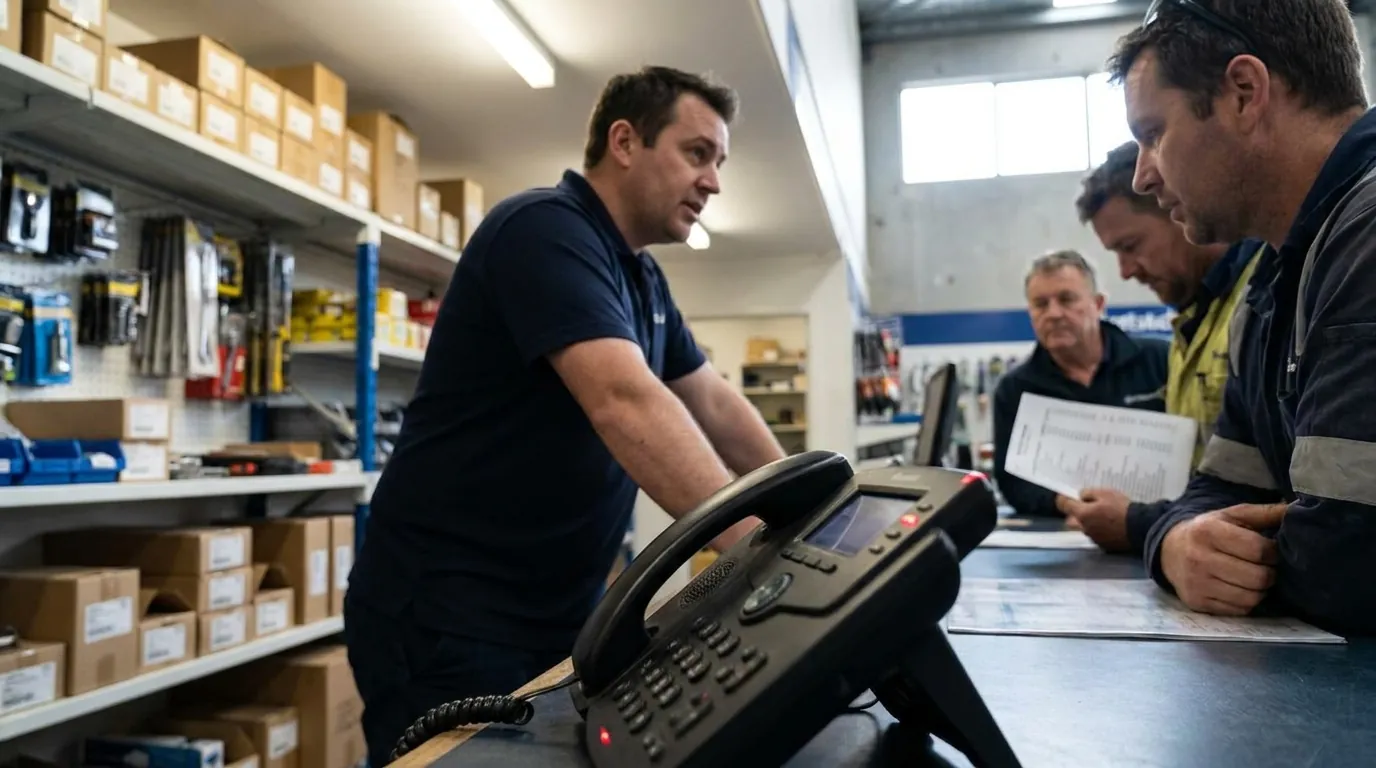
Take a commercial supplier with a trade counter and six branches. Here is the build we would run.
Every Waboom AI agent discloses it is an AI at the start of the call. Your buyers do not mind. What they mind is ringing three suppliers and reaching one.
What do the honest NZ and AU numbers say?
Here is where we break ranks with our own industry. Most of the missed-call statistics you have read are made up.
The claim that 62 percent of trade calls go unanswered traces back to vendor SEO pages. So does the 8 billion dollars Australian businesses supposedly lose each year. No survey, no sample, no publisher.
We went looking for the sources and they do not exist. You should not buy software off the back of a number nobody can produce.
The verified numbers are quieter and still damning. hipages is Australia's largest tradie marketplace. Its FY24 investor presentation shows 86 percent of posted jobs got a tradie connection, its best half on record. Read the other side of that: even in its best half, 14 percent of paying customers attracted nobody at all.
On the NZ side, Builderscrack tells homeowners most people find a tradie within five minutes of posting a job. That is the market you sell into. It clears in minutes. A buyer who reaches your voicemail at 5:20pm is someone else's customer by 5:25.
How do you measure revenue instead of answer rate?
Answer rate tells you the phone got picked up. It does not tell you what the line earned. Three numbers do.
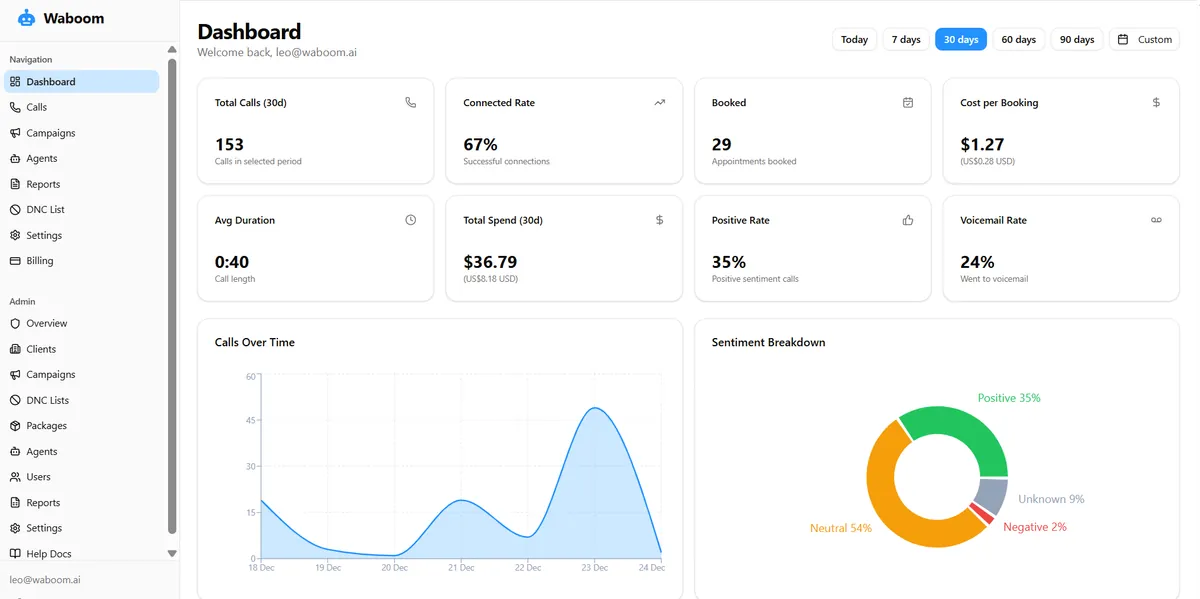
Revenue tagged to calls. Orders taken on the line, plus quotes booked on the line that later closed. This is what the office supply retailer measured, and it is why their result reads in dollars.
Cost per booked outcome. Calls cost about 80 cents a minute, billed by the second. Divide the month's call spend by orders plus booked quotes, and compare it with what you pay to win work anywhere else. We walk the method in cost per booked outcome.
The buried saves. Tags surface the calls where a buyer nearly walked, as we covered in call tags and alerts. One recovered account order pays for a month of the line.
Frequently Asked Questions
Can the agent really take an order, not just a message?
Yes, within the rules you set. For account customers it can capture the order details and write them into your system, with anything unusual routed to your team. For new customers it typically books the callback with everything captured, so your rep opens the call already knowing the job.
What happens to the complex technical enquiry?
It goes to a human, fast, with a summary attached. The agent's job on a hard call is to capture the detail and get the right person on it, not to bluff. A warm handover with context beats a cold voicemail every time.
Where does our customer and order data sit?
Transcripts, tags and structured call data sit on our Sydney servers. Live audio is processed offshore, and we are transparent about that split rather than claiming everything stays local. See the Office of the Privacy Commissioner and the OAIC for the frameworks.
We already have a receptionist. Why add an agent?
Keep the receptionist. The agent takes the calls she cannot: the second and third simultaneous call, the 5:30pm enquiry, the Saturday morning rush. The revenue engine is built on the calls you currently lose, not the ones you already win.
For the bigger picture, read our complete guide to AI voice agents for NZ and Australian businesses.
Leonardo Garcia-Curtis
Founder & CEO at Waboom AI. Building voice AI agents that convert.
Ready to Build Your AI Voice Agent?
Let's discuss how Waboom AI can help automate your customer conversations.
Book a Free Demo