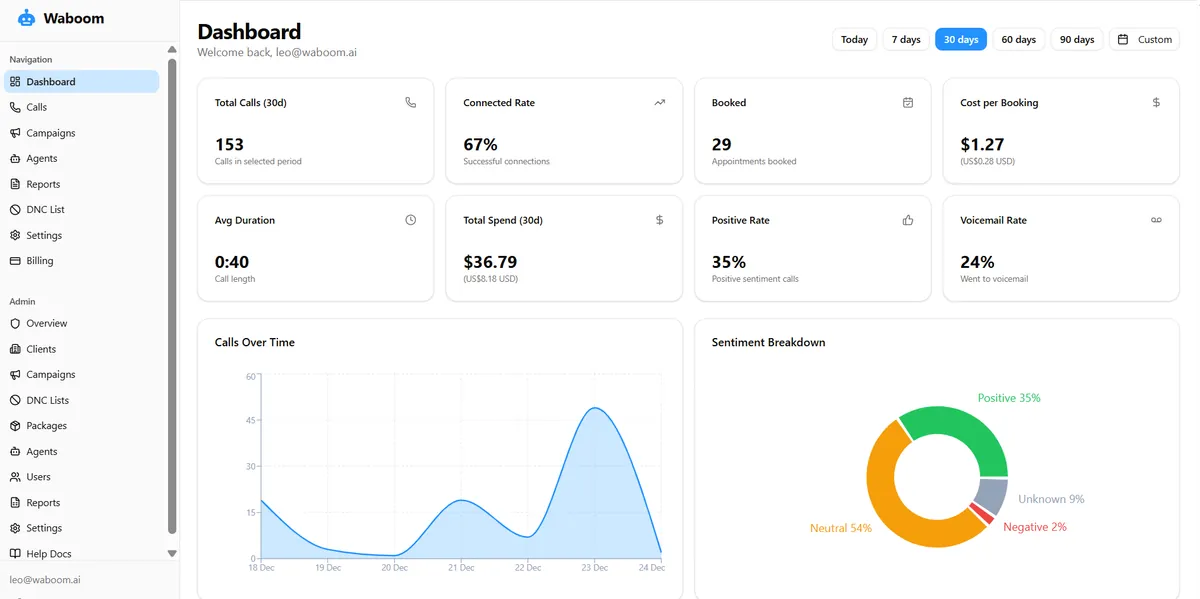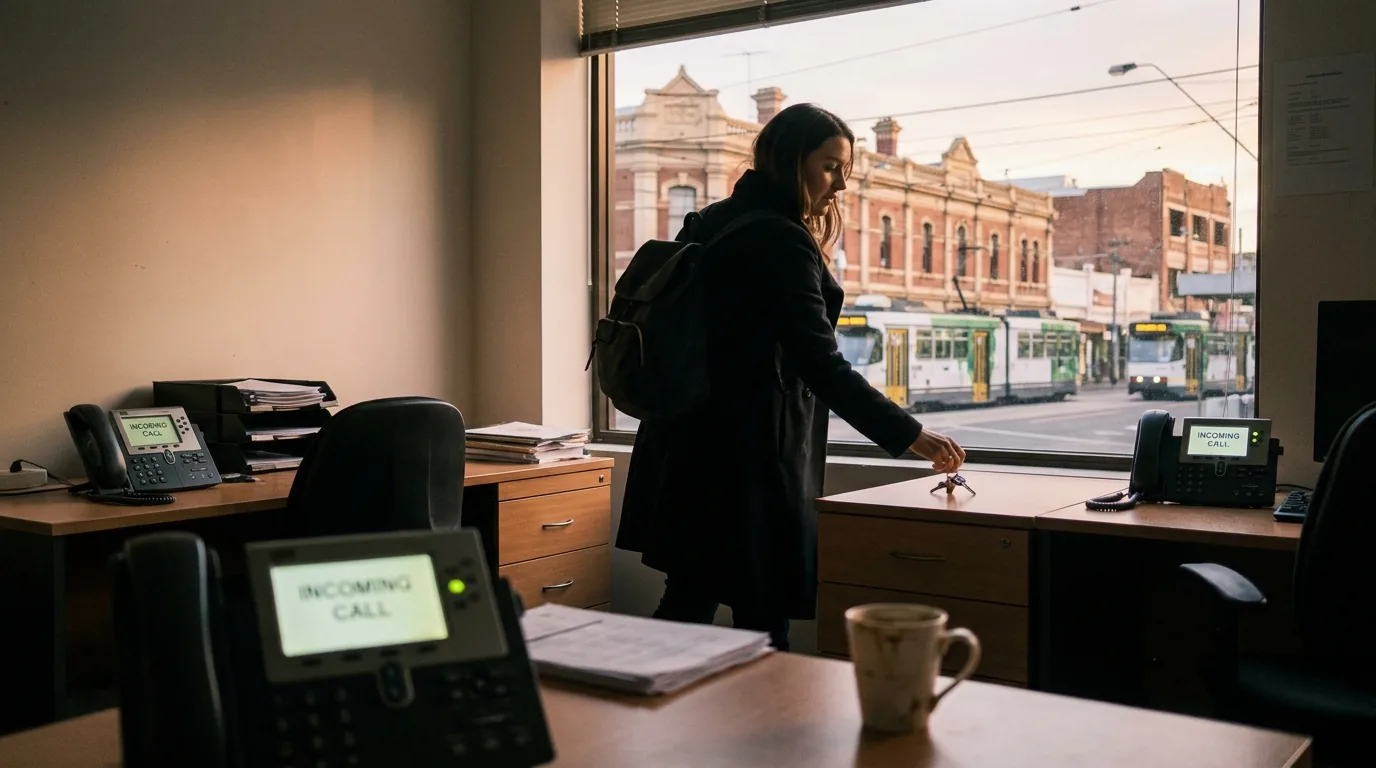
Overflow and after-hours call routing means the calls that ring out get caught somewhere other than voicemail. It is 6pm Friday. Three lines are ringing. The one receptionist has gone home. Overflow call routing is the difference between a booked job and a caller who rings your competitor instead.
This is the most common gap we see in NZ and AU phone setups. Your day team is good. They just cannot answer four lines at once, and they cannot answer at all after 5pm.
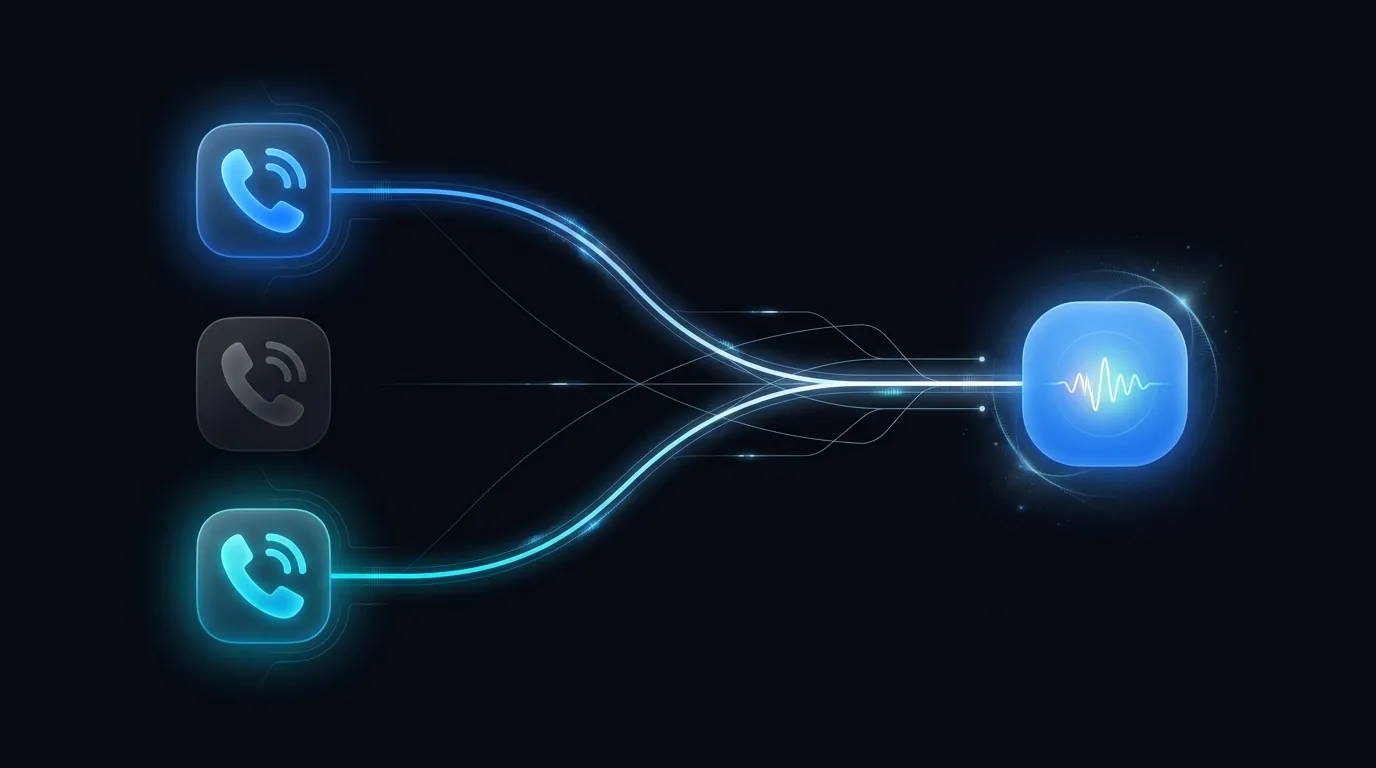
When the desk is empty or busy, overflow routing catches the call your team cannot reach.
What is overflow and after-hours call routing?
Overflow call routing sends ringing lines somewhere else when your team is busy or gone. Overflow means line three rings while lines one and two are already taken. After-hours means 6pm Friday, the receptionist has left, and the phone keeps going. The agent picks up both.
Picture a plumbing firm in Penrose. One person on the desk, three incoming lines. At 4.55pm two callers are already mid-conversation. The third caller hears ringing, then voicemail, then hangs up.
That third call was a hot-water cylinder job worth four hundred dollars. It is gone before anyone knew it existed.
Overflow cover sits behind your existing number. When a call is not answered in a set number of rings, it forwards to the agent. The caller never hears a dead line. They get a real conversation, a booking, or a message that lands in your inbox within seconds. It is the same idea we cover in our guide on the inbound calls your team keeps missing.
Why do missed overflow calls cost more than you think?
Missed calls cost more because the caller does not wait. Most people who hit voicemail just ring the next business on the list. One missed cylinder job at four hundred dollars a week is twenty thousand dollars a year walking out the door.
We pulled the numbers on a Dunedin property manager who logged 300 missed calls in a quarter. Most landed after 5pm or during the lunch rush. Each one was a tenant, a tradie, or a prospective landlord. You can read the full breakdown in our piece on the Dunedin property manager who lost 300 calls.
The hidden cost is not just the lost job. It is the reputation hit.
A clinic that never answers gets a one-star review about phone access. A trades firm that misses three calls a day looks understaffed to every caller. The phone is your front door. A locked front door at 6pm Friday tells people you are closed for good. Our look at cutting call abandonment shows how fast that damage adds up.
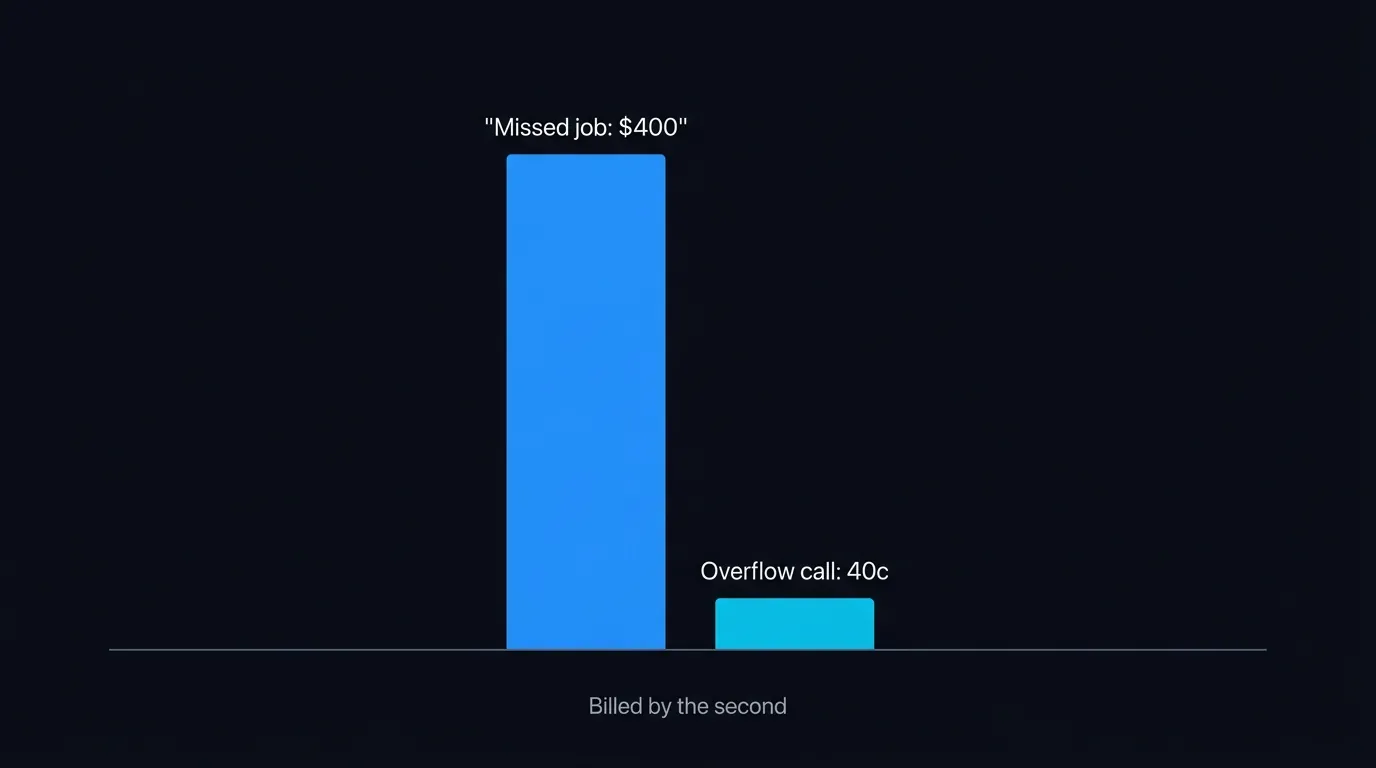
One missed job a week dwarfs the cents-per-call cost of catching it.
How does an AI agent catch the overflow calls your team cannot?
The agent answers every overflow call on the first ring, all at once. It does not get tired, it does not take a lunch break, and it handles ten simultaneous calls as easily as one. Your team keeps the calls they are already on. The agent takes the rest.
There is no queue and no hold music. When line three would have rung out, the agent is already talking. It greets the caller, discloses it is an AI, and gets to work. It can take a booking, answer the top five questions your business gets, or capture a clean message with name, number, and reason.
A mobile mechanic cannot answer mid-job under a bonnet. We wrote about an Auckland mechanic losing callers every afternoon because his hands were full. Overflow cover meant the bookings kept landing while he stayed on the tools. Same logic for a Hamilton home care provider fielding family calls during shift changes.
Stop letting the third line ring out.
See how overflow and after-hours cover slots behind your existing number on our page for teams drowning in inbound calls.
How does after-hours routing actually work with your existing line?
You keep your current number and add conditional call forwarding. When a call is not answered in three or four rings, your phone system forwards it to a dedicated line that reaches the agent. No new handsets, no rip-and-replace, no porting.
Most NZ and AU phone systems support this already. It is the same forward you would use to send calls to a mobile, pointed at the agent instead. We walk through the exact setup in our guide on forwarding calls to an AI agent. If you run a hosted phone system, the steps are even simpler, as our VoIP overflow walkthrough shows.
You set the rules. Forward only after hours. Forward only when busy. Forward everything.
A dental practice can forward 5pm to 8am and all weekend. A trades firm can forward only when the desk is already on a call. You decide what counts as overflow and when the night cover switches on.
Can it still book and warm-transfer urgent calls after hours?
Yes. After hours the agent still books appointments straight into your calendar and still routes genuine emergencies to a human on call. A burst pipe at 11pm does not wait until Monday. The agent recognises the urgent ones and warm-transfers them to whoever is rostered.
For routine calls it books the job for the next working day. For urgent calls it can ring your on-call mobile and hand over with context, so the human is not starting cold. The caller hears one continuous conversation, not a cold transfer to a confused phone.
This is where after-hours cover earns its keep. A property manager does not want a 2am call about a slow-draining sink. They do want the 2am call about water through the ceiling.
The agent triages the difference and only wakes the human when it matters. Our deeper look at after-hours phone cover for NZ teams covers the triage rules in detail. Every call still opens with a clear AI disclosure, in line with the Office of the Privacy Commissioner expectations and the OAIC privacy principles.
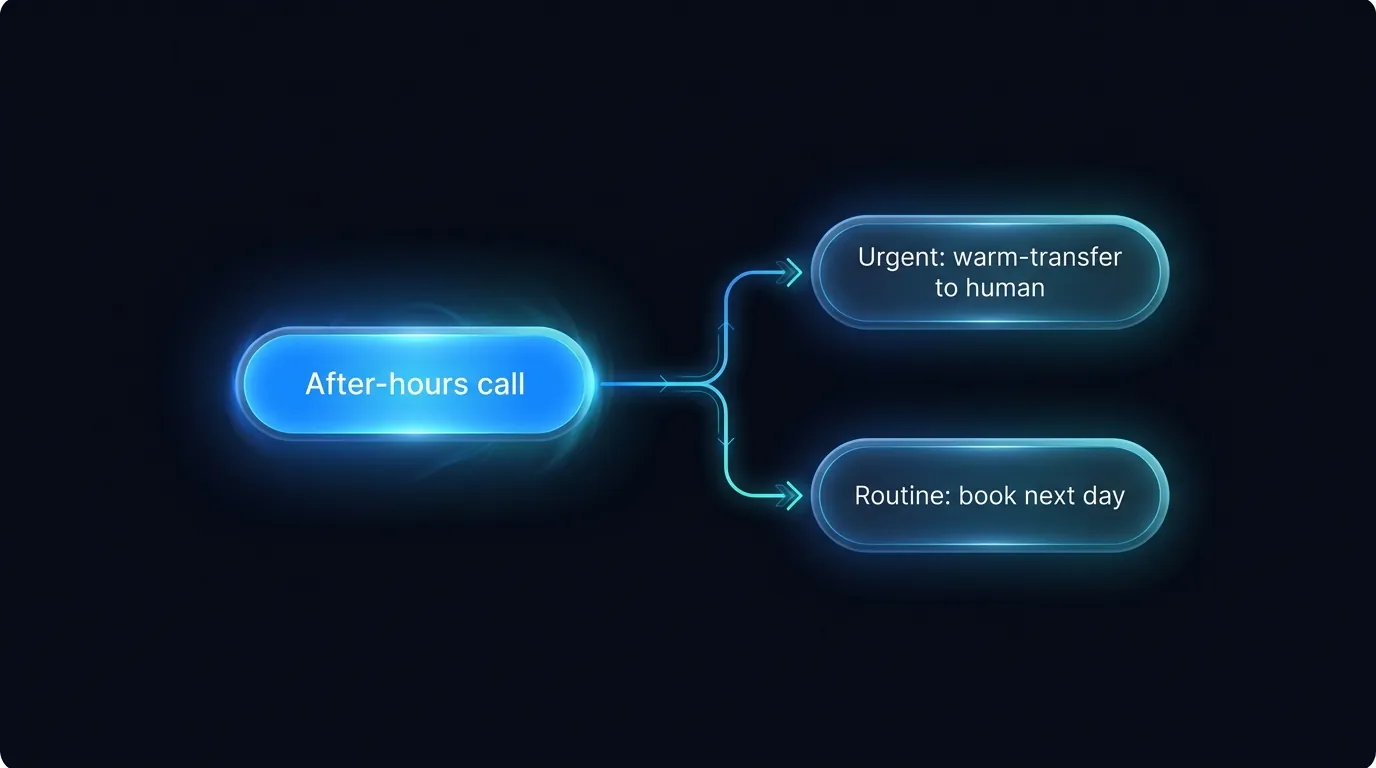
Urgent calls warm-transfer to a human; routine calls book for the next working day.
What does overflow cover cost compared with a night-shift hire?
Overflow cover is billed by the minute, not by the hour, so you pay for conversations not idle time. Calls run about 80 cents a minute. An answered overflow call averages around 30 seconds, so roughly 40 cents. A one to two minute booking costs about one to two dollars.
Compare that with a night-shift receptionist. A part-time NZ or AU receptionist runs 28 to 35 dollars an hour before KiwiSaver or super, ACC, and holiday pay. To cover 5pm to 8am you are paying for fifteen hours of someone sitting by a phone that rings four times. The agent costs you four bookings worth of minutes for the same window.
Overflow does not replace your day team. It catches the calls they cannot.
Take fifty after-hours calls a month with half as quick messages. Your monthly cost lands in the low tens of dollars, not the thousands a night shift would cost. The maths is not close.
How fast can you switch overflow cover on?
Fast. Most teams are live within a few days, and the phone-forwarding change itself takes about ten minutes. We set up the agent with your greeting, your booking rules, and your top questions. You add the conditional forward. Calls start getting caught the same day.
There is no hardware to install and no contract lock-in. You can run overflow cover for one busy month, then dial it back. You can start with after-hours only, see the bookings land, then add busy-line overflow once you trust it. Start small and expand when the numbers prove it.
Once it is live, watch the right numbers. Track answered rate, bookings made after hours, and the count of urgent calls warm-transferred. Our guide on the phone metrics worth tracking shows which numbers actually tell you it is working.
Catch the next 6pm Friday call.
Set up overflow and after-hours routing behind your existing line on our inbound call cover page.
Frequently Asked Questions
Will callers know they are talking to an AI?
Yes, and that is by design. The agent discloses it is an AI at the start of every call. New Zealand and Australian buyers respond well to a clear, fast AI that books the job, far better than to voicemail. Hiding it would breach trust and trip privacy expectations. Honesty up front is both the legal and the smart play.
Is my caller data safe and stored in Australia?
Your portal, call transcripts, and structured records sit on our Sydney servers. Live audio is processed offshore while the call is happening. We are honest about that split because pretending all data stays in Australia would be false. We align with the Australian Privacy Principles and New Zealand's Privacy Act 2020.
Does HIPAA apply if I run a clinic?
No. HIPAA is United States law and does not apply to New Zealand or Australian businesses. In New Zealand health data falls under the Health Information Privacy Code 2020. In Australia it sits under the Privacy Act 1988 and the Australian Privacy Principles. We handle health information under the rules that actually apply to you.
Can I forward only some calls and keep answering the rest?
Yes. Conditional forwarding lets you send only the overflow. Busy lines forward, the rest stay on your desk. You can forward after 5pm only, on weekends only, or whenever a line is already engaged. Your day team keeps every call it can handle, and the agent quietly catches the rest.
What happens to an urgent call at 2am?
The agent triages it. A genuine emergency gets warm-transferred to your on-call mobile with full context, so the human is briefed before they speak. A routine request gets booked for the next working day. You only get woken when something truly cannot wait, which keeps your roster sane.
How is this different from a normal answering service?
A traditional answering service takes a message and a human reads it back to you later. The agent books the job there and then, answers questions, and transfers the urgent ones live. It runs every line at once for cents per call, with no queue, no hold music, and no callback gap.
Want the fundamentals first? Read the full AI voice agent guide.
Leonardo Garcia-Curtis
Founder & CEO at Waboom AI. Building voice AI agents that convert.
Ready to Build Your AI Voice Agent?
Let's discuss how Waboom AI can help automate your customer conversations.
Book a Free Demo