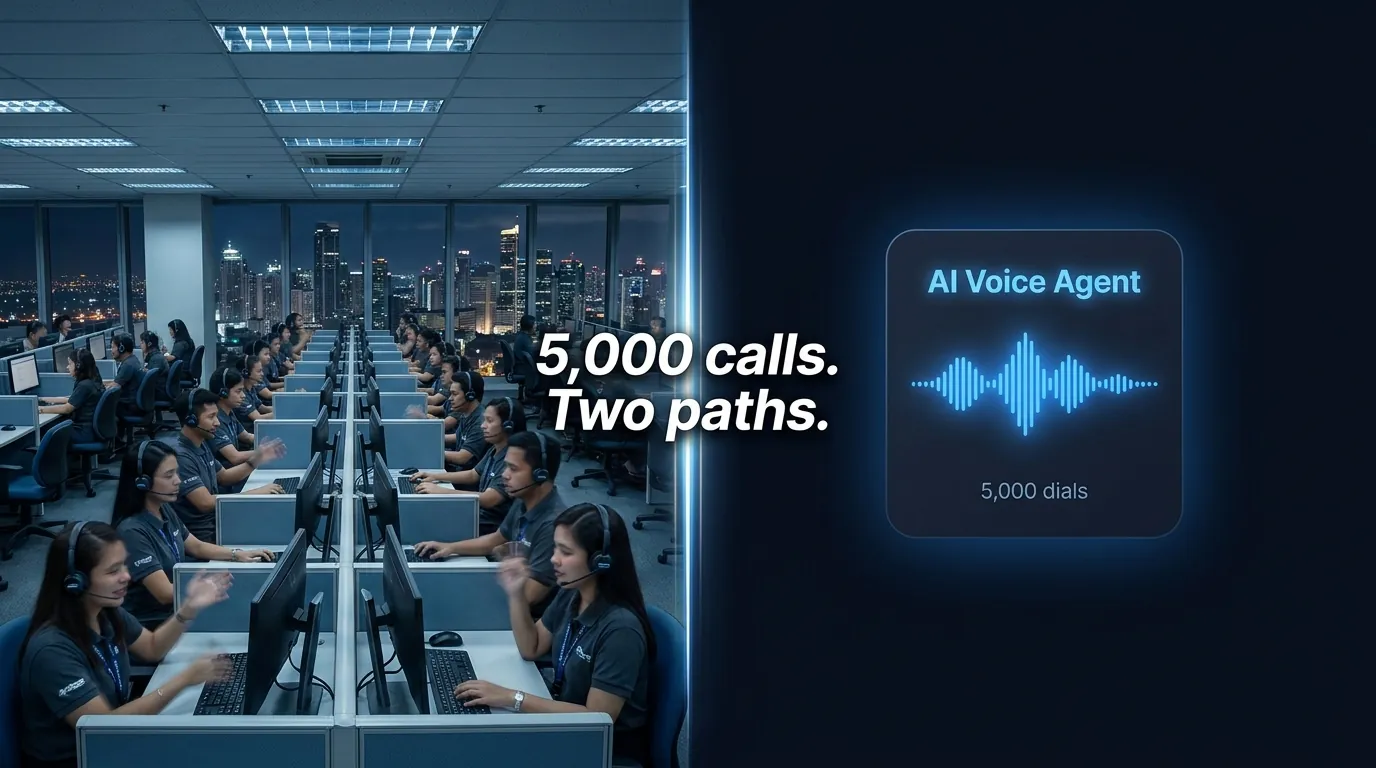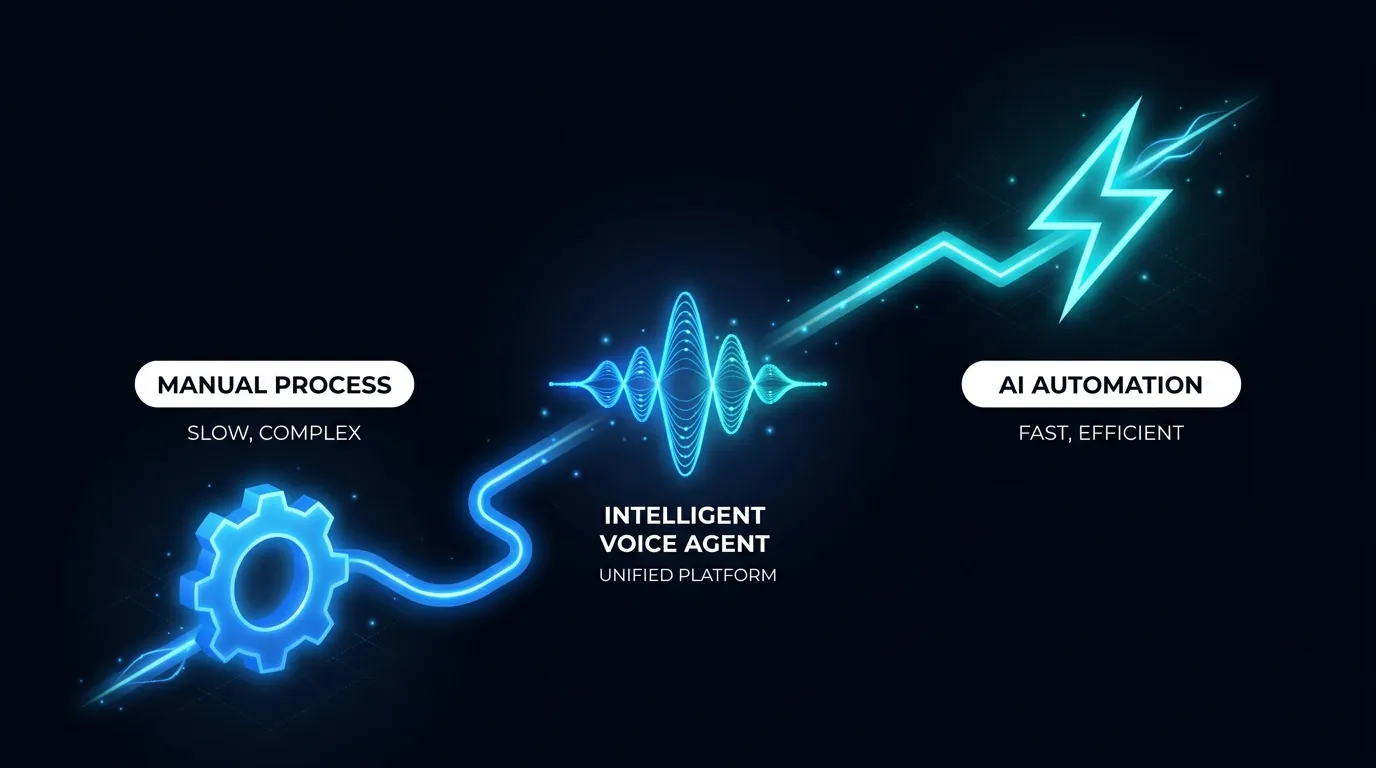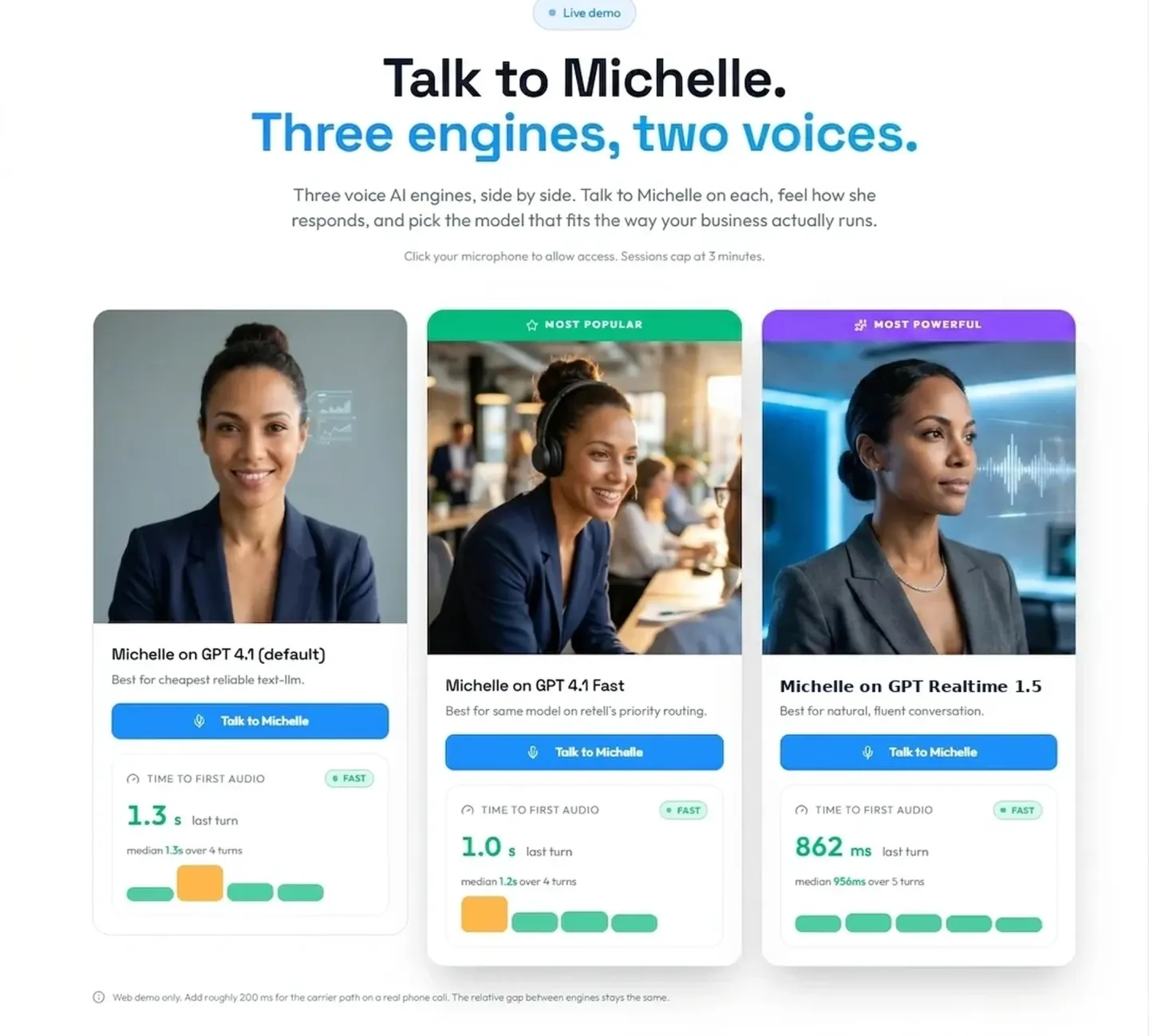
A call management solution decides what happens between a phone ringing and a conversation ending. It routes inbound calls on intent, runs outbound campaigns, and records every interaction. Increasingly it handles the whole conversation through an AI voice agent that qualifies, books, or resolves without a human picking up.
In 2026 the category sits in three distinct tiers. Each suits a different business size, budget, and call volume. Pick the wrong tier and you either pay for capacity you never use, or you miss calls your business cannot afford to lose.
The Categories
What are the three tiers of call management in 2026?
Tier one: enterprise contact centre platforms. Large, per seat platforms built for 50-plus agent operations, with workforce management, omnichannel routing, and deep compliance tooling. Pricing runs from roughly $70 to $240 per seat per month before add-ons.
Tier two: cloud phone systems. These blend voice with team messaging and CRM hooks for teams of five to fifty. Per seat pricing is lower, but you pay whether the seat takes a call or not.
Tier three: AI voice agents billed per minute. The agent answers, qualifies, books, or escalates. You pay only for active conversation time, with no idle seat cost. It answers in under a second and fires real actions mid-call.
The Maths
How do the pricing models compare?
The pricing model matters more than the feature list. Here is how the three approaches stack up on a realistic call volume.
| Pricing model | Best fit | What you pay per call |
|---|---|---|
| Per minute AI agent | Variable volume, AI-handled calls | Low. You pay only when talking |
| Per seat platform | 50-plus agents, omnichannel | Fixed monthly regardless of volume |
| Per seat cloud phone | 5 to 50 seat sales or support teams | Fixed monthly per person |
$0.43 a dial. $2.31 for a conversation that counts.
Most dials cost cents and never reach a person. The $2.31 is what each real conversation works out to once the whole campaign is loaded in, and those are the calls that book the meeting or surface the seller. Sydney 90-day run: 10,713 dials became 1,997 real conversations and 141 warm sellers for AU$4,617 all in. A human handling one call costs $3 to $7 whether it connects or not, and a per seat platform charges the same fee whether the calls happen at all.
For seasonal businesses, after hours coverage, or outbound campaigns that run in bursts, the per minute model removes the cost floor entirely. See the full NZ and AU AI voice agent pricing breakdown for a detailed comparison across call volumes.
The Difference
What does an AI voice agent do that a phone system cannot?
A traditional phone system routes a call. An AI voice agent runs the conversation. That is the core difference.
The agent listens, understands intent, asks follow-up questions, and acts. It books meetings into a calendar, sends confirmation SMS messages, looks up stock levels, and updates CRM records before the customer hangs up. Read how mid-call functions work in practice.
When the call needs a human, the agent transfers it warm. The caller's name, reason for calling, and gathered information arrive with the transfer. Your team picks up already briefed, with no repeat explanations from the caller.
The knowledge base is live, not cached. Edit a document and the next call reads the updated version immediately. Add your website as a source and it re-crawls on a regular schedule. APIs let you push new files or URLs the moment a product launches. See how fast knowledge base updates land on live calls.
The Fit
Is an AI voice agent right for a business under 50 staff?
For most NZ and Australian businesses under 50 staff, the economics work clearly. The per seat model charges you for eight hours of availability per agent per day. An AI agent runs around the clock, answers in under a second, and costs only when it is talking.
A Hamilton home care agency lost an estimated $641,000 per year in after hours enquiries that rang out unanswered. An Auckland mobile mechanic missed 463 after hours calls in a year. An Auckland hotel recorded 47% more after hours bookings after deploying an after hours agent.

Read the Hamilton home care story, the Auckland mechanic case, and the Auckland hotel result. If your business takes inbound enquiries, an AI voice agent covers the gap a per seat platform leaves open.
The Numbers
What should you measure to know your call management is working?
Platform marketing talks about features. Your business needs numbers. The metrics that matter are connect rate, conversation rate (calls lasting 30 seconds or longer), warm transfer rate, and cost per outcome.
Waboom AI's Sydney 90-day campaign logged 10,713 dials and a 33.7% human pickup rate. The conversation rate hit 18.6%, the warm transfer rate reached 7.1% of those conversations, and 141 leads transferred in total. The whole run cost AU$4,617, so the average dial came in at $0.43 and each real conversation at $2.31. Plenty of those dials hit voicemail or a dead line and cost next to nothing. The $2.31 is the price of the conversations that actually moved a deal.
For inbound, track call abandonment rate, after hours answer rate, and resolution without transfer rate. A Dunedin property manager logged 300 missed calls per month before deploying an agent.
See the full KPI framework for AI receptionists and the outbound campaign KPIs to know which numbers to watch at 30, 60, and 90 days.

The Setup
What does a Waboom AI agent setup look like?
Waboom AI is a done-for-you platform, so you do not build from scratch. Waboom AI sets up your agent, configures the knowledge base, connects your calendar or CRM, and runs war-testing before the agent goes live. See how battle-testing works before launch.
Your portal gives you one place to run voice agents and web chat agents. Each agent has its own persona and its own knowledge base. You can run three or more agents from the same interface: one for inbound enquiries, one for outbound campaigns, one as an after hours receptionist.
The web chat agent embeds on your site via a single script tag. It runs the same knowledge base as your voice agent, so answers stay consistent across both channels. Read more about AI web chat agents.
On security, toll fraud protection runs by default. That means public-key authentication on web widgets, invisible human verification, caps on simultaneous calls, region restrictions, and spike monitoring. Every call includes AI disclosure, and Do Not Call suppression stays active across campaigns.
On data residency, portal data, transcripts, and audit logs sit in Sydney. Live audio, recordings, and model inference run offshore, and Waboom AI does not claim all data stays in Australia. Full detail in the toll fraud prevention guide and the NZ Privacy Act guide for AI voice agents.
Want to see which tier fits your call volume?
A 15 minute demo on your own numbers shows you exactly what a per minute AI agent would cost against your current per seat spend.
Frequently Asked Questions
What is the difference between a call management solution and an AI voice agent?
A call management solution is the broad category: anything that handles what happens to a phone call, from basic routing to full AI conversation. An AI voice agent is a specific type of call management tool that holds the conversation itself, without a human agent. It listens, responds, acts, and transfers when needed.
Is a per minute AI agent cheaper than a per seat platform for small businesses?
For most NZ and Australian businesses under 50 staff, yes. Per seat platforms charge a fixed monthly fee whether the seat handles calls or not. Per minute AI agents charge only for active conversation time. Waboom AI's Sydney campaign ran at $0.43 a dial, and most dials cost cents because they never reach a person. Each real conversation worked out to $2.31 once the full run was loaded in, still well under the $3 to $7 a human desk spends on a single call. A per seat model cannot match that at variable volumes.
Can an AI voice agent handle after hours calls without any human involvement?
Yes. The agent answers, gathers information, books appointments, sends confirmations, and logs outcomes without a human present. If a call genuinely needs a person, it captures details and queues a callback or sends an alert. An Auckland boutique hotel recorded 47% more after hours bookings after deploying an after hours agent.
How quickly can a Waboom AI agent learn about a product update or price change?
Immediately. Edit the document in the knowledge base and the next call reads the updated version. There is no overnight rebuild cycle. APIs let you push new files or URLs the moment a product launches, and your website source re-crawls on a regular schedule.
Do AI voice agents work for outbound campaigns, or only inbound calls?
Both. Waboom AI runs inbound agents (receptionists, after hours, overflow) and outbound campaigns (lead qualification, appointment booking, database reactivation). The portal tracks connect rate, conversation rate, warm transfer rate, and cost per outcome for outbound campaigns in real time.
What makes a voice agent built for NZ and AU different from a generic platform?
Accent, vocabulary, and local knowledge make the difference. A generic platform trained on US or UK data mispronounces NZ place names and uses unfamiliar phrasing. Waboom AI builds agents with native NZ and AU accents, handles Te Reo Maori greetings and place names correctly, and optimises for local business context. Read why a generic accent leaks trust on NZ calls.
New to the space? Start with our full guide to AI voice agents.
Leonardo Garcia-Curtis
Founder & CEO at Waboom AI. Building voice AI agents that convert.
Ready to Build Your AI Voice Agent?
Let's discuss how Waboom AI can help automate your customer conversations.
Book a Free Demo