
A warm transfer is when our agent stays on the line and briefs a human before the call is handed over. The caller never repeats themselves. The human picks up already knowing the name, the reason for the call, and what was promised.
That sounds small. It is not.
A cold transfer dumps a caller onto a stranger with no context. They start from scratch. They get annoyed, and some hang up.
We built warm transfer into every Waboom AI agent because the handoff is where most phone systems lose people. This is how it works.
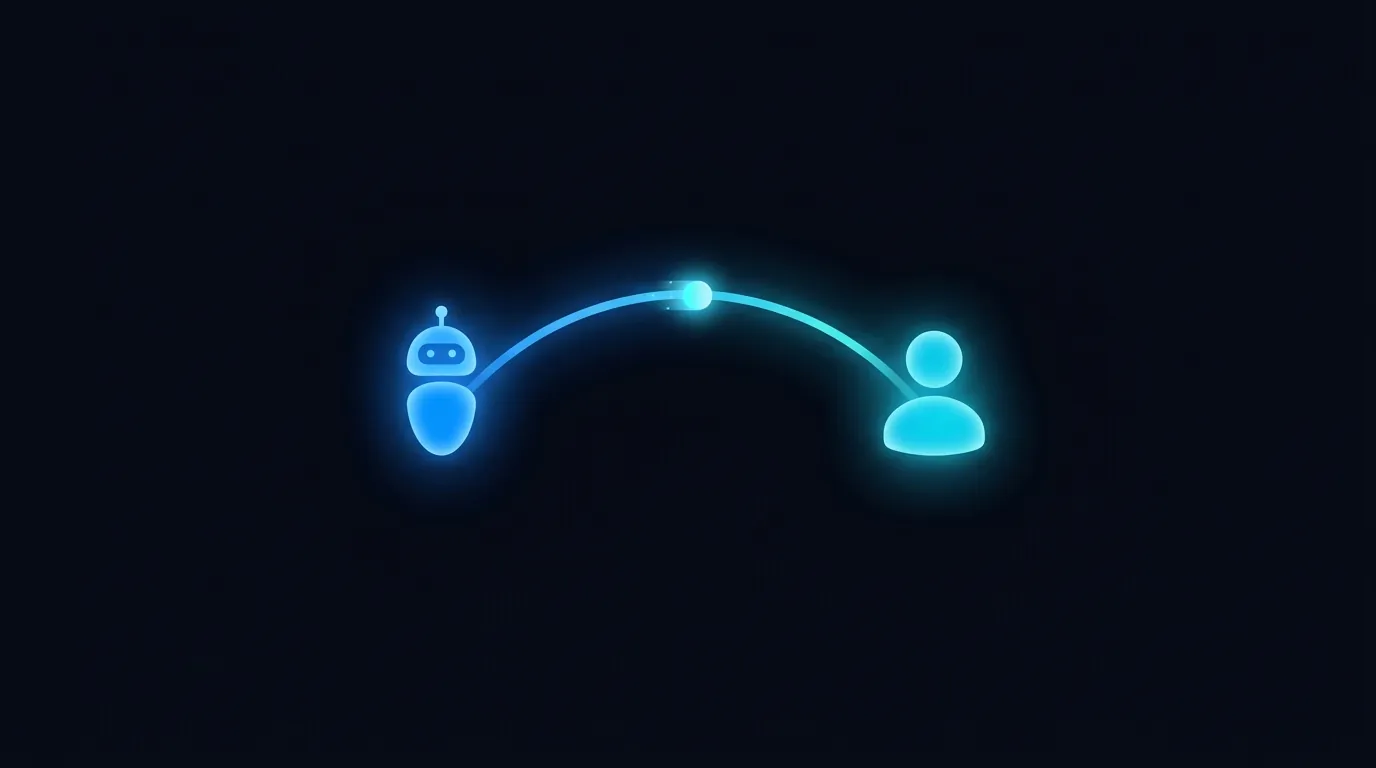
A warm transfer carries the caller and their context across to a human in one smooth move.
What is a warm transfer on an AI voice call?
A warm transfer is a hand-off where the agent passes the live call to a human with the full context attached, so the caller never repeats their name or their reason for calling. The human hears a one-line brief first. Then they take the call already up to speed.
Picture a Hamilton plumbing office. A caller wants an urgent quote for a burst pipe. The agent gathers the address, the problem, and the budget in 40 seconds.
Then it transfers to the on-call plumber with all of that attached. The plumber answers and says the caller's name first. No "how can I help you" again. That is the whole point.
Why do cold transfers lose callers?
Cold transfers lose callers because the human starts blind. The caller has to re-explain everything they just said. Repeated information sits among the top frustrations in contact-centre churn. People hang up rather than tell the story twice.
Think about your own experience on a phone tree. You give your details to one person. Then you get bounced, and the next person asks for the same details.
By the third time most people are done. A 1 to 2 minute call costs about 1 to 2 dollars on our platform, billed by the second at around 80 cents a minute. A dropped caller costs you the whole job. The maths is not close.
How does the agent pass the full context to a human?
The agent packages everything it captured during the call and delivers it to the human two ways at once. First, a spoken one-line brief while the caller waits on hold. Second, a written summary on screen with the name, number, intent, and any details collected.
So the human gets the story by ear and by eye. They can scan the screen while the agent talks. By the time they say hello they already know who is calling and why.
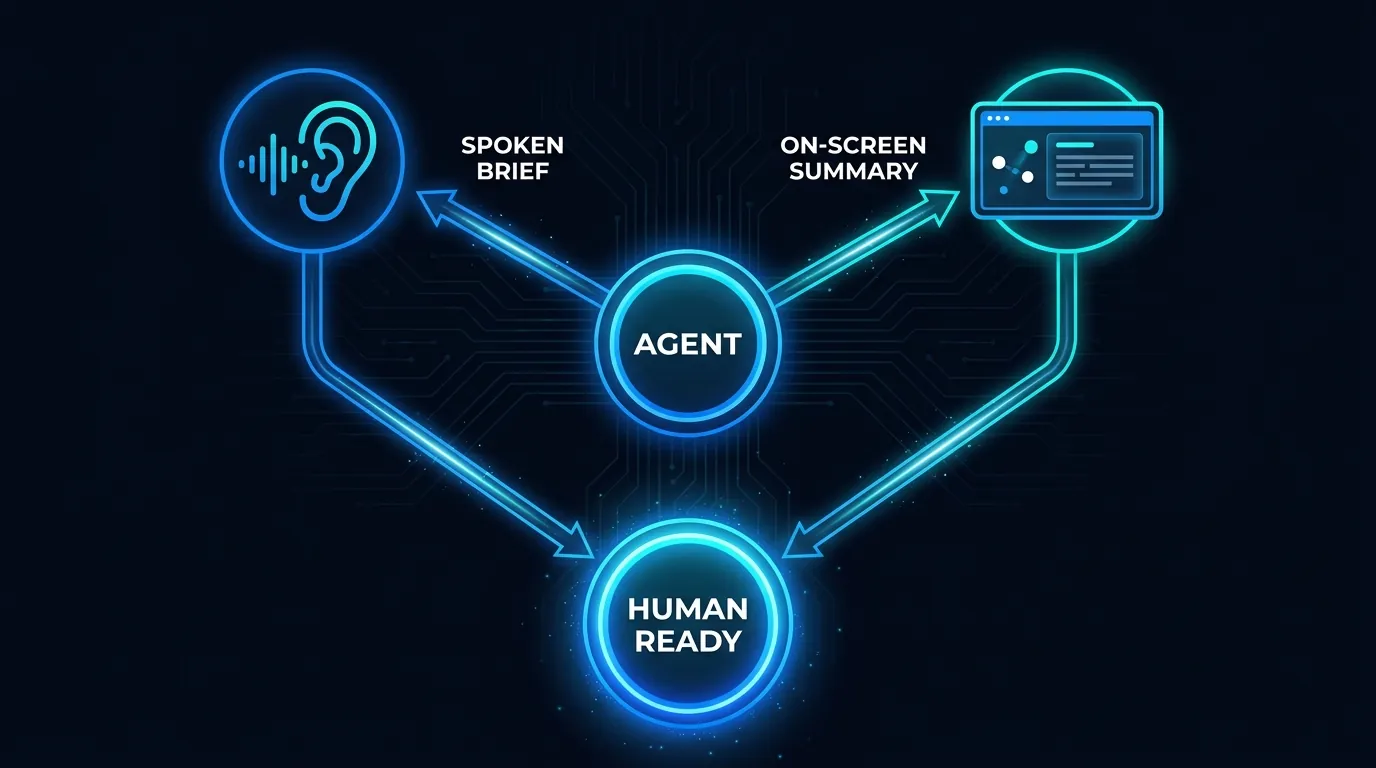
The agent briefs the human by ear and on screen at the same time.
This is the same context-preservation engine we describe in how we move a call between agents without losing context. The principle is identical whether the next link is a bot or a person.
When should a call be warm-transferred?
A call should be warm-transferred when it crosses a line the agent should not handle alone. Pricing negotiation, a complaint, a medical or legal question, or a caller who simply asks for a person. The agent knows the boundary and hands over.
For everything else the agent finishes the job itself. Most routine calls never need a human. We cover that split in our piece on how many calls an agent resolves on its own.
The decision is rules-based, not a guess. You set the triggers, and the agent follows the path you drew, which we explain in how the agent chooses a route mid-call.
A warm transfer is not a failure. It is the agent doing the right thing at the right moment. Humans still matter, as we argue in why voice agents still need people.
See a warm transfer happen on your own calls.
Book a quick demo and watch the handoff in action on our AI voice agents page.
How fast is an AI voice agent warm transfer?
The handoff takes a few seconds. The agent reaches the human, delivers the spoken brief, and connects the caller. The caller hears a short hold, usually under ten seconds, then a human voice. No long silence, no dropped line.
Because the brief is one line, the human is ready almost instantly. They are not reading a long file. They get the headline and the call.
Compare that to a manual transfer where a receptionist explains the caller out loud while the caller waits and listens. That is slow and awkward. Our agent does it cleaner and quicker.
Does the caller notice the transfer?
The caller notices that they are being put through to a person, because we tell them. Every Waboom AI agent discloses it is an AI, and it says when it is connecting you to a human. What the caller does not notice is any loss of information. They never repeat themselves.
So the experience feels smooth, not robotic. "I'll put you through to Sarah now, she has all your details." Then Sarah picks up and uses the name. The seam disappears.
Honesty is part of the design. The agent tells callers it is an AI on every call. That builds trust rather than tricking anyone.
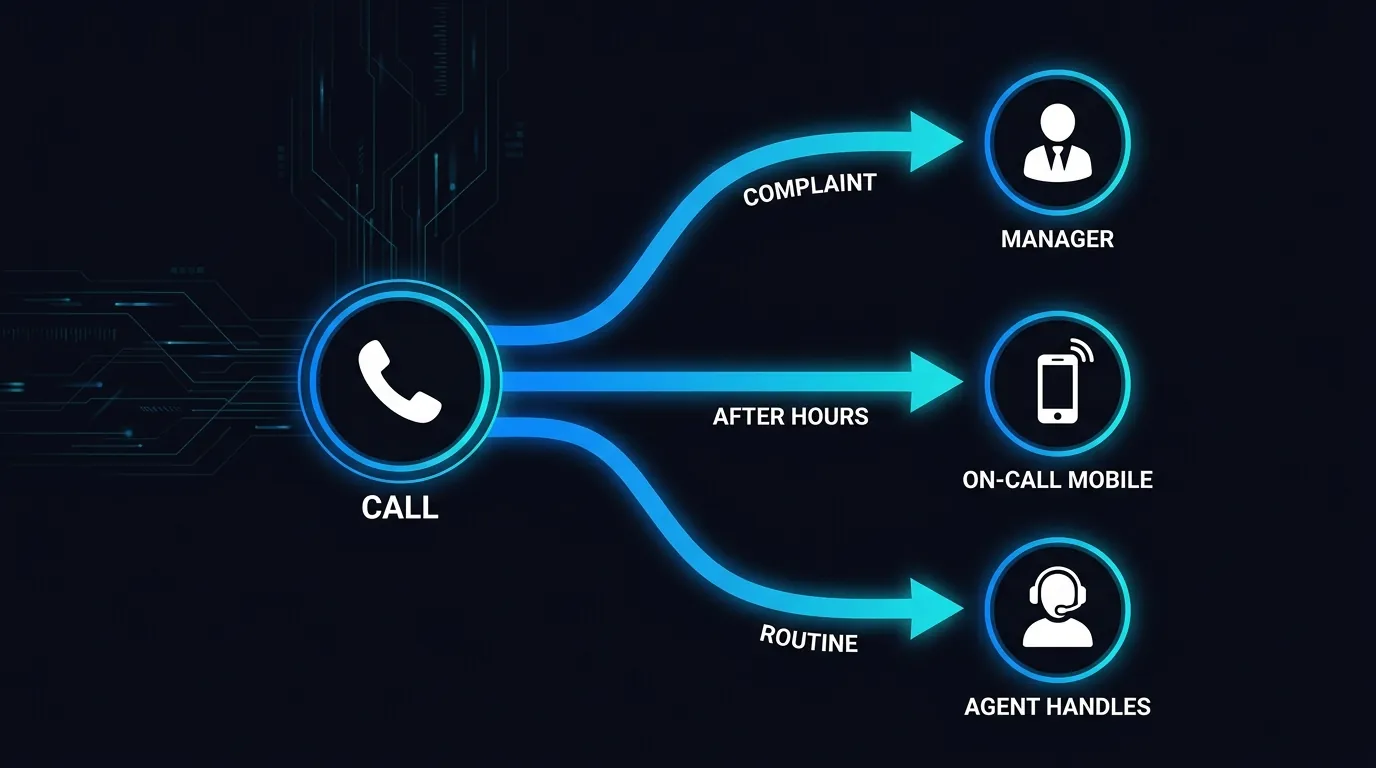
You decide which calls reach a human, by topic, time, or who is on call.
How do you set the transfer rules?
You set the transfer rules in plain language when we configure your agent. You tell us which situations need a human, which number to ring, and what the human should hear in the brief. We turn that into the agent's logic.
You can route by topic, by time of day, or by who is on call. A complaint goes to the manager. After-hours urgent jobs go to the on-call mobile, and everything else the agent handles.
Want the full walkthrough of a single call? Read what an AI voice agent does on a call. Warm transfer is one moment inside that flow.
What about my callers' data and privacy?
Your structured records, transcripts, and call summaries live on our servers in Sydney. Live audio is processed offshore under documented arrangements with our voice infrastructure partner. We do not claim all data stays in Australia, because that would not be true.
In New Zealand we work to the Privacy Act 2020 and the Office of the Privacy Commissioner. In Australia we work to the Privacy Act 1988, the 13 Australian Privacy Principles, and the OAIC. The agent discloses it is an AI on every call.
So the warm transfer never leaks context to the wrong place. The brief goes to your chosen human and the record sits in your account.
See warm transfer working on your own calls.
A short demo shows the full handoff with your scripts and your team on our AI voice agents page.
Frequently Asked Questions
What is the difference between a warm transfer and a cold transfer?
A warm transfer hands the call over with the full context attached, so the human starts informed. A cold transfer drops the caller onto a stranger who knows nothing. With a warm transfer the caller never repeats their name or reason. With a cold transfer they tell the story again.
Will the caller know they spoke to an AI before the transfer?
Yes. Every Waboom AI agent discloses it is an AI at the start of the call. When it transfers, it tells the caller it is connecting them to a person. We never pretend the agent is human. Honesty on every call is part of how we keep trust with your customers.
How long does an AI voice agent warm transfer take?
A few seconds. The agent reaches your human, gives a one-line spoken brief, and connects the caller. The hold is usually under ten seconds. Because the brief is short, the human is ready almost instantly and answers using the caller's name.
Can I control which calls get transferred to a human?
Yes. You set the rules in plain language. Route by topic, time of day, or who is on call. Complaints to the manager, after-hours urgent jobs to a mobile, everything else handled by the agent. We build your logic and you can change it any time.
Where is my call data stored after a transfer?
Your transcripts, summaries, and structured records sit on our Sydney servers. Live audio is processed offshore under documented arrangements with our voice infrastructure partner. We follow the NZ Privacy Act 2020 and the OPC, plus the Australian Privacy Act 1988 and the 13 Australian Privacy Principles.
Does a warm transfer cost more than a normal call?
No extra fee for the transfer itself. You pay for talk time at about 80 cents a minute, billed by the second. A 1 to 2 minute call runs about 1 to 2 dollars. The few seconds of handoff are part of that, not a separate charge.
Leonardo Garcia-Curtis
Founder & CEO at Waboom AI. Building voice AI agents that convert.
Ready to Build Your AI Voice Agent?
Let's discuss how Waboom AI can help automate your customer conversations.
Book a Free Demo

