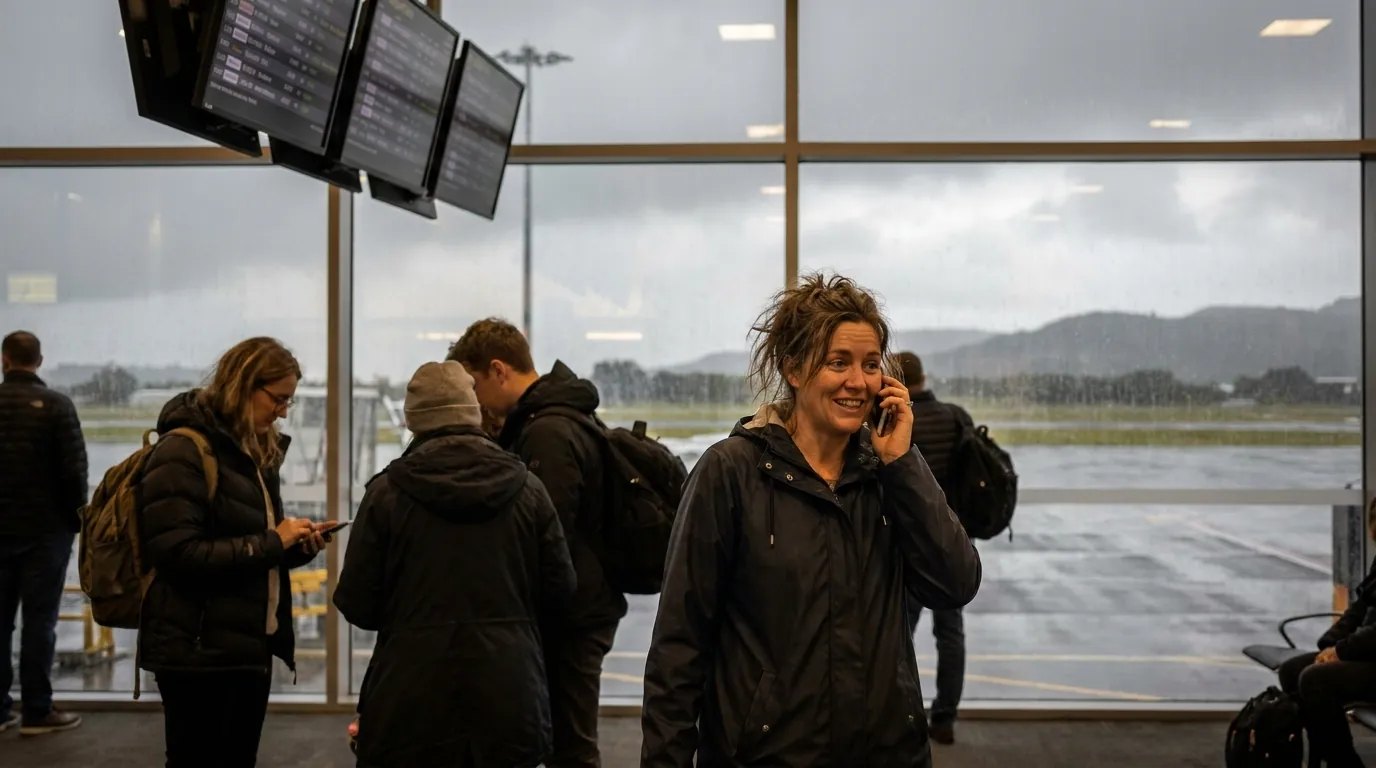
Your customer rings. The voice agent answers in a chirpy American accent.
"Hi! How can I help you today?"
Your customer pauses for half a second.
The half-second is the problem.
That tiny hesitation is the customer's nervous system asking: "Is this place mine?"
For your generic American voice on your NZ customer base, the answer comes back: "No. Not for me."
They'll still book. They'll still buy.
But you've leaked a tiny bit of trust on call one. Across thousands of calls a month, that tiny leak is a flood.
The pattern: persona is the thing your customer feels before they think
This is Playbook 4 from the voice agent column we have been running.
Five playbooks beyond the AI receptionist. This one's the one most operators in your space don't even know is a knob they can turn.
Three layers your voice agent needs to get right for a NZ customer base:
The voice itself. Accent, tone, cadence. The thing your customer feels in the first second.
The pronunciation. Place names, Māori words, customer names. The thing they notice when you get it wrong.
The persona. The name your agent goes by. The personality. The way it picks up the phone.
Most agents get one of three. The good ones get two. The ones your competitors are quietly shipping get all three.
Same agent. Same minute pricing. Same 800ms first-token reply. New trust.
Layer 1: The voice itself
Hunter Douglas runs Buddy in Australia. Archie in the UK. Same engine, different persona per market. Conversion lifts when your customer hears their own accent.
Why? Because the customer's nervous system relaxes when they hear a familiar voice.
You can't argue your way past a nervous system. You can only meet it.
Want the Tauranga DTC e-commerce version? Meet Tane.
Tane is your Kiwi-accented voice agent. He doesn't sound like he's reading from a script. He sounds like the kid working the till at Mount Hot Pools on a Saturday.
Customer rings about a returns query. Tane picks up.
"Hey there, you're through to Tane at Bay Beach Boards. How can I help out?"
Customer relaxes. Half-second hesitation? Gone.
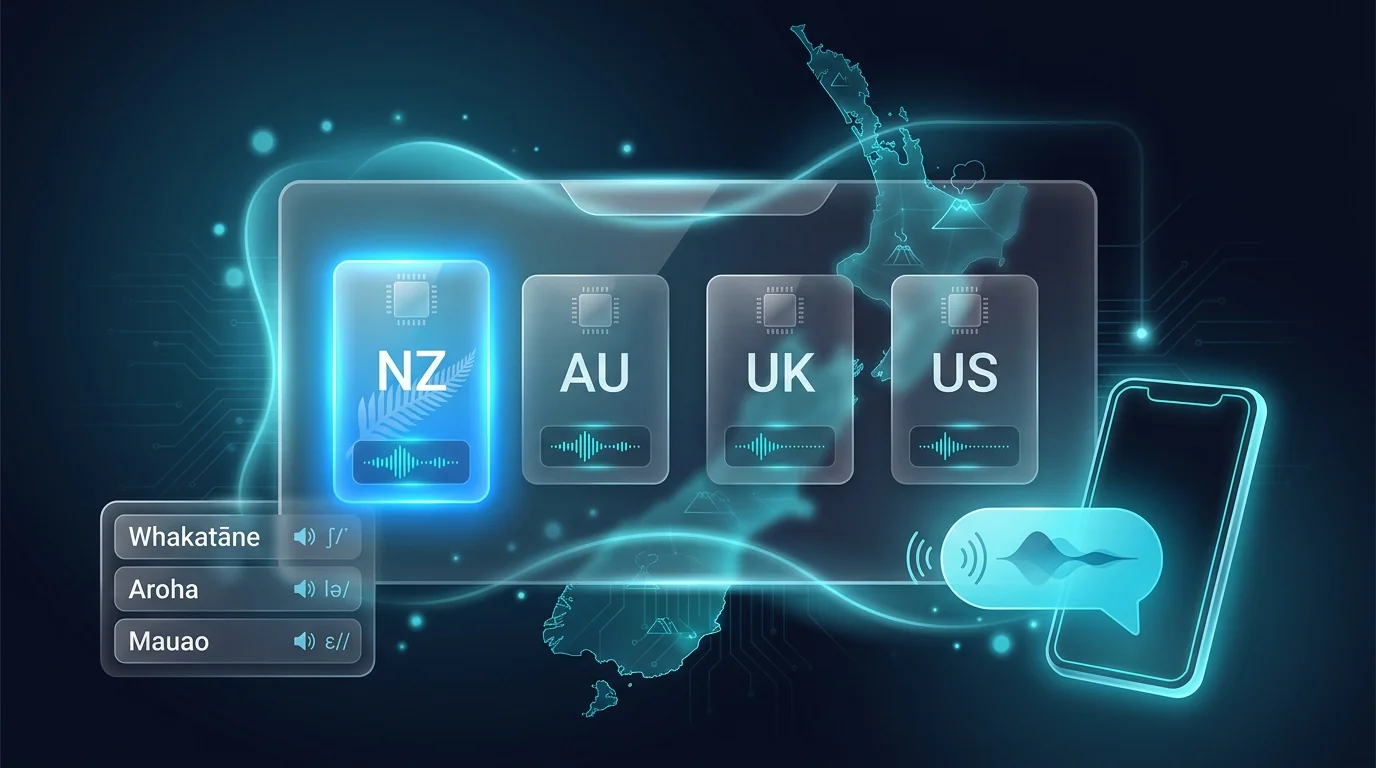
The technical part is choosing the right voice from your provider's library. Most modern voice providers stock 20+ English accents. Aussie, Brit, American (north and south), Indian, NZ. The NZ option exists. Most operators don't pick it because they've never been told it matters.
(I've sat with an operator who picked a US voice "because it sounded more professional". Three months later he switched to a Kiwi voice.
His call-completion rate jumped 14%. Same script. Same agent. Different accent.)
Layer 2: The pronunciation
The voice gets you the first second. Pronunciation gets you the rest of the call.
Most agents butcher Māori place names. Aroha becomes "Uh-roh-ha". Whakatāne becomes "Wha-ka-tane" with the wrong stress. Mauao becomes "May-ow-oh".
Each butchered word is a flag for your customer that you don't really know where they live.
We've already written about why this matters and how to fix it. The full breakdown is in the AI voice agent pronunciation dictionary.
The short version: every NZ voice agent needs a pronunciation dictionary. Te reo Māori words, suburb names, business names, customer names that don't follow English phonetics.
Want a few that come up on every NZ deployment?
Whakatāne. Te Awamutu. Ōtorohanga.
Tauranga (most American voices stress the wrong syllable). Pāpāmoa. Whangārei.
Plus your customer names. Aroha. Te Aroha.
Tāne. Hineahuone. Atawhai.
Get these right and your customer feels seen. Get them wrong and they feel like they're talking to a call centre in Manila.
Layer 3: The persona
The persona is the agent's identity. The name. The tone. The way it opens the call.
Hunter Douglas's Buddy is more casual than Archie. Why? Because Australian customers expect more casual. UK customers expect more polished.
Same engine. Different persona per market.
Want the Tauranga version? Tane opens with "Hey there", not "Good morning, how may I assist you today".
Want the Christchurch private hospital version? Meet Aroha. She opens with "Kia ora, this is Aroha from Forte Health. How are you doing today?"
Different audience. Different persona. Same voice agent under the hood.
The persona has three components you need to write down before you ship:
The name. Single word, easy to pronounce, fits the audience.
The opener. Five words max. Sets the tone for the whole call.
The disposition handlers. How does the agent respond to a happy customer?
An upset one? A confused one? Each persona handles these differently.
Get these wrong and your customer hears a script. Get them right and they hear a person.
Honest moment: when localisation goes wrong
Me: "What's the worst persona failure you've shipped?"
Builder: "Forced too much Kiwi slang into the script. Agent kept saying 'sweet as' on every other turn. Customers found it grating."
Me: "How did you fix it?"
Builder: "Cut the slang back to one or two natural moments per call. Sounded like a person again. Stopped sounding like a tourist trying to fit in."
The pattern: persona is a knob you tune, not a costume you wear.
Don't force a persona to match a stereotype your audience would find embarrassing. The Tauranga DTC operator doesn't need Tane to say "chur" every other sentence. Tane needs to know the difference between Bay of Plenty and Bay of Islands. That's the lift.
(Forced cultural matching reads worse than a generic American voice. The middle ground is genuine local fluency without performing it.)
Layer 4 (the bonus): mid-call cultural awareness
The agent that knows your customer's home town picks up subtle cues a generic voice misses.
Customer rings from Tauranga to a Hamilton mortgage broker. Agent says, "Ah Tauranga, hope you're not stuck on the Tauranga Eastern Link this morning."
Customer chuckles. The trust calibration just shifted. The agent isn't generic. The agent is part of the same world.
This isn't pre-scripted. It's a feature of the voice provider's prompt context. You feed the agent local knowledge (suburbs, landmarks, common references) and let it weave them in naturally.
(Most operators skip this because it sounds like over-engineering. Then they wonder why their conversion rate sits at 31% when their competitor's at 47%.)
Your localisation checklist
Five questions before you ship:
Then two more:
If you can answer all five, you're ready to ship.
If you can't yet, your agent is leaking trust on every call. Quietly. The lift is sitting on the table.
Pick the layer your customers feel first
Three layers (four with bonus). One pattern.
Same engine that picks up your missed call at 9pm. Same minute pricing. Different feeling.
The competitors who deploy this in your suburb are quietly building trust your generic voice agent never will. Your customers don't tell you why they switched. They just stop ringing.
Pick the layer your customers feel first. Wire the voice. Add the dictionary. Test the persona on 60 calls before you scale. Playbook 5 will cover why.
Then watch the next caller relax in the first half-second.
Far out, that's a long article. Pick one layer. Ship one experiment.
Want help picking the voice, building the pronunciation dictionary, or wiring a persona that actually fits your customers? Spend 25 minutes with me. We'll pick the layer your customers feel first.
Book a slot here and check our pricing first.
For context on the wider category, see how AI voice agents work for local businesses.
Leonardo Garcia-Curtis
Founder & CEO at Waboom AI. Building voice AI agents that convert.
Ready to Build Your AI Voice Agent?
Let's discuss how Waboom AI can help automate your customer conversations.
Book a Free Demo