
It is 38 degrees in Brisbane and your phone has not stopped since 7am. Three techs are on roofs. Nobody is at the desk.
An AI voice agent for HVAC picks up every one of those calls. It answers on the first ring, triages the emergency from the routine, and books the job straight into your diary. No voicemail. No lost customer ringing the next mob.
We build these for heating and cooling businesses across New Zealand and Australia. The pattern is the same in Auckland or Adelaide. The agent does not replace your sparkies or your office manager. It catches the calls they physically cannot reach during a spike.
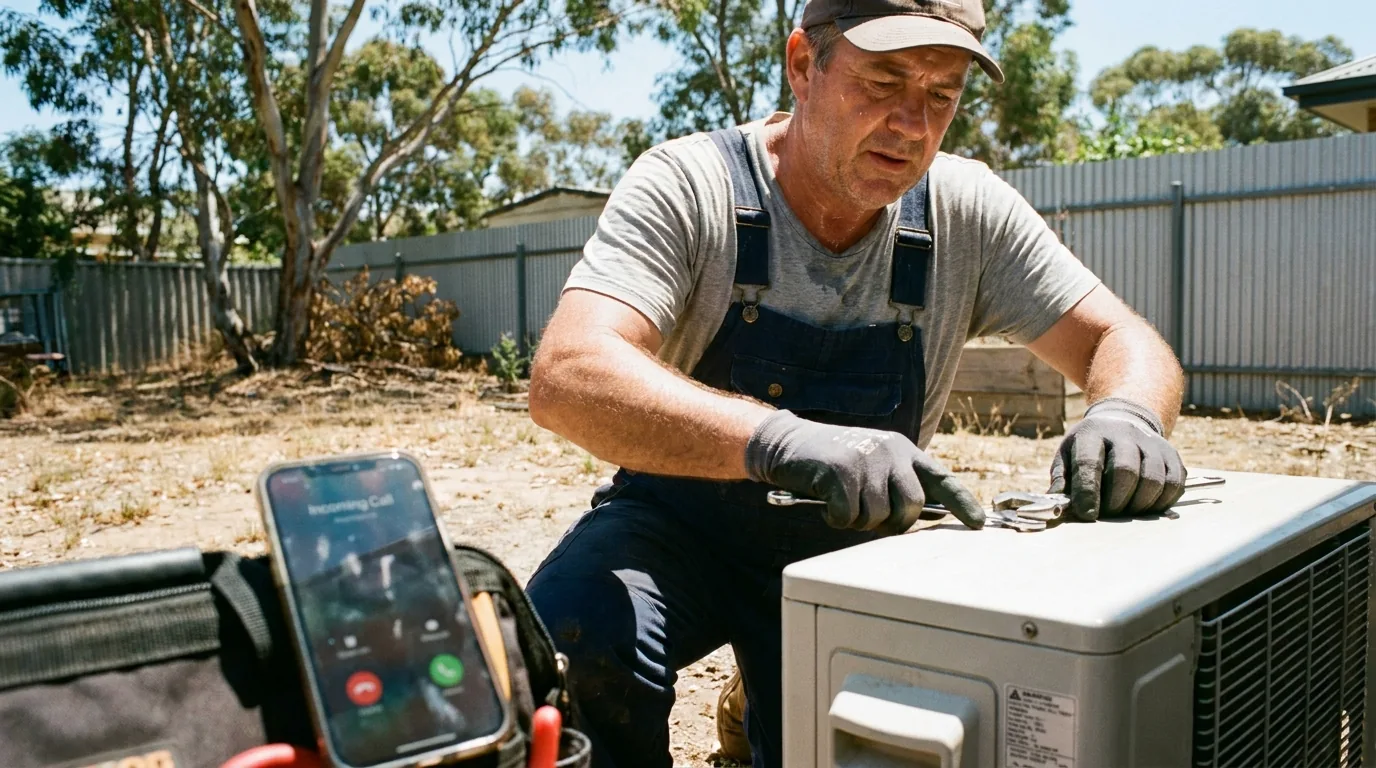
When every line lights up and the team is on roofs, the agent answers the call your desk cannot.
What does an AI voice agent do for an HVAC business?
It answers your phone, works out how urgent the job is, and books it into your schedule. It runs around the clock, handles 10 callers at once, and writes every detail back to your system. During a heatwave it absorbs the call flood your team cannot touch while they are up a ladder.
Think about the gap a missed call leaves. A homeowner with a dead air-con rings, gets voicemail, and hangs up.
Eight seconds later they ring your competitor. That job is gone, and you never even knew the phone rang.
The agent closes that gap. It picks up in under a second, every time, even when all 4 lines light up at once.
For the full picture and local pricing, see our AI voice agent for HVAC hub. The fit changes by job type, not by city.
Why does seasonal demand break your phone line?
Because your call volume can triple in a week while your headcount stays flat. A cold snap or a heatwave sends every second household reaching for the phone. One receptionist cannot answer four lines at once, so calls drop and revenue walks.
Picture the first 35 degree day of summer. Calls land faster than anyone can pick up.
Your office manager is already on a call. The other three lines ring out.
By lunchtime you have missed 40 calls. At an average job value of a few hundred dollars, that is real money gone to whoever answered first.
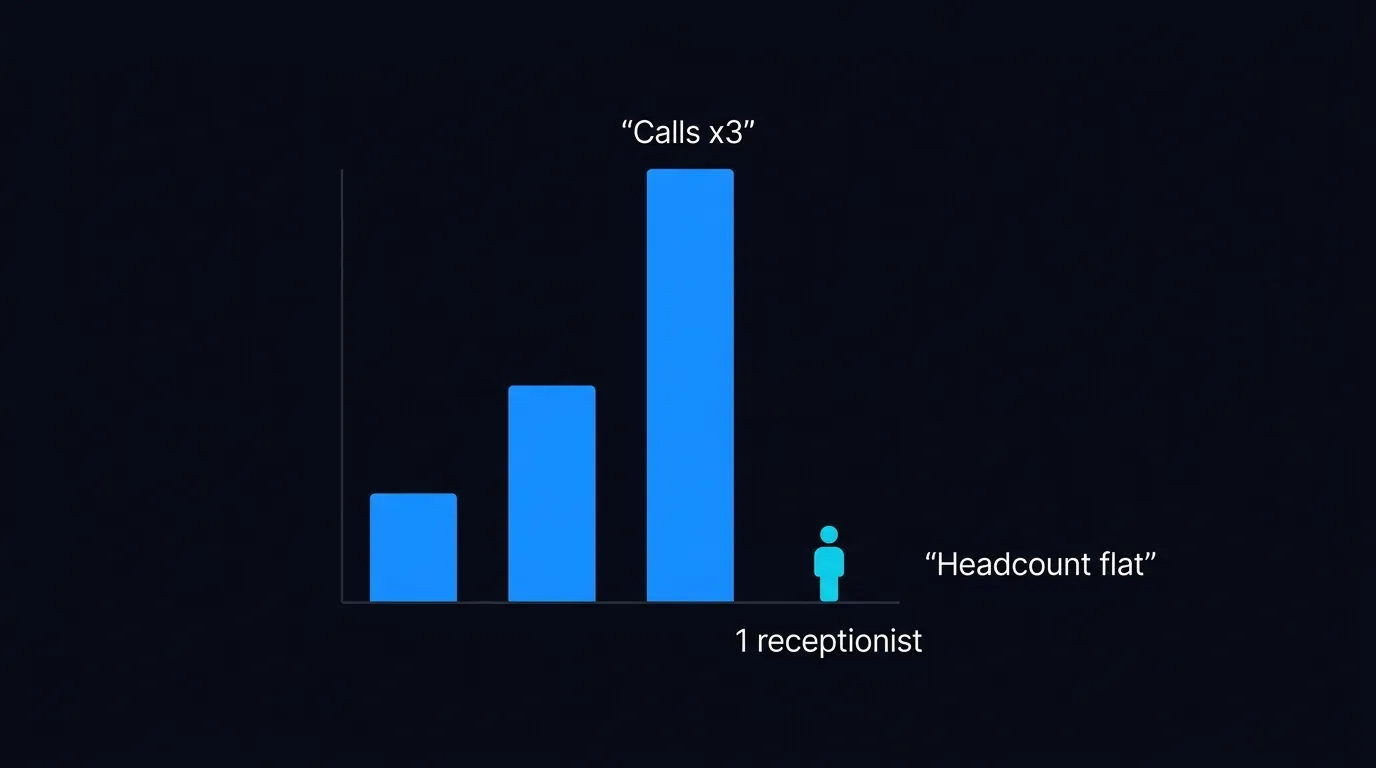
Call volume triples in a week but your headcount stays flat, so the overflow drops to voicemail.
The agent does not get overwhelmed. It takes the fourth and fortieth caller as calmly as the first. To see what those dropped calls cost you, read our piece on cutting call abandonment with a voice agent.
How does it triage urgent versus routine jobs?
It asks a few quick questions, then sorts the no-heat emergency from the routine service. The agent listens for the words that matter, like no cooling, gas smell, or elderly resident. It flags the genuine emergency for same-day dispatch and parks the routine tune-up into a normal slot.
So a 2pm call from a family with a newborn and no heating jumps the queue. A call about an annual filter clean books two weeks out.
Your techs stop driving across town for the wrong priority. The urgent jobs get reached while they still matter.
Every caller hears upfront that they are speaking with an AI. We disclose it on every call, in New Zealand and Australia. People respect the honesty, and it sets clear expectations before the triage starts.
For how the booking logic works end to end, read our guide on AI receptionist appointment booking. The triage rules are yours to set.
How does it book and dispatch during a spike?
It checks your live diary, offers the caller a real slot, and writes the booking back instantly. No double-booking. No paper notes lost on a van seat. The agent sees the same calendar your team sees and books straight into it.
A one to two minute booking call costs about one to two dollars. Compare that to a part-time receptionist at 28 to 35 dollars an hour before KiwiSaver or super, ACC, and holiday pay.
The agent captures the address, the fault, and the access notes. Your tech rolls up knowing the gate code and the dog is friendly.
Losing jobs to voicemail every heatwave?
See how the agent fits your heating and cooling business on the AI voice agent for HVAC hub, with local pricing and setup steps.
It writes all of this back into your scheduling system the moment the call ends. For the mechanics of that, see our guide on AI voice agent CRM integration. Clean data in means the right tech, on the right job, first time.
How does it cover after-hours callouts?
It answers nights and weekends, triages the emergency, and either books it or pages your on-call tech. Most HVAC emergencies do not wait for business hours. A burst pipe on a Sunday or a dead heater at 10pm still needs answering, and the agent never sleeps.
So the Saturday night no-heat call gets caught. The agent confirms it is genuine, takes the address, and texts your on-call tech with the details.
The routine queries get logged for Monday. Your tech only gets woken for jobs that are actually worth the callout fee.
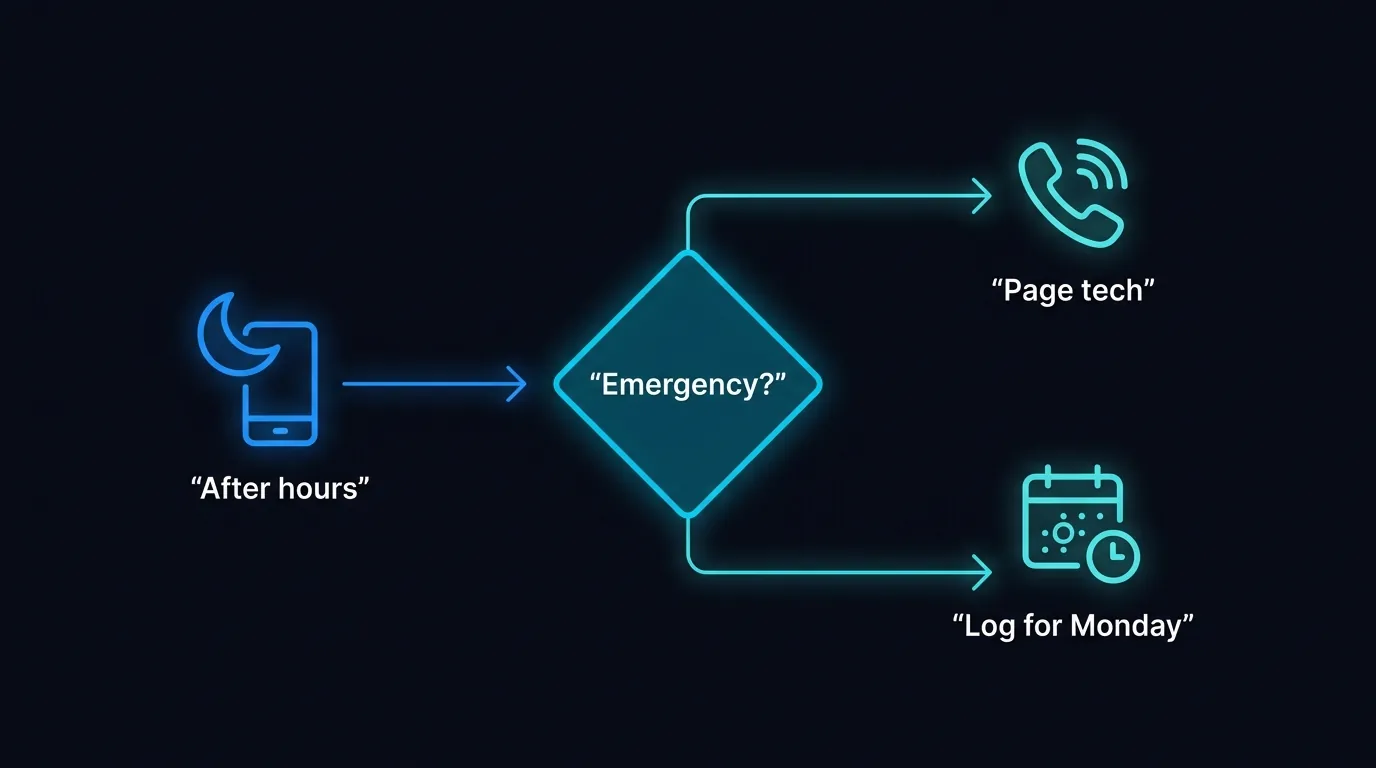
Nights and weekends, the agent confirms the real emergency and pages your on-call tech with the address.
For more on this, read our piece on the after-hours receptionist. The agent turns your dead hours into booked work.
What does the busy-season overflow cost?
About 80 cents per minute in NZD or AUD, billed by the second, with no salary and no idle time. Most answered calls run about 30 seconds, near 40 cents. A full one to two minute booking call costs roughly one to two dollars.
Run the numbers across a peak week. If the agent handles 200 overflow calls, most short, you are looking at low hundreds of dollars total.
Set that against a part-time receptionist at 28 to 35 dollars an hour before on-costs. Or against the jobs you lose to voicemail at your busiest moment.
There is no overtime, no sick leave, and no idle pay between calls. You pay for talk time, not for a chair sitting empty in the off-season. For a full breakdown, see our guide on how much an AI receptionist costs.
How fast can it go live before peak season?
Most HVAC agents go live in days, not months. We load your services, your pricing rules, and your triage logic, then connect your diary. You forward your overflow or after-hours line to it, and it starts taking calls.
You do not change your number. You forward calls to the agent only when you want to, like nights, weekends, or when every line is busy.
So you can switch it on before the first heatwave and leave your main line untouched. For how forwarding works, see our guide on forwarding calls to an AI receptionist.
The agent still hands the tricky calls to a human. It books the standard jobs and routes anything odd to your team. For where that line sits, read our piece on why voice AI agents still need humans. And if you are sizing this for inbound, our AI receptionist for inbound calls page has the wider context.
On data and privacy, here is the honest split. Your transcripts and structured booking records sit on Sydney servers. Live audio is processed offshore under documented arrangements with our voice infrastructure partner. Recordings can be deleted in 10 minutes on request.
We follow the NZ Privacy Act 2020 and the Office of the Privacy Commissioner. We also meet the AU Privacy Act 1988 and its 13 Australian Privacy Principles under the OAIC. For the detail, read our guide on NZ Privacy Act compliance for voice agents. Fewer details captured than your old paper job sheet, stored more safely.
Want every heatwave call answered and booked?
We build the agent around your services, your diary, and your triage rules. Start on the AI voice agent for HVAC hub for local pricing and a go-live plan.
Frequently Asked Questions
What does an AI voice agent for HVAC actually handle?
It answers every call, triages urgent from routine, books the job into your diary, and writes the details back to your system. It runs day and night and takes 10 callers at once. During a heatwave it absorbs the overflow your team cannot reach while they are up a ladder.
Can it tell a real emergency from a routine service call?
Yes. It asks a few quick questions and listens for the words that matter, like no cooling, no heat, or gas smell. A genuine emergency gets flagged for same-day dispatch. A routine tune-up books into a normal slot, so your techs reach the urgent jobs first.
What does it cost during a busy week?
About 80 cents per minute in NZD or AUD, billed by the second. A short answered call is near 40 cents. A one to two minute booking call is about one to two dollars. Handle 200 overflow calls in a peak week and you are looking at low hundreds of dollars, with no salary or idle time.
Does it work after hours and on weekends?
Yes. It answers nights and weekends, confirms a genuine emergency, and either books it or texts your on-call tech with the address and fault. Routine queries get logged for the next working day, so your tech is only woken for callouts that are worth the fee.
Will customers know they are talking to an AI?
Yes, on every call, in both New Zealand and Australia. We disclose it upfront because honesty builds trust and sets clear expectations. Your transcripts sit on Sydney servers under the NZ Privacy Act 2020 and the AU Privacy Act 1988, with deletion available in 10 minutes.
How long until it is taking calls before peak season?
Most agents go live in days, not months. We load your services, pricing, and triage rules, connect your diary, and you forward your overflow or after-hours line. Your main number stays the same, so you can switch it on before the first heatwave with no disruption.
Leonardo Garcia-Curtis
Founder & CEO at Waboom AI. Building voice AI agents that convert.
Ready to Build Your AI Voice Agent?
Let's discuss how Waboom AI can help automate your customer conversations.
Book a Free Demo

