
It is Saturday morning. A first-home buyer in Hamilton has a pre-approval question. She rings three mortgage brokers off a Google search. The first call rings out to voicemail. The second goes to an after-hours service that takes a message. The third answers in two rings, asks her name, her deposit, her timeline, and books her in for Monday.
She books the broker who answered. The other two never knew she called.
That third broker did not answer the phone. An AI voice agent did. It handled the loan enquiry, qualified her on the call, and warm-transferred the booking under Privacy Act consent. This is what an AI voice agent for mortgage brokers does in practice. Here is how it works for a NZ or AU brokerage, line by line, with the real numbers.
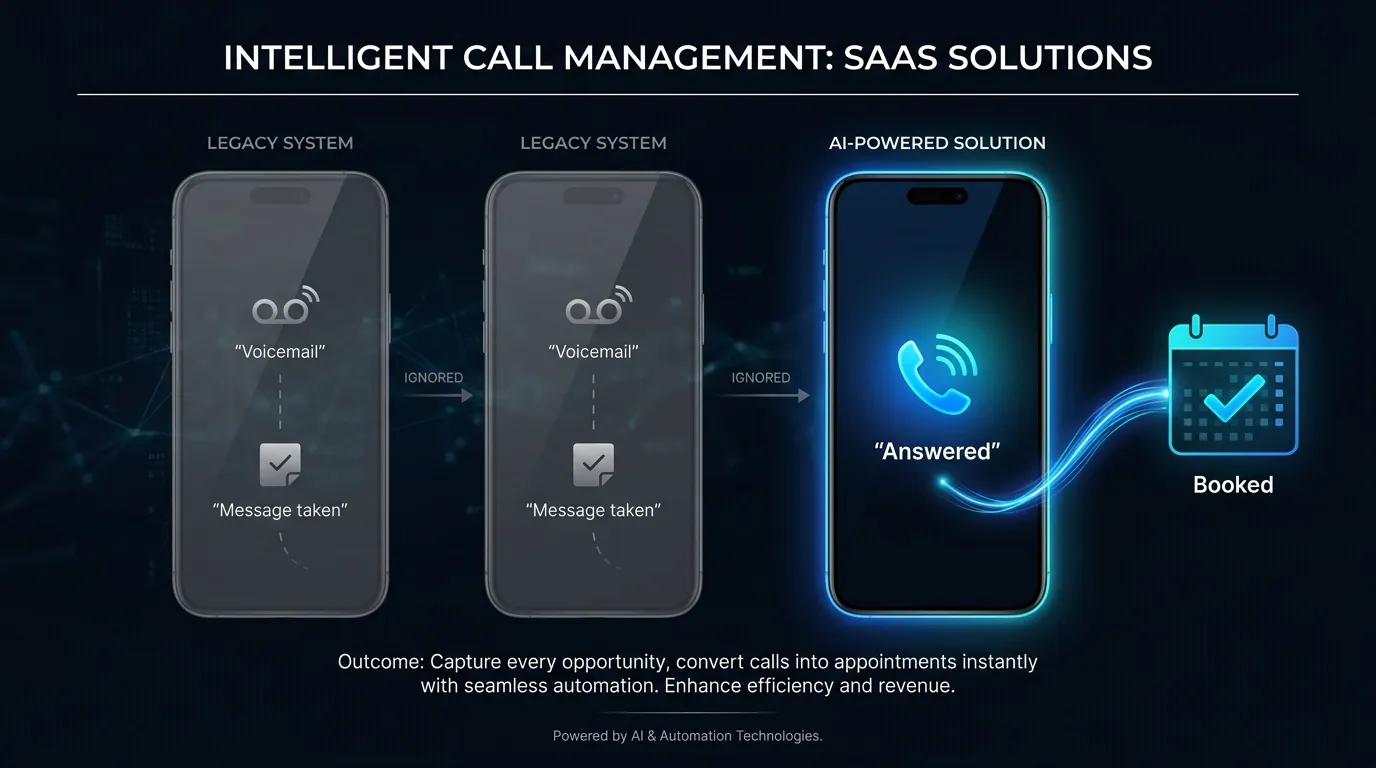
Three brokers, one Saturday caller: she books whoever answers first.
What does an AI voice agent do for a mortgage or finance broker?
An AI voice agent for mortgage brokers answers every enquiry call, qualifies the borrower, and books or warm-transfers the ones worth your time. It runs day and night for about 80 cents a minute. A 30-second enquiry costs about 40 cents. You stop losing the Saturday caller who picks whoever answers first.
Picture your week. You are in a signing when three calls land. Two ring out. One leaves a vague voicemail you return on Tuesday, by which time the borrower has gone elsewhere.
The agent takes all three. It greets each caller, discloses that they are speaking with an AI, and asks the questions you would ask. Loan type, rough deposit, property timeline, employment.
Then it sorts them. The ready borrower gets warm-transferred or booked. The not-yet borrower gets logged with a callback note. You wake up to a clean list, not a missed-call screen. Want it tuned to your loan book? Start with our AI voice agent for NZ mortgage brokers.
Why does speed to first response win the deal?
Speed wins because borrowers ring more than one broker and book whoever answers first. A first-home buyer with a Saturday question does not wait. She works down her search results until a human, or an agent, picks up. The broker who responds in two rings books the meeting. The one who calls back Monday is too late.
We have watched this in real call data. On outbound follow-up, connect rates run 47 to 65 percent, and the gap between an instant response and a next-day callback is the whole deal.
Think about the borrower's state of mind. She has summoned the courage to ask about a mortgage. That window is open for minutes, not days.
A voicemail closes that window. A live, qualified conversation keeps it open and moves her forward. For the wider follow-up case, see our piece on following up hot leads in seconds.
How does it qualify a borrower enquiry on the call?
It asks a short, scripted set of questions and scores the answers against your rules. Loan purpose, deposit size, income type, property stage, and timeline. In under a minute it knows whether the caller is a Monday-ready borrower or a six-months-away nurture. No detail gets lost.
Let me walk one call. A caller says she has a 12 percent deposit, a permanent job, and an offer going in next week.
The agent captures each answer as structured data, not a fuzzy voicemail. It tags her as ready, high intent, time-sensitive. That tag is what triggers the warm transfer.
Now a second caller. Self-employed, no deposit yet, just curious about rates. The agent stays warm, logs the detail, and books a callback for later. You decide the rules once, the agent applies them every call.
A 1 to 2 minute qualifying call costs about $1 to $2. Compare that to your hourly rate spent on a caller who was never going to proceed.
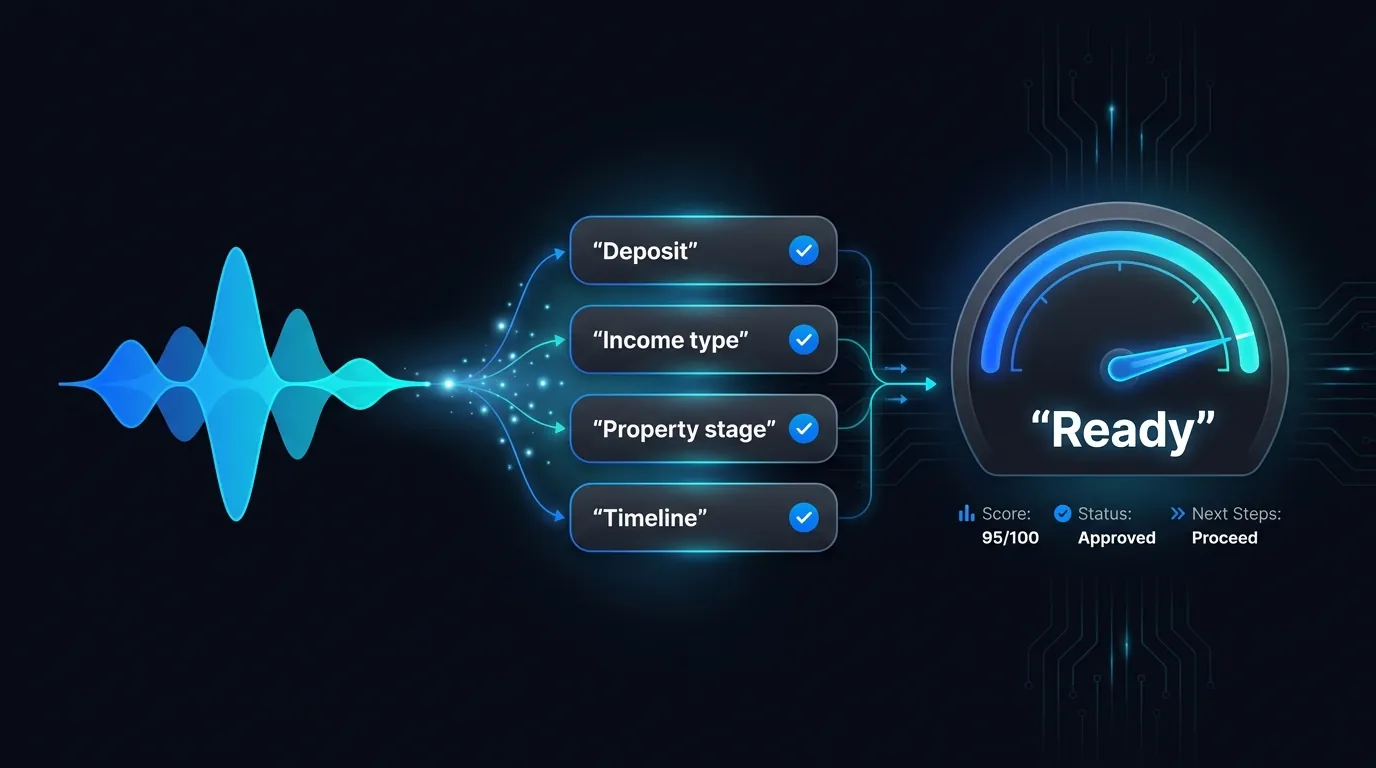
Each answer becomes a structured field, scored against your qualifying rules in under a minute.
Stop losing the Saturday caller.
See exactly how the agent qualifies and books your loan enquiries on our AI voice agent for AU mortgage brokers page.
How does it warm-transfer a qualified borrower to you?
When a borrower clears your bar, the agent calls your line, briefs you in a sentence, then connects the caller. You pick up already knowing her name, her deposit, and her timeline. No cold "who is this". The borrower never repeats herself, and the handover feels like one smooth call.
Here is the sequence. The agent finishes qualifying. It flags her as ready. It dials you with the context attached.
You hear a quick summary first. "First-home buyer, 12 percent deposit, offer next week, wants pre-approval." Then she is on the line. You start where she left off.
If you are mid-meeting, the transfer falls back to a booked slot instead. Nobody gets dumped to voicemail. For the mechanics of context-rich handovers, read our explainer on warm transfers that preserve full context.
How does it handle financial data under the Privacy Act?
It collects only what you need, discloses the AI up front, and stores the record on our Sydney servers. The NZ Privacy Act 2020 and the Australian Privacy Principles govern financial data, and the agent is built to meet cross-border accountability requirements. Live audio is processed offshore for the seconds a call runs. The durable record stays in Sydney.
Be clear on the honest split. Your portal, transcripts, and structured call records sit on our Sydney servers. The live voice processing happens offshore while the call is connected.
That matters for a broker because deposit figures and income details are sensitive. The agent discloses on every call that the caller is speaking with an AI. Consent to collect is captured, not assumed.
We never claim all data stays in one country. No voice AI works that way today. For the NZ detail, see our NZ Privacy Act 2020 compliance guide.
Can it book the appointment and write to your CRM?
Yes. The agent books straight into your calendar and writes the full call record to your CRM. Name, phone, loan type, deposit, timeline, and the transcript all land as structured fields. You open Monday to qualified borrowers already in your pipeline, not a stack of message slips to re-key.
No double handling. The caller picks a slot, the agent confirms it, and the booking appears in your calendar with the qualifying notes attached.
Your CRM gets the same data. Lead source, loan purpose, deposit band, the lot. For the integration detail, see our guide on connecting your voice agent to your CRM.
This is the part that compounds. Every call becomes a clean record you can search, report on, and follow up. The booking flow mirrors what we cover in AI receptionist appointment booking. Brokers who also write insurance can lean on the same pattern we describe for an insurance broker voice agent.
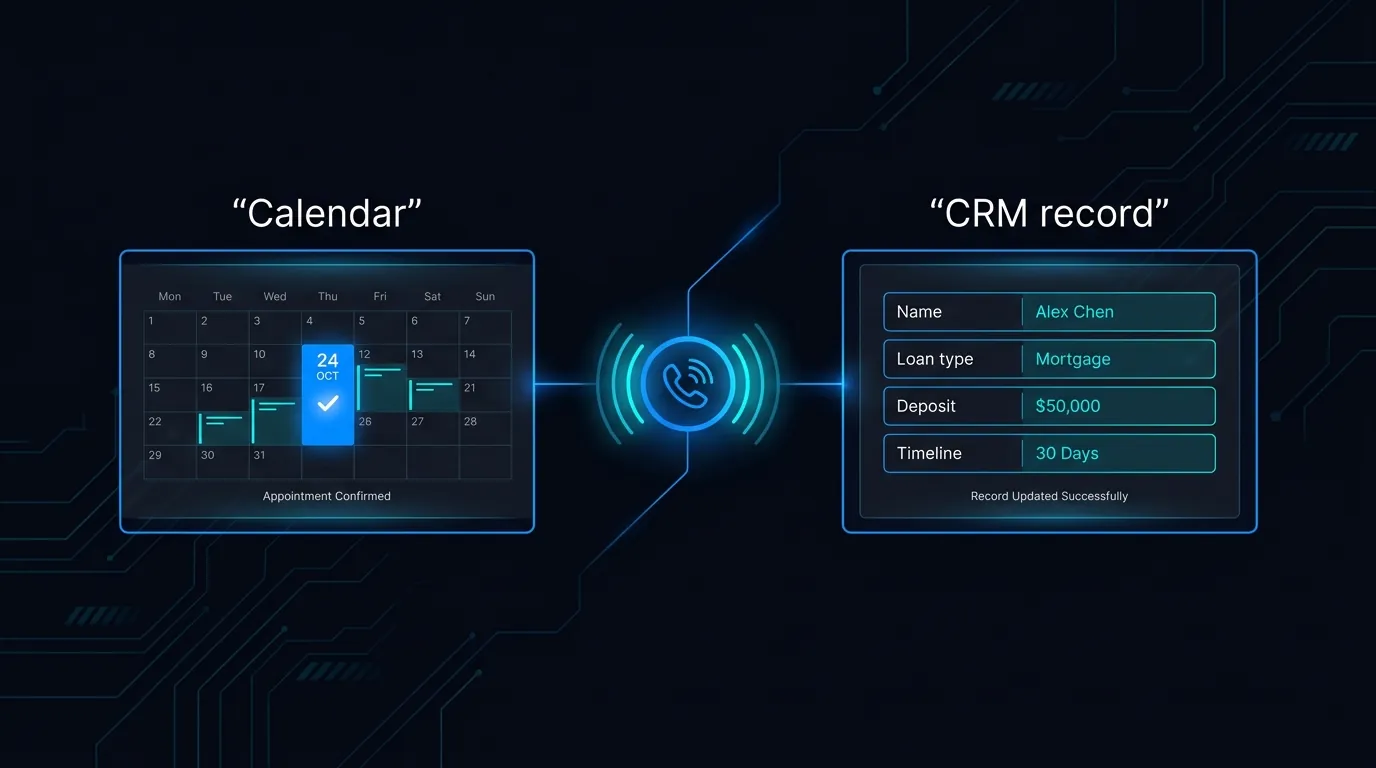
One call becomes a booked slot plus a clean CRM record, with no re-keying.
What does it cost a NZ or AU brokerage?
About 80 cents a minute, billed by the second, in NZD or AUD. A 30-second enquiry costs about 40 cents. A full 1 to 2 minute qualifying call runs $1 to $2. A part-time receptionist costs $28 to $35 an hour before KiwiSaver, super, ACC, and holiday pay, and clocks off at 5pm.
Run the maths on a busy Saturday. Forty enquiry calls, averaging a minute each, costs around $32 in agent time. That is one missed deal's worth of fee, many times over.
On outbound follow-up, a 200-dial campaign costs about $100. In one real case, a Sydney sales agent produced 141 leads in 90 days at $32.74 per lead. A Christchurch developer booked viewings at $7.12 each.
The agent does not call in sick, does not take lunch, and does not miss the Saturday caller. To go live, start with your region page for NZ mortgage brokers or for AU mortgage brokers.
Answer every loan enquiry, day and night.
Map your qualifying questions, calendar, and CRM in days. Start on our NZ broker page or our AU broker page.
Frequently Asked Questions
Does the AI voice agent tell callers it is an AI?
Yes, on every call. The agent discloses that the caller is speaking with an AI before it collects any detail. That meets the disclosure expectations under the NZ Privacy Act 2020 and the Australian Privacy Principles. Borrowers respond well to a straight answer, and a clear disclosure builds more trust than a bot pretending to be a person.
How does it handle sensitive financial details like deposits and income?
It collects only the fields you need to qualify and stores them as structured records on our Sydney servers. Live audio is processed offshore for the seconds a call runs. We meet cross-border accountability requirements through documented arrangements with our voice partner. We never claim all data stays in one country, because no voice AI works that way today.
Can it transfer a hot borrower straight to me?
Yes. When a caller clears your qualifying rules, the agent rings your line, gives you a one-sentence brief, then connects the caller. You pick up already knowing her name, deposit, and timeline. If you are busy, it books a slot instead, so no qualified borrower ever drops to voicemail.
What does it cost per call?
About 80 cents a minute, billed by the second. A 30-second enquiry is roughly 40 cents. A 1 to 2 minute qualifying call runs $1 to $2. A part-time receptionist costs $28 to $35 an hour and clocks off at 5pm. The agent answers every call, including the Saturday ones that win deals.
Will it work for both NZ and Australian brokers?
Yes. The agent runs in NZD or AUD and follows the right rules for each country. NZ falls under the Privacy Act 2020 and the Office of the Privacy Commissioner. Australia falls under the Privacy Act 1988, the Australian Privacy Principles, and the OAIC. Start with the region page that matches your brokerage.
How fast can it go live?
Most brokerages are live within days, not months. We map your qualifying questions, your calendar, and your CRM fields, then test the agent on real call flows before it answers a single borrower. You sign off on the script and the handover rules first. From there it runs every enquiry, day and night.
For the full security picture, read how Waboom secures voice AI.
Leonardo Garcia-Curtis
Founder & CEO at Waboom AI. Building voice AI agents that convert.
Ready to Build Your AI Voice Agent?
Let's discuss how Waboom AI can help automate your customer conversations.
Book a Free Demo

