
6 min read · Explainer · Last updated 29 May 2026
Part of Learn Claude Code: The Complete Operator's Guide. For the operator's overview of Skills, Connectors, Cowork and Artifacts, start there.
Anthropic released a new model on 28 May 2026. It is called Claude Opus 4.8. If you run a business rather than write code for one, the announcement reads like a wall of benchmarks.
So here is the plain version. What changed, what it means for the work you actually do, and why it matters if you are learning to build with Claude.
The hero artwork above is from Anthropic's own Claude Opus 4.8 announcement. You can read the full release here.
It owns up when it is not sure
The headline change is honesty. Opus 4.8 is about four times less likely than the version before it to let a flaw slip through without flagging it.
In plain terms: when it is uncertain, it tells you, instead of writing a confident answer that happens to be wrong. Say you use AI to draft a contract clause, reconcile a spreadsheet or summarise a long report. That is the single most useful upgrade in the whole release.
Would you rather trust a tool that flags its own doubt, or one that sounds certain and is quietly wrong?
The first thing we teach people at our workshop is to never trust a confident answer you have not checked. Opus 4.8 does some of that checking for you, and says "I am not certain about this line" rather than burying the doubt.
It handles a whole chain of steps on its own
Most useful work is not one question and one answer. It is a chain. Find the file, read it, pull the right numbers, write the summary, save it in the right place.
Opus 4.8 completed 84% of tasks in an independent test that puts the model behind a web browser. It has to click, read and fill in forms across pages, the way a person would. In one agent benchmark it was the only model to finish every test case from start to finish.
The everyday read: you can hand it a job that is half a dozen steps long. It holds the thread the whole way through, rather than losing the plot halfway.
This is exactly the kind of work Claude Cowork is built for. You describe the end state, walk away, and come back to a finished deliverable. We run our outreach digest in Cowork every morning at 7am, and no human touches it before then. A more reliable model makes the walking away part far less nerve-racking.
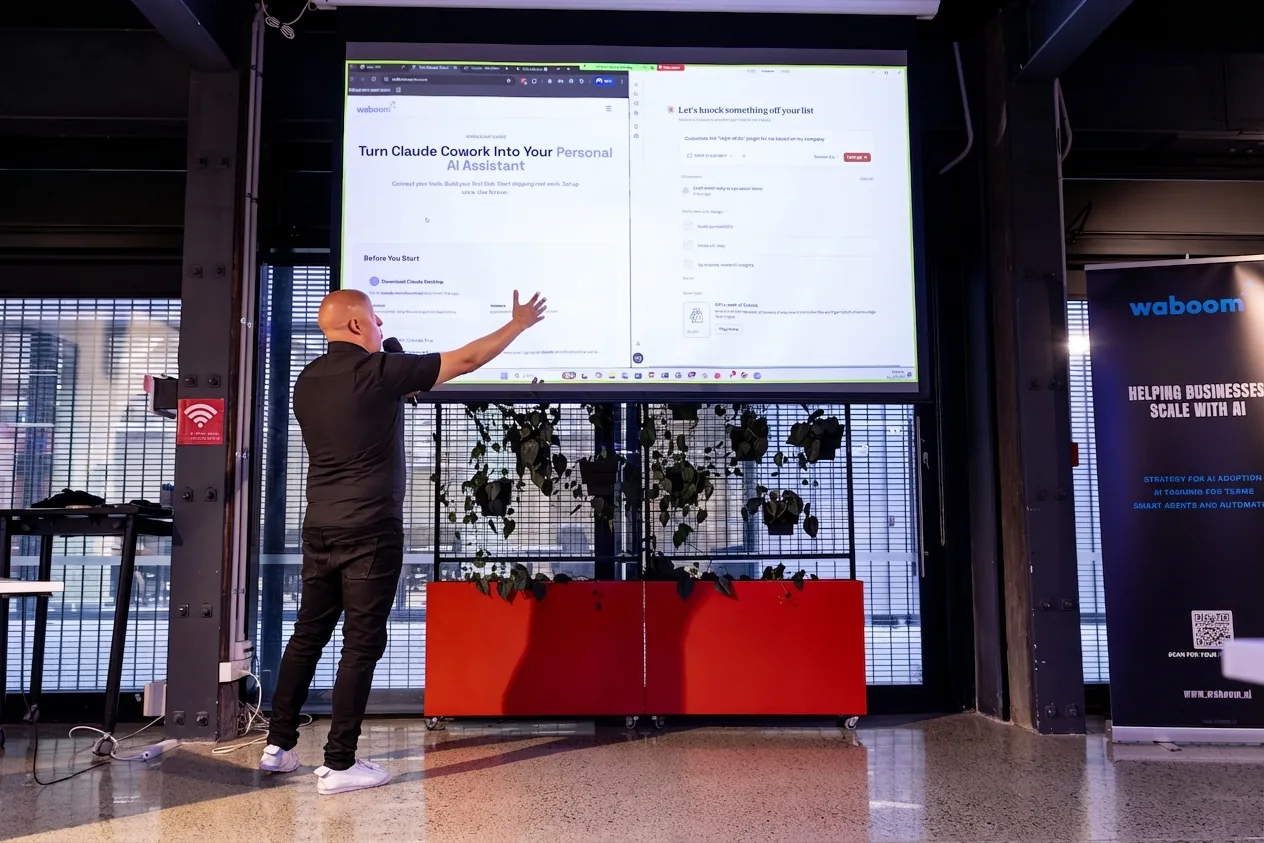
Walking through Claude Cowork at one of our workshops. The screen shows the exact setup flow attendees build on the day.
You can now dial the effort up or down
There is a new control called Effort Control, in both claude.ai and Cowork. You choose how much thinking Claude puts into a task.
Turn it down for a quick answer. Turn it up for the hard stuff that deserves a slower, more careful pass. It is the difference between a fast reply and a considered one, and now it is your call. You save time on the small jobs and you do not pay for deep thinking you did not need.
Same price, plus a faster lane
The price to use Opus 4.8 did not go up from the previous version. That matters, because a smarter model usually arrives with a bigger bill. This one did not.
When did a smarter tool last arrive without a bigger bill?
There is also a fast mode that runs about 2.5 times quicker for when speed beats depth. And reading documents got cheaper: working through PDFs and diagrams costs around 61% less than the previous version. If your business feeds Claude invoices, reports or scanned contracts, that is a real saving on every batch.
For builders: one Claude becomes a team
There is one piece aimed squarely at people building things. Inside Claude Code, there is a new research preview called Dynamic Workflows. It lets Claude split a big job across a team of helpers working in parallel. So it can take on work at the scale of a whole codebase, or a few hundred tasks at once.
You do not need to understand the plumbing to benefit from it. It is the same idea as handing one brief to a team instead of one person. This is the builder end of the news, and it is exactly what we get hands on with at our Claude Code workshop.
Where Claude Opus 4.8 actually fits
Opus is the heavy-thinking model in the Claude line-up. It is not the one you reach for to rename a file or answer a quick question, and it does not need to be.
Most everyday chat runs beautifully on the smaller, faster models. Opus is what you bring in when the job is worth the deeper thinking. The legal summary. The financial reconciliation.
The research that has to be right at every step. The smart move is knowing which job goes to which model, and that judgement is worth more than any single release.
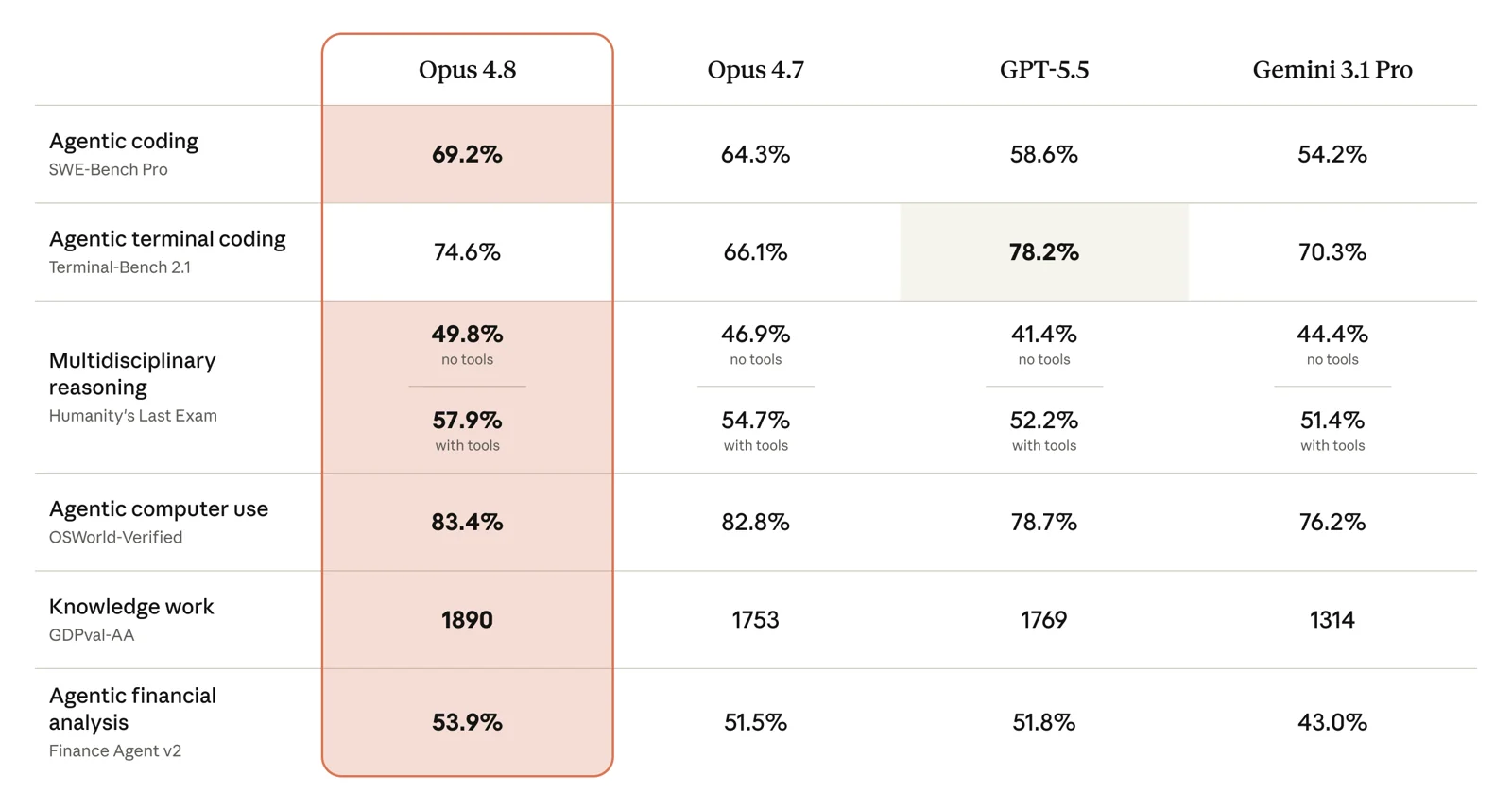
Anthropic's own comparison. It is not a clean sweep: another model edges ahead on terminal coding. That is the honest read of the field, and why we teach people to match the model to the job. Try Opus 4.8 yourself at claude.ai.
What this means if you are not technical
None of this requires you to write code. A better model raises the ceiling, it does not change the basics. The skill that compounds is knowing which job to hand to AI. And how to brief it so you get back something you can actually use.
That is the whole point of our Claude Code workshop in New Zealand. You bring real work from your own business, and you leave with it running, on the same model this post is about. No prior coding needed.
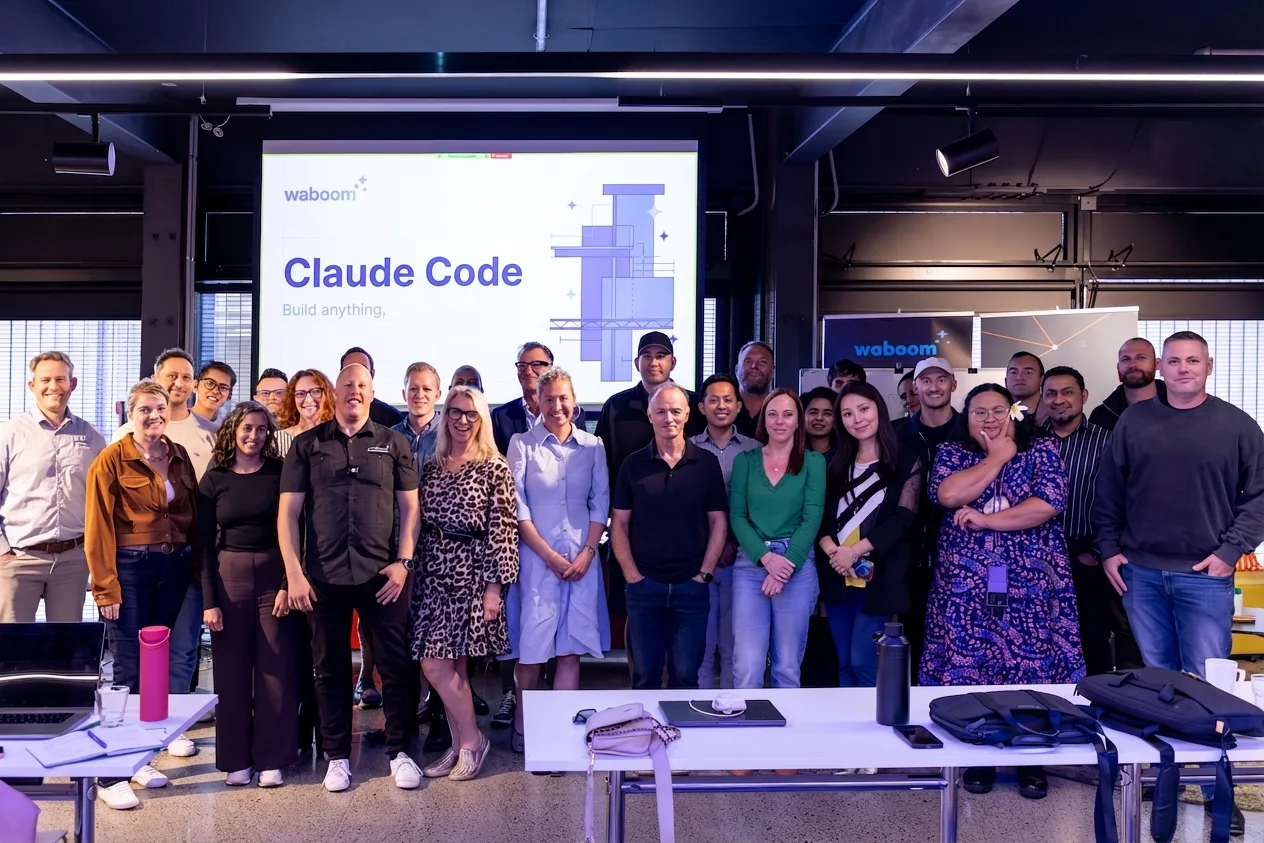
A recent Claude Code workshop group. People arrive without a coding background and leave with real work running on Claude.
A model that flags its own doubts and carries a long job to the end is a better teammate. Better than the one we had a month ago. The people who win with it are the ones who learn to brief it well. That part has not changed, and it is the part we teach.
Frequently Asked Questions
What is Claude Opus 4.8?
Claude Opus 4.8 is Anthropic's new flagship AI model, released on 28 May 2026. It builds on Opus 4.7 with better honesty and stronger handling of longer jobs that run end to end. It also adds Effort Control, which lets you choose how hard it thinks. The price did not change from the previous version.
Do I need to be technical to use Claude Opus 4.8?
No. You can use Opus 4.8 in claude.ai or the Claude desktop app with plain conversation, the same way you would brief a capable assistant. The builder-only features like Dynamic Workflows live in Claude Code, but the core model is for everyone. Our Claude Code workshop is built for non-technical operators.
Is Claude Opus 4.8 more expensive than the last version?
No. Anthropic kept the price the same as Opus 4.7. On top of that, reading documents like PDFs and diagrams costs around 61% less than before. There is also a fast mode that runs about 2.5 times quicker when you want speed over depth.
What is Effort Control in Claude?
Effort Control is a new setting in claude.ai and Cowork that lets you choose how much thinking Claude applies to a task. Dial it down for a quick answer, up for careful work on something that has to be right. It balances speed, cost and quality on your terms.
How do I learn to actually build with Claude?
Start with Learn Claude Code, our free operator's guide to Skills, Connectors and Cowork. Or join the hands-on Claude Code workshop, where you build working AI workflows with your own business tasks. You do not need a coding background.
Self-paced
Your free operator's guide to Skills, Connectors and Cowork. The fastest way to put a model like Opus 4.8 to work without writing a line of code.
Start Learn Claude Code →Hands-on with us
A live workshop where you build AI workflows on the latest Claude, with real work from your own business. Bring tasks, leave with them automated.
See the workshop →Leonardo Garcia-Curtis
Founder & CEO at Waboom AI. Building voice AI agents that convert.
Want your team to actually use these tools?
Waboom AI runs hands-on AI training and Claude workshops for teams across New Zealand and Australia.
Explore AI Team Training

