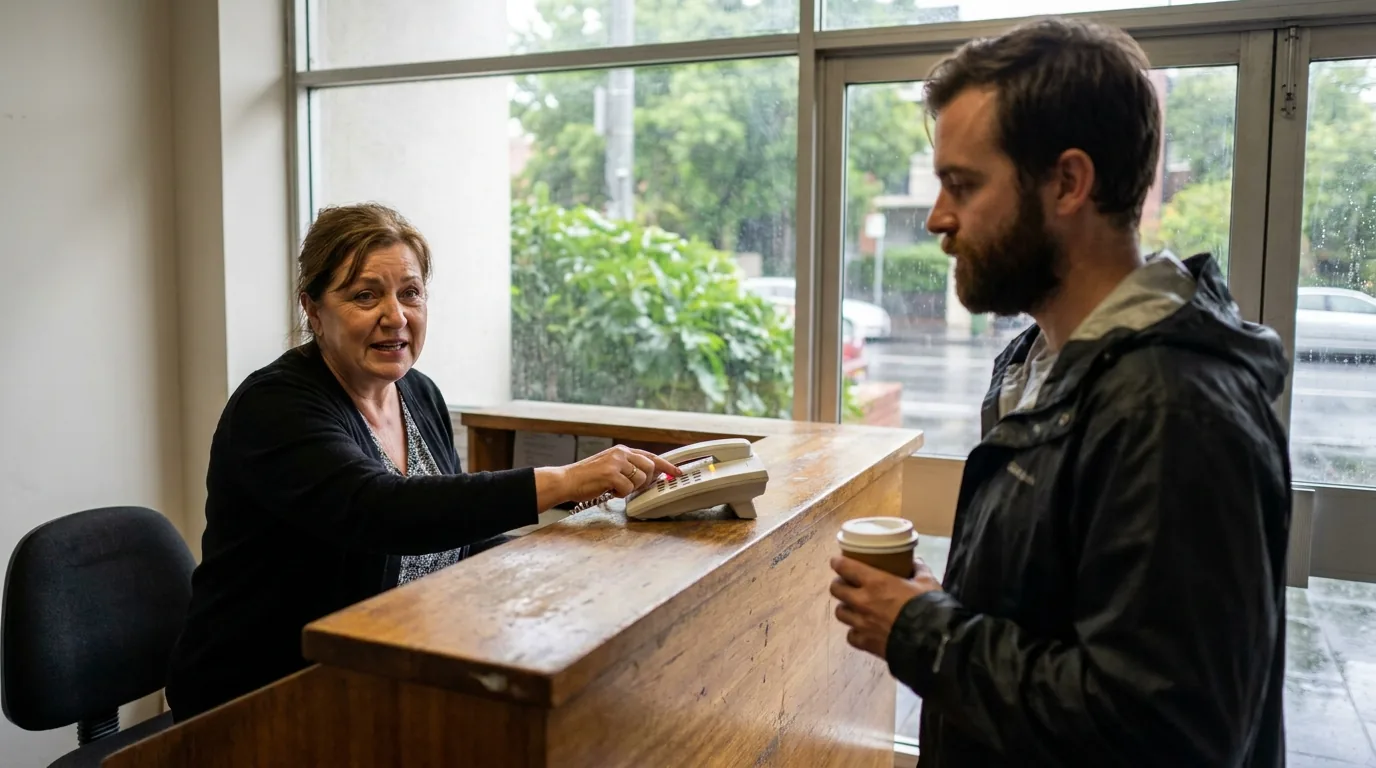
A property management answering service answers tenant and owner calls when your team can't. It's the safety net for every call your office misses.
It picks up after hours, at lunch, and during the 5pm rush when three phones ring at once. It triages a maintenance fault, books a viewing, takes a rent message, and logs the lot into your system. Done well, it turns a missed call into a handled job before the tenant hangs up.
Most agencies picture a human call centre. That's one option. The other is an AI agent that answers every call on the first ring, all night, for about 80 cents a minute. No roster, no holiday pay, no voicemail.
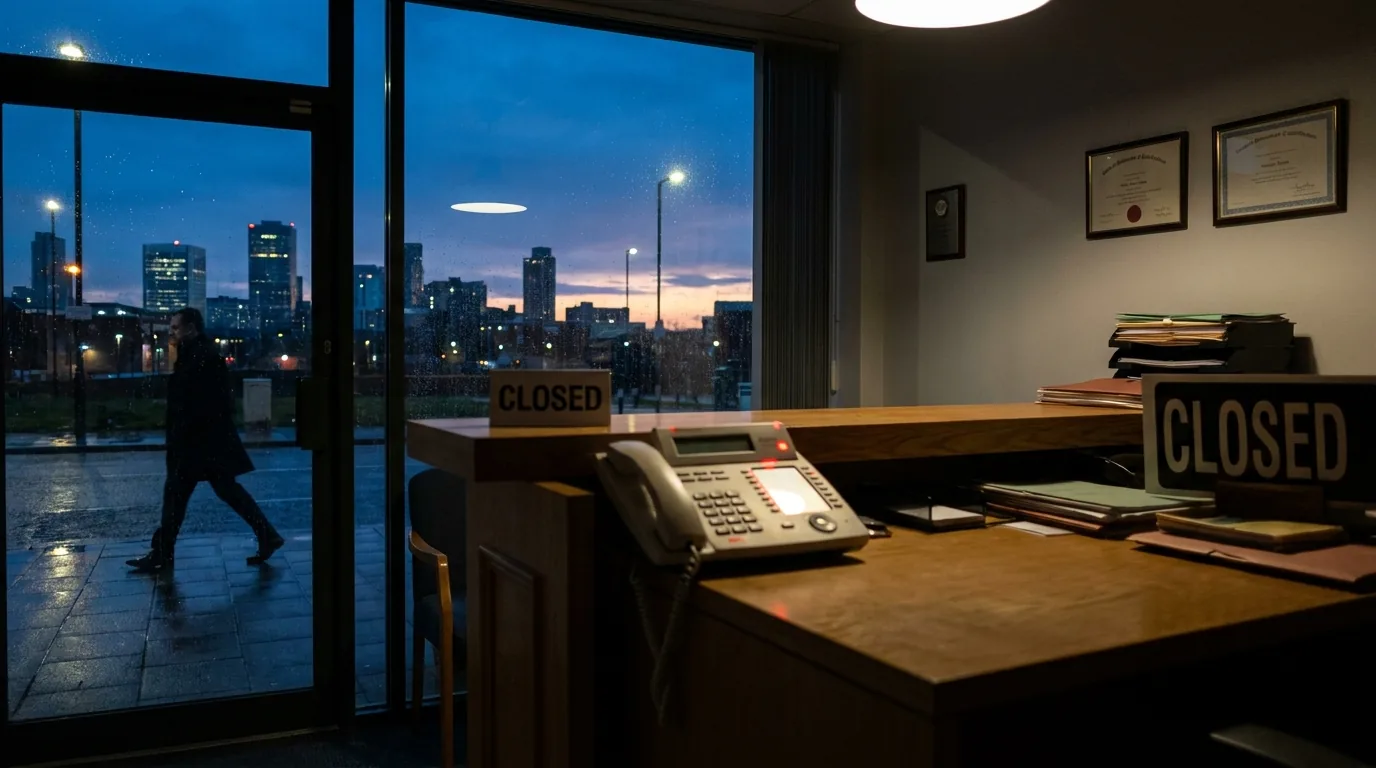
A 9pm burst pipe is the classic test. A tenant rings, gets voicemail, and leaves a vague message. By the time someone hears it at 8am, the water has been running for eleven hours. The repair just doubled.
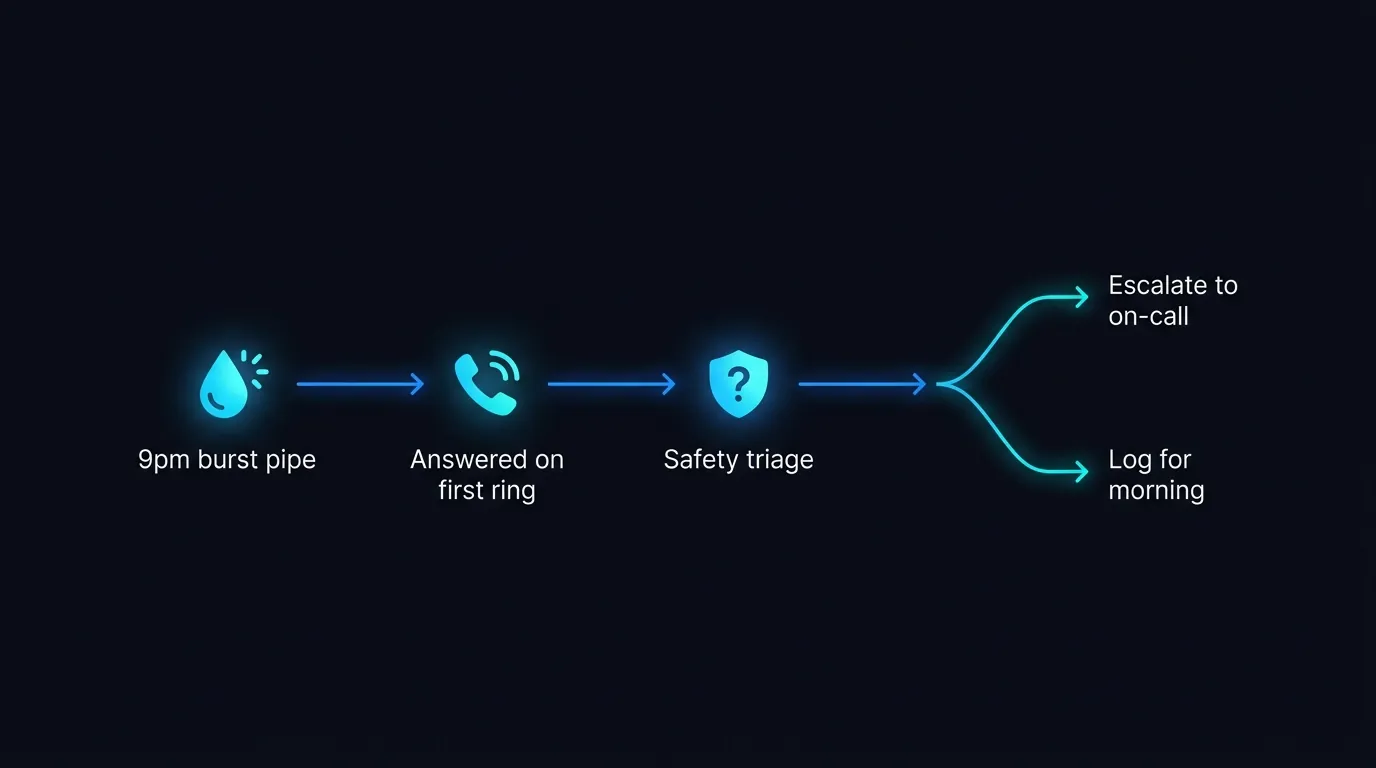
A 9pm emergency answered, triaged, and escalated in one call instead of sitting in voicemail until morning.
How many maintenance and tenant calls is your agency missing?
More than you think, and most happen when nobody is at the desk. A single property manager handling 150 doors can field 30 to 50 calls a day. In our experience a big chunk of those go to voicemail at peak, and plenty never ring back.
We pulled the numbers from a Dunedin agency that thought it was answering most calls. Over one quarter it missed more than 300. We wrote it up in our look at a Dunedin office that lost 300 calls in a quarter. Each missed call is a tenant who stops trusting the office, or an owner shopping for a new manager.
Run your own maths. If you miss 8 calls a day at 200 doors, that's 40 a week and roughly 2,000 a year. Some are noise. But the burst pipe, the lockout, the keen viewer, those are the ones that cost you a property or a five-star review.
The pattern is always the same. Calls cluster at 8am, at lunch, and after 5pm. Your team is busiest exactly when the phone is loudest. That gap is what the service fills.
What should the AI handle: maintenance triage, viewings, or arrears?
All three, in that order of urgency. Maintenance triage first because a burst pipe at 9pm can't wait. Viewing bookings next because a keen tenant goes cold in an hour. Rent-arrears overflow last, where the agent takes the call, logs the promise to pay, and flags the file.
Maintenance triage is the heavy lifter. The agent asks what's wrong, how bad it is, and whether anyone is at risk. Water, gas, no power, or no heat in winter get escalated to your on-call line. A dripping tap gets logged for the next working day.
Viewing bookings are pure revenue protection. A tenant who can't book a viewing rings the next listing. The agent offers two or three time slots, confirms, and writes the booking into your calendar. We cover this in our piece on a Christchurch developer who booked 49 viewings in a fortnight, at $7.12 each.
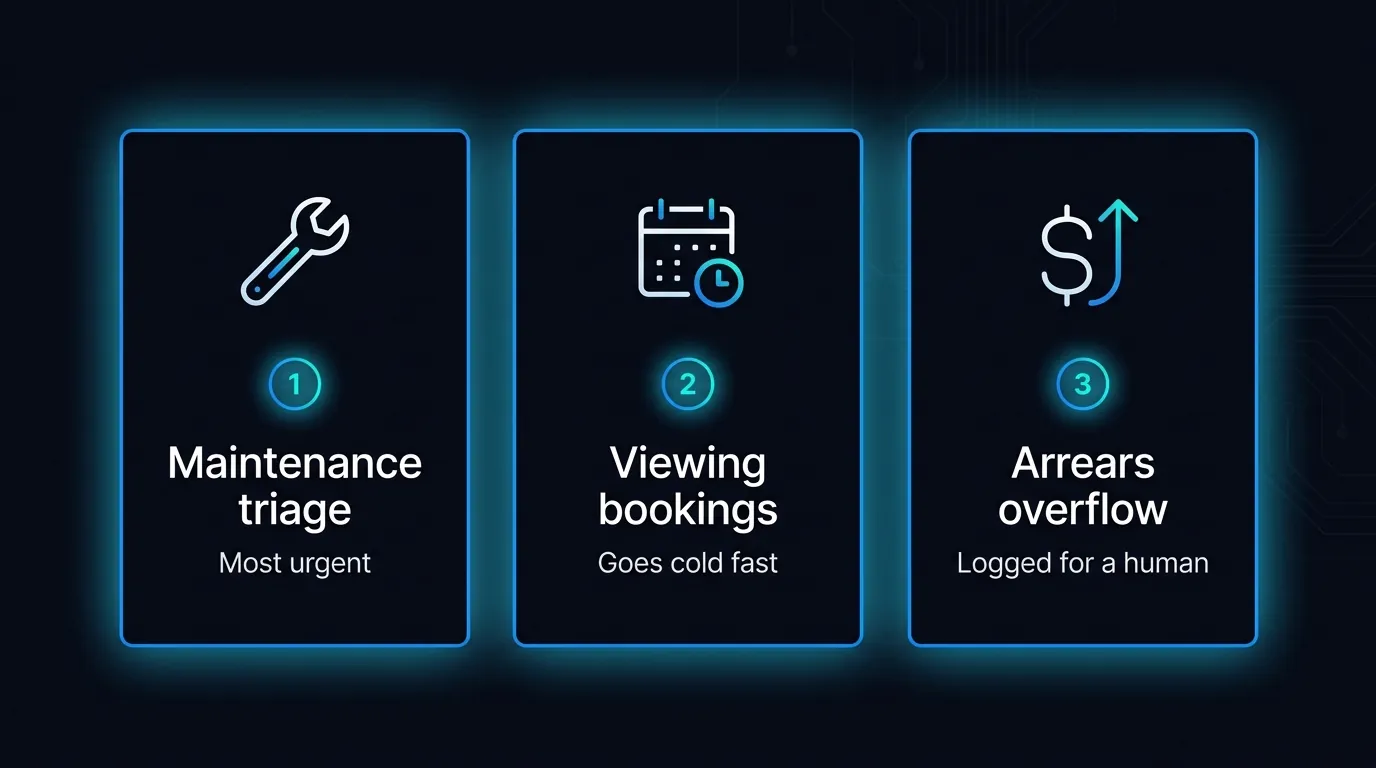
Maintenance triage, viewing bookings, and arrears overflow, ranked by how fast each one goes cold.
Arrears is the sensitive one. The agent doesn't argue or threaten. It takes the call, records the tenant's message, captures any payment promise, and routes the file to a human. We go deeper in our guide to chasing rent arrears with a voice agent and the follow-on work around Tenancy Tribunal applications.
What does a property management answering service cost a NZ or AU agency?
About 80 cents a minute in NZD or AUD, billed by the second, for the AI option. An average answered call runs about 30 seconds, so roughly 40 cents. A two-minute maintenance triage with full questions costs $1 to $2. No minimum, no monthly seat fee.
Compare that to a human. A part-time receptionist in New Zealand or Australia costs $28 to $35 an hour before KiwiSaver or super, ACC, and holiday pay. They cover one shift, not nights and weekends. To cover 24 hours you need three of them.
Here's the honest framing. The AI handles the volume and the after-hours load for a few dollars a day. Your humans handle the hard conversations and the relationships. The service pays for itself the first time it catches a 9pm emergency.
For a full breakdown of pricing models, we wrote a plain-English guide to what an AI receptionist actually costs. The same per-second economics apply to property work.
Stop paying for calls you never answer.
See how the maths works for your door count on our setup for New Zealand property teams.
How does it handle an after-hours maintenance emergency?
It answers on the first ring, runs a triage script, and escalates real emergencies to your on-call human within the call. No voicemail, no overnight delay. The tenant gets a calm voice and a clear next step at 9pm instead of a beep.
Walk the burst-pipe scene. The tenant rings. The agent answers and confirms the property. Then it asks the safety questions. Is water coming through the ceiling? Is anyone in danger? Is the power affected? Those answers decide the path.
For a true emergency the agent warm-transfers to your duty manager or texts the on-call plumber with the address and fault. For a non-urgent fault it logs a job ticket dated for the morning. The tenant always knows what happens next.
Every call opens by disclosing the caller is speaking with an AI. That's not a legal grey area, it's a trust move. Tenants are fine with a machine that actually helps at 9pm.
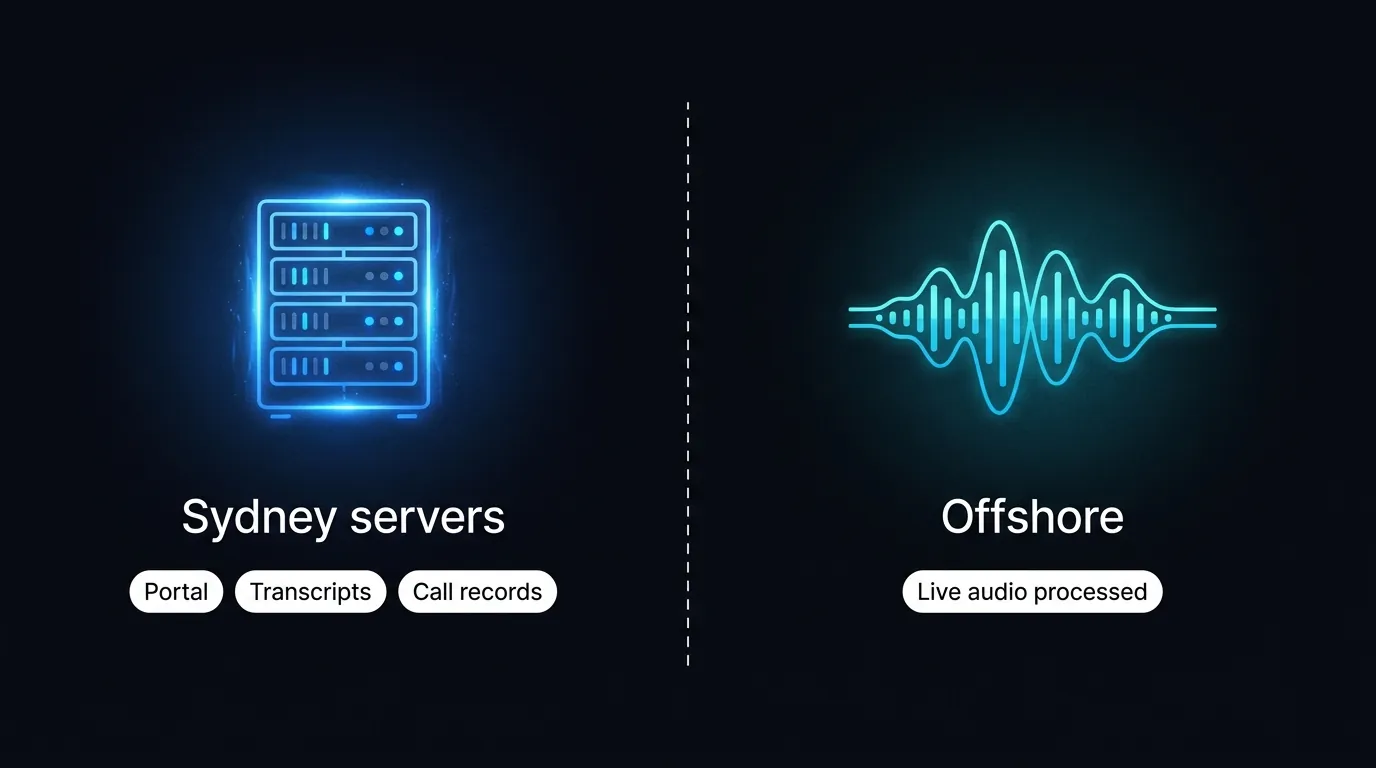
Where the data sits: structured records on our Sydney servers, live audio processed offshore in the moment.
How does it stay inside the Privacy Act and tenancy rules?
It collects only what the call needs, discloses the AI up front, and stores records on servers you can point to. In New Zealand that means the Privacy Act 2020 and the Office of the Privacy Commissioner. In Australia it means the Privacy Act 1988 and the 13 Australian Privacy Principles overseen by the OAIC.
On data, here's the honest split. Your portal, transcripts, and structured call records sit on our Sydney servers. The live audio is processed offshore in the moment of the call. We never claim all data stays in Australia, because it doesn't, and a careful owner will ask.
One myth to kill. HIPAA is United States law. It does not apply to a property agency in Auckland or Brisbane. If a tenant mentions a health reason for a repair, the relevant rules are the local privacy ones, not HIPAA.
The point for a buyer is simple. You collect less, you disclose more, and you can answer the residency question with a straight face. That's what a Tenancy Tribunal hearing or a privacy complaint will test.
Can it book viewings and write the call into your property system?
Yes. The agent books the viewing live, confirms the slot with the tenant, and writes a structured record into your property management system or calendar. No sticky notes, no end-of-day data entry, no lost bookings.
Every call produces a clean record. Who rang, what they wanted, what the agent did, and the outcome. That record lands in your system so the next person sees the full history. We dig into the mechanics in our walkthrough of how AI appointment booking works for NZ and AU.
This is where the time savings stack up. Your team stops re-keying call notes. The owner report writes itself from the call log. The tenant gets a confirmation, not a maybe.
If you manage rentals in New Zealand, our page for NZ property managers shows the local setup. If you're across the Tasman, the version for Australian property teams covers the same ground. Both walk through go-live in days, not months. For the wider picture, see how our inbound answering works across other front desks too.
See the after-hours service handle a 9pm burst pipe.
Book a live walkthrough on our page for Australian property managers and we'll run the scene for you.
Frequently Asked Questions
Does the answering service work for both rentals and body corporate?
Yes. The agent triages maintenance, books inspections, and takes owner messages for rentals, body corporate, and commercial portfolios. You set the scripts and escalation rules per property type. The economics are the same either way, about 80 cents a minute billed by the second, so a short message costs cents.
What happens if the agent can't answer a tenant's question?
It does what a good receptionist does. It takes a clear message, captures the detail, and routes the call to the right human with full context. For a genuine emergency it warm-transfers or texts your on-call line during the call. The tenant never hits a dead end or a voicemail beep.
Is it cheaper than a human receptionist?
For after-hours and overflow, yes, by a wide margin. A part-time receptionist costs $28 to $35 an hour before on-costs and covers one shift. The AI answers every call around the clock for a few dollars a day. Most agencies use both, humans for relationships and the agent for volume.
Will tenants know they're talking to an AI?
Yes, every call discloses it up front. That's deliberate. Tenants care far more that the call gets answered and the problem gets actioned than about who picks up. A machine that books a real plumber at 9pm beats a voicemail from a human every time.
How fast can we go live?
Days, not months. We load your properties, escalation rules, and scripts, then test against real call scenarios before you switch the after-hours line over. You start with overflow and after-hours, then expand to daytime overflow once you trust the agent. The NZ and AU setups follow the same path.
Can it handle rent-arrears calls without upsetting tenants?
Yes, when scoped carefully. The agent doesn't argue, threaten, or chase. It takes the call, records any payment promise, and flags the file for a human. Sensitive arrears conversations stay with your team. The agent just makes sure the call gets answered and logged.
Leonardo Garcia-Curtis
Founder & CEO at Waboom AI. Building voice AI agents that convert.
Ready to Build Your AI Voice Agent?
Let's discuss how Waboom AI can help automate your customer conversations.
Book a Free Demo