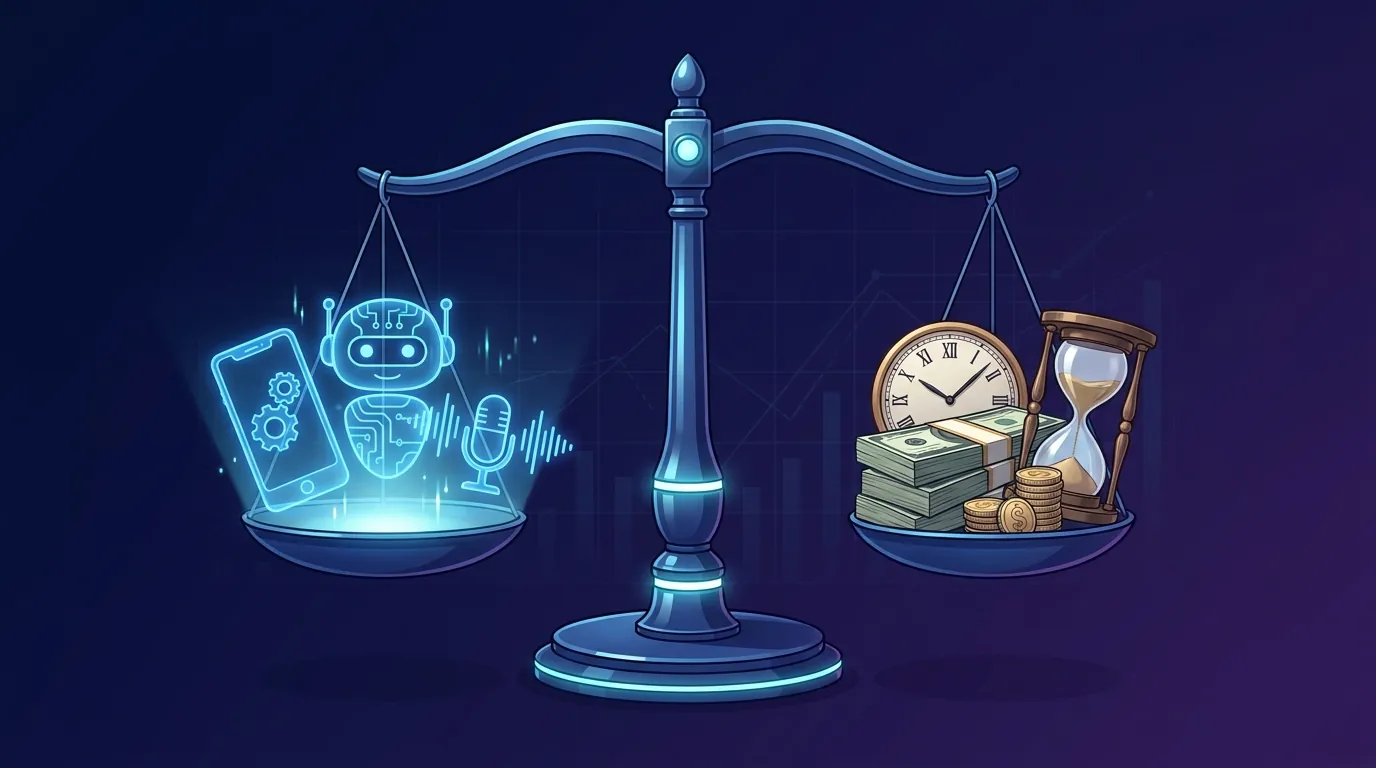
The honest answer to "is an AI receptionist worth it" is "almost certainly yes for you, but let us check the maths".
The maths is simple and the answer for most businesses comes back in under a minute. Here it is. For most, an AI receptionist for business is the cheapest way to stop missing calls.
The 60 second worth-it test
Three numbers. Multiply them.
One. Calls you miss per week. Pull your call log. Count the calls that did not get answered or hit voicemail and never got a callback.
Two. Average value of a converted customer. Pull last year's revenue, divide by customers acquired. That is your average customer value.
Three. Conversion rate from a missed call. A reasonable working number for after-hours service-business calls is 20-35%. Pull your historical data if you have it.
The maths: missed calls per week × 52 × conversion × customer value = annual revenue you currently leak.
If that number is more than $5,000 a year, the AI receptionist pays for itself many times over. Most SMEs we work with see numbers between $20,000 and $250,000.
Three worked examples
Example one: Auckland mobile mechanic.
Real numbers from a real client. 463 missed calls in a year, mostly after 5pm. Average job ticket $340. Conversion on after-hours service calls in his market sits at 35%.
Lost revenue: 463 × 0.35 × $340 = $55,067 a year.
AI receptionist cost: ~$1,560 a year on Starter ($130 a month).
ROI: 35x. Payback: 11 days.
Full breakdown: An Auckland mobile mechanic missed 463 after hours calls last year.
Example two: Sydney bookkeeping practice (composite).
80 calls a week, 19% missed under the old setup. Average client lifetime value $4,200. Half the missed calls are existing clients (no acquisition cost) and half are prospective.
Lost revenue from prospective callers: 80 × 0.19 × 0.5 × 52 × 0.25 (low conversion because these are admin calls) × $4,200 = ~$103,000 a year.
AI receptionist cost: ~$1,560 a year.
ROI: 66x.
Example three: Hamilton home care agency.
Real numbers. 5pm to 8am voicemail capture before the AI rolled out lost the agency $641,000 a year on conservative assumptions.
Full breakdown: A Hamilton home care agency loses $641k a year. After 5pm.
Typical payback periods
Across roughly 47 NZ and AU businesses we have rolled the receptionist out for, the median payback period is 11 days. The fastest was 3 days (a Christchurch medical clinic that picked up $8,400 in jobs in week one). The slowest was 6 weeks (a low-volume legal practice with high-value but rare calls).
Payback is so fast because the underlying cost is so low. $130-$320 a month on Starter. Even one captured booking a month at most service businesses pays for it.
When it is not worth it
Three patterns where the maths does not pay.
Pattern one. You answer every call. If you and your team genuinely do not miss any inbound calls and have spare capacity, an AI receptionist does not capture incremental revenue. It still saves time on routine FAQs but the headline ROI is harder to pin down.
Pattern two. Your call volume is below 25 a week. At very low volume the absolute revenue captured is small. Worth doing if you value your time, not worth doing for hard ROI alone.
Pattern three. Your business is built on emotional calls. Grief support practices, mental health triage, complaints lines. AI handles 70-80% of these well, but the 20-30% it cannot match a human on are the ones that matter most. Run a hybrid (AI for routine, virtual receptionist for emotional) instead of pure AI.
The hidden value most businesses miss
The headline ROI is captured calls. There are three more value streams most analyses miss.
One. Time recovered. Every call your team did not have to interrupt their work to handle is time spent on billable work, customer-facing work, or just rest. We see ~6 hours a week recovered per principal in a small practice.
Two. Customer-experience consistency. Every caller gets the same first-impression service. No bad-day human, no stressed Friday afternoon, no off-script reception. The brand experience holds.
Three. After-hours brand presence. Picking up a call at 9pm on a Saturday signals that you are open for business. Voicemail signals the opposite. Some customers buy from whoever answers first.
The fourth value, less measurable: optionality. With an AI front door, your team can take Tuesday off, run a workshop without anyone watching the phone, scale up advertising without scaling reception staff. The phone becomes a non-issue.
Questions to ask before signing
A short checklist.
1. Pull a real call log. Not estimated. Actual missed-call data from the last 90 days.
2. Run the worth-it maths above. If the number is over $5,000 a year, proceed.
3. Demo the agent on your business. Tuned on your services. Not a generic demo.
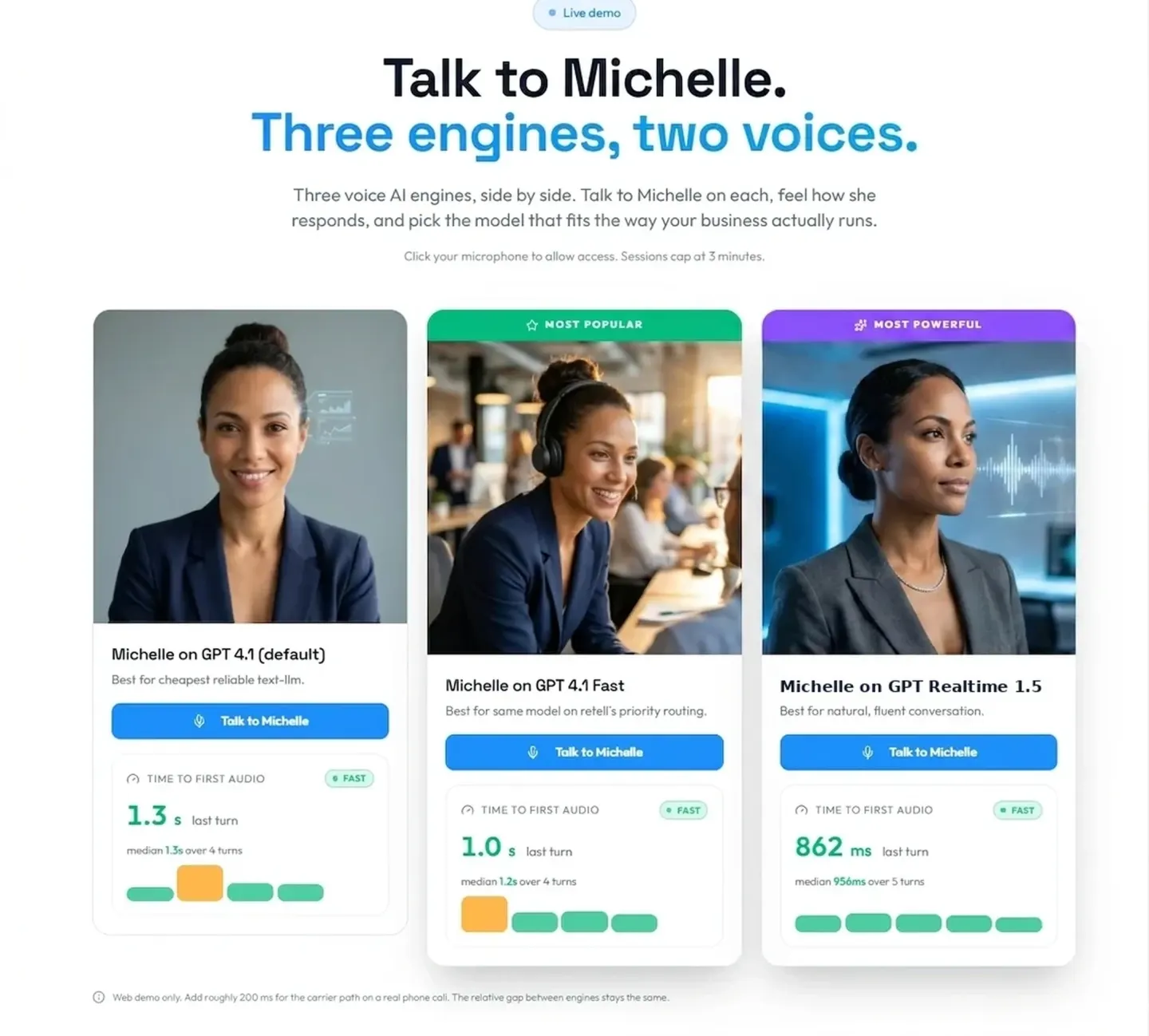
4. Confirm latency. Sub 800ms total turn time. Anything slower will feel off.
5. Check the contract. Month to month. No annual lock-in. No setup fees.
6. Confirm data residency. Especially if you handle health data or financial data.
7. Review the first 100 calls together. Tune any edge cases. Re-deploy.
A good vendor will run all of this with you in week one.
Frequently asked questions
How fast does the ROI usually show up?
In the call log within week one. In booked revenue within week two.
What if my industry is not one of your case studies?
Most SMEs sit in the same pattern: missed calls, average customer value, conversion rate. Run the maths for your specific business. The pattern usually holds.
What is the smallest business this works for?
A single sole trader with 25+ missed calls a week and a job value above $200 sees clear ROI. Below that, the case is more about time recovery than hard revenue.
Can I try before I commit?
Yes. Pay-as-you-go starter credit at $500 NZD or $460 AUD lets you trial a real deployment for a few weeks. No subscription required.
What is the catch?
The catch is that AI handles 70-80% of routine calls well and 20-30% you have to design a graceful handoff for. If you skip that handoff design, the 20-30% turns into customer complaints. Run the rollout properly.
How does it compare to a human receptionist?
Cheaper for the calls-only fraction of the role. Worse on emotional calls. Better at consistency and after-hours coverage. We covered this in detail in AI receptionist vs virtual receptionist.
Run the maths on your business
We will pull your missed-call estimate, model the ROI on your numbers, and run a tuned demo on your services in week one. No commitment.
Leonardo Garcia-Curtis
Founder & CEO at Waboom AI. Building voice AI agents that convert.
Ready to Build Your AI Voice Agent?
Let's discuss how Waboom AI can help automate your customer conversations.
Book a Free Demo