
What does an AI voice agent do for a recruitment agency?
An AI voice agent for recruitment answers every candidate call, runs a first-pass screening, and books interviews into your consultants' calendars. It works your inbound and outbound dials around the clock. Your consultants only spend time on the shortlist that survives the screen.
Think of a Wednesday afternoon. A job ad goes live at 9am. By 2pm forty people have called. Three consultants are in client meetings. Twenty of those callers hit voicemail and never ring back.
The agent picks up all forty. It asks the same structured questions your senior recruiter asks. It tags who is worth a consultant's time and who is not, then writes a summary to your CRM within 60 seconds of hangup.
This is the vertical build behind our AI voice agents for recruitment page, tuned for candidate flow rather than generic reception.
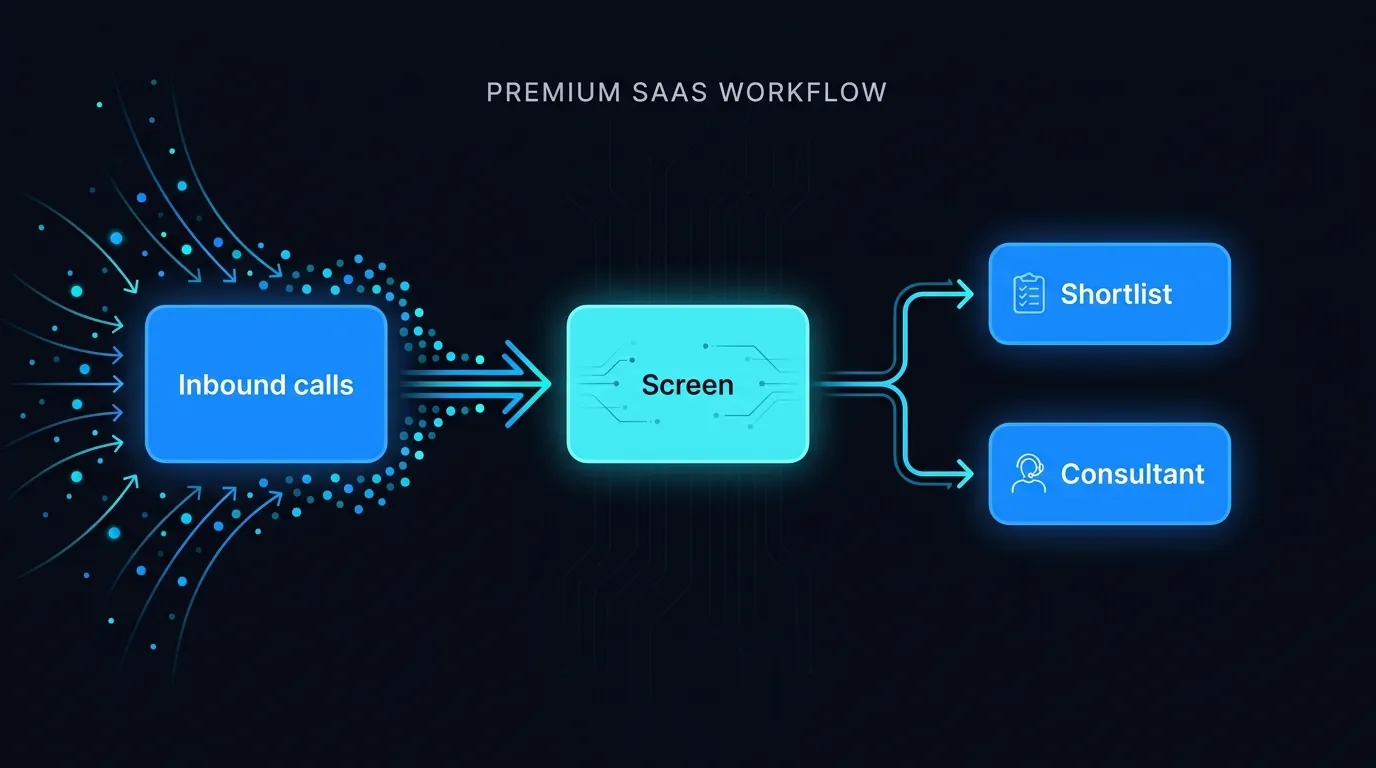
The agent fields the inbound flood, screens each caller, and hands consultants a clean shortlist.
Why does candidate volume swamp your consultants?
Volume swamps consultants because one popular role can draw 40 to 80 applicants, and each first-pass screen takes 8 to 12 minutes. That is 6 to 16 hours of phone time per role. Consultants do not have it, so calls go unanswered and good candidates go cold.
The maths is brutal. A consultant placing four roles a month faces hundreds of inbound calls. Most are unqualified. A handful are gold.
Sorting gold from noise by hand is the job nobody loves. So it slips. Strong candidates wait two days for a callback and accept another offer.
The agent removes the sorting. It handles the 40 to 80 first-pass calls so your consultant opens a clean shortlist of 8 to 12 names.
Stop losing candidates to voicemail.
See how the screening and booking engine is built for agencies on our recruitment voice agent page.
How does it run a first-pass screening call?
The agent runs the screen by asking your structured intake questions in order, then writing a summary to your CRM within 60 seconds of hangup. It covers role fit, work rights, notice period, salary expectation, location, and reason for change. The candidate hears one calm, consistent interview every time.
Here is the flow on a typical call. The agent introduces itself and tells the candidate it is an AI. Most callers are fine with that once they are getting answered at 7pm.
It asks the eight questions your best recruiter asks. It listens, follows up, and never skips one because it is tired or rushing to a meeting.
A 1 to 2 minute screening call costs you around 1 to 2 dollars. A part-time receptionist in NZ or AU costs 28 to 35 dollars an hour before KiwiSaver or super, ACC, and holiday pay.
This is candidate screening AI doing the repetitive intake so your consultants do the judgement work.
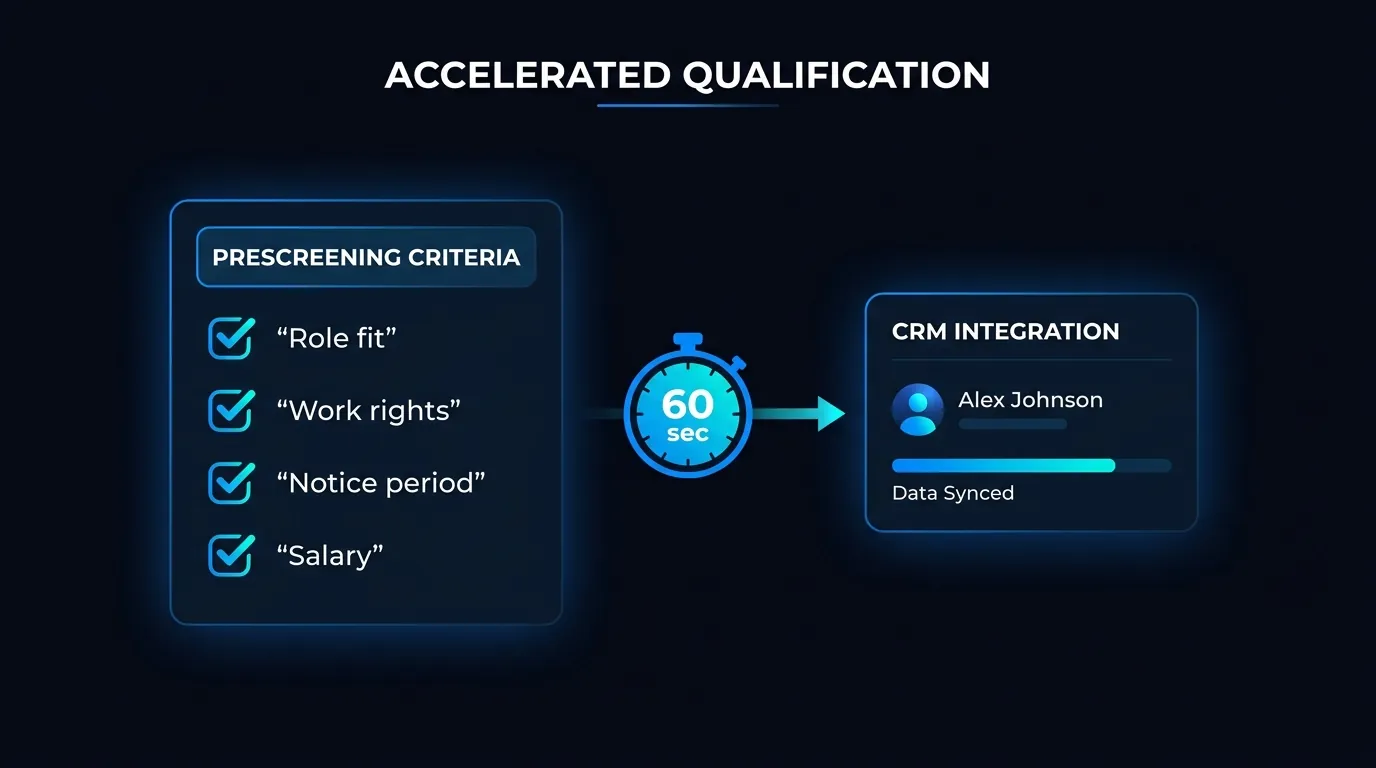
Every candidate gets the same eight structured questions, then a summary in the CRM within 60 seconds.
How does it book and confirm interviews?
The agent books interviews by reading your consultant's live calendar, offering open slots, and writing the confirmed booking back in real time. It then sends the candidate a confirmation and a reminder. No double-booking, no email tag, no slot held for someone who ghosts.
A candidate who screens well does not wait for a callback. The agent offers Tuesday 10am or Wednesday 2pm on the same call.
The candidate picks one. The slot locks. The consultant sees it appear without lifting a finger.
This is the same engine behind our appointment work. If you want the mechanics, our piece on AI appointment booking walks through the calendar logic, and our CRM integration guide shows how the data lands.
How does it keep candidate data private?
Your candidate data is handled under a clear residency split. Your portal, transcripts, and candidate records sit on Sydney servers. Only the live audio of a call is processed offshore for the seconds it takes to run. We never claim all data stays in Australia, because that would not be true.
Recruitment runs on sensitive information. Salaries, current employers, reasons for leaving. People share it on the call expecting it to be held properly.
In New Zealand you sit under the Privacy Act 2020 and the Office of the Privacy Commissioner. In Australia you sit under the Privacy Act 1988, the 13 Australian Privacy Principles, and the OAIC. The agent discloses it is an AI on every call, which keeps your collection honest.
We go deeper in our NZ Privacy Act compliance breakdown.
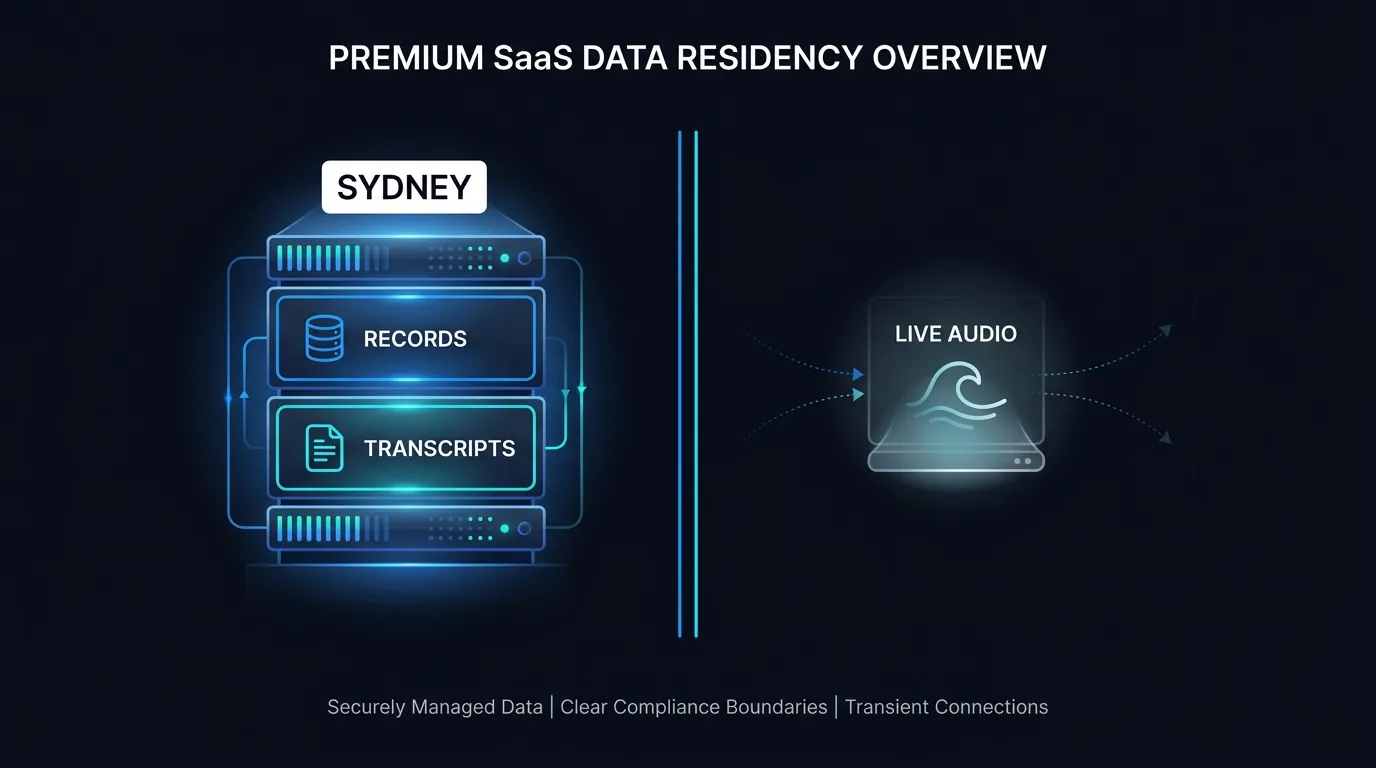
Records and transcripts stay on Sydney servers; only live audio is processed offshore.
When should a candidate reach a consultant?
A candidate should reach a consultant when they are senior, time-sensitive, or clearly placeable. The agent spots them by salary band, role title, or an immediate-start flag, then offers a live transfer or an instant callback. Everyone else gets screened and queued. Your consultant's day stays high-value.
This is the line we never blur. The agent does the first pass, not the placement.
A 180k operations director does not get a robo-screen and a thank-you. They get straight to a recruiter. We wrote about where the human still wins in when voice AI still needs people, and our hot-lead follow-up playbook shows the urgent-candidate routing.
What does it cost a NZ or AU agency?
It costs roughly 80 cents a minute, billed by the second, in NZD or AUD. An average answered call runs about 30 seconds, so near 40 cents. A 1 to 2 minute screen lands at 1 to 2 dollars. A 200-dial outbound campaign to lapsed candidates costs around 100 dollars.
Compare that to a part-time screener at 28 to 35 dollars an hour. One Sydney sales agent we ran pulled 141 qualified leads in 90 days at 32.74 dollars each.
Outbound connect rates sit between 47 and 65 percent. Around 20 to 25 percent of dials become a real one-minute conversation.
For a full breakdown, our guide on AI receptionist pricing lays out the numbers by call volume. To switch your line over, see forwarding calls to the agent.
Hand your consultants a clean shortlist.
Book a screening and interview-booking setup on our recruitment voice agent page, and see how it slots in alongside our inbound answering.
Frequently Asked Questions
Does the agent tell candidates it is an AI?
Yes. The agent discloses it is an AI at the start of every call, inbound and outbound. This keeps you compliant with the NZ Privacy Act 2020 and the Australian Privacy Principles. In our testing, candidates accept it readily, especially when the alternative is voicemail at 7pm after a long day.
Will it put off senior candidates?
No, because senior candidates do not get stuck in a screen. The agent identifies them by salary band, role title, or current seniority, then offers an immediate consultant transfer or callback. Junior and mid-level candidates get the full screen. Your top people get a recruiter faster than they would have by voicemail.
Can it handle inbound and outbound?
Yes. Inbound, it answers every candidate and client call, screens, and books. Outbound, it runs callback campaigns to lapsed candidates or fresh applicants. A 200-dial campaign costs around 100 dollars, with 47 to 65 percent connecting and 20 to 25 percent becoming a real conversation.
How fast does the summary reach my CRM?
The candidate summary lands in your CRM within 60 seconds of the call ending. It includes role fit, work rights, notice period, salary expectation, and a recommendation. Your consultant opens a clean shortlist instead of a voicemail queue.
What happens after hours?
The agent works 24/7, so a candidate calling at 8pm gets a full screen and an interview slot, not voicemail. This matters most for shift-work sectors like aged care, hospitality, and trades. We cover the pattern in our after-hours receptionist guide.
How much does a screening call actually cost?
A 1 to 2 minute screening call costs around 1 to 2 dollars in NZD or AUD, billed by the second at roughly 80 cents a minute. A 30-second call is near 40 cents. Against a part-time screener at 28 to 35 dollars an hour, the agent pays for itself inside the first busy role.
Leonardo Garcia-Curtis
Founder & CEO at Waboom AI. Building voice AI agents that convert.
Ready to Build Your AI Voice Agent?
Let's discuss how Waboom AI can help automate your customer conversations.
Book a Free Demo

