
An AI voice agent for accountants answers your phones when the team is buried in returns. It books appointments, chases missing documents, and gives clients the status of their return. All in plain English, billed by the second, for about 80 cents a minute.
Tax season does not care that your CAs are flat out. The calls come anyway. This is how a voice agent absorbs that load so nobody gets pulled off the work that matters.

Tax season floods the phones with the same routine calls while your team is heads-down on returns.
What does an AI voice agent do for an accounting practice?
It answers every inbound call, day or night, and handles the routine ones end to end. Bookings, document chasing, return-status questions, and basic triage. The accountant never gets pulled off the work for a call that did not need them.
Most calls into a practice are not complex. A client wants to know if their return is done. Another forgot which forms to send. A new lead wants to book a chat.
These calls do not need a CA. They need someone who picks up, knows the answer, and moves the caller forward. The agent does exactly that.
Every answered call is logged. You get a transcript, a structured summary, and a tidy record of who called and why. Nothing falls through.
This is the core of our AI voice agent for accounting practices. It carries the routine volume so your team keeps their head down.
Why does tax season break the phones?
Tax season breaks the phones because the same questions flood in while your team is heads-down on returns. Call volume spikes, nobody can answer, and voicemails pile up. Clients chase, get frustrated, and some walk.
Run the numbers on a small firm. Three staff, each fielding fifteen calls a day in March and April. That is forty-five interruptions, most of them the same handful of questions.
Each interruption costs more than the call. A returns specialist loses focus, then spends minutes finding their place again. The real cost is the deep work that never gets done.
So the phone goes to voicemail. Clients hate voicemail. A missed call during tax season is a client wondering if you forgot them.
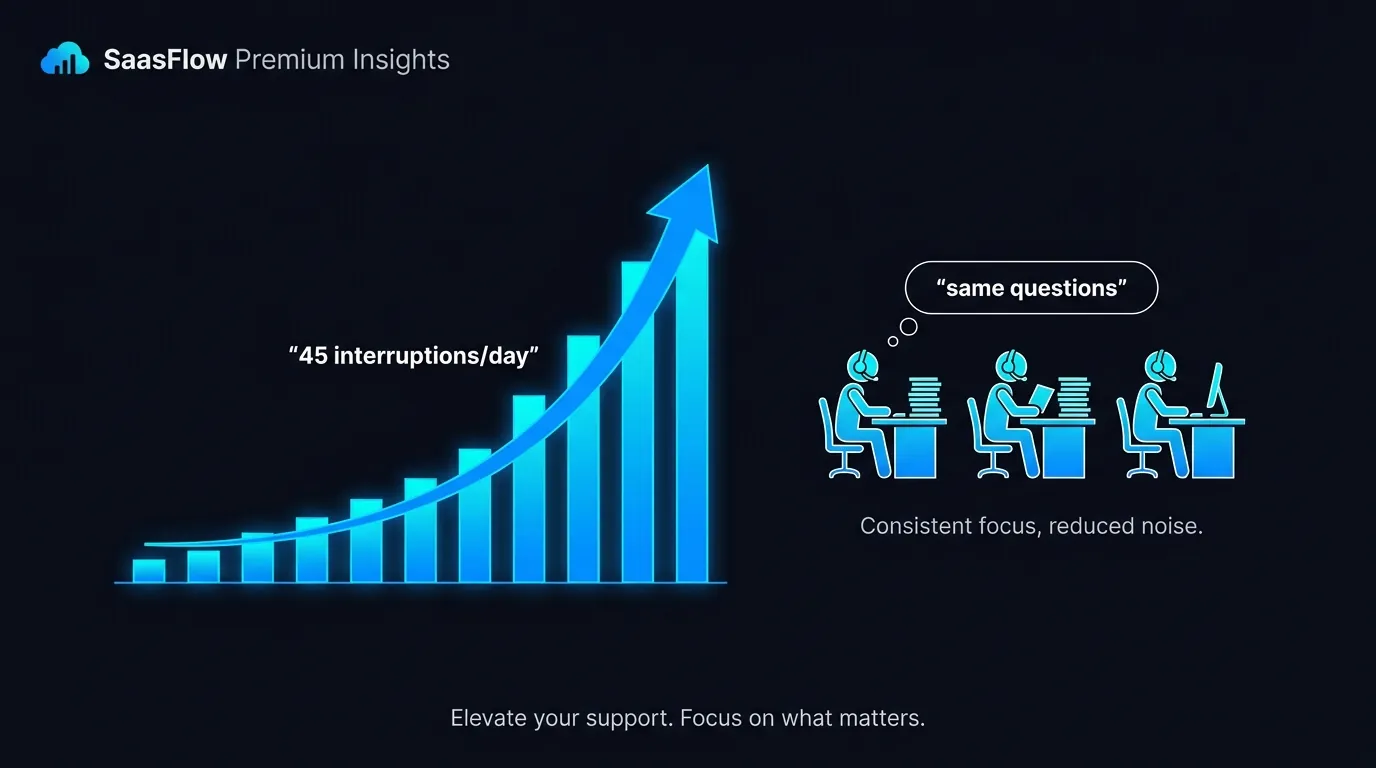
Three staff fielding fifteen calls a day is forty-five interruptions, most of them the same questions.
How does it handle booking and document-chase calls?
The agent books straight into your calendar and chases missing documents by name. It knows your availability, offers real slots, and confirms by text or email. For document chasing, it lists exactly what is outstanding.
Booking is the easy win. A caller wants a fifteen-minute review. The agent checks the live calendar, offers two times, locks one in, and sends a confirmation. No back and forth.
Document chasing is where practices bleed time. A return stalls because one client has not sent their IRD summary or their last bank statement. Someone has to ring them.
The agent makes that call. It explains what is missing, answers the obvious questions, and logs the response. If they promise to send it Friday, that note lands in your system.
For more on this, see how we approach AI receptionist appointment booking across NZ and AU.
Stop losing March and April to the phone.
See how our voice agent for accountants books reviews and chases documents while your team finishes returns.
How does it keep client financial data private?
Client financial data is handled under documented arrangements with our voice infrastructure partner. The agent also discloses on every call that the caller is speaking with an AI. Portal records, transcripts, and structured data sit on Sydney servers, while live audio is processed offshore.
Be straight about the split. The structured records you log into, the transcripts and the summaries, live on Sydney servers. The live audio that gets processed in the moment runs offshore.
We do not pretend all data stays in Australia. That claim is false for most voice systems, and clients in finance can tell.
For NZ practices, this sits under the Privacy Act 2020, overseen by the Office of the Privacy Commissioner. For Australian firms, the Privacy Act 1988 and the Australian Privacy Principles apply, overseen by the OAIC. HIPAA is a United States rule and does not apply here.
Two more controls matter for finance. Every caller is told they are speaking with an AI at the start. And a transcript can be deleted in 10 minutes if a client asks.
We go deeper on this in our guide to NZ Privacy Act 2020 compliance for voice agents.
When should a call reach an accountant?
A call should reach a human the moment it stops being routine. Tax advice, a dispute, a distressed client, or anything touching a judgement call. The agent recognises these, stops, and hands off to a named person with the context attached.
Draw the line clearly. The agent handles status, booking, and document chasing. It does not give tax advice or interpret a complex position.
When a caller asks something that needs a CA, the agent does not bluff. It takes a message, flags the urgency, and routes it to the right person.
The handoff carries context. Your accountant gets the caller name, the question, and the transcript before they ring back. No starting cold.
This is the honest version of voice AI. It does the routine volume so humans do the work that needs a human. We wrote about that balance in why voice AI agents still need humans.
Can it write the call into your practice software?
Yes. The agent writes a structured record of every call into your practice management or CRM system. Caller, reason, outcome, and next action, all logged automatically. No staff member retyping notes after the fact.
This is the part that saves the most admin. A call happens, and the record appears where your team already works. The booking, the document promised, the message for the accountant.
Without this, voice AI is just a smarter answerphone. With it, your client records stay current on their own.
We have written separately about how AI voice agent CRM integration works across NZ and AU.
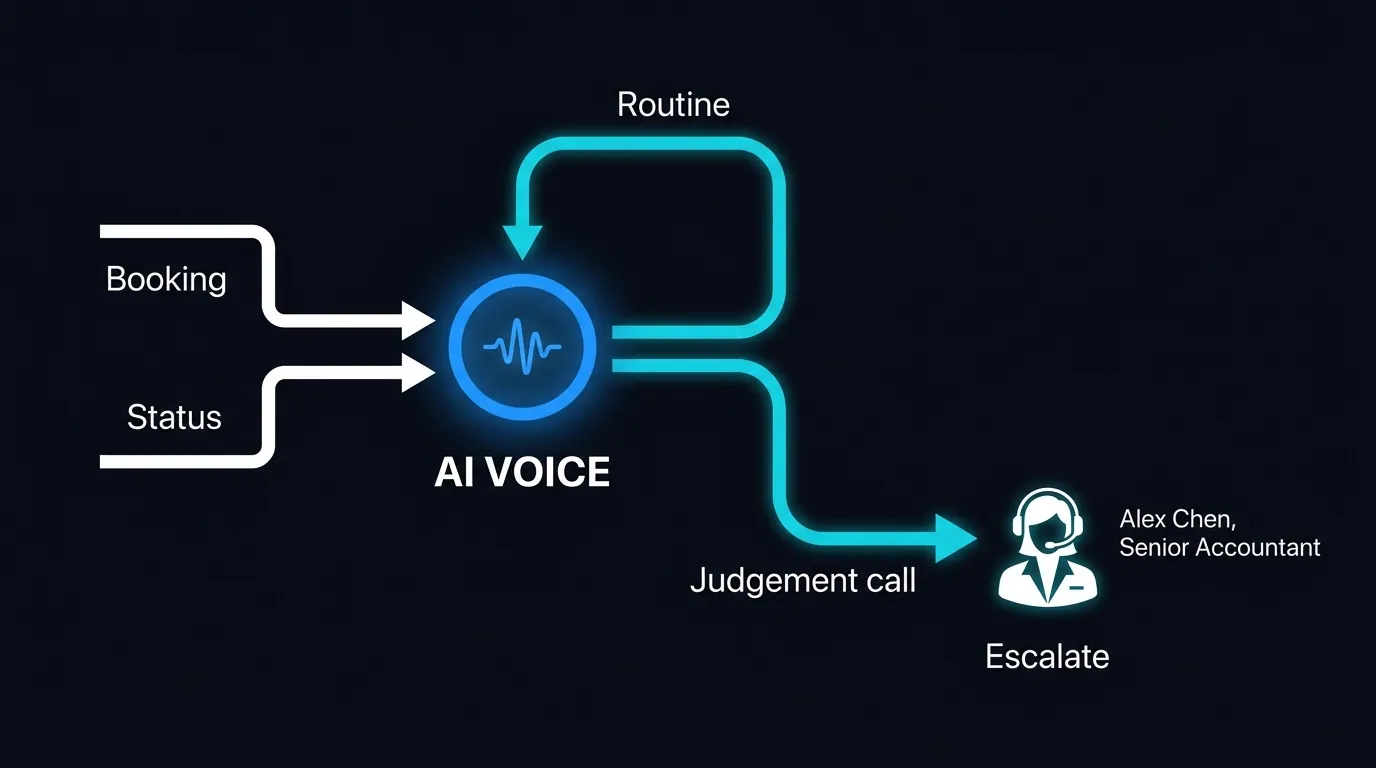
Routine calls stay with the agent; judgement calls escalate to a named accountant with the transcript attached.
What does it cost a NZ or AU firm?
It costs about 80 cents a minute, billed by the second, in NZD or AUD. An average answered call runs around 30 seconds, so roughly 40 cents. A one to two minute booking or document chase lands around 1 to 2 dollars.
Compare that to a part-time receptionist. In NZ or AU you pay about 28 to 35 dollars an hour before KiwiSaver or super. Add ACC and holiday pay on top of that.
That person also goes home at five and takes leave during tax season. The agent does not. It picks up at 9pm on a Sunday in April for the same per-second rate.
If you run outbound document chasing as a campaign, the maths holds. A 200-dial chase round costs around 100 dollars NZD. Connect rates run 47 to 65 percent, and a fifth to a quarter of dials become a real conversation.
For a full breakdown, read what an AI receptionist actually costs.
Get your phones covered before the next deadline.
Book a walkthrough of the AI voice agent for accountants or see our NZ inbound receptionist in action.
Frequently Asked Questions
Does the AI voice agent give tax advice?
No. The agent handles status updates, bookings, and document chasing only. Anything that needs professional judgement, like a tax position or a dispute, gets routed to a named accountant with the transcript attached. The line is deliberate. Routine volume to the agent, advice to the human.
Will clients know they are talking to an AI?
Yes. The agent discloses on every single call that the caller is speaking with an AI, right at the start. This is a privacy expectation under both the NZ Privacy Act 2020 and the Australian Privacy Principles. Finance clients respect the honesty more than they mind the AI.
Where is our client data stored?
Portal records, transcripts, and structured summaries sit on Sydney servers. The live audio is processed offshore under documented arrangements with our voice infrastructure partner. We never claim all data stays in Australia. Any transcript can be deleted in 10 minutes on request.
How fast can we get it running?
Most accounting practices are live in days, not weeks. We map your common call types, connect your calendar and practice software, and set the handoff rules to named people. The bulk of the work is deciding what the agent handles versus what reaches an accountant.
What does it cost during tax season?
The same per-second rate, about 80 cents a minute. A typical answered call of 30 seconds is around 40 cents. There is no surge pricing in peak months. A busier April simply means more calls answered, each billed by the second.
Can it handle both NZ and AU clients?
Yes. The agent works across both markets and follows the right rules for each. NZ falls under the Privacy Act 2020 and the OPC. Australia falls under the Privacy Act 1988, the Australian Privacy Principles, and the OAIC. Outbound chasing respects the AU Do Not Call Register and NZ electronic message rules.
For the bigger picture, read our complete guide to AI voice agents for NZ and Australian businesses.
Leonardo Garcia-Curtis
Founder & CEO at Waboom AI. Building voice AI agents that convert.
Ready to Build Your AI Voice Agent?
Let's discuss how Waboom AI can help automate your customer conversations.
Book a Free Demo

