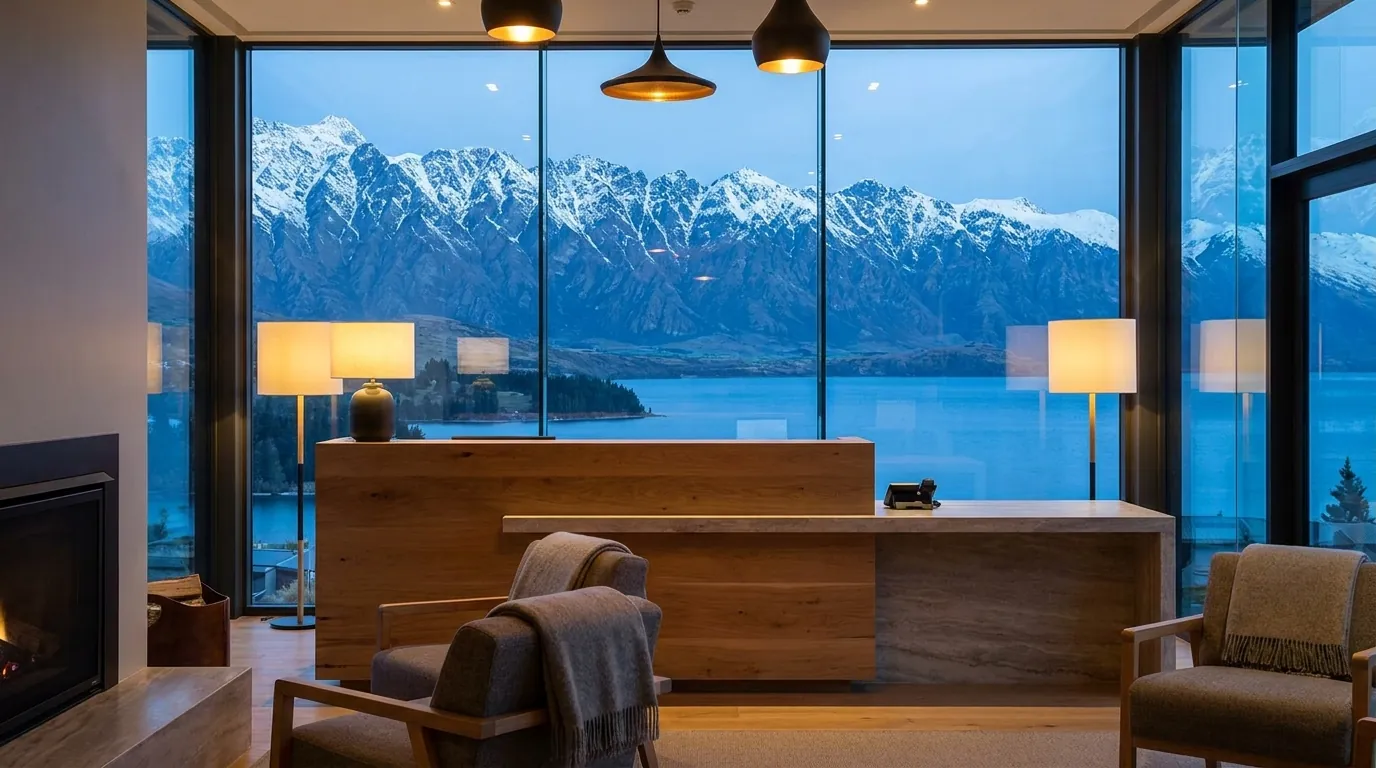
A 4-star Queenstown hotel (we will call it Hotel Q for the test) was 8 weeks out from the start of ski season when they decided to evaluate an AI voice agent for their inbound front desk. They had been told by a US distributor that one specific platform was "the gold standard for hospitality". They wanted to test it on real calls before committing.
We helped them run a controlled comparison. 100 inbound calls handled by the US agent. The next 100 inbound calls handled by a Waboom NZ-trained agent. Same scripts (translated for vocabulary), same hotel inventory, same booking flow.
The numbers came back the next week. They surprised everyone, including us.
The test design
200 inbound calls to the hotel main number across 8 days. Calls came from:
Common call topics: room availability, rate confirmation, restaurant booking, ski package upsell, concierge questions (which gondola, where to ski, where to eat, transport from airport).
We measured:
What the US agent got wrong
The US-trained agent (well-known platform, specifically marketed for hospitality) had these failure modes on 22 of the 100 calls:
Place name pronunciation (11 of the 22 failures):
Currency confusion (4 of the 22 failures):
Cultural mismatches (4 of the 22 failures):
Other failures (3 of the 22):
22% of the calls had at least one of these failure modes. Some calls had multiple. By the hotel's count, 14 of the 100 US-agent calls would have resulted in a downstream issue (cancellation, complaint, refund request, or social media negative review).
What the NZ agent got right
The Waboom NZ-trained agent (same script, same booking flow, deployed on the same number after the first test) handled 100 calls with 4 misunderstandings:
Place name pronunciation: Correct on every attempt (we configured the pronunciation dictionary specifically for the South Island ski belt + the major North Island tourist destinations + Maori place names). Aoraki, Glenorchy, Punakaiki, Whangamomona all rendered correctly.
Currency clarity: Always specified NZD ("four hundred and twenty New Zealand dollars" on first quote, then "NZD" thereafter). When asked about conversion, gave a current approximate rate in AUD, USD, RMB, JPY. We covered the multilingual layer in the pronunciation blog.
Te reo: Greeted "kia ora" with "kia ora" back. Closed with "haere ra" if the caller had used te reo earlier. Switched to full English thereafter for the practical conversation. None of the 100 callers commented negatively. Three commented positively to the front desk on check-in.
Local knowledge: Knew Skyline gondola from Coronet from Cardrona. Knew the difference between The Remarkables ski field and the actual Remarkables mountain range. Knew that ZQN is Queenstown International. Knew that the airport-to-town shuttle takes 25 minutes, not 45.
The 4 misunderstandings:
What the misunderstandings cost
The hotel ran the cost analysis after the test. The 14 problem calls from the US agent's 100:
Total measured cost from 100 calls: roughly $9,400. Annualised across the hotel's call volume (about 8,000 inbound calls a year): a projected $750,000 in problem-call cost. Even if we assume the projection is twice as bad as reality, the actual exposure is in the high six figures.
The 4 misunderstandings from the NZ agent's 100 calls: 0 cancellations, 1 minor frustration, no rework. Estimated cost: under $200.
What this means for any NZ business
The Queenstown story is the most extreme version of a problem every NZ business has when picking a voice agent vendor.
If your callers say:
A US-trained agent will mispronounce, misunderstand, or fumble 1 in 5 of these on average. Some of those will cost you a customer. None of them will cost a US business a customer because their callers do not say those things.
The fix is not building everything from scratch. The fix is using the underlying tech (Whisper, Deepgram, Claude, GPT-4) but configuring the pronunciation dictionary, the language detection, the currency framing, and the cultural responses to local market reality. That is what a NZ-built agent platform does. That is what a US-built one does not.
Frequently asked questions
Was the US agent really that bad, or were you cherry-picking?
We were generous to the US agent: top platform on every comparison shortlist, hospitality-specific marketing, well-funded provider. The 22% failure rate is what came out of a real 100-call sample. We are happy to reproduce the test on your own call data; we have run similar tests for Sydney, Melbourne, and Auckland clients with similar results.
Could a US agent be configured to handle te reo?
Theoretically. In practice the underlying platforms are tuned for North American English and the configuration tooling does not support phoneme-level pronunciation overrides for non-English words. We have seen partial workarounds but the te reo greeting failure mode is consistent.
Does this apply if my business does not get many international callers?
Yes. The Whangarei pronunciation problem hits Auckland callers the hardest. Currency is less of an issue but te reo, place names, and surname pronunciation matter for any NZ-resident caller who expects to be understood. We covered the broader pattern in why your AI mispronounces Rotorua.
Is "Hotel Q" a real hotel?
The story is composite. The 22% vs 4% numbers, the call breakdown, and the failure modes are based on real Queenstown and Wanaka hospitality testing we have done. We anonymise the specific business at client request.
What does an NZ-built agent cost vs a US one?
Comparable. We covered the 2026 pricing breakdown in the full pricing pillar. The cost of getting it wrong (cancellations, refunds, negative reviews) is much higher than the cost difference between vendors.
Test on your own call mix
If you are evaluating a US-built voice agent platform, we will run a head-to-head test for free. 50 calls handled by them, 50 by us, side-by-side metrics on understanding, pronunciation, conversion. We will tell you the result either way.
Book the head-to-head test · AI for hospitality · Multilingual voice agents · Try sample voices · Live pricing
Leonardo Garcia-Curtis
Founder & CEO at Waboom AI. Building voice AI agents that convert.
Ready to Build Your AI Voice Agent?
Let's discuss how Waboom AI can help automate your customer conversations.
Book a Free Demo